
It Takes Two to Gaslight with Dr. E: A New Way to Understand Medical Dismissal
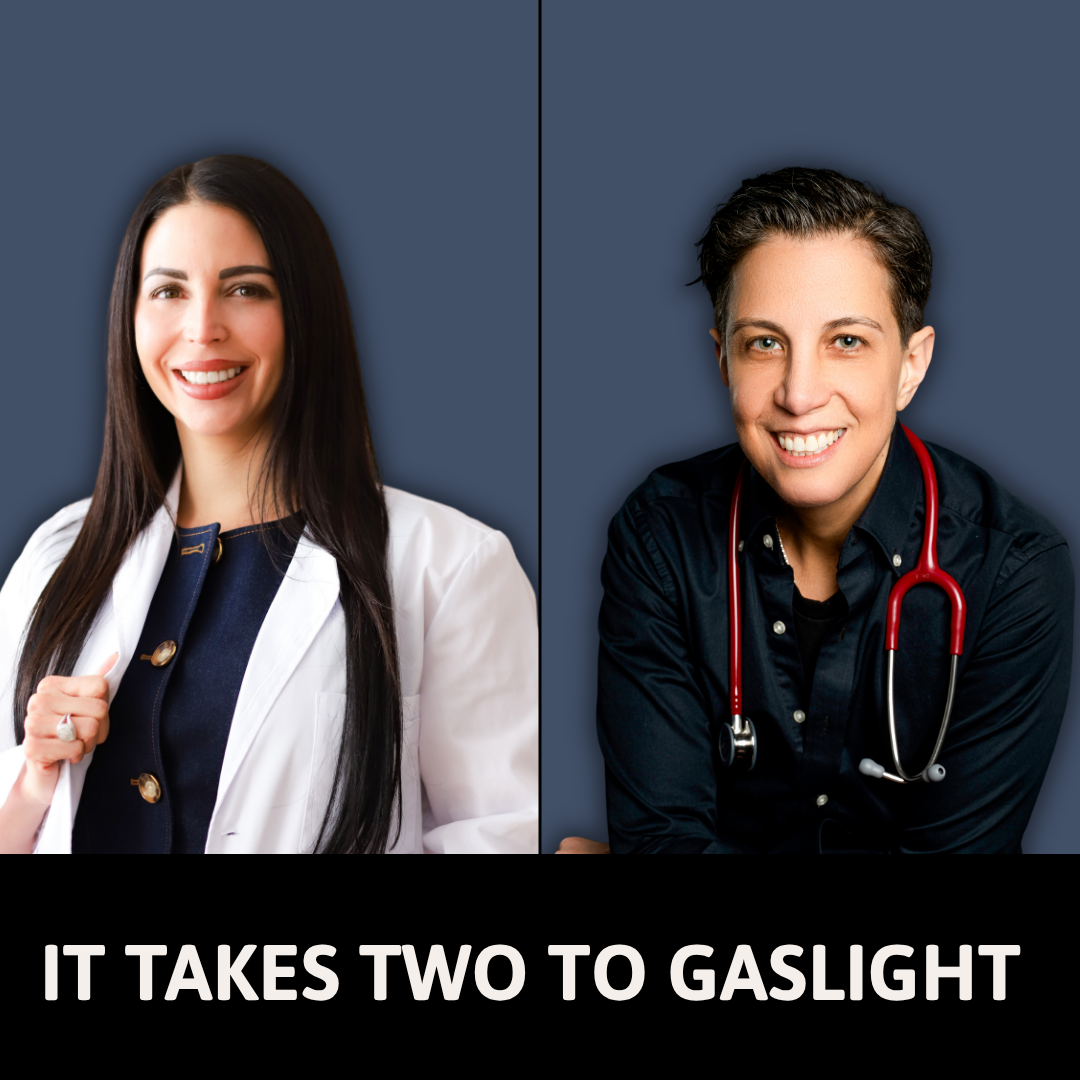
You’ve been told everything is “normal”… but you know something isn’t right. In this episode, I sit down with Dr. Efrat LaMandre to unpack one of the most frustrating and isolating experiences in healthcare today: medical gaslighting. We dive into what it actually is, why it happens more often than we think, and the deeper systemic patterns inside medicine that lead providers to dismiss symptoms when labs don’t tell the full story. This is not about blaming doctors, it is about understanding the gap between patient experience and clinical training so we can start to bridge it.
Together, we explore the hidden dynamics at play in the exam room, from the limitations of evidence-based medicine to the influence of pharmaceutical-driven research and the rigid frameworks many providers are trained within. We also get into the powerful mindset shifts that can completely change how you navigate your own health journey, including how to advocate for yourself without burning bridges and why “normal” results don’t always mean optimal health. If you’ve ever felt dismissed, confused, or like you’re falling through the cracks of the system, this conversation will open your eyes and give you a new lens to move forward with clarity and confidence.
Topics We Cover in This Episode:
- Why “normal labs” can still leave you feeling anything but normal
- The surprising truth behind what medical gaslighting actually is
- What’s really happening in a provider’s mind during your appointment
- The hidden limitations of evidence-based medicine no one talks about
- How patient expectations can unintentionally shape the outcome of a visit
- The difference between ruling things out and truly getting answers
- A powerful analogy that will completely reframe your healthcare experience
- The subtle ways you can advocate for yourself more effectively
If you’re ready to start approaching your body and your care with a deeper level of understanding and empowerment, make sure you subscribe so you don’t miss what’s coming next. Your symptoms are real, your experience matters, and this is just the beginning of learning how to navigate it all differently.
Transcript
Welcome back to Hormones Metabolism in You, the show where we talk about what’s really going on beneath the surface when your body is changing, your energy is crashing, and the answers you’ve been given just don’t match your lived experience. Let me start with a moment many of you will recognize instantly. You finally book the appointment. You’ve rehearsed your symptoms in the car. You’ve got the timeline, the notes, the patterns, fatigue, weight changes, anxiety, brain fog, insomnia, stubborn inflammation. A cycle that’s off a body that just doesn’t feel like yours anymore. And then the labs come back normal, and suddenly the conversation shifts from curiosity to conclusion. You’re fine. It’s stress. Maybe it’s anxiety. Try to sleep more. Come back if it gets worse. If you’ve ever left a visit feeling embarrassed or even asking, doubting yourself or wondering if you’re somehow failing at being a patient. Today’s episode is for you because we’re talking about something that’s real. It’s common and it’s incredibly isolating. Medical gaslighting. And I want to be clear before we dive in, this is not an attack on doctors and it’s not a call for confrontation. This is an honest look at why dismissal happens and most importantly, how we can interrupt it so patients and providers can meet each other differently in the exam room.
I am honored to welcome today’s guest, Doctor Efrat Limandri, also known as doctor E, who’s a nationally recognized nurse practitioner who calls out a problem most patients can name immediately, but few clinicians are trained to identify what happens when symptoms persist, tests look normal, and the system runs out of room for uncertainty. Doctor E speaks from inside medicine, not outside of it. She’s also the host of the Medical Disruptor podcast, where she brings clinicians, researchers and public health leaders into real conversations about trust, power and the limits of what medicine currently measures. In this episode, we get into the questions that can change everything, like how doctor E defines medical gaslighting, why it’s often not intentional, why normal labs so often end the conversation even when patients still feel unwell, what patients may unknowingly do that makes dismissal more likely, and the concept that she shares that stops people in their tracks. It takes two to gaslight. If you’ve ever been told you’re fine while you’re quietly falling apart, stay with us. Let’s get into it. Today I am super excited to have doctor E on. She is a lovely breath of fresh air if you guys don’t follow her.
We’re going to put all of her contact information in the show notes. But she talks a lot about medical gaslighting. And as you guys know, if you listen to this podcast, we talk a lot about how your symptoms matter. Normal labs sometimes don’t always mean normal, and you have to be able to have conversations with your provider. And so I wanted to bring her on today so that she could just kind of explain what is medical gaslighting, why does it happen? And we’re just going to talk about that. So thank you for coming on to my podcast. It’s an honor to be here. Thanks for having me. Of course. So I think we should start with just saying we both agree to this medical gaslighting per se. We’re going to talk about what it is, but this is not an attack on doctors. This is not an attack on providers. This is just a call for let’s discuss it. We’re not trying to make confrontation. We just want everyone to understand what is gaslighting, why does it occur in medicine and how you can maybe navigate around it in order to be your own best advocate. Would you say that’s fair?
100% fair?
Okay, so when people hear medical gaslighting, they often think that there’s this malicious intent, and I don’t think there always is. How do you define medical gaslighting?
Excellent question. And the term medical gaslighting is it’s purposefully insightful, right? Like gaslighting. We know that the word gaslighting involves intent. There’s malice in the true sense of what gaslighting is. The definition psychologically is that someone is purposely manipulating your reality to kind of change things up. Many of us experienced it in conversations with people. And so medical gaslighting, it is incendiary that people know exactly what it means. They know what it feels like. They know that moment, even if they can’t define it. But it is important that we take that moment past that kind of like initial reaction, like, oh yeah, that happened in the exam room. And understand that in the case of medical gaslighting, we it is my contention that this is not intentional. I will say that there are 5% of providers who are just like bad apples, so let’s just remove them from the conversation. I am certain I want to validate anyone’s experience. That was just horrible, like rude and just horrible. So let’s just remove those from the equation. But most providers are not in it to be malicious. They are indoctrinated, which we could talk about. And the education, myself included for many years, I call myself a recovering medical gaslighter the education leads you to really fervently believe in a certain type of only evidence based medicine, and only evidence based labs and diagnostics, so that you are such a believer provider of such believers that when they can’t discover something, they kind of end up having to put it back on the patient. And that feels like gaslighting. And we’ll dig a little deeper once we understand that it’s really indoctrination. The power dynamic can shift in the room.
I like that, I think that’s a good way to explain it, because I agree with you that I don’t think doctors are malicious intently. Now, there are probably 5% of people who just, you know, or maybe on personality spectrums, whatever. And they, you know, they just maybe shouldn’t be practicing. Yes. Patient patient interaction. Maybe they should be radiologists. But in general, most providers, I mean, we do this out of compassion and care. Right. I tell people all the time, it’s very difficult to work in the medical field. It’s emotionally taxing. It’s physically taxing. You and I were kind of talking about this before. And so people don’t do this usually, you know, for the wrong reason, right? We do it because we want to help people. It’s actually the greatest profession in the world, in my opinion. Right. My humble opinion. But to your point in school, we are kind of indoctrinated. Like that’s a good way to put it. It’s like, if this, then this here’s the box. People fit in the box or they don’t. And if they don’t, it’s almost like, well, we don’t know what to tell you. And so to your point, I think a lot of providers, you know, some of them are seeing people every 10 or 15 minutes. And if you come to them with an issue that they can’t solve, maybe they just. Yeah, they put it back on you like, well, you’re not fitting in this box or this box or this box. And this is what traditional medicine has said. So it must be a you problem when in reality it is a lack of knowledge problem, or just the fact that we need to have this open dialog conversation and actually use our brain and think about outside the box physiology and figure out what’s going on with the patient.
Yeah. Let’s talk a little bit about everything you just said. Like my son is going to med school. Like no one goes to med school to be a jackass. No. If you ask anyone who interviews med school, MP school, PA school, they want to help the patient. These are young kids primarily. I went to school later on, but like most of them, are just young kids, starry eyed, really just ready to learn the science to help humanity. Truly, this is where most people go into medicine. Nurses like this is the reason they have a calling. And then you’re going to spend a minimum of seven years. Oftentimes it’s 15 years learning medicine. And that means you’re going to learn a certain Bible. And that Bible is really long and it’s really complex. And there’s only one human that has to learn all of that. And that Bible has been written by a lot of studies and the idea of evidence based medicine, and it’s called the gold standard. And you hear these terms over and over again in your schooling of like, this is the way to practice medicine and all other ways are dangerous, right? I mean, it truly is a religion. Like, you know, anything else is snake oil supplements or snake oil. And any idea that’s not covered by the professor is actually categorized as, you know, it’s anecdotal or just less than evidence is less than. So by the time you graduate ready to take care of your patient, you’re like so super excited. You’re armed with so much knowledge. I mean, I really want to take a moment to just acknowledge how much schooling there is, but yet there’s more that you didn’t learn, but you’re also taught that anything else is dangerous.
And so that is the person that you, dear listener, are going to see in the exam room, you’re going to see someone who dedicates a significant portion of their adulthood to learning really rigorous stuff that is oftentimes life saving, but they don’t learn other things. And you may come in and go on the internet or something else, which has a lot of validity, but different religion. And you’re coming in and you’re telling that person who’s practicing differently. Hey, can you just check this out? What I learned? And they’re like, what are you talking about? I never learned, I spent 15 years of my life, never learned that. So there is a bit of like hubris and there is a bit of dismissal, but it’s not coming from malice. And then the other piece of it is like, so now I’ve learned all these things. I’m the doctor or the provider, I’ve learned all these things, and I’m genuinely so interested to figure out what’s going on with you. And I will run every single test to every image, to every everything I’ve ever learned in those 15 years. I will do it because I’m so worried about you and then everything will come back normal. And so again, the schooling is going to force me to say, well, there is nothing wrong with you. I’ve tried everything I know. And so then it has to come back on you. Maybe you need to lose some weight. Maybe you’re stressed. Maybe you’re just anxious. And again, it’s not with malice. It’s honestly the only logical conclusion that someone that comes from that religion can draw.
I like that talking about it as a religion. It’s so true. And the problem with that religion, that indoctrination that we get in medical school, is that, unfortunately, I feel like in the United States that religion is driven by certain things, right? Pharmaceutical companies, the way that we are taught in medical school is driven, unfortunately not by how it used
to be, right? Like it used to be 100 years ago. We were trying to make patients better. They talked about food, they talked about movement, they talked about relationships they talked about and then medicine. Right now, med school is very indoctrinated as to here is the disease, here is the cure. And the cure is usually a prescription of some sort, right? So it’s a very pharmaceutically driven education system. And I, you know, to your point, I did 13 years of higher education. I did two years of fellowship with endocrinology, diabetes, metabolism, hormones, everything they taught me in fellowship. You know, I did this two extra years of my life and more debt to learn how to write more prescriptions. It was the most unfulfilling two years of my life. I didn’t realize that while I was practicing, I got into the world and I started practicing. You know, I did a lot of clinical trial studies on GLP one and all these things that were going to make people so much better. And then I get out into the world and I do exactly what I was taught because I’m, I was a by the book rule follower 100%.
It’s terrifying not to be right. Also scare you.
Yeah. And people got worse. Like they got worse for the first two years. And I was just like, what the heck? And so I think the problem is, you know, we’ve spent years and years and years they’ve spent, they, you know, the world has spent a lot of time retraining our brains, right? Retraining our minds, because I remember going through medical school and I had a provider that was a teacher, and he was in his 80s whenever I was in school, and he would get so mad at the way we taught and the way we did things. And he was like, this is just all garbage. This is not how we did it. When I went to school, we touched people. We talked to people we had relationships with, patients. We used our brain. And I used to always be like, man, he’s kind of crazy. And then I got out of school and I’m like, no, he actually knew what he was talking about.
Yeah, he had a right. And you’re right. Right. Because even the language we’re talking about evidence based medicine. But what is this evidence? And to your point, the only thing that is accepted as evidence in med school, it is strong evidence, but it’s that double blinded placebo study one variable for those listening. That means you only have to make one change, right? So if I take this thing, did it make a change? But we all know that health has many factors, right? So you’re not allowed to test many manufacturers. So this evidence base is always one thing, one intervention, one variable that can be repeated in kind of like a vacuum. It doesn’t matter what’s happening in the patient’s life is the patient’s stress. So how the patient’s eating right. So these studies are basically around an intervention. And because they require so much numbers of people, it’s very expensive. And so the only people, the only companies that can afford these type of studies are pharmaceutical companies because they will recoup that money. Again, it’s not malicious. It’s return on investment. They will recoup that money once they’re able to sell their product. Conversely, I just had a patient come in to me the other day in primary care because even though it’s primary care, I sprinkle in obviously my integrative knowledge.
You know what? You know, you can’t take it back. And the mom brought her teenager in and she said, five years ago, you saved this kid. He was asthmatic. He was covered in eczema. And I just said, why don’t you just try to go dairy free? And his life changed, but there was no study for that. Who’s going to fund that study? Right? Pharmaceutical is not going to fund it. The milk company is not going to. Who’s studying the study of absence of dairy on skin and asthma? Absolutely no one. And so you’re right, that has no studies on it. But it’s because of the way it’s situated financially. We can never run a study on it. And so even our language like, oh, that’s anecdotal. I’m like, you’re right, it’s anecdotal. Yet every single pediatric patient I’ve had have taken off dairy has at least improvement, if not complete resolution. And yet somehow that doesn’t count. So it is very problematic how it’s set up.
Yeah. And to your point, you know, I learned when I was in med school, they told us this and then I’ve seen it, 50% of what you learn in medical school will probably be out of date or malpractice seven years after you’re out of med school. And that is so true. Not only that, but if I only followed FDA guidelines in my practice, I mean, I would be doing 20% of what I’m doing. To your point, everything that I do is what I believe is best for patient care. I would never do anything to harm people. I took the Hippocratic Oath very seriously. Like first do no harm. But to your point, I use all of this data that I know from taking care of tens of thousands of people. And guess what? It worked on 85% of them. No, there’s no study because nobody’s going to fund that study, but it makes people better. And the crazy thing is, what is frustrating is doctors, providers, people will make you out to be this monster because you’re practicing outside these guidelines. But again, to your point, the FDA, although the FDA was set up for a reason, and I truly believe they were, it also makes things difficult because to your point, nobody’s going to spend millions of dollars doing a study to prove that something works when we know anecdotally as providers, hey, I’ve done it a thousand times and it’s worked on 956 people, which is more than any prescription I’ve ever prescribed for anyone. So I’m going to do it, you know.
And also oftentimes interventions that you and I are trialing in our own practices at worst are neutral. They can they will not cause harm, and no one’s going to be harmed by going dairy free for a while and tracking your symptoms. No one’s going to be harmed by changing their nutrition and just trying something for 30 days. You can’t cause harm. Unlike a pharmaceutical, which has a risk of side effects, our interventions like who actually crazy. The person who’s willing to prescribe something blindly with all these known interactions and side effects, or providers like ourselves who are willing to try lifestyle things in addition to not instead of when appropriate to medication. So you know who’s crazier? Like I sometimes terrified to send some of these prescriptions that are, you know, part of the guidelines. I’m like, oh, I know this is not such a good one, you know, but like, I will get a letter from insurance saying, why didn’t you put this patient on this thing? And I’m like, okay, I’ll do it. Yeah.
Or like my favorite was I was sitting in the lunchroom with my nurse practitioner yesterday and we were chatting and he’s like, look at this. He gets, you know, these up to date stuff from the nurse practitioner board. And it was like, oh, breaking news. Hormone replacement therapy likely decreases your risk of osteoporosis. And I was like, that’s not breaking news. That’s like 20 plus years ago. And, you know, we know this anecdotally because giving people hormones, as I have for the last 15 years, I can tell you, you know, but it’s just frustrating because it has to go through this whole loophole. And it takes ten years to become breaking news and FDA approved when we’re just missing out on the boat. And by the time that happens, something else better is there, you know, and so it’s just exactly right.
And so bringing it back to our listeners, all this that we just described, Doctor Cassidy and I described is that this is what you’re up against when you walk into the exam room, right? You’re up against someone who’s been schooled this way. And this might seem really disheartening. So what am I going to do? And how do I get what I need? And you guys are not making me feel any better. I needed this, but I think if you look at it, you can be empowered to understand who you’re talking to. I think part of the gaslighting experience is the expectations we come with as patients into the room. And so the way I like to describe it is if I have an electrician and I expect him to fix my toilet, I am going to be constantly upset. And when they say I can’t fix it, not only will they say, I can’t fix your toilet, but they’ll say, there’s nothing wrong with your toilet. I would feel really gaslit. I mean, I wouldn’t feel gaslit, I would say, okay, I obviously called the wrong guy. Like I should have called the plumber, right? And that’s how we should treat our clinicians if we’re going into primary care or a classically trained endocrinologist. We need to expect that what we’re going to get is the industry standard. And that’s important. Like you want to rule out if you don’t feel well, you have to go there first.
Go to your PCP first, go to the specialist, get the test, find out that if they find something, you’re in the right place. Like you are going to need something, right? God forbid a cancer or something like you want to be in the system if there’s something pathological going on. But if they find nothing and they say nothing’s wrong, I don’t want our listeners to get disheartened. I want them to look at that clinician and internally know they just went to electrician with a plumber problem and just say, thank you so much for using all the tools that you have. I feel great to know that given your tools, you found nothing. And then you have to find someone like you or someone else alternative who has different set of tools. And once we understand the expectation of our providers becomes different understanding of their limitations because we come in thinking that just knows best, they must know. How could you not know? I don’t feel good. What do you mean, I’m fine? That is where the emotional part comes in. You’re like, no, I’m good. Thank you so much. You ran all the tests and there should be a level of empowerment when you understand this. And there’s more that we’re going to talk about more empowerment. But that’s like step one.
No, I think that’s really powerful for people to hear. That’s so true because I actually had a patient who it didn’t upset me. It kind of surprised me. But I had a patient who sees me and we diagnosed her with thyroid cancer. We did an ultrasound. She had a biopsy. She had thyroid cancer. And so I was like, hey, you know, this is what we need to do for the thyroid cancer. And then about a month later, she came back and she was like, okay, I’m ready to do that. Just so you know, I went to see an endocrinologist and got a second opinion and I was like, okay. And she said, not that I don’t trust you, which, you know, I’m a board certified. I just wanted to go to somebody who does traditional medicine and see what they said as well. And I was like, that’s fair. I did traditional medicine before I did functional medicine, but I was like, I understand her point of view, right? And she said, they said exactly what you said, so let’s do it, you know? And I’m like, okay, to your point, it’s very true. Like if you have something really bad pathologically wrong with you. Sure. Go get that opinion and figure out what’s going on in the system.
And I tell people this all the time, if you want me to write you three blood pressure medications, a cholesterol medication, you know, ten medications, then you need to go down to the street to your primary care doctor, because they are well versed in doing that, they’re happy to do it and you are not wasting their time. If you want me to put everything together and tell you what I think is going on from a root cause approach and try to actually fix this, you’re in the right place, right? And it’s not that they’re doing anything wrong. I’m doing anything wrong. It’s just like we do different things. And so I like your analogy of the plumber and the electrician. You need both to make a house work, but they’re in their lane and I’m kind of in my lane. And so I think that is really powerful. And I think that’s a good way to put it when you go to an emergency department, right? Because you think you’re dying, you want them to make sure you’re not dying, but you would not go to an emergency department to talk to somebody about your bloating and how you want to use a GI map to holistically heal your gut. So it’s just very different conversations and expectations.
Well, I do think people do show up to the E.R. with bloating and expecting more. And that’s a really good analogy because I think for many people, there is an understanding that emergency rooms are for emergencies, even if in the moment it feels like an emergency. Oh my God, it’s bloating so much my back pain hurts so much. The goal of the emergency room is to discover is this. Indeed, it may feel like an emergency. It may be as painful as an emergency, but if I’ve done all the X-rays or MRIs, it’s not an emergency. And then you kind of know that after the emergency room, you have to go follow up with the specialist, that specialist. And that’s the same is true for your primary care provider. And conversely, to your point, your functional medicine provider also can’t manage everything. You’re not going to be the one to manage radiation or chemo. The bottom line is you need to build a team, and you need to know what everyone’s scope of practice is. And even in functional medicine, not all functional medicine people are like, I loved working with mold when I used to do it, but I wasn’t great with lime, so somebody else was great with lime. And you’re great with hormones. So even in functional medicine, you might need more than one person or your person is not right for, you know, your partner or your friend. So let’s remember also that every provider you see is a human being with limited mental capacity. There’s only so much you can know and you want to be really good at the things you’re amazing at. Hormones. So, you know, get educated and get your expectations in line with what the person in front of you can do.
Then the other thing I want to say to patients is when you’re in the exam room, a lot of patients go silent. And I have, like you, highly educated patients, who’s a lawyer, who’s a doctor, who’s a, you know, team leader in a fortune 500 company. They know how to run meetings. They know how to run their household. They know how to argue for themselves. They know how to give the latte back and get it right. But when they come into the exam room, they go quiet. And so then there’s this indoctrination piece of talk about of the indoctrinated patients, what happens to you? You’re so, you know, you know how to take a stand everywhere else in your life. But in the exam room, something happens internally to you as a patient. And it’s, by the way, not your fault. It’s years of like doctors, right? And you don’t cry and you don’t complain. And like, there’s a lot of training that happens to patients as well. So by the time we’re in our 45, we walk in and say, I’m so sorry, I don’t mean to waste your time. And it’s probably not a big deal. But like we have all these phrases, patients have all these phrases. And like, I actually feel like I have to shake my patience sometimes. Like, don’t be sorry you waited. This is your time. Show me the list on your phone. Ask the questions. So my point to your audience is use the skills that you have everywhere else in your life and don’t abandon them in the exam room.
I think that’s very powerful and true. And to your point, I think it takes a lot of propaganda to make us small when we are used to being so, you know, taking care of ourselves, taking care of our family. But yes, you get this. Like, I think a lot of times it’s people go to 4 or 5 doctors and they get dismissed, right? Oh, your labs are normal or that’s nothing. Or, you know, yes, the doctor’s always right. And so you just start to think, okay, well, maybe there is nothing wrong with me. Maybe I am crazy. Maybe I do need a prescription. Because then you’re also watching TV and there’s all these marketing ads on TV that you don’t even realize talking about. Talk to your doctor about this prescription. And so I think that that is a very validating and good point. And I deal with hormones. So I deal with hormonal women and I will have somebody cry several times a week, and then they get embarrassed and then they’re upset and then they’re and it’s like, well, don’t be upset. Like if you want to cry, then cry, cry. You know, this is a part of hormone changing. And then tell me why you’re crying and like, let’s fix it, you know? And so I do think that that is powerful. Like if you need to go in your doctor’s office and break down and cry and show them the list on your phone. And, you know, sometimes I feel like I’m a therapist, but that’s okay too, right? Because part of medicine is trust and good relationships. And so I do think that those are all okay too. And if you have a provider that you don’t feel comfortable with doing that, you should probably find another provider to put on your team, right?
Yeah. So let’s unpack some of that. So hopefully after this podcast, even that first part, like I got dismissed, I got dismissed, I got dismissed. I first want to manage that, right? If we’re going in with that newfound expectation of like believing yourself, I don’t feel well. I believe that is data, right? So that is very important. I don’t feel well. I’m going to this one plumber to find out if he or she has a way to figure out why I don’t feel well. And when they don’t, I don’t want you to take that as dismissal anymore. Again, not talking about somebody who’s actually rude. Don’t talk to them again. And I don’t want you to take that as dismissal. I want you to say like, okay, but I still believe myself. My body is my data. I still don’t feel right. You did everything you could. You actually can’t dismiss me like the power it takes two like you can dismiss. And I have to accept the dismissal. Like I don’t accept your dismissal. I accept your limitations. That you can’t figure out what’s wrong with me. But I’m no longer dismissible. Okay, I want patients. You can’t dismiss me. I’m not saying rude. I’m not saying throw a chair. I’m not saying be mean. But there is a shield in knowing that the person you’re talking to has limited knowledge. Use them to the best of their ability and then move on. But no one is going to dismiss you any further. It’s not possible. So just as impossible for electrician to tell you that there’s nothing wrong with your toilet, you’re not even going to believe the electrician. Like, what are you talking about? You’re not going to be dismissed.
You’re going to be like, he’s not a plumber. That is literally the action I want you to have. So we’re not going to have 3 or 4 people who dismiss us. We’re going to have 3 or 4 people to whom you went to, to utilize the tools and the skill set that they have. So you went to electrician and you haven’t found your plumber yet. That’s it. But your toilet is still leaking and no one is going to convince you otherwise until you find the right plumber who’ll be like, oh yeah, of course you need to do this. I can’t continue the metaphor because I don’t know anything about plumbing, but you need to move the thingamajig for that and then it won’t, you know? So then you find your person. So dismissed. No more. There’s no such thing as you being dismissed anymore. Anytime you feel like you’ve come, you’ve come to the limit of your provider’s knowledge. That is all that happened. That’s that wall you feel is their limitation, not yours. You keep going. And the other piece is you. We’re going to need a team so that PCP you like, don’t get even mad at that PCP because there might be a time when you need an electrician. Like there might be a time when you need electrical care. You still want to go to PCP for your annual, your GYN for your pap smears. You want them to, you know, get mammograms or colonoscopies. You know, you still need all those things. Use them when they need them. Build a team and never be dismissed again.
So do you think if that happens to somebody, if they’re in an exam room with a PCP and they can’t figure out what’s wrong with their toilet because they’re actually an electrician? I like that. Like, don’t get upset. You’ll probably need them at some point. You know, you may get a rash, whatever you need, a colonoscopy, whatever. But would it be reasonable for you to say to that primary care doctor? Okay. I appreciate you looking at all these things and you obviously haven’t been able to. Help me figure out why I’m having this symptom. Is there somebody you recommend I see or. Would you just say that person should say, okay, thank you for your time, leave and then go do their own research. Like, what would you do after that?
Yeah. The first thing I would do is I would ask the primary care provider two things. One, have you looked at every possible thing that you think could be contributing to my fatigue, brain fog, whatever, like make sure that if they’re like, well, there’s other tests and I didn’t think we want to run it. I want you to verbalize to me that you think you have done everything in your wheelhouse to do it. And then two, what symptom would make you feel like you need to reinvestigate it, right? So like, fatigue is one thing. And a lot of people are tired for various reasons, but if I’m suddenly short of breath when I go up the stairs, I think that is a red flag that I might want to be. So understand? When would I need to come back to you? Did you do everything under the sun? And what symptom would convince you that we need to reopen this case. And it’s like, well, if you know headache, right? If the headache will go from sleep, I really want to know. Right. We would list the things of red flags. And then after that, it is my hope when I speak to providers, all I ask of them, I don’t ask them to get retrained. All I ask of them is to find someone local that they can send to a functional medicine provider that they’ve learned over the years to trust. I wish that every provider was open minded enough to be like, I can’t help you, but Suzy down the street is really great at this stuff. I’ll start there. Most providers have not done that, so you can ask if the house I want to refer to. But the reality is they probably won’t have anyone.
Why do you think that is? Do you think that that is providers have too big of an ego. Is it that they’re worried about losing the patient? Like why do you think that is with providers?
I think it goes back to what we were saying. Like they think that we’re all crazy, right? We’re all charlatans selling snake oil and like talking about gluten all day long and mitochondria, like they absolutely think that what we say is nonsense. And it doesn’t help the fact that sometimes people who are only influencers, who are only about the cell and the commission are certainly saying certain sentences that sound similar to the sentences that you and I are saying. And so now this person who’s just who’s still indoctrinated is conflating my sentences with the person who’s like detox, tea, detox, whatever they’re feeling is they don’t have the ability to separate you because Lord knows, I know how, how long. Not only did we go to school, but then you have to go to functional medicine. And that’s a lot of schooling. They cannot differentiate between you and the person who’s just selling like magnesium on TikTok. So I think for them to have someone on the referral list, they have to already have a crack in their own indoctrination to be like, I think there’s more out there. I’m not really interested in doing it myself, but boy, have I seen some results with these patients. And that already indicates that they’re open minded. And I don’t think that most providers are there yet.
I think that’s fair. And I think everything you say is true because when I started doing functional medicine six years ago, actually this week, I just kind of jumped off a cliff right before Covid. I was so mad with just like traditional healthcare. It was probably the worst time ever. I started a private functional medicine practice in Oklahoma City, one of the unhealthiest states in the country, on March 1st, 2020, the worst time in the last 100 years. So, I mean, when I say I jumped off a cliff, I like literally jumped off a cliff with no parachute.
I was all of them zero.
Yeah. I mean, it wasn’t good during Covid, but I mean, now it’s amazing. And so to your point, when I first did this, people were like, she’s crazy. I mean, every doctor I think in Oklahoma City thought I was crazy. Like, who is this endocrinologist who left Mercy Hospital? Who’s telling people she’s going to help their gut and reverse their Hashimoto’s and take care of their hormones by meditating and seeing the sun and eating better and sleep, you know, and like, people thought I was nuts. But six years later, I will tell you that a lot of those doctors who thought I was nuts not only refer many patients, but I see them and I see their family members And I see there, you know, because I just did what I knew was right. And that’s what I want people listening to this to know if you’re a provider is when you take that step, when your doctor nation gets cracked, like you said, and you step out there with me. It was once I knew you said this, once I knew better, I knew I had to do better and I could never go back like I learned.
And I was like, this is not right. And the more you learn, the more you do. And it was hard at first, right? Because people like nobody wants to be hated. Nobody wants to be called crazy. Nobody wants. But once you know better and once you do better and then you start seeing those results, I mean, you just keep doing it and your patience will mark it for you. I don’t really spend a lot of money marketing. I just take really good care of people. And I would say 95% of the referrals I get are my patients. They tell someone like, oh, you have to go seek out, you know, Doctor Cassie. And now some of those patients are even providers. So I think that what you said is really powerful and true. And so if people are listening to this and they’re thinking as a provider, hey, maybe that functional medicine doctor down the street isn’t crazy. They’re not. And to your point, just send somebody there. It doesn’t mean you have to do it, but at least give your patients that option of something else.
And you touched on something so important. And I want the audience to hear this because the criteria to be on my podcast, my podcast is called The Medical Disrupter. Is that the guest has to have been clinically trained first, such as yourself, and then they decided to jump off a cliff and do something else because the audience needs to know. And that is a different it’s a line in the sand for me with my guests. I’m sure there are a lot of people who are well versed regardless of training. It’s not the criteria of my show, but there is something people who go to school and then they really like the amount that we risk, especially in the beginning years. We risk our reputation, we risk our livelihood. And there is something so earnest and like in the belief that you have of how you are going to now help people that you really, for a moment in time, risk it all. Your reputation, your livelihood. Can I pay my bills? You risk it all for the sake of the truth that you’ve learned. And that is something that just can’t be replicated by someone who maybe learned it on their own journey or through, you know? So it is really important for the audience to know that when you go to a functional medicine provider who is first clinically trained, MD, PA, NP, and then they risked a lot to get here, like they know their stuff.
I’m sure those first few years you were like hanging on my fingernails. I know I was, I know every TikTok I posted. At first I was terrified people would come for me and then providers thought I was crazy. My, my association thought it was crazy. But then to your point, the cardiologist started coming to me. The cardiologist partners started coming to me like everybody started coming to me, sending their, their wives and their and their children. And because what happens is the way the indoctrination breaks for many of us is that you or a loved one get sick and the system fails you. And that’s when you’re like, oh my God, there’s something else. And so it’s really if somebody is figuring out who to see, this is a good litmus test. Like your provider did they first go to school somewhere before?
Yeah. And I think that’s a good point too. Like nothing bad about the system, but I tell patients, and if you’re listening to this, right, if you’re listening to us and you’re thinking, huh, maybe this is something I want to look into. The definition of insanity is repeating the same thing over and over and expecting a different result. Primary care, traditional healthcare, it’s there. If you’ve been in that system, you’ve done it for years. Nothing has changed. Nothing’s probably going to change, right? So that’s where you’re like, hey, maybe I should start looking outside the box now. I don’t I also don’t think people should set in a system like that for years and get sicker and not get better. Like, you know, your own body. You made a very good point. You are an N of one. Despite what they teach us in medical school. You know your own body and if you’re sick or something’s not right and your labs look normal and somebody’s dismissing that, then find somebody else. Because I promise if you keep going to the same person, you’re going to get the same results, right? And even if you come to me and you don’t get the result that you like, then you need to go somewhere else. Like you need to keep finding a different plumber until your toilet is no longer clogged. And that’s just, you mean you have to you have to listen to yourself, just like I had to.
You know, I’ll never forget the day I came home from my job, and I was about in tears. And I told my husband I want to quit my job. And he looked at me and said, well, you can’t because we owe $500,000 in student loans, and I don’t know what you’re going to do if you quit your job. And I said, well, I don’t either, but I can tell you that this is not what I’m going to do with the rest of my life. Like people are not getting better. And so he was like, okay. And I jumped off that cliff and it was the scariest thing I’ve ever done. But I knew in my soul, like my soul, I couldn’t even sleep. I was just like, I know this is not what I’m supposed to be doing. And so if you just listen to that, you follow that? I think ultimately things will end up how they’re supposed to, right? So you have to listen to that even as a patient, and you just keep trying to find the right provider. If it’s not me, if it’s not doctor E, you just keep looking because there will be somebody that will help you. Not if you keep doing the same thing though.
Amen. 100%.
So I do. I love that the plumber analogy is great. Why do you think like if people are listening to this, is there something that they unknowingly do that maybe will make them more dismissive or make them be dismissed easier? Other than not just like you said, they go in a room and they kind of just like clam up. Are there other things that people we could like give listeners advice for as far as like when you’re going into a visit that they could do to make them not so dismissible?
Yes. So first of all, you really, truly have to believe that your symptoms are real no matter what. That doesn’t mean you’re dying now that you have cancer, but your symptoms are absolutely. They’re what you feel is what you feel, and no one should be able to talk. You should never go home and be like, maybe I’m exaggerating. Your reality is the only one that matters. So that’s first of all. Second, you would never show up to anything, to any meeting or court date or anything. Not prepared. Don’t wing it in the office. Come prepared. Write the list out. Let them know you have a list. When a patient tells me they have a list, I know people say, oh, listen, if your provider absolutely is not willing to listen to your list, you’re definitely in the wrong room. But like, not every patient that I have has a list. And so sometimes just a quick ear pain. So I have the time to listen to the patient with the list. Trust me, I have a high volume clinic. It’s okay. Bring your list. Okay, so write it down, get organized. And when you describe things, do not use overdramatic words. Do not say, I always have a headache. This never goes away. It’s there all the time. I’ve had it forever. These are words that work. Over lunch with your friend to express how dramatic and serious this is to you. But it has the opposite effect in the medical room.
The medical listener wants details. When I get up, it’s like this. When I sit down, it’s like this. When I walk, it’s like this. When I eat, it’s like this. It happens at 2:00. It happens when I sleep. So saying forever and always might sound impressive. Like in a friendly setting. It does the opposite. It actually makes the listener the medical listener. Not only not listen, but they’ll probably start like the Inquisition. But when did it start? And like, like now it’s just rapid fire. Question. There is a set of things that happens in the mind, you know, a mnemonic that you’re going through when you’re listening to a patient. So come prepared. Don’t use dramatic language. Certainly. Say what affects you. Since I had this, I have not been able to drive. Certainly. Say, what affects you? I’m not saying to underrepresent, but just be really exact in your language. And then you may not have the answers right away. They might need to run tests or whatever, but after they go over the test and everything and then you ask the question, do you think you have done everything to uncover the cause of my headache or whatever? Whatever. And then if they feel 100%. Yes, let’s move on. So to be not dismissible is to be calm, not overly dramatic, extremely organized, and then ask them at the end, is there any stone left unturned? Is there any question I haven’t asked? And then you’re not dismissible.
I think those are great tips. I actually tell my patients sometimes too, when they come in and they’re really flustered, and then sometimes they cry and I actually ask them to. I say, you know what? The next time when you come in, do this, the day before you come in, get out your phone, go to your voice memo and just talk into your phone. Just talk into it. Tell me exactly how you’re feeling. But use describing words. Who? What, when, where, why? Like tell me that and then save it. And then listen to it and make sure that that’s what you want to tell me. And I’m even fine with you coming in and playing that for me. So that way it’s kind of like you’re ready, like you got it, you know, like I got my stuff ready for you today. So it’s like, you know, do that. So that way you’re prepared and then you know what it’s going to sound like. And then that helps the provider to say, okay, yes, this is very helpful. Your headaches are happening. You know, every time you have a menstrual period and they feel like this, and this is what makes them worse and this is what makes them better, you know? So then that helps us as your provider figure out what do we need to do. So I think that’s really good advice.
Yeah. And Gary, you don’t go anywhere else unprepared. Why would you come here unprepared. Right.
That’s exactly right. And the funny thing is literally right for this podcast, I had a doctor’s appointment because I had surgery five weeks ago, and I literally was sitting there with my little list, like when he came in, I’m like, okay, this, this, this, this. And he’s like, okay, is that it? I’m like, yep, he was in and out in ten minutes. I had five questions. We had a very good conversation. I wasn’t dismissed, I felt very well taken care of and it took him less than ten minutes. So if I have stuff to do too, I had to come talk to you. So I was like, let’s go.
Ah, you’re right, it does not extend the visit. It actually makes it great. I’m like, read me the whole list first. Because also the other thing is I tell my patients, like, before you go into details, read me the whole list because sometimes number one is connected to number ten. And I need to know that already in advance. It actually makes for a much more efficient. If you think you’re taking up the doctor’s time, you’re not. You’re actually making it better. Mhm, I.
Completely.
Agree.
I kind of want to end with what should listeners do differently? I mean, I think we’ve kind of talked about it. Is there anything else you think listeners should do differently after this episode? I think we did a good job of I think we did a good job.
We could just recap it, right? Believe yourself, come prepared. Understand your provider’s limitations so that you are actually never dismissed again, and then build a team. You absolutely need to build a team. And I offered you one litmus test of how I would know whether somebody is real versus snake oil. Come up with your own litmus test if you don’t want to use mine. I think mine is pretty straightforward. I like the clinician first, and then they went on to something else. Even if they’re selling a supplement, that’s not always the litmus test. Like there’s plenty of amazing clinicians out there who are selling supplements. That is not the test. I think the test is what kind of schooling they went to before they decided that they’re going to create their supplement line. Final litmus test by which you will test every single person that you are going to add to your team.
I think that’s all wonderful advice. So as we wrap up, I want to ask you three questions. I ask everyone these questions. So answer these three for me. And then I’m going to let you tell everyone where they can find you. Don’t overthink this first thing that comes to your mind. What is one food that’s most beneficial and why?
Oh, I’ve got most beneficial one.
Water.
Water.
Okay.
Nobody’s ever said water.
Water. You cannot. Everyone’s into detoxifying. And you cannot without water. I mean, of course, there’s a world where it can over hydrate, but most people are not going to over hydrate, so hydrate.
I love.
That.
What is one thing that anyone listening to this podcast right now can do that would improve their health? That’s 100% free.
Easy sleep. Sleep. Sleep.
How many hours a night do you think people should sleep?
So interesting. When you wear a wearable, it changes, right? So 7.20 is the minimum. But if you had a very stressful, painful day, you worked out you might need eight. So 7.20 is the minimum. But if you wear wearable you could see that sometimes you need more. Yeah, I love that.
And then the last question is what is one thing you wish you knew about your health 20, 25 years ago that you would have done completely different?
I wish I knew more about alcohol. I think for a long time for our generation, we really, truly believed that a certain amount was okay and that certain types were actually beneficial. And so even as the data started coming in, it was really hard on learning. You know, it’s everywhere. It’s in every celebration. And it’s only in the past few years that it’s resolutely in my mind. This is a carcinogen equal to cigarettes. And I would have treated it very differently over the years if I if I really knew that.
I would agree. I think that the younger generation, it’s very interesting. They don’t drink, they enjoy experiences, they enjoy time. It’s kind of cool. I agree.
So I think.
Yeah, I agree. Now the the pot gummies we could talk about separately, but basically don’t drink, right? And they vape also, which we didn’t vape. That’s a whole different story. But yeah, let’s stay on the positive.
Yeah, we’re going to stay on track. So I appreciate you so much. I think this is very helpful. I think validating people’s feelings and just giving them a different approach. I also like people to understand we don’t think doctors are malicious and this isn’t always on purpose. And I do like, you know, when you look at something from a different perspective, it’ll change your lens and also change your internal feelings too, right? Because we didn’t talk about this than we could. But when you get upset and you let something upset you and really bother you and elevate your cortisol and mess with your stress and affect your gut, I mean, you shouldn’t do that. So like, if you go to a doctor and they upset you, looking at it like this is going to be a lot better. So I think this is very beneficial for people. Tell everyone where they can find you. Obviously we’re going to link all your stuff in the show notes and just any way that we can support you.
Thank you. So medical disrupter podcast, come hang out medical disruptor website. It’s a place where you can literally put in a keyword to find out which podcast interests you, fibromyalgia, auto immune. So you don’t have to go through everything and find the thing that every guest on my show. The reason I have them is so that you can find the provider that you need on your journey. So medical disruptor.
Okay, and you’re on Instagram, I know you’re on Instagram. I’ll link all of that. Do you have anything that’s coming out soon? We should know about that. You want us to help you promote your book?
Yeah, it’s not coming out soon, but hopefully by next year. And it’s about medical gaslighting. Oh, do you have you don’t have a title yet? I’m assuming we’re thinking that.
The title will be It Takes Two because the idea is that again, it’s what can I can’t change the doctor or the provider, but what can I do differently as a patient so that I am no longer gaslit?
Well, definitely let us know when that comes out. We would love to help you promote that. I did that last year. Mine’s coming to an end, right? My book is next month. Yeah. April 7th. So it’s a lot.
Good for April.
7th. Oh, yeah. Or we can do it after. I would love to be a guest on your show. If I meet the line of drawing a line in something. I would love to be a guest, though. I would be honored. But yeah.
Talk to my team. Let’s make sure we get in line with your book launch.
Okay. Well, thank you so much for coming and chatting. I really enjoyed.
It. Likewise.
As we wrap up today’s episode of Hormones Metabolism in You, I want to acknowledge something important. If this conversation brought up emotion for you anger, sadness, relief, validation, that makes sense. Being dismissed in a vulnerable moment doesn’t just feel frustrating. It can change the way you trust your body, the way you speak up, and the way you seek care moving forward. And what I appreciate so much about doctor E is that she didn’t frame
medical gaslighting as a blame game. This wasn’t an attack on doctors, and it wasn’t a call for confrontation. It was an explanation of why dismissal happens, how normal labs can become a full stop instead of a starting point, and how we can interrupt the pattern in real, practical ways. If you’re taking anything from this episode, let it be this you are not too much for having symptoms. You are not dramatic for wanting answers, and you are not fine. Just because something hasn’t shown up on a test that was ordered. Medicine has limits on what it measures. And you deserve a provider who can hold curiosity and clinical rigor at the same time. Doctor E also gave us language, words you can use in the moment when you feel the conversation slipping into dismissal.
She helped highlight what patients sometimes do unknowingly. That makes dismissal more likely, and how small shifts in communication can change the entire dynamic in the room. Because the goal isn’t to win in an appointment, the goal is to be heard, taken seriously, and partnered with in a way that moves you towards actual resolution. If this episode made you think of someone, a friend who keeps being told it’s anxiety, a sister with normal labs, a partner who’s been brushed off, please don’t keep it to yourself. Share this with anyone that needs to hear this. Follow the show so you don’t miss another episode and leave a review. That’s how other people know that this podcast is worth listening to. Also, consider following me on social media at Modern Endocrine Underscore, where I give free advice every day. Consider becoming a patient by visiting our website at WW endocrine Com and booking a discovery call as we’re licensed to provide care via in person in Oklahoma City at our new state of the art facility or via telehealth in 46 states. Thanks for being here with me today. I’ll see you next time on hormones, metabolism, and you have a great week.
Dr. Efrat LaMandre Resources:
Follow on @drefratlamandre
Connect on Instagram drefratlamandre
Follow on Facebook drefratlamandre
Follow on YouTube @DrEfratLaMandre
Website drefratlamandre.com
Connect on LinkedIn efratlamandre
Podcast Show www.drefratlamandre.com/e-podcasts
Resources:
Check out the website
Follow Cassie on Instagram
Follow Cassie on Facebook
Follow Cassie on YouTube
Follow Cassie on TikTok
Disclaimer:
The information presented including any materials discussed, referenced, or linked within this podcast are for general educational purposes only, not the practice of medicine.
No doctor-patient relationship is formed from you listening to this podcast or utilizing any of the information provided.
I am a doctor, but I am not talking to you as your doctor. The information provided is not intended to diagnose or treat health problems or take the place of the professional medical care provided by your doctor.
If you are experiencing any health problems, including problems you believe have been touched upon in any respect within this podcast, you should consult your doctor about the problems without delay. You may ask your doctor whether he or she believes the information I have provided would be helpful to you, but you should still consult your doctor immediately and follow his or her medical advice as your treating physician.
I’m just here to provide you with basic knowledge about the issues we discuss so you are more aware of them and can better discuss them with your doctor.
Join me on the next episode as we continue our journey.