
Beyond Sick Care: Why Insurance Isn’t Coming To Save You
For many people, the healthcare system becomes frustrating long before they receive a diagnosis. Symptoms are dismissed, lab work comes back “normal,” and the next step is often another prescription rather than a conversation about why those symptoms developed in the first place.
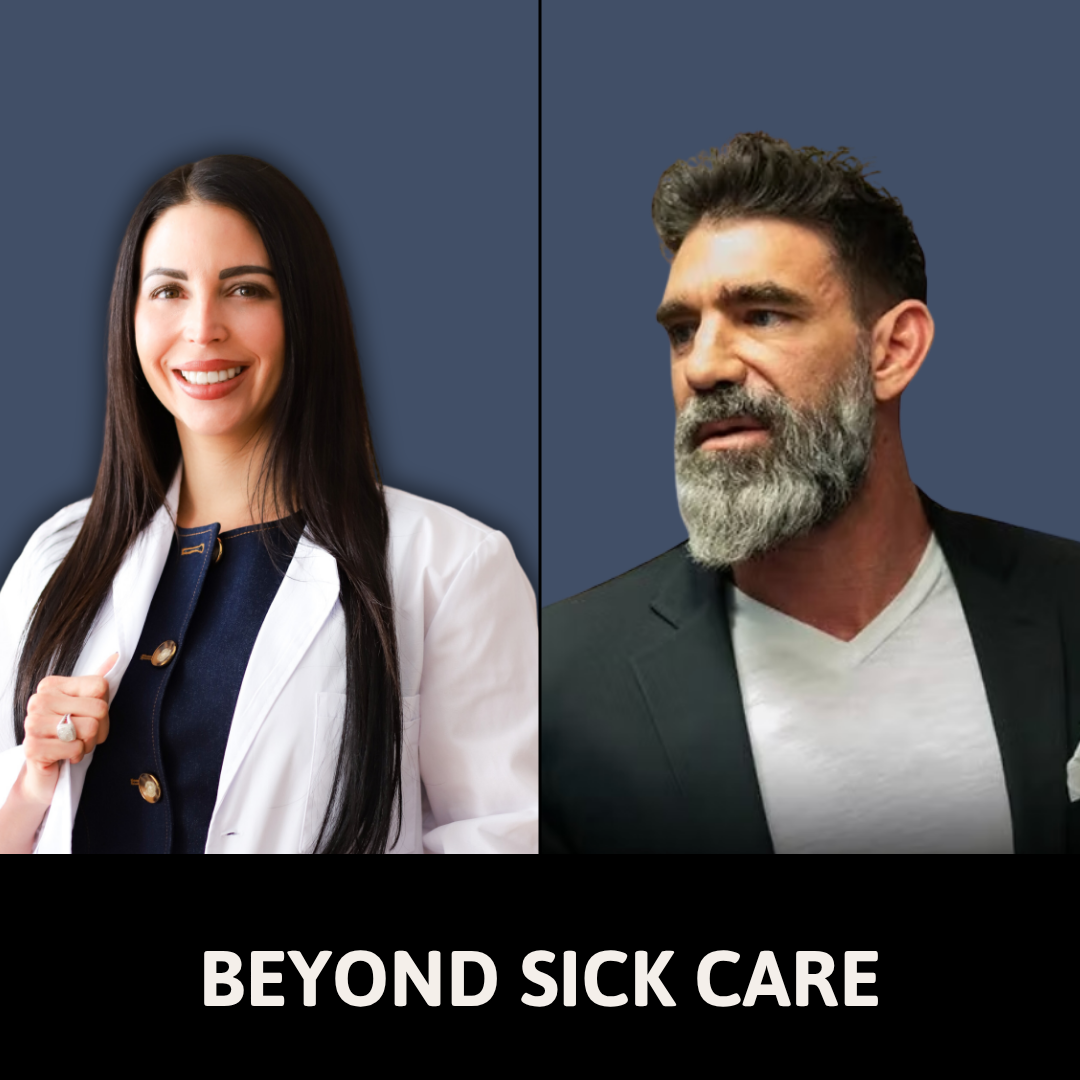
In this episode, I’m joined by board-certified anesthesiologist and hormone optimization specialist Dr. Mike Fortunato to discuss his journey from conventional medicine into functional medicine, and why he believes many patients are looking for something today’s healthcare model wasn’t designed to provide.
Our conversation explores the realities of practicing medicine inside an insurance-driven system, the role hormones play in long-term health, and what Dr. Mike observed after years of caring for increasingly unhealthy surgical patients.
Topics We Cover in This Episode:
- Why “normal” lab results don’t always reflect optimal health
- How Dr. Mike’s own health challenges changed the way he practices medicine
- What anesthesiology taught him about the declining health of today’s patients
- Why hormone optimization is about more than treating symptoms
- How insurance influences the care many patients receive
- The role lifestyle plays alongside hormone health
- Why prevention often receives less attention than disease management
- How patients can become stronger advocates for their own health
If you’ve been searching for a broader perspective on healthcare, hormones, and long-term wellness, I hope you’ll join us for this conversation.
Resources:
Optimize MD: https://optimizemd.health
Order Dr. Cassie’s Book ‘Fix Your Gut, Fix Your Hormones’: https://guthormonefix.com/
Use code LISTEN10 for 10 % off your order on shopmodernendocrine.com
Resources:
Check out the website
Follow Cassie on Instagram
Follow Cassie on Facebook
Follow Cassie on YouTube
Follow Cassie on TikTok
Disclaimer:
The information presented including any materials discussed, referenced, or linked within this podcast are for general educational purposes only, not the practice of medicine.
No doctor-patient relationship is formed from you listening to this podcast or utilizing any of the information provided.
I am a doctor, but I am not talking to you as your doctor. The information provided is not intended to diagnose or treat health problems or take the place of the professional medical care provided by your doctor.
If you are experiencing any health problems, including problems you believe have been touched upon in any respect within this podcast, you should consult your doctor about the problems without delay. You may ask your doctor whether he or she believes the information I have provided would be helpful to you, but you should still consult your doctor immediately and follow his or her medical advice as your treating physician.
I’m just here to provide you with basic knowledge about the issues we discuss so you are more aware of them and can better discuss them with your doctor.
Join me on the next episode as we continue our journey.
Transcript
Welcome back to the show. This week I am joined by doctor Mike Fortunato. He’s a board certified anesthesiologist,
hormone optimization specialist and founder of optimized MD. After spending nearly two decades in conventional
medicine, doctor Mike saw firsthand how our healthcare system often functions more like sick care, managing
symptoms, missing root causes, and too often, leaving patients feeling dismissed even when they knew something
was wrong. In this conversation, we talk about whether healthcare became sick, care by accident, or whether it was
always built this way, why your insurance is not coming to save you, and what it was like for doctor Mike to work
inside traditional medicine as an anesthesiologist while watching patients need more medication, more sedation,
becoming harder to actually sedate and then more difficult to wake up. We also get into what led him into functional
medicine. His personal transition into using hormones in his mid 30s because traditional medicine residency makes
us sick, and how that affected him from an ego perspective, and what changed physically, mentally and emotionally
once he started testosterone. Most importantly, we talk about what people can actually do if they want something
better than sick care. This is a powerful, honest and eye opening conversation that we just kind of stumbled into. So
let’s get into it. Welcome back to the show. Today I have a special guest who is a traditional anesthesiologist, but we
joked before the podcast that he’s kind of recovering from that, like me and he’s kind of transitioned into traditional
medicine. His name is doctor Mike Fortunato and he is based out of Las Vegas. And we are going to chat just about
functional medicine today. And he’s going to explain to you the issues he saw in traditional health care. He’s very
much like me. I’m going to let him tell you how he had a story. And we’re just going to talk about why when your labs
look normal, you don’t feel well, all sorts of stuff. So thanks for joining me today.
Oh, it’s a pleasure. It’s an honor, actually. It’s rare that you meet people in the medical field who escaped the medical
field and doing things that are helping people in a positive way. So you’re doing it?
Yeah. Well, tell everyone you were kind of sharing with me, first of all, what you do every day now and kind of where
you came from and maybe a little bit about your journey so that they understand like who they’re talking to because
you are a board certified physician. I think that that’s important for people to know. There’s lots of people who say all
sorts of stuff out there. So you’ve lived it and dreamed it just or lived it, lived in the dream, you thought at least, but
you’ve lived it. And so kind of tell everyone about you.
Sure.
Yeah, I’m a board certified anesthesiologist. I do that now. I do that one day a week and I do hormone optimization
the rest of the week. My journey not traditional. I don’t think anything I’ve done in my life is quite traditional. I went
back to school in my late 20s to become a physician. I got into a bar fight. I had my face broken and I thought it was
time to get my life in order. So I went back to college. I majored in philosophy, and then I got into med school. I met
my wife in college. We went through med school. You know, just like most people going into medicine, you you have
a vision of what it would be like, what you had hoped it would be like. And then you get in there and then you see
how the system is restricting much of what we want to do and what we should be doing. But you’re just a student, so
you’re going through it. I went through residency in Penn State, and that’s where I really got more disenchanted with
medicine as a whole. Anesthesia is unique in that you’re working with patients that you don’t know for just a few
minutes generally, and then you try to get them safely through the surgery comfortably and then you move on.
And so for me, I had to rotate through other rotations, but I saw how we’re just disconnected in how we treat
patients, how the patients are disconnected with themselves really in many ways. And you just, you kind of get stuck,
but you’re in residency and you’re like, hey, this is what I’m doing now. And so you rationalize, well, I’m helping
people. I’m putting them through surgery. It’s necessary. And so you stick with it. So I stuck with it. I got out of
residency. I just started feeling terrible all the time, just exhausted. And, you know, I went to my colleagues friends
and saying, you know, I just feel terrible all the time. I just have low energy. I’m not sleeping well. I have almost no
desire to have relationships with my wife in any sexual way. Um, in my mid 30s. Now this is this can’t be normal. You
know, they ran labs like they do and they, they said, oh, everything’s normal, you’re fine. This is, this is just life
stressful being a physician calls difficult. You know, it’ll get better, but this is what it is. And I lost about five years
with that statement just kind of chugging along thinking, okay, it’s gonna get better.
And it just didn’t. It got worse in every aspect. And I said, this can’t be normal. And so I started looking at hormone
replacement. I had heard murmurs from people I met, but it was so taboo. I was like, this is like over ten years ago.
Like, people don’t really do these things. No one in medicine knew about it. And so I kind of had to look at chat rooms
and doing my own research, and I found a clinic that would treat me and they were doing everything wrong. At the
time, I didn’t know this, but they rejected me once a week and I was having these horrible estrogenic effects. And
then they’re putting me on these strong estrogen blocking drugs that were causing more issues. And the whole time
my wife, who’s a physician is like, I don’t think this is for you, but I had some of the effects of it and I felt some clarity
while I was using. I was like, man, no, this feels something feels right about this. So I toughed it out. I convinced them
to let me treat myself and I got better. I really got much better. And I did this for years. And I went back to, you know,
I was doing anesthesia chief of anesthesia at a hospital.
And I kept in the space, I watched podcasts, I had buddies who were really into this. And I just saw how bad it was
being done. And I was like, no, no, this is ridiculous. And I kind of went through a spiritual journey of a few other
things in my path. And I just felt called to like, okay, I’m not just going to do things anymore to do them. I’m actually
do something for passion again. And so I got educated on it. I took CME courses through the roof and I decided, I’m
gonna, I’m gonna do this. And I open up my own practice about a year and a half ago. And I’ve been doing
telemedicine. Initially, it started out with just being men, but I have friends who do podcasts with females and where I
talk about it. And now more than half of my patients are females, because they tend to be definitely more motivated
because they’ve dealt with this far longer than men have. Right. But just the way hormones are managed and treated
in this country. And yeah, so now I’m just on a path of trying to help as many people as I can in a positive way, and I
enjoy it. So that’s most important.
So what I hear you say, doctor Mike, is you went through the traditional med school route like I did. They don’t teach
you to be very nice to yourself. In fact, they teach you to ignore yourself and they teach you that yes, this is just a
part of life. This is just a part of aging. Keep going. I mean, same thing happened to me. And then you get out and
you’re like trying to survive in the middle of the ocean. Your head’s not quite underwater anymore, but you’re like,
man, this kind of sucks because I don’t feel great. It’s frustrating because you’re like, man, I learn all these things and
I know how the body is supposed to work, and this is not how I feel. And then it’s really frustrating when you go into
practice and every patient that comes into your office feels the same way, you just start putting things together, just
like me. You’re like, this can’t be right. You know, I’m a board trained endocrinologist and they didn’t teach me
anything about hormones. But do you mind if I ask you, when was it that you first started to go to this men’s clinic?
Because was this in the late 2010, like.
Let’s say? Yeah, it was probably around I first started searching while I was actually in residency. So this is like 2011
ish. And then when I got out, probably 2014, I finally found someone after colleagues and everyone were saying, no,
no, no, no no no no no. 20 1415.
That’s crazy. I was in residency in 2011 to 2014. Two rough years, right?
We’re like twins.
Rough years. So yeah. And to your point, a lot of these clinics do you know, I think I think it was just hormones were
so taboo at first that people were just trying to do something and they didn’t really understand what they were doing.
I don’t think they I don’t think doctors ever do anything to be malicious or harmful. They’re just.
I.
Believe to your yeah, to your point, they were giving you testosterone, but then they were giving you estrogen
blockers. And that makes no sense. And so yes, you see the light and then you don’t see the light, and then you see
the light. And so I think it just took some time of like us being comfortable talking about hormones now especially,
and you’re a man. And so for men, we’ve always talked about testosterone, at least in the form of an injection. But
for women, I started talking about testosterone and women in 2020 and people thought I was crazy. And you know,
2015. Like that’s nuts. Right? But it’s really not. And it’s just something that thankfully people are starting to
understand, like, this isn’t crazy. We need to talk about it now. You have a practice full of women, and I’ve heard that
we’re a little more difficult to deal with than men. I wouldn’t know why, because we have three hormones and you
only have one.
I think you know. Well, that’s what I thought initially. I was like, I’m gonna do men. They’re gonna be no problem. But
so yes, I think physiologically, biologically, women are trickier, but patient wise, they’re much more mature and
they’re absolutely more tolerant to swings of things. And they’re more assertive in the sense that they make
decisions. They’re like, yes, I’m done. I’m over feeling sick. Let’s do it where the guys I’m constantly having to like do
coaching, like, come on, it’s going to be okay. Where and I don’t like to do that because I feel people should be called
to do change for themselves, otherwise they’re never really going to stick to it. But I feel like the women are just like,
let’s go, let’s do it. And it’s more enjoyable actually, in that aspect, but they are trickier.
Well, I’m glad to hear that. Yeah. It’s true. Like women are just if you think about it, like I was, I was talking to
somebody about this the other day. Most of our moms and our grandmas didn’t talk to us about hormone issues
because that was just kind of taboo. So like, whenever I start having hormone issues, I have to go to my mom and
like, ask her, hey, did this happen? And then they’re like, I don’t know. We didn’t really talk about it. You know, it’s
just like a weird thing. And so for us now, I think a lot of us are embracing the fact that everyone’s talking about it
and God, love my husband and God love you. Like, sometimes there are just weeks where I’m just a basket case and
he’ll just look at me and be like, what is wrong with you? And I’m like, I don’t know. I think it’s my hormones, you
know? And then the next day, I feel great. And I’m like, okay, I’m sorry. But yeah. To your point, I think we’re just like
used to these like wild swings and not that that’s normal, but that’s what’s happened. And then we just kind of get
used to that and we feel like that’s okay. And it’s really not.
I think that emotional chaos to some degree is probably a little normal. And it’s okay. I think it’s awesome. The dance
of it. But when it’s becoming, you know, a problem for you. Yeah. No, like the swings for home, like, especially when
you get to menopause and you’re seeing it much younger, right? Like the endocrine disruption is just massive in this
country, I think probably globally affecting so many things, right? Gut health, but directly affecting hormones. Right.
We know this from the Endocrine Society saying this has been going on for 15 years plus. So we’re seeing things
much earlier than we used to and more severe, right. So it becomes trickier, but good treatments out there, they’re
just not being talked inside the modern medicine system because most of the medications that we use are
bioidentical, right? They’re not synthetic made medications. And when we were in training, there was no such thing.
Compounding pharmacies were weird. Like, what were they? They’re fringe pharmacies. Maybe you sent something
to have a cream made for some patient, but otherwise it wasn’t advocated for. And we didn’t learn about hormones.
We were told, hey, they’re tricky. Leave it to endocrine. They cause cancer. I mean, this is literally the basis of most
of hormonal stuff, right? We didn’t learn about this.
But the endocrinologists who did the fellowship will tell you we didn’t learn about it either. Yeah.
This is that’s the whole funny thing.
You’re supposed to learn hormones. And then I went to a really, well accredited fellowship and it was like, hey, what
are we going to talk about hormones? And it’s like, oh, well, you use the lowest dose for the lowest amount of time.
And then you get people off them because they cause cancer. And then if guys want to take shots, it’s like, oh,
maybe give them to them once a week. And until they feel better, it was like there was no learning. And I was like,
this doesn’t make physiological sense. So to your point, yes, it’s like, send them to the endocrinologist. But the
endocrinologist didn’t learn anything either. And I have a question for you. Yes. Do you think that part of this reason
that it’s so taboo and maybe I’m just out there, but is part of the reason it’s so taboo and we don’t learn in medical
school because the pharmaceutical companies don’t have a way to prescribe and make a ton of money off of these
medications. Like, you know.
I’m sure your audience is informed, but yeah, progesterone, estradiol, these things cannot be patented, right? So if
you can’t patent a drug, you can’t make profit off of it and isolate it. You have to modify it, make it synthetic. Right.
Premarin Provera. Progestin. Right. And Synthroid. Perfect example of these things. And when they do this, then they
can patent it and it becomes whatever they want to charge. And that becomes the drug of choice. The problem is it’s
not bioidentical. And it and it doesn’t mimic exactly like our natural bioidentical hormones do. And oftentimes it leads
to things like cancer and other maybe just flat out ineffectiveness, like Synthroid. But we weren’t taught this. We
were taught these are the drugs we use because they’re on the formulary. And if you prescribed outside that, even if
you knew to prescribe outside of the formulary, patients couldn’t get it covered and they would be upset, right?
They’re paying good money for insurance. And they’re Well, why are you giving me this drug? Give me the one that’s
covered. And so the system is built around, I think, for sure to some effect, to keep us away from these things. It’s
pretty clear they don’t talk about it. They know that it’s an issue and it’s just ignored.
So two points I want to make. Number one, you said something about the hormones cause cancer. I like to tell people
I don’t think hormones cause cancer. It’s the way we metabolize hormones and the hormone choice we use. Right?
So if we’re using and I think this is what you mean, but if we’re using synthetic hormones that we’re giving to
somebody in a toxic environment, so their body has insulin resistance and they’re not sleeping and they’re stressed
and they have gut dysbiosis, the way your body metabolizes your hormones and then excretes them, it can be done
inappropriately, and that can increase your risk of cancer. And so yes, to synthetic hormones, I think that happens
with bioidentical ones. It less likely happens. And then if we clean out somebody’s environment, like you talk about
and I talk about if we actually teach you that movement and sunlight and relationships and stress and what we think
are important, then that helps clean these things out. Digestion. You know, I tell people all the time, digestion and
liver support are key to where you start health. Because if you can’t digest your nutrients and poop all your toxins out
every day and your liver can’t help with that, it doesn’t matter what else we give you. Like it’s just a big mess in
there, right?
We are biologically a mess, sadly, in this country, probably worldwide. But I speak, you know, I only know relative to
here. But yeah, I mean, we’re overrun by toxins. Yeah.
It’s bad. And then the second thing too is, I think to your point, pharmaceutical companies don’t want people to take
hormones. So they try to make it difficult because if you take hormones, you don’t need all the other crap that they
want to give you a lot of times, right? So we get, I like to say, I like to say we lose our hormones and then we get old.
We don’t get old and then lose our hormones. And so if you lose your hormones, you get old and you start having
disease processes and you start having issues, and then you need the pharmaceutical companies. If you don’t lose
your hormones, a lot of times you don’t need them. And so they don’t like that. And unfortunately, I also say this all
the time, you know, if you’re waiting for your insurance to save you or the system to save you, then just look at
what’s happened to the United States population. And I wrote about it in my book, all the statistics of how it’s just
worse and worse and worse and worse every year. And so although it sucks and I hate it too, and I pay $1,500 a
month for insurance I never use because I don’t pay for anything. I literally got my labs done today right before this,
and I paid cash for them because they don’t.
Because most of the things you need, right? The rest of the things we test, you’re not getting covered. My wife did
this to me. I ordered labs for my wife and I said, please just go pay cash because she’s a doc. She said, we have
insurance. I said, no, no, no, just go and end up costing us double on the insurance, that it would have cost me cash
and I had to pay out of pocket because of the deductibles 5000. So it was like.
But but the insurance company. Yeah. Like nobody is saving you, you guys. And it’s not fair. And I know people get
mad and I get mad too. But, like, if you’re waiting for the insurance company or the system to save you, you’re going
to be a health statistic just like the rest of this country. One out of three women die of heart disease. One out of two
women over the age of 75 have dementia. All these men are dying of colon cancer and prostate cancer. And it’s just
like all of our cancers, breast cancer, 1 in 4 women get breast cancer. We are getting sicker and sicker and more
infertile. We’re the most infertile we’ve ever been, the most insulin resistant. It’s just crazy. And you’re paying good
money to a insurance company that’s supposed to protect you. And I promise you, they’re not, because they’re
making billions and billions of dollars out on their yacht, and that’s all.
They care about, actually. Trillions. Trillions.
No. So it’s like, it sucks, but it’s true. Like insurance is not coming to save you and you just have to make those
decisions. And it’s not fair. I don’t know how we fix it. None of us do. But everyone that’s been in the trenches of it,
you and I. I mean, we know we can tell people like they dictate how you do everything. They handcuff you, they try.
They try to handcuff and dictate your care. I get letters every day. I don’t even take insurance. Doctor. Mike. I haven’t
taken it.
No, neither do I.
I can’t I can’t practice.
The way we have to. You can’t.
But I get letters from insurance companies every day. I got three of them today. This patient is on this medication.
We don’t like it. Stop it immediately. I’m like.
Yeah.
Who’s sending me the prescribing physician? A document that says that they can’t take this medicine when you know
nothing about the patient. Like it just pisses me off. I’m like.
When did you.
Go to school? And for how long? Like trash.
They they’ve taken over the system for sure. I look at it like this. It is infuriating. And you’re right, it’ll drive you nuts
to think about how absurd it is because people are paying more, they’re getting less, we’re being reimbursed less.
Somebody is making all this extra money, right? And then they deny the patients. When you do actually need it for
real care. The model of medicine we went into was a sick care model. This is what it was. We call it health care, but
it’s really sick care. It was designed to. If you were sick, come see us. We’ll try to get you back to your baseline at
best. Right? No one was ever. Let’s go. Let’s go see the doc and see if they can make us healthier. This is unheard of.
Now people are starting to realize, wow, I want to be healthier because we’re getting sicker and sicker and we need
solutions. And when I go to my primary doctor telling me to go exercise and eat better is not a solution. I need real
solutions to what I need to better my health. And so this is where spaces, I think, where optimization and hormone
optimization and starting to make headway.
There’s a lot of terrible people doing this, not doing it right. But there are those that are doing it right. And they’re
making a huge difference in what you see in research done and how people improve. It is the best thing we have to
helping people maintain a normal body weight, muscle composition, maintain they’re not so much their fertility. We
know this is going by the wayside from all of the endocrine stuff. But dementia prevention, Alzheimer’s prevention,
heart attack, strokes, osteoporosis, all these things are helped by giving you your natural hormones back. And people
feel great. They’re energized when you give them bioidentical thyroid. They’re metabolizing better. It’s not the
solution. I tell people, we’re in a poisoning environment. And what do you do when you’re being poisoned? You try to
remove the poison first, which sadly, we haven’t raised our consciousness enough as a whole to demand better. So
we have to use the antidote. And the antidotes for now, I believe are largely replacing hormones with bioidentical
stuff to help our body keep up.
I would not, I could not agree.
Yeah. I could not agree more. Like it is. It’s just really sad to. And as a woman in her 40s now, I will tell you like it’s
frustrating because. And I know people listening to this feel this. But you remember what it was like in your 20s and
you remember what it was like to feel great and you could even probably do things you shouldn’t do. Stay up too
late, do dumb stuff, eat stupid stuff, and you still felt okay the next day, right? You just went on and you. But it’s
really frustrating in your 40s when you start struggling with sleep, and you’ve always been a good sleeper and you’re
doing everything right and you’re laying down when you’re supposed to, you’re just not getting that good rest. You
can feel it the next day. And then it’s really frustrating when you actually go and lift weights because we’re supposed
to and we want to maintain our muscle and we want to our bones to be strong. And then you hurt for three days and
you’re like, shit, I used to not feel like this after I lifted weights. And so all these things are frustrating and it doesn’t
have to be like that. Like there are things that can help you not to say that you’re never going to hurt after you work
out. You should hurt a little. But like if you’re lifting weights, it shouldn’t be so miserable the next day, or you
shouldn’t be getting micro-tears in your ligaments women, because your estrogen is so low and it shouldn’t hurt to
have sex with your husband. And like, none of this is okay.
No, this is like, it’s just right.
What traditional medicine tells us is like, it’s just a part of aging, like your labs are normal for your age and it really
makes me mad the older I get. I mean, I’ve taken care of thousands, tens of thousands of people now, but it just
makes me mad to hear that because I know people can be so much better.
Yeah, it’s demoralizing for these people, right? The reason why I continue so much is because they see their neighbor
and their buddy. We’ve all been the frog in the pot slowly boiling, and we don’t really notice how things are affecting
us negatively because we’re all experiencing it. So we say it must be normal because they’re experiencing it. And
when I get to 50, I look at the 50 year olds and they’re experiencing this. So that’s what I have to look forward to.
What’s nice about replacing your hormones and doing these things? You’re not subject to many of these things. And
then you become kind of like a freak in your circle and people go, what’s going on with this person? They look happy,
they look energetic. They said they went to the gym this week. What’s going on? Who has the energy to do these
things? And it piques people’s interest. And I think that’s how we make the change. We have no hope in convincing
our government or our or higher institutions to do this. They have their own motives, and clearly it’s not in the best
interest of ours. So we have to create the change around us and have it spread outward. I think, you know, you’re
seeing all those patients. It spreads out to their family, to their friends, and then their family and their friends. And
that’s how we make the change.
Yeah. And when you feel better, you do better. And when you feel better and do better, the people around you see it
and they want to change with you. And it, it is frustrating to think about, to your point, like we have a sick care
system in this country and we train doctors to make it a sick care system. The pharmaceutical companies train
doctors and doctor’s offices like, yes, just prescribe these drugs. The insurance companies try to push it onto people.
And yes, we just get sicker and sicker and it costs us more and more money. And it’s just infuriating. I don’t know
how you fix it other than just trying to educate people and just pushing back and saying no. And I think it’s very
interesting. You said that, you know, my husband’s turning 50 in a couple of months and everyone thinks he’s a
freak. Like everywhere we go, they’re just like, he’s a freak. He has abs. He dressed eight, six pack, eight pack. You
know? I mean, he’s in shape. I mean, he just takes care of himself and people give him so much crap his friends give
him crap about. What are you eating? Do you not eat all these things? And it’s just like, well, no. He takes his
testosterone and he takes a few peptides. He sleeps consistently. We don’t eat garbage. We walk 10,000 steps a day.
We don’t drink alcohol. We see the sun like that’s about it. We’re just pretty normal people, you know? But you’re
kind of a freak, right? If that’s.
The case, you.
Become superhuman in many ways, right?
People, I guess.
But it gives you motivation and drive, which I think people are up against it. Part of me is like, oh, humanity, I cannot
stand it. And then other times individually on a one on one basis, like, I love people, but you think about all the stuff
they’re up against. And then you’re like, I remember back when I felt completely lost, completely detached to who I
was and no connection to my wife and no drive to do anything. And so I try to remind myself of that because it is it’s
a tough go, and you don’t really know how bad you’re off until you get it back. Right? And so I see a lot of people who
are just, you just got to make that one step to be like, you just have to understand you’re not a broken vessel. You’re
being attacked at all angles. And there are solutions. And when you make those decisions, I’m going to find
something better. It’s the first step.
Yeah. I mean, our body gets used to whatever we put it through. It’s true. You know, our brain gets used to whatever
situation we’re in. And when we feel bad, it just kind of copes with that. We have a pretty resilient, amazing body, but
it will just come. It will just kind of do what you ask it to do. So I’m curious to know when you were in the thick of the
anesthesia world, because this is kind of what moved me out of the traditional medicine world. But when you were in
the thick of the anesthesia world, the longer you were in it and the more people you put to sleep. Like, did you see
that the people that came in, they just got sicker and sicker or required more anesthesia medicine, or it was harder
to wake him up, or they had more complications. Like what is. I can’t imagine being an anesthesiologist in the
general world today. Like that would be. I mean, you’re killing people I know, not on purpose, but I mean, people are.
Sick and they’re going to become.
It’s just it would be like terrifying.
The one great thing about anesthesia, we become excellent at preoperative assessment to prevent to to really
pinpoint what are the main things we need to screen before ever getting them into the Or. Now, obviously
emergencies and things like this, you just have to deal with what you have to deal with. But we’ve been really good
about prescreening. And so it prevented a vast majority of things that in the past were deadly. But to your question,
yes, of course, when I was in residency, we were using half the medications to sedate, to keep people comfortable, to
keep people asleep that we are now. People were mildly obese then. They’re massively obese now. I live in Las
Vegas. I don’t know how prevalent it is everywhere, but we have marijuana shops on every corner, and marijuana
changed the scope of anesthesia drastically. People’s tolerance to everything are through the roof. And so it
negatively impacts what we do. It makes it extremely more difficult. And keeping people comfortable harder and
keeping them asleep is more difficult. And then they wake up. They take longer to wake up because now you’ve over
sedated. So these things are for sure. But yeah, people are infinitely sicker than when I started my training. There’s
no doubt about it in anesthesia.
I’m assuming most of what you’re using is processed through your liver, right? That’s how you’re going to detox.
Or a lot of.
It. And then you have the gas who is just brain to lungs exhaling.
Okay.
But all of the injectable stuff. Yeah.
Yeah. And I mean, when people’s livers are bad because they have insulin resistance or they’re drinking too much or
they’re in a toxic environment, I can just only imagine, like I feel stressed just thinking about it for you because to
your point. Well, and also sometimes people just don’t even think like people do this to me all the time, and I’m sure
they do it to you. But like, I’ll be 30 minutes into a consult with somebody and I’ll bring up something and I’ll be like,
okay, well, we could maybe think about this or we could think about this. And then they’re like, oh yeah, I forgot to
tell you. And I took, I take these three medications too. And you’re just like, what?
Like, you know, like anything.
You inject or put in your body I need to know about. Right?
Yeah.
Now with peptides and which are great people, but yeah, people historically have been awful with histories.
Anesthesia is very good. I say we become like interrogators because we only see you a few minutes before surgery,
oftentimes, possibly. Right. And we gotta know exactly what to ask, how to ask it to get what we need. That may
have not been documented. And so yeah, you get better at doing that, but you get burned all the time.
I’m curious, when you were doing traditional medicine, was insurance companies, like, did they try to dictate what
you did as far as putting people to sleep? Or how like, did they do any of that or no?
Luckily, it’s just a matter of do they get authorized to do the procedure or not? Once they get authorized, they think
we do voodoo magic back here. So I don’t think they.
Really leave you alone.
There’s no restrictions. We can use almost any medication we need at the moment. And so it’s just a matter of does
the patient get meet the criteria to get a surgery. And if that happens, then we don’t really get limited for the most
part.
Well, that’s a plus because if they were trying to tell the anesthesiologist what to use, that would be a big issue
because I’ve talked to surgeons and sometimes surgeons will tell me, they’ll tell them, oh, you can do this procedure,
but you can’t do that procedure. And then they may get in there and they need to do that procedure that they said
no to. And it’s like, what am I supposed to do? Stop the procedure and call my insurance company on the, you know,
it’s just like ridiculous. So I’m glad you don’t have that issue.
No, we haven’t luckily, but we deal with many other issues.
I’m sure the system.
Is broken and people go, well, how do you fix the system? And I say, you can’t. It’s built. The system, I believe, is
functioning exactly how it was designed. It was designed for sick care. And it’s morphed into this massive money
making machine where patients are just required for the process, but they’re not the object of the goal of the
process. The doctors are trying to do the best they can, but the system is built in such a way that that’s just like a a
side effect of the system. The real goal is money.
And when I figured that out in 2020, and it just made me madder and madder and madder, that’s when I finally was
like, I am done. I will not participate in the system, I just won’t. Like, I know it sucks for people, but literally, they try
to force doctors to prescribe you medications that sometimes could make things worse. They don’t care about your
long term survival or outcomes. They literally want your premiums. They’re going to cash them. They’re going to fight
with your doctor, and they’re going to fight with whatever you actually need to get better, and they’re going to hold
them and they make it so difficult. You usually give up and then they’re happy. And it’s just it is infuriating and it
affects patients care. And I mean, it’s really sad, but I don’t know what you do to your point to make it better other
than you just, you know.
Saw someone saw the epitome of this during Covid, right? We saw the epitome of a system not looking out for the
best interest of patients, not giving patients informed decisions, but just saying, you do this or no. And we saw that
they they ignored good research or just lied and said things were safe that they couldn’t possibly conclude. And it
was a major eye opener. I was on board. I was the chief of anesthesia during that time. And I saw, you know, fear.
Fear drives a lot of horrible decisions. The worst thing you can do is make a major decision during fear. And they
know I think the system knows this. And so during Covid, we saw the worst of humanity. Even in the hospitals where I
was on boards as the chief of anesthesia, and their plans were everybody that comes to the door is forced to. We’re
forcing vaccinations, we’re forcing it to all the. And I was like, wait a minute, when did we. When is physicians. Did we
start forcing anything on people without informed consent? I know you’re scared, but you can’t do that. You have to
give people this information and allow them to decide. And that’s where I really said this is no longer fixable. And I
shortly after is where I really migrated out of medicine because I just said, this is too far gone.
You know, I completely.
I agree.
When people are squeezed, right, they always say, you see the essence of an orange when you squeeze it, you get
orange juice. And when they squeeze you, what comes out of you is your essence, whether it’s anger, whether it’s
this. And during that sphere process, you saw people resorted to things that were not in the best interest of medicine
humanity for their what they perceive to be their own safety, which really wasn’t real anyway. And I said, this system
is so broken they rewarded to continue the narrative. And if you spoke out, I mean, I was on social media not to
make. It’s not a political thing. As a physician, I felt compelled. I said, I’m not political, but we should ask questions
because I thought we went into medicine as physicians to say we have to. Question. We have to always question and
we better get good answers or we keep questioning. In everything we do. And that’s how we know that we’re
advancing and we’re becoming better at what we do. And that all went out the window and I said, ah, I can’t, I really
can’t in good conscience continue this system.
Yeah, I agree, same thing. I work I was getting letters in 2021, well, 2020, 2021, 2022 from pretty much every
insurance company out there that would say, you’re going to do this or you’re going to make your patient do this, or
you’re going to do that, or we’re not paying you for visits. And it’s like when you’re in private practice and you have
to pay your staff and your bills, it’s very frustrating. And when I left the insurance space, I there is still an insurance
company that owes me a lot of money that I will never see because I got sick of fighting with them about it. And it’s
like, why would I have to fight with you about the care that I provided to a patient? By the way, if you look at my
patient notes and you look at my patient outcomes, they are far better than any shitty person you send them to.
By far.
I can.
Prove.
That to you. My patients did phenomenal. And so the fact that I have to come back and ask your permission for
anything I did is frustrating. But then they would say, well, if you don’t do this, then we won’t pay for the visit. And
that’s when I was like, I am so out. And I know it made a lot of patients really upset and I lost a lot of patients, but I’m
like, I will never be the person that is forced to do something to you that I don’t feel as your doctor is in your best
interest. You can go somewhere else and allow them to do that. Not here.
Like, and this is.
Where patients participation is huge, right? You have to have ownership in yourself. You have to advocate, like you
said for yourself, because listen, nobody cares as much as you or your family about you. So you may come across an
excellent physician who may, but you should always be advocating for yourself and you have to participate. And
along the way, we lost that too, right? People, you know, they don’t question. They just they come in, they want a
prescription, they want this. And the system is so distorted in so many ways. I’m like, I look at it from the outside and
I go, I can’t even be in it. I don’t understand it. It’s not benefiting. And the people in it, I don’t think they even realize
that they’re in this machine of just nonsense that is not helping them. And like, to your point earlier, you sacrifice so
much to go into medicine. I mean, we’ve sacrificed weekends and holidays and just our health as a whole, you know,
you just go, hey, I’m in this. I have to do this. You bury your emotions, right? You see so much sadness and death and
you have to continue because you have to be effective at what you do. Right? I can’t feel the emotion of this family
member crying over their family. I won’t be able to do what I do correctly. Right. And so we bury all that shit and then
we come out and that stuff doesn’t go away. That stuff’s there. And we’re continually walking through this job,
burying it, burying it. And I did that for so long, right? Because as anesthesia, you’re dealing with death. You’re
seeing it all the time. And man, you can’t run from it. Eventually you got to deal with it and it’s definitely traumatic.
But my hormones, having them balance allowed me to do that. And I talk about that with my patients. Like, life’s
tricky, man. It’s very difficult and I’m very spiritual and I think I worked on my spirit. I used to meditate all through
residency, hoping that it would help me while my hormones were a disaster and I just couldn’t, I just couldn’t. And
then I stopped the meditation because it’s not working. And I finally got my hormones and I realized, no, I need to get
back to the spiritual stuff now. Because even though I had my hormones, I was still angry at the world Covid, I was so
frustrated. How could this world be like this? How could people be treated like this? How could they not see this? How
could they not want better for themselves? And then it ate me up until I dove into my spiritual stuff. And so, you
know, I don’t know. I’ve learned you can’t bury any of that stuff. It’s always going to come out. But we learn to do
that. That’s what we’re trained to do. Right? And I think the medical system, it makes us subhuman because it tells us
we have to be like that to treat people. But I think it’s wrong. I think it’s wrong. I think you should feel these things.
You have to deal with them. And I think that allows you to then look at patients and be okay with them not getting
better. Right? It numbs you a lot of ways. And so there’s so much shit when you look at that system, I’m like, oh, God,
can’t be in that. It’s not, it’s not, it’s not right.
Yeah.
I mean, that’s part of the reason I went into private practice too, because I think I cared more about my patients than
they cared about themselves. And it ate me alive. Like, if I couldn’t figure out what was wrong with them, how to
make them better, how to get them. And then I realized, you’re not going to Cassie because they’re stuck in this
system where everything is dictated by an insurance company that has zero medical background, and you’re fighting
with people on the phone that have zero medical background. And I was working with a therapist at the time and
she’s like, why are you so upset? Why are you so dis aligned? And I’m like, because I take care of 20 people a day
and zero of them are going to get better, you know? And so finally, I just was like, I, you know, and now it is so
different because the people who come to me have a choice. They’re coming. They’re paying money to see me. They
want to get better. And oh my gosh, it’s just so different when I can like walk with them and make them better and
explain to them to your point, you know, hey, hormones are going to make you feel better.
They’re going to make you less stressed. They’re going to, you know, my hormones were a wreck too. And once you
fix that and you get back in alignment spiritually and what you’re supposed to be doing, it’s very different. But it is
sad. And I know we kind of went down this rabbit hole. I didn’t really mean to, but it’s sad, like the system that we’ve
created for sick care because it is sick care in this country. And I think this is actually really good, although we didn’t
really plan to talk about this because I think patients need to realize too, from the provider perspective, I don’t think
patients really understand, you know, they call their insurance because they get these big bills and their insurance
lies to them and says, oh, your doctor didn’t code this right. If your doctor codes it right, we’ll pay for it. What that
means is there is a code for what you have. But if you don’t have it, we can’t lie. And so insurance companies make it
seem like, oh, it’s the doctor’s issue. It’s not. It’s that the insurance doesn’t want to pay. You know, it’s just so
patients are clueless as to what really?
Yeah. Yeah. They’re completely clueless.
So but it is frustrating because people are not going to get better unless they really take it upon themselves. To your
point, to be their best advocate, to know the system isn’t going to save them, and then to find a provider who truly
understands hormones and understands how all of this works. So what do you think is like the best thing that came
out of you doing hormones as a man? Like, well, first of all, I’m going to ask you this because I want to ask my
husband this on camera and he won’t talk to me about it. But when you first were going through this, this is a great
this is great. So I’ll just interrogate you. When you first realized like, maybe something’s wrong, like, I don’t feel well
and you went to go get your hormones checked. Did you feel like, ashamed about that? Or you kind of like, hmm, this
isn’t like, you know, where you like kind of had an ego about it. Like I shouldn’t have low hormones. How did what
went through your head?
There was a part of that initially for sure, but it got so bad, it got so bad that I was just like, I’m forcing myself,
literally forcing myself to have sexual relationship with my wife once a month just so that I have some connection to
her so she doesn’t feel like I don’t love her. Right. I had to force this. I had no, no ability to do it myself. How old are
you? 34. Right. This is absurd. This is insane. Right. And I was like, I love my wife. This is not right. And so eventually
it just got to a point where I said, I don’t care, right? Like, this is so bad. And so I did pursue it for that. That was a
main reason for it other than feeling like shit all the time. And I knew it was like, how can a 34 year old be this bad?
Like, I must have cancer or something that’s not being picked up. I cannot possibly feel this bad. And so the worst
thing you can hear sometimes is your labs are normal because then you’re like, what’s wrong with me? I’m a doctor,
okay? I’m a doctor. My wife’s a doctor. How can I be walking around every day like this, and we can’t figure this shit
out.
And my friends who are doctors, I talk to them and they can’t figure it out. What’s going on? This is absurd, right?
Once I got better, or at least once, I started to get better. And that’s why I find hormones. I mean, I think everything
is spiritual, but I felt like once I started to get my hormones managed and I was no longer so, so foggy, then I had to
deal with the deeper shit that I posted away forever. And it all came out the anger. And it wasn’t the anger from the
hormones. Because honestly, when I really did deal with all of that, my wife will tell me I’m a different human being.
I’m more present. I’m more calm, not a pushover by any stretch, but I’m more empathetic to people and at the same
time, they’ll have boundaries. I won’t put up with nonsense, and I call it out when I see it, but it’s just I’m more
present for my wife. I’m more present with my kids. I’m more patient. Right. Things that people think, wow, you’re
gonna get on testosterone. You’re gonna be this angry, aggressive human being. No, it was the opposite. When all of
that was balanced, I became more centered and much better human being in every way, honestly.
Yeah, I know, I agree. So you’re in your mid 30s. Main reason you went was because you have zero libido. You got
over it pretty quickly because you started feeling better. And then it allowed you to process and fix other things in
your life. Yeah. And I think that’s important for people to realize because I think some people listening to this, men in
particular, I don’t know why it’s sort of like an ego thing for them and it really shouldn’t be. You know, I have guys
who come in because their wives. This this is the M.O. in my clinic. I take care of a ton of women because we don’t
care. We just don’t want to feel bad. And we don’t want to look like we have a tire around us, and we don’t want bags
under our eyes like we are the most vain people. We don’t care. So we take care of women, we make them feel
better, and then their husbands like, what in the heck? You know, like, what is going on with you? And so then the
wife sends the husband in and it always goes like this. I’m like, so why are you here, Mr. Jones? I don’t know, my wife
made me come. I’m like, okay, well, you know, that’s always it’s especially guys in their 30s and 40s. It’s like they
don’t want to tell you, well, I’m here because my wife says, whatever they’re having, Eddie or they’re. But it’s just
interesting because women. I’m like, why are you here, Mrs. Jones? And it’s I’m tired. I’m, you know, we’re just, we’re
at it like we’re telling you every reason we’re here and why we don’t feel well. And guys are just very like not all of
them, but most of them are just very reserved, you know? And I’m like, why?
I’m like the reverse, right? Because so now I think you see it from the female perspective. I think yes, men come into
a women and they’re more embarrassed. I see the men come in to me oftentimes, yes. At the beginning, it was my
wife’s patients in her cosmetic clinic. Their wives were sending their husbands to me, and then I would work on their
husbands and they’d be more open because I think I’m a guy. But when I’d see the women, though, they didn’t care.
They share everything. They’re like, I’m so sick of being like this. I don’t care what you look like. You look like a
caveman. You got a beard. Whatever. Let’s talk about making me better. So it’s opposite for me. But I think the guys
are. Yes, they’re more ashamed. They’re more embarrassed. Right. Guys have much bigger egos than women. They
have no idea how to deal with vulnerability and any of that type of stuff because we were taught, hey, men don’t cry,
men don’t deal with this. You push that shit away, go through life. That’s how I was raised. That’s how most of us
older guys were raised. And so now you’re dealing with let’s talk openly. What’s your emotions and how you feel
about things and what this is crazy talk. We don’t do this, but until you do that, you can’t really, really become whole
again, honestly. And there’s a lot of garbage in there. Everyone has garbage. So I tell everybody, everyone has
something and it could be serious or it could be inconsequential. But for them, it’s it could be massive. And so you
have to deal with it. And I think hormones open that door. I really believe that it allows people to have mental clarity,
have motivation, have a sense of themselves again. And then eventually I think the soul starts knocking and says,
okay, Now it’s time to do the real work. And I see so many times.
To your point, communication, I think, is a big part of what is missing in people in their 30s and 40s. I don’t think it’s a
coincidence that, number one, infertility rates are lower than they’ve ever been. It’s because people are waiting until
they’re older to have children, and then it’s because we’re so sick, and then it’s because we have men in their 30s
that have no testosterone and women. And so you have to have the desire to have sex in order to have children. I
mean, but then the other thing is, I don’t think it’s any coincidence that divorce rates are astronomical above 50%.
Now in your 40s and your 50s, like 40s to 50, and it’s like, what is going on? You’ve been married for 20 years and
now you’re getting a divorce. Well, what’s going on is there’s zero communication, there’s zero sex. And then as
humans, we’re supposed to be connected. They’re supposed to be. And so if we’re not communicating because we
feel like we have an ego, I don’t mean this. If guys are listening to this, I don’t mean. But like as a woman married to
a man.
If something’s going on with you, I want you to tell me. Because if you don’t, I think that you’re mad at me. Or I think
that you’re talking to some other girl, or I think that you don’t love me anymore. I’m not pretty. Or you don’t like my
little fat role that I’ve developed in my 50s or 40s, and that’s usually not the case, guys. I mean, that is not the case.
It’s just they don’t communicate that. And then you get this communication issue. And then now we’re not having sex
and we have this communication issue. And then I’m angry and you’re angry. And then it just turns into this big
disaster. And that’s why people are getting divorced in their 40s and 50s because, I mean, it just is. It’s not like
you’ve lived with somebody for 20 years and you all of a sudden hated them. It’s because you didn’t know how to
communicate with them and then have a good relationship with them, with which sexual intercourse is part of a
relationship. It’s a very important part of our.
Relationship for intimacy. It’s required. I hate the concept of like, that’s gone. That’s when we were younger. That’s
gone. And this is so sad. And it’s like the deepest connection you can have with somebody. And to just be like, that’s
gone. Just accept that this is absurd. You’re right. Communication is crucial. I think people get married and life goes
on. Right. And the longer you’re married. I’m married. I’ve been with my wife for 20. Oh, man. She’s gonna kill me 25
years, right? We’ve been married 18 years. And you don’t think we went through changes? You don’t think we went
through struggles and difficulties? You have to have this sense of respect and love from the beginning. And then you
have to learn to communicate and adapt with each other. My marriage should have failed a hundred times. I don’t
know why it did it. My wife was way more patient and tolerant than she should have been. While I went through all of
my growth and my my hormones. And I thank God that she stayed because I was an idiot. But communication is key.
And now I have one of the best relationships of anyone I know. And the reason why is we stay connected. We do date
night once a week. I have a ten year old and a six year old. We have grandparents that watch. We do these things.
We don’t take for granted. I think a lot of people take for granted. They get married and they go, okay, this is it. And
they get lazy and nobody exercises. And he sits on the couch and drinks beer and she gets overweight. And they
don’t do the date nights and they don’t have intimacy. And they say, this is life. And then eventually they go, wow,
this is awful. This is awful. It shouldn’t be like this.
I’m assuming you and your wife both have phenomenal hormones, too.
Yeah, no, we’re optimal, but I optimize my parents and they have a sex life again. And, like, this is a beautiful thing.
Like, we shame this other problem with this nation. We make sex taboo and gross and shameful, really, and guilt
ridden. And it’s it’s absurd. It’s the most important connections you can have with someone. It’s such a powerful
energy to use to motivate you to do many things productively. And they shame it. And I think they do that purposely
because they know it weakens us as people. But I think it’s a beautiful thing If more people did it lovingly, we would
be in a different world for sure.
I completely agree. My parents and my husband’s parents are all optimized with hormones too. We completely agree.
It makes you a better person. It makes you more like you have more vitality. It’s just it’s a good thing. So I think that
if you are listening to this and you’ve thought like, maybe I should consider hormones or, you know, could hormones
be the reason I’m having brain fog or I fight with my husband or whatever the answer is probably. And you need to
find a provider that can help you with it, because it doesn’t have to be like that. And to your point, I think hormones
are very important. I think your gut is important as well. And we didn’t talk about a ton of that, but your gut and your
sleep and your movement, I mean, there’s lots of things, but hormones are one of the, the building blocks that we
have to work on. And nobody’s coming to save you, especially not your insurance company.
So there’s that 1,000%, 1,000% agree. You’re here to save yourself.
Yes. So, yeah. And even though your labs look normal, maybe to somebody, that doesn’t mean they’re optimal at all.
And if you have symptoms and this is the other thing, if you have symptoms of a deficiency. So if you have every
symptom of low testosterone or androgen deficiency, it doesn’t really matter what your lab shows, because what
your lab shows is what the hormone is doing in your blood. It doesn’t mean that the hormone went from your blood
into the actual cell. We can’t measure intracellular hormones. And if you are metabolic dumpster fire, and I use that
as kindly as I can, but most of America is a metabolic dumpster fire. They have high insulin, they have high CRP, they
have high lfts. So their liver enzymes are high, their glucose is high. I mean, they’re just things don’t work in your
body like they’re supposed to, like you were saying their anesthesia doesn’t work. So then even though the
testosterone is there, or the estrogen or the progesterone or the thyroid hormone, it can’t go into the cell. And so I
don’t really care if your blood levels look, quote unquote normal. If they’re not in my optimal range and you have
every hormone of a disease that’s deficient, that tells me we still have a problem. And so.
100%.
Take that.
However, shows that’s all. And that’s what all the research shows, right? The research shows we don’t treat two
numbers. We treat to symptomatology. They have ranges. And almost always those ranges end up outside of what
we consider normal because normal is not healthy. Normal sick.
Right. Correct. Well, this was a fun conversation. I want to ask you, I want to transition to three questions I ask
everyone. And then I’m going to let you kind of tell everyone where to follow you and find you. But what is one food
that is most beneficial and why?
Ooh.
Well, one thing that I’m obsessed about is macadamia nuts. I think people’s cholesterol are way too low. Healthy
cholesterols and healthy fats are so important, and I have a hard time getting those in the way I should. Like I said,
especially as we get older, we need cholesterol. This whole misnomer that we have to crush cholesterol. So
antiquated. But macadamia nuts, I love them, but the opposite fasting. I think fasting is so beneficial to everyone.
That’s like one thing I said, hey, everybody can do this. If you can’t, you can’t afford hormones, you can’t afford this.
You can’t afford not to eat. Intermittent fasting, I think is so beneficial for us. And it’s so underutilized. Yeah.
For how long?
Ease into it. I do it for 18 hours, 16 to 18 hours. I think for women, 14 to 16 hours is good, but ease into it. Try 12
hours, go slow. But when you start to do it, I think it does such wonders for the body helping your body reset and
clear out toxins and things that you know, if you’re eating all day, your body’s dealing with that and not dealing with
cleaning up the system for sure.
Fun fact since you’re an anesthesiologist, I’ve had to have surgery three times, and the first time it was a disaster
because I got way too much anesthesia because I think I’m healthy. And they just. Anyways, they tried to kill me. Not
really, but it’s took forever to wake up and I was so well.
Know you’re a healthcare provider. Healthcare providers always have horrible experiences.
Well, anyways. But so then the second time I was like, okay, I fasted 24 hours before I had surgery. Mhm. Totally
different experience. I mean, I told them to, but still, like I wasn’t nauseous. Very different. And so then I had, I have
surgery a third time and I fasted 36 hours before the surgery. And then when I woke up, I fasted for 24. I mean, I was
up in two days, like they told me, oh, you won’t get out of bed for two days. I felt amazing, like I went to see the
doctor and he was like, what? What are you doing? And I was like, I feel great. Like, I feel fine. I don’t even have any
pain. I’m taking a medicine like.
Right.
Now. So it’s pretty interesting that you said that, I don’t know.
Well, we know how beneficial it is. The body’s an amazing, amazing thing. We can’t even understand it. We take for
granted, we cut our finger. And then it just feels like this in and of itself is just fascinating to me. And people just like
overlook this so the body knows what to do. Most of the time, if we get out of the way, right. And then we give it the
things that need, sadly, we’re deficient in so many things, but oftentimes less is more. Just get out of the way.
I mean, in my thought process, I was like, okay, I don’t want my body utilizing any energy. It doesn’t need to, I just
want it to heal. So if I don’t have anything in my stomach, then it can. And I and my last surgery, I had a
hysterectomy, which is not a small surgery. And they’re like.
Yeah, it’s a big.
Surgery. I was, I didn’t eat 36 hours before I went in. I felt great, had surgery, woke up the next day a little nauseous.
They wanted me to take pain medicine. So I was like, I’m just not going to eat. And then literally 36 hours after
surgery, I was getting out of bed, walking around. I went to my clinic and everyone’s like, I don’t. I wasn’t in pain. I
felt fine, like I was, I’m not gonna lay in bed if I feel okay, like I’m not gonna do anything crazy. But like I was walking
around, I was moving. It was pretty crazy, like, and then I ate. I started eating broth, but I just wasn’t hungry. Which
also makes sense because I had just had a really big surgery and my body probably, you know, but so I just thought
that was interesting that you said that. So if I ever have surgery again, I’m definitely fasting, FYI.
It’s a good thing for everybody.
Yeah. Yeah. My surgeon was he was very shocked. But I also did ozone and some peptides. But that’s a whole nother
conversation. What a.
Fantastic.
What is one thing somebody can do that’s listening to this right now? That’s 100% free. That would improve their
health. So it won’t cost them anything. You said fasting, but give us another one.
The fasting. Yeah. Exercise obviously. Yeah. I think it’s so important, you know, weight bearing exercise. You know,
when we were younger we thought especially men, this is what we do. We have to show off and lift heavy weights
and throw them around. But all the good research with exercising in weight bearing, showing that 20 to 25 reps, very
slow, methodical to protect your tendons and joints gives you an anaerobic and aerobic response. So you’re getting
cardio while you’re building muscle. Doing that to even just two, two times a week is massive for people. So weight
bearing exercise, massive. As we get older, we need muscle, right? It’s directly correlated with mortality with low
muscle. And so yeah, I think it’s important.
Yeah. And do if you’re listening to this, you can do body weight squats, you can do push ups against a wall, you can
do push ups on the ground. And you don’t have to go to a gym and spend a bunch of money.
Absolutely.
Yeah. And then what is one thing you wish you would have known about your health when you were in residency that
you would have done differently?
Well, what a wish. One 100%. I had a doctor out there that knew what the hell they were doing with hormones, and I
got them then rather than eight years later. But, you know, I think I’m exactly where I need to be and where I was
supposed to be right now. And everything that’s happened was meaningful and purposeful. But that being said, it
would have been a lot easier. Yeah.
But you became who you are out of pain. Like a painless purpose. Pain with purpose. Like a, like a most of us. But no.
Okay. That’s fair. Do you want to tell everyone, doctor Mike, where they can find you? If you have anything that you
want us to share with our audience.
You can find me at optimize MD dot health. We do telemedicine. Men and women nationwide. Yeah, my Instagram
and Facebook are horrible. I’m working on that. So now really optimized MD dot health is good.
Okay, perfect. Well then maybe we’ll ask you to collab on the episode. Maybe we won’t. But yeah, so optimize them.
Do. And I appreciate you coming on. I appreciate you being honest. I think this is good information for people. People
just need to know, like all the information that we’re talking about, and maybe we’ll have you back sometime and we
can talk about some other things that you see.
Sure. I’d love it. It was awesome. I appreciate it.
If you’re ready to go beyond sick care and take a root cause approach to your hormones and health, you can learn
more about becoming a patient at Modern Endocrine by visiting our website at www.endocrine.com and clicking on
the Become a Patient link. We’re licensed to provide hormone care in 46 states via telehealth, or you can be seen in
our state of the art clinic in Oklahoma City. If this episode spoke to you, please share it with someone you love who
needs to hear this message. And if you’ve been enjoying the podcast, I’d be so grateful if you would leave a review. It
really helps more people find the show. You can grab my book, fix Your Gut, fix Your Hormones at
www.guthormone.com, where you’ll also be able to get access to freebies and additional resources. My book focuses
on how you can stay out of the traditional sick care health model, and how you can utilize things like sunlight,
nutrition, movement, relationships, stress, talking better to yourself in order to fix your gut and ultimately fix your
hormones. And don’t forget to check out Shop Modern endocrine.com for our supplements and use the code listen
ten for a special discount just for being a podcast listener. Thanks for being here and I’ll see you on the next episode.