
Heart Disease Myths Exposed: Statins, LDL, Estradiol, Testosterone, & the Truth
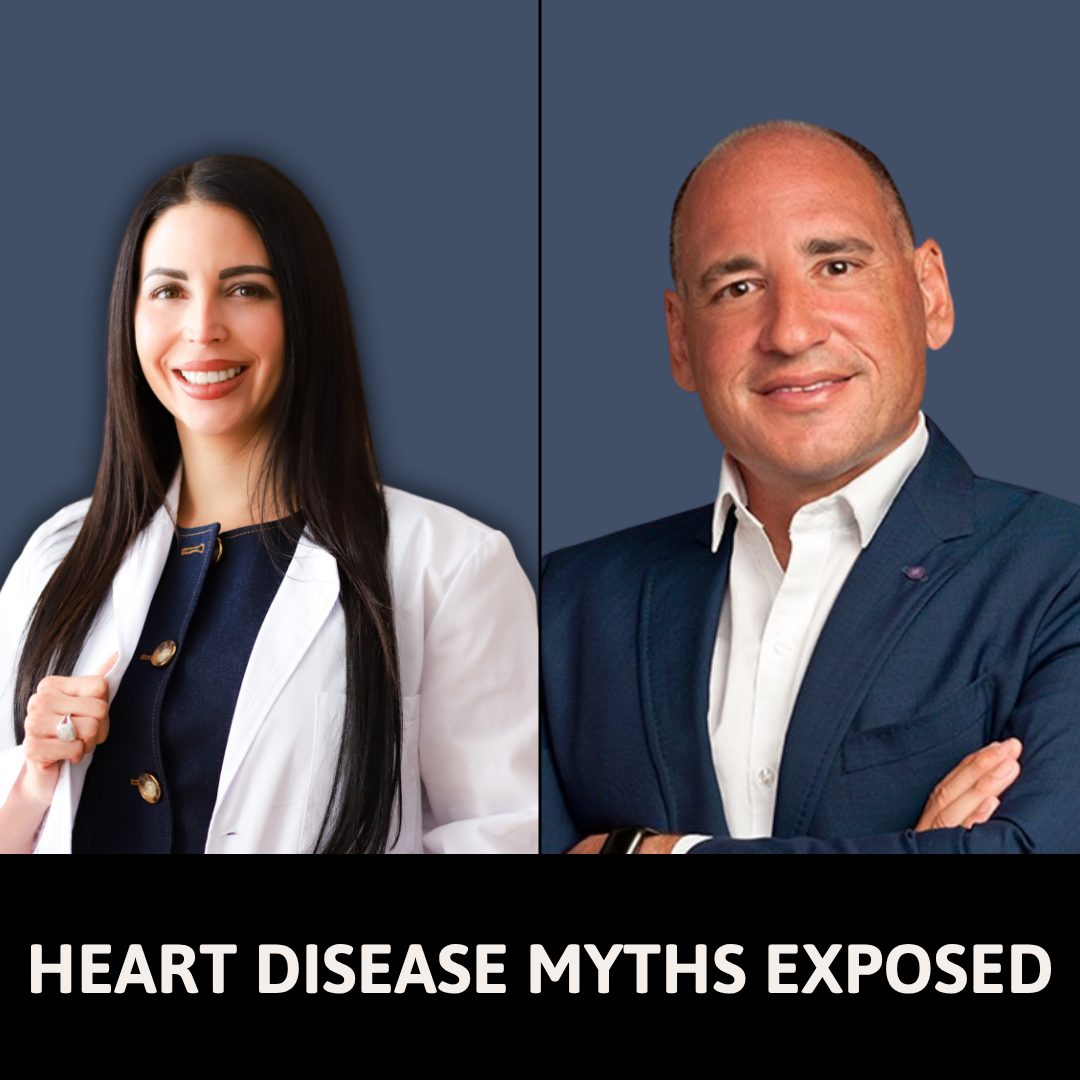
Heart disease is still the leading cause of death, yet many people are left wondering whether they’re focusing on the right risk factors.
In this episode, I sit down with board-certified cardiac surgeon Dr. Philip Ovadia to discuss how his perspective shifted from treating advanced heart disease in the operating room to helping people prevent it in the first place.
We talk through common questions about cholesterol, LDL, statins, coronary calcium scores, and why he believes heart health requires looking beyond a single lab value to better understand metabolic health, inflammation, and insulin resistance.
Topics We Cover in This Episode:
- What LDL cholesterol can and cannot tell you about heart disease risk
- How insulin resistance and inflammation fit into the bigger picture
- When a statin may make sense and when other factors deserve attention first
- The current conversation around bioidentical hormones and cardiovascular health
- Who should consider a coronary artery calcium scan and what the results can tell you
- Why metabolic health may be one of the most important pieces of heart disease prevention
- Practical questions to ask when evaluating your own cardiovascular risk
Resources:
Take the Quiz with Dr. Ovadia: https://ifixhearts.com/
Order Dr. Ovadia’s Books: https://ifixhearts.com/books/
Order Dr. Cassie’s Book ‘Fix Your Gut, Fix Your Hormones’: https://guthormonefix.com/
Use code LISTEN10 for 10 % off your order on shopmodernendocrine.com
Resources:
Check out the website
Follow Cassie on Instagram
Follow Cassie on Facebook
Follow Cassie on YouTube
Follow Cassie on TikTok
Disclaimer:
The information presented including any materials discussed, referenced, or linked within this podcast are for general educational purposes only, not the practice of medicine.
No doctor-patient relationship is formed from you listening to this podcast or utilizing any of the information provided.
I am a doctor, but I am not talking to you as your doctor. The information provided is not intended to diagnose or treat health problems or take the place of the professional medical care provided by your doctor.
If you are experiencing any health problems, including problems you believe have been touched upon in any respect within this podcast, you should consult your doctor about the problems without delay. You may ask your doctor whether he or she believes the information I have provided would be helpful to you, but you should still consult your doctor immediately and follow his or her medical advice as your treating physician.
I’m just here to provide you with basic knowledge about the issues we discuss so you are more aware of them and can better discuss them with your doctor.
Join me on the next episode as we continue our journey.
Transcript
Welcome back to the podcast. Today’s episode is a big one because we’re diving into one of the most important and
most misunderstood topics in modern health. Heart disease. Heart disease remains the leading cause of death in the
United States, and according to the CDC, one person dies every 34 seconds from cardiovascular disease. In 2023
alone, 919,032 people died from cardiovascular disease, which is one in every three deaths. Joining me today is
Doctor Philip Ovadia, a board certified cardiac surgeon and founder of Ovadia Heart Health whose work focuses on
metabolic health, lifestyle and heart disease prevention. On his official site, Doctor Obadiah’s mission is centered on
helping people understand how lifestyle and metabolic dysfunction drive chronic disease risk, and why prevention
has to go deeper than surface level lab numbers. In this conversation, we tackle some of the biggest myths and
questions surrounding heart disease today. Should you take a statin? Do hormones hurt or help your LDL? Does LDL
tell the whole story? Who should get a calcium score? How often should we get a calcium score? What score do you
want? What do you do if your calcium score is high? We also get into the deeper drivers that also are often missed,
including insulin resistance, metabolic dysfunction, inflammation, and gut health, and why improving these root
causes may matter far more than most people realize when it comes to long term cardiovascular risk.
We also talk about the role bioidentical hormones may play in supporting overall metabolic and cardiovascular health
as part of a bigger prevention strategy. If you’ve ever felt confused by the cholesterol conversation, uncertain about
statins, or frustrated by oversimplified advice about heart disease, this episode will change what you’ve been told
and give you a more complete framework for protecting your health. Let’s get into it. I’m super excited to have
Doctor Ovadia with me today. I was on his podcast and he is just such a wealth of knowledge. You guys are gonna
love him. He is actually a board certified cardiac surgeon who now is a little more holistic based, we will say. And so I
brought him on the podcast so we can talk about all the things everyone asked me about heart issues and disease.
So I’m gonna pick your brain about everything. Doctor Ovadia, we’re going to talk about hormones and statins and
how we stay off your operating table.
Yeah. This is going to be fun and awesome. And I can’t wait to have the conversation with you and your audience.
So can you tell everyone what you do? Like what why did you decide to be a board certified heart surgeon? And then
how did you end up writing all these amazing books that are more like preventative medicine? Because a lot of
people would say, that’s silly. If you’re trying to get people to prevent heart disease, then you’re not going to have a
job, right? But you don’t look at it like that.
Yeah, exactly. I’m not that great a businessman, I guess, but ultimately trying to do what I can for the patients. So,
you know, to go back to the beginning of my story, I knew from a very young age I wanted to be a doctor. My parents
swear that from about five years old, I said I wanted to be a surgeon, not a doctor. No idea why I would have said
that. We didn’t have doctors in the family. I didn’t have, like, surgery when I was a kid or anything, but who knows? I
guess it was just sort of destined to be. So, you know, went through medical school, went into my surgical training,
and when it came time to decide what area of surgery I wanted to specialize in, I just loved heart surgery. I loved the
technical aspects of it. I love the physiology that’s involved in that. It all just kind of fascinated me, and that’s what I
decided I wanted to do. Now, what I now say is sort of ironic about it is, so this is late 1990s, early 2000. I’m finishing
up my training. I’m having these conversations with my mentors and I say, I want to go into heart surgery. And they
said, Phil, please don’t. You’d be an idiot to go into that. We have these things called statins, and heart disease is
going to go away. There’s going to be nothing for you to do in 20 years. And they discouraged me from going into the
specialty because it was felt to be a dying specialty. Here we are, 25 years later, there is now a shortage of heart
surgeons in this country. There are not enough heart surgeons to do all the surgery that needs to be done. And the
reality of that problem is it’s not really not enough surgeons.
It’s too many people that require heart surgery these days. Now, the other sort of thing going on at that time in my
life is I’ve struggled with obesity since I was a child, and I reached a point ten, 15 years ago. I was morbidly obese, I
was pre-diabetic, and I kind of came to this realization that I was going to end up on my own operating table, so to
speak. I was going down that path that so many of my patients had gone down, and I didn’t know what to do about it,
because the advice that I had been trained to give eat less, move more, eat a low fat diet. It wasn’t working for me. It
wasn’t working for them. And that kind of got me asking some questions like, why not? You know what’s wrong with
this advice? And I started thinking about things differently. I started coming across some different information. I
ultimately was able to lose 100 pounds, reversed my pre-diabetes, and along the way, I came to realize that what I
thought was true about heart disease, this disease that I had been, you know, dedicated my career to fighting
against wasn’t exactly the whole story. And ultimately, I also So recognize that no matter how good I might be as a
heart surgeon, no matter how good all the heart surgeons out there might be, the patient is never as good after they
have the surgery as they would have been if they didn’t need the surgery in the first place. And so that’s why I’ve
kind of brought in this other aspect of my career now focused increasingly on keeping people off the operating table.
And that gets into the books and my practice these days, and all of those good things that we can talk about.
Yeah. So here we are 25 years later. And statins didn’t cure everyone. If anything, they might have made people
worse. We’ll talk about that. But yeah, I mean, it’s true. I was telling you in Oklahoma City there is a shortage of heart
doctors. I have a friend who’s a heart surgeon, and it’s crazy trying to cover all these hospitals. And it’s just sad
because I think you can relate to this. And I know this is why you started writing your books. But I mean, what would
you say 95, 99% of people that are on your operating table, it’s preventable. Like it’s something that we just, we
really could probably prevent.
Yeah. You know, what I realized these days is every patient that ends up on my operating table is a failure. And it’s
not the patient that failed. It’s the medical system that failed the patient. Because you’re right, this is almost
universally preventable if we focus on the right things. And what has happened along the way is we’ve gotten
distracted by the wrong things. When it comes to heart disease, the concept that blood cholesterol levels are the
most important and really, in most doctor’s minds, the only important thing when it comes to preventing heart
disease, it’s just flat out wrong. Right. And we can go into all the reasons of why we came to believe that and what’s
wrong about it. But just look at the big evidence, right? You know, for 40 years, we’ve had statin medications starting
a decade or two. Before that, we had the recommendations to change the way you eat to lower your blood
cholesterol levels, the low fat diet. And they have been abject failures because here we are 40, 50 years later and
heart disease is worse than ever. It is still far and away the number one killer of both men and women, by the way,
most relevant to your audience.
And it is showing no signs of getting better, of slowing down. And so you just have to look at the big evidence and
say, okay, there are more patients than ever on these medications. Our cholesterol levels as a society are lower than
they have ever been. We consume less red meat than we ever have in history, and heart disease continues to get
worse. So it can’t be the cholesterol. And unfortunately, most doctors, they really just don’t have the time to ask
those basic questions. Right. They’ve been trained without question. Cholesterol is the primary driver of heart
disease, and therefore, the best thing you can do as a doctor for your patient is lower their cholesterol levels. And
they don’t have the time to step back and say, well, I keep doing this and it’s failing. Right. The patients keep ending
up with heart attacks, needing stents on the operating table, bypass surgery, all of the stuff. And it kind of saddens
me these days, honestly, that most of my doctor colleagues are so disempowered and so kind of just buried that they
can’t step back and see the reality that’s in front of them.
I think that a lot of providers are starting to see it, especially with social media. People like you and I, I think that they
feel trapped or they don’t know what to do because they have 5 or 10 minutes to spend with somebody and they
can’t talk to somebody about their nutrition and their sleep and their lifestyle in 5 to 10 minutes and do a good job. In
addition to doing all the things they have to check Mark in order to get their reviews and their reimbursement
through insurance companies, because insurance companies dictate how you take care of patients and they don’t
care about that. And so it’s frustrating because we have what’s called sick care in this country. It is literally a, you
know, just a hamster wheel of keeping people in that sick care. And so it’s, are they on a statin? I mean, you know,
this you were in cardiology. Are they on a statin? Are they on an Ace inhibitor? Are they on an aspirin? Which none of
that actually changes the trajectory or outcome of their life. It certainly pads the pharmaceutical companies pockets.
But, you know, it’s just like that’s how we were taught. And the training hasn’t changed.
And I do think that doctors are getting frustrated because they see, just like I saw. And just like you see, hey, people
aren’t getting better giving them this medicine. But every time somebody comes in, they have to beg them to stay
on their statins because their legs hurt or, you know, and it’s just like, we get these letters now I get letters from CVS
Caremark and all these companies, even though I don’t take insurance. You’re a patient, you know, Bob Smith has
not been filling their stat nor has not been filling a blood pressure medicine. You need to add this medication
immediately because they have diabetes. And it’s like, I’m sorry, CVS did you check a cholesterol panel on Bob Smith
or do you know anything about him? You know, you get like these threatening letters. It’s just crazy. And I think that’s
the disheartening thing is like doctors were taught that patients try to listen to their doctors, but then a lot of times
they develop side effects. And to your point, our cholesterol is lower than it’s ever been. And people are so much
sicker. So it’s not the cholesterol, despite what the statin companies want us to think, in my opinion.
Yeah. No. And I share that. I wouldn’t even say it’s an opinion at this point in my mind. It’s the reality, right? It’s
what’s in front of me. And again, I perhaps have a little bit of a unique insight in that I got to see every day in the
operating room, the failures of that approach. And most of the patients that are on my operating table today, most of
them have been taking statin medications, usually for decades. And again, none of this is new, right? We can go back
to the 1970s, when Doctor Joseph Kraft looked at all the patients that came into his hospital with heart disease. And
what he found was if you tested the patient correctly for insulin resistance, 95% of the patients with heart disease
had it. And you contrast that to the data. At the time that was looking at cholesterol levels in patients coming into the
hospital with heart disease, and it was a 5050 shot at what was defined as high cholesterol at that time. You know,
half of the patients had it and half of them did not. So that is just, again, very early basic data that shows us that
cholesterol was the wrong focus. And we can get into the story of why cholesterol became the focus. But it ultimately
wasn’t necessarily about the patient. It was about politics and money and pharmaceutical companies and all of that
that got involved in that story.
Yeah. And also Doctor Broda Barnes, I think it was in the 50s, 60s 70s he looked a lot at cholesterol. He looked at
thyroid hormone and whether people’s thyroid was adequately treated and how that affected their heart. And it’s
just, it is disheartening because I feel like in the 50s, 60s, 70s, medicine kind of started changing. And unfortunately,
I don’t think it’s for the better. And to your point, it’s just this big political mess now. And the other frustrating thing I
have a problem with is most of these studies that we used to treat heart disease. Now, they weren’t done in women,
but we just extrapolate all that data on women and we do the exact same thing to women. We are not little men. We
are very different than men. We have different hormones than men we have. And so that’s frustrating to me too, is
like, you want to put a woman on a statin because her LDL is high, but we don’t want to talk about her hormones. You
and I are going to talk about hormones. We don’t want to talk about anything else. And oh, by the way, there are
actually studies now showing that women that take statins for ten years have a higher risk of breast cancer, but
nobody wants to talk about that or study that. And that, I think, is where I get really frustrated. I see that I have to
deal with the aftermath of that with patients. And to your point, you’re operating on people’s hearts. I mean, you
have the best view of anything. It doesn’t matter what lab tests we see, you’re operating on people that have been
on statins for years. And you see, they still have heart disease. So obviously we’re missing something.
Yeah. And that’s what, like I said, got me asking some more questions. Right. And seeking out more information. And
you’re right, all of these things that we ignore, whether we’re talking about the hormones and we’re talking about
inflammation and insulin resistance, right? That really do tell us the story and doctors and the medical system, right,
that the doctors are trapped within. I think you’re very right about that point only puts us in one direction. And, you
know, ultimately it does become, I’ll say a little bit silly, right, to think that something as complex as heart disease
can be reduced to one number on that blood work, right? And if you just look at this one number, right, that tells you
everything you need to know about heart disease. And if you just treat that one number that’s going to take care of
the heart disease. And it obviously can’t be that simple. And it isn’t that simple. And like we’ve been saying, it just
doesn’t work in the end. As a surgeon, I’m a very outcomes driven person. And so I can say, okay, it was a good
theory, right? It makes a lot of sense. We look at the plaque that’s in people’s arteries and there’s cholesterol in it,
and there’s cholesterol in the bloodstream, and there’s cholesterol in some of the foods that we eat. So maybe it’s
you eat too much of the cholesterol and you get too much in your bloodstream, and then it ends up in your arteries.
Makes sense. The problem is it just doesn’t work in the end. And it’s time for a new approach. It’s time for us to
rethink this and go beyond that.
Yeah. And I mean, I even have patients, men and women who have LDL cholesterol, 181 90 but they have very high
HDL cholesterol. They don’t have bad particle sizes. Low. Lipase. Low. About bees. Their hormones are replaced
appropriately. They don’t take statins. And I had one guy in particular whose elbow was 195. He ended up developing
chest pain, went to the hospital, had a calf because they were like, oh my, you know, he refused to take statins. He’s
been my patient for a long time. Testosterone is great. Active. We had a conversation. His ratio is low. Of course,
they calf them and tell them, you know, she’s trying to kill you. She’ll make you put you know, you’re on a statin zero
plaque in this guy. None in his 60s. Zero plaque had a calf LDL 190 plus. And he’s like I they tried to make him take a
statin before he came to me. He felt terrible, you know? But then you have people who are on statins and their LDL is
50, and they feel terrible because they don’t have enough LDL in their brain. So they’re having brain fog and their cell
membranes don’t have enough, you know, especially women. We need LDL cholesterol to make hormones and for
our cells. And anyways, their LDL is 50 and they get capped and they have triple vessel disease. And so it’s not just
the LDL and we have to use our brain. And I think that’s the problem in medicine is like the pharmaceutical
companies in med school wants you to think if this, then this. But we need to expand the box instead of just looking
in the box. And so is there a patient that you feel like 100% they should be on a statin, or do you think no one should
be on a statin? Like, what is your thought as a cardiac surgeon?
Yeah. Ultimately, if someone is insulin resistant, if someone has inflammation and they have high cholesterol levels,
we know that those are going to be poor quality cholesterol particles. They’re going to be the small, dense particles,
the oxidized particles that truly do end up in the plaque and contribute to this problem. And if the person is not going
to take care of the insulin resistance, and they’re not going to take care of the inflammation, then a statin is going to
be a small benefit to them. Now, the benefit is a lot lower than these big numbers. You hear that? The doctors hear
that, it reduces it 50%. Those are all statistical manipulations, relative risk reduction. The reality is, is that for
someone who has not had a heart attack, what we call primary prevention in the best studies of statins, and again,
there are some reasons to be suspicious about these studies, but we’ll just take them at face value. The difference is
point 8%. What we call the number needed to treat is somewhere between 100 and 120, meaning that if you put 100
to 120 people on a statin for five years, one of them will avoid a non-fatal heart attack.
None of them will live longer. Statins have never been shown to extend life in primary prevention, And one of them
out of the 120 will avoid a non-fatal heart attack, and 119 of them will have gotten absolutely zero benefit and taken
on the potential harm. And those harms are real. We know, for instance, that patients that have been on statins for
more than five years, their risk of developing type two diabetes goes up by about 25%. Type two diabetes being one
of the biggest drivers of heart disease. You just mentioned increased risk of cancer, breast cancer, and other cancers
because oh, by the way, cholesterol is part of our immune system. We might need it to fight off cancer and less
definitive. But concerning data regarding memory loss and Alzheimer’s disease, Parkinson’s disease having higher
rates in people that are on statins. So that’s the reality of the statin. But listen, if you’re not going to do something
about your insulin resistance, You’re not going to take care of the inflammation, then? Yeah, you might get a small
benefit from taking that statin.
Or maybe the new PSK nine inhibitors. I feel like they may be a better alternative. Like people aren’t getting as many
bad side effects. No. You don’t think so?
Yeah. So the scary thing about the Pcsk9 inhibitors is the seminal trial that led to their approval, the Fourier trial. So
two groups of patients, all the patients are on statins. And one of the patients gets the Pcsk9. One group gets it
added and the other gets the placebo. More patients in the group that receive Pcsk9 died during the trial. That
difference did not reach statistical significance. The trial was stopped early. Kind of controversial, but what did those
people die of? Slightly less number of them died of heart problems. Heart disease, although that’s also been debated
since. But clearly more of them died of cancer and infection because again, cholesterol is a very important part of our
immune system. So the Pcsk9 inhibitors avoid some of the side effects of the statins, the short term ones, especially
because they work by a different mechanism. But I still have concerns about those medications. And even so, I point
to those trials and say, okay, we’ve now lowered cholesterol levels massively. Right. I’ve seen patients with LDL
cholesterol levels in the single digits in the teens on these medications, and patients don’t live any longer, and they
appear to actually live shorter and die more often. So again, it tells me maybe the cholesterol thing isn’t what we
think it is.
So what I tell patients is like, here are the guidelines. Is there medicine guidelines? Pharmaceutically driven? In my
opinion, statins are one of the highest prescribed medications beside thyroid medications. But I told him, you know,
let’s look at the ratio of LDL versus HDL. Let’s look at particle size. Let’s look at your insulin. Let’s look at your
triglycerides. What can you do to fix this? If you have somebody though that has a hyperlipidemia that is genetic. So
they’ve got ldls in the 300, you know, familial hyperlipidemia, very uncommon. But if you do, would you say that’s
probably the only person that should have a statin? Would you even give that person a statin? Because for me, I
mean, that’s kind of what I tell people. Like unless you really have FH, familial hypercholesterolemia, this is a lifestyle
issue that we really need to focus on. We need to fix your hormones. We need to fix your gut. We need to fix your
lifestyle. We need to give you the education to teach you how to do that. But this is a lifestyle issue. And so in my
mind, I’m kind of like, nobody really needs a stat. In my opinion, the ones I have problems with are I’ve got a 28 year
old who is in very good shape, who has an LDL of 360. I mean, what do you do with those people?
Yeah. So true. Fh genetic familial hypercholesterolemia is its own very interesting case study, because it turns out
that some of those patients get very accelerated, very early heart disease. A lot of them do not. And when you look
at the ones that do not, it turns out that if you are, let’s say, 60 years old and you’ve had familial
hypercholesterolemia your entire life and your cholesterol level is in those ranges that you talked about, you are
going to live longer than the general population. So we say, okay, what’s different about the patients with FH that die
early get the accelerated heart disease and those that don’t? And what it turns out is that FH is actually a number of
different genetic anomalies, and some of them interfere with the blood clotting system. And it turns out that when
you look at the patients that get the early accelerated heart disease, they don’t have a cholesterol problem. They
have a blood clotting problem. And that’s why FH becomes so problematic. So even in FH it may not be the
cholesterol that’s the problem. And again, this is something that most doctors don’t understand and can get into a
whole nother rabbit hole regarding heart disease if we want to go down it. But the role that blood clotting plays in
heart disease versus the concept that the plaque is all because of cholesterol.
Well, let’s table that for a second because we’re going to talk about that with hormones. But so what I’m hearing you
say, Doctor Nevada, as a cardiac surgeon, heart specialist, you are not in the camp that everyone should be on a
statin.
Absolutely not. And I am in your camp of this is a diet and lifestyle problem first and foremost, and therefore the way
that we fix it is with diet and lifestyle recommendations.
Mhm. Fixing your inflammation by fixing your gut, your stress, your nervous system, your hormones, etc.. Okay, so
statins are a huge question I get asked. The other thing is hormones. We have to address this from a cardiologist,
cardiothoracic surgeon, cardiac surgeon perspective. You know, the other thing is unfortunately right now hormones
get this terrible rap and hopefully that’s going to change. But we know that in 2001, when the WHI came out and we
ripped women off of hormones for the last 24 years, there’s been data published recently that went back and said,
you know what? We might have messed that up. Actually, in the study, it was progestin, it was premarin. It was
prempro. It was, you know, not bioidentical, but synthetic hormones and progesterone in particular. That may have
caused some increased risk in a few things. It was not bioidentical hormones. I think in the last 25 years, we have
seen that women are getting sicker. They’re dying sooner and we still have more heart disease. So I think that was a
huge problem that is going to take years to unravel, because doctors learned that in school, patients learned that.
And it’s really hard to teach dogs new tricks. So all the doctors out there who haven’t done any continuing medical
education or read a journal since they got out of school because they don’t have time and they work like crazy. It’s
hard to change that mindset. But the literature, from what I understand, and I would love to know your perspective, is
that actually hormones can be beneficial to our heart and to our brain and to estrogen in women, even a little bit of
testosterone, testosterone in men. So I want to know your take on our hormones bad. Should we not be taking them
from a heart health perspective? And do they really cause increased clotting?
Yeah. So clearly estrogen talking about women first. Estrogen is protective against heart disease. Full stop. Right.
And that’s why we see that women lag a decade behind essentially, men when it comes to the development of heart
disease. So the risk of a 60 year old man developing heart disease is the same as a 70 year old woman. And we really
don’t see heart disease starting to develop in women until you get into perimenopause menopause range, because
estrogen is so protective against heart disease. So how we got from that obvious fact to somehow replacing estrogen
and progesterone in postmenopausal women would cause more heart disease. It never really made sense. The data
never really supported it. The story behind that whole Women’s Health Initiative debacle, I’ll call it, is a really
fascinating one in medical history. And I’ll point to a recent book that went through this real well, and I just blanked
on the title. But Marty MacQuarrie, who was just stepped down as FDA commissioner, his most recent book, it goes
into the whole story, and it turns out that the data never supported it. It was one of the lead investigators that
literally was just looking to promote himself and put out this fact right in quotes that, you know, there was more heart
disease in the women getting hormone replacement that wasn’t actually supported by the data, and even more so,
yes, they were using outdated forms of hormone replacement and they were using it at dosing.
That was inappropriate. And I fully believe, as do you, that modern bioidentical hormone replacement is not only
perfectly safe when it comes from a cardiovascular standpoint, but it is beneficial from a cardiovascular standpoint.
And so women should have no fear on that side of things. On the man side of things, testosterone. And again, the
concern has been men go on testosterone replacement, and that’s going to predispose them to blood clots, and
that’s going to predispose them to heart disease. And the reality is, again, well managed testosterone replacement
therapy not a risk and probably a benefit. Now there is an issue that if testosterone replacement isn’t managed well,
and if levels run super high at, you know, for long periods of time, yes, you can get an increase in what we call your
hematocrit, the number and the concentration of red blood cells. And that can predispose to blood clotting issues.
But that’s due to the irresponsible way that the testosterone is being managed. It’s not due to the testosterone itself.
Well-managed testosterone replacement. Absolutely zero increased risk and probably protective, because having
appropriate testosterone levels will help men to maintain their insulin sensitivity, maintain their muscle mass, and
remain more metabolically healthy, which is then going to be protective against heart disease.
Amen. I couldn’t agree more. And and I think that there is a difference in hormones. You know, there are synthetic
hormones, there are bioidentical hormones. There are different ways that you prescribe them, manage them, monitor
them. And I mean this in the nicest way possible. But I was in Dallas, Texas two weeks ago. Literally, there was a sign
next to a Starbucks sign that was like teen clinic, you know, and it’s like this clinic you just walk into and order
whatever you want and leave. Like that’s not safe. But if you’re going to an actual provider that’s checking your
levels, understands hormone physiology, metabolism is prescribing you hormones in a bioidentical form, that’s safe.
And to your point, I think that’s so important. And even testosterone in women. There’s never been a study that
shows testosterone in women causes harm. Now, obviously, if your levels are super high, but it’s just so frustrating
for me. Like I had a 61 year old lady who came in this week and her gynecologist told her she couldn’t take hormones
because she’d gone through menopause ten years prior. She’s got heart disease. She was having hot flashes. She’s
having vaginal dryness. Her mom died of dementia. She’s got osteoporosis. She has every reason to need a hormone.
And she, you know, and I tried to explain the risks and benefits and she said, well, my gynecologist, who, by the way,
is 65 and ready to retire, said that there’s no way in the world I should ever be on a hormone. And if you tried to give
me one, you were trying to kill me. And it’s just really frustrating because first of all, if you’re listening to this and
you’re a provider, if you don’t know the latest research, don’t say something that’s gonna hurt someone.
Like don’t call anyone’s baby ugly. I never call anyone’s baby ugly. Like just, it’s just so frustrating that you would say
that to somebody, like hormones can, can cause you to die. It’s just not factual. And like, I just, I love it when you say
that as a cardiac surgeon, I love it when I have an ObGyn. Just it’s not true if done correctly. And so I think that when
we are talking about the sheer increase in volume of heart issues, you’re telling me there’s not enough heart
surgeons, people are sick. We’re dying of heart disease. We really have to take a step back and figure out why.
Because if we just try to Band-Aid it, and you try to operate on everyone, and we don’t really step back as a society
and say, what is going on? Like, how have we failed? It’s just going to keep getting worse, right? And so that’s why I
love conversations like this. And I think that people need to realize what the data really shows. And so you’re saying
estrogen does not cause heart issues and it’s actually protective full stop. And men can take testosterone. I love that
tell people listening though, how do they stay off of your operating table? If somebody’s listening to this and they’re
like, man, I don’t want to have heart issues, what are 3 or 5 things people can do to make sure they don’t have to
come see you in their life. Like what?
Yeah. So I tell people about the three I’s that we don’t see when it comes to heart disease these days. Insulin
resistance, inflammation and imaging. And this leads you to how do I stay off the operating table. So insulin
resistance it is the big one. Like I said earlier, 95% of patients that end up developing atherosclerotic heart disease,
they have insulin resistance. You just got to test for it the right way. So get your fasting insulin level checked. Figure
out if you’re insulin resistant and if you are. And oh, by the way, you probably are, because the statistics today show
us that 93% of the adults in the United States have cardiometabolic disease, which insulin resistance is the hallmark
of that? So figure out if you’re insulin resistant and if you are, you fix it with diet and lifestyle. Low carbohydrate non-
processed foods. That is the best way to fix insulin resistance. It is reversible and that’s the primary driver of heart
disease. Number two is inflammation. Get it checked. Get the blood work done. Hscrp is a great test to start with.
There are some other ones, but figure out if you have inflammation. And if you do, where’s it coming from? Is it
coming from your gut? Which is probably one of the most common reasons that we get inflammation. Is it coming
from anywhere else? Figure out what’s causing the inflammation.
Again, a lot of it diet and lifestyle related, that same low carb non-processed food diet. It’s going to fix much, if not
most, of the inflammation that people are suffering from. And the third piece is the imaging. If we’re worried about
heart disease, we can argue all day long until we’re blue in the face about blood work and what it means, what it
doesn’t mean. But the bottom line is there is no blood test that shows you whether or not you have disease plaque in
your arteries. But we do have imaging studies, and the one that I like most to start with is called the coronary artery
calcium scan. It is a simple scan. It literally takes two minutes to do. They don’t have to put an IV in you. You just lay
down. You go in the machine, you come out the machine. Most places in the United States, you can get it done for
under $200. Usually under $100 these days. And it will show you whether or not you have plaque calcified plaque,
specifically developing in the arteries of your heart. I call it the mammogram for the heart. In the same way that we
can use mammograms to see the breast cancer early, and therefore we can take care of it before it becomes a big
problem. That’s what the coronary artery calcium scan does for your heart.
If you see calcified plaque, you know that you have problems. And let’s figure out where those problems are coming
from. And again, like we’ve been discussing, it’s not coming from your cholesterol, it’s coming from insulin resistance.
It’s coming from inflammation. And let’s get on top of that. So then we can stop it from getting worse. There’s more
advanced imaging that can be done these days. What are called coronary CT angiograms. Great tests give us very
fine detailed looks at the blood vessels of the heart. But if we’re concerned about plaque in the arteries, we got to
look for plaque in the arteries. All women should have a CAC scan, their first one done by the time they’re 50 years
old. All men should probably have it done by the time they’re 40 years old. If you have reason to be concerned, if you
know you have insulin resistance, if you’re diabetic, if you have a strong family history, get it done earlier. Because
again, the sad reality is that there are 30 year olds ending up on my operating room table these days. And it’s
because they’ve been metabolically unhealthy since they’ve been teenagers and they’re developing the heart
disease early. So get the test done and figure out where you stand regarding your risk for heart disease.
I love that we actually do that at modern endocrine, where big calcium score proponents, you can get them in
Oklahoma City for $49. And so that’s what we do. When you come in, you get a full lab panel. We look at your HDL to
LDL ratio, we look at your homa IR ratio by a fasting insulin, and we look at your lipoprotein A and your Apob if any of
that alarms us, you go get a calcium score. If your calcium score is elevated, then you’re going to see a cardiologist
to see, do we need a stress test? Do we need a cath? What are we doing? And so I think that’s amazing. I mean,
we’ve done that. That’s that’s been our protocol for years. And I agree with you. It’s easy. It’s an X-ray. And if it’s zero
great. But you know some people say that you can have soft plaque that doesn’t pick up and still you can have
issues. What are your thoughts on that? Is that real? Do we really clearly like, what is your thought?
Yeah. So the reality is if you have a zero CAC score, yes, you could have some noncalcified plaque, but the chances
of you having a significant enough amount of the noncalcified plaque is negligible. Now a zero CAC score always
needs to be interpreted. Taking your age into context, having a zero CAC score at 30 years old is not quite the same
as having it at 70 years old, but it’s still meaningful now. I love the advanced CT angiograms with the AI analysis
clearly is one of the companies. There are a couple of others. You’re right, it shows us amazing detail. I can see all of
the noncalcified plaque. I can actually with some of these analyzes and scans these days, we can see the
inflammation in the blood vessel, which is probably what is the most important thing. But are they necessary for
everyone? No. And I always tell people, start with the CAC scan. If you get a zero CAC score, you’re good. 3 to 5 years
later, repeat it again. Make sure it’s staying zero. But your chances of having a heart attack in the five years after
that are less than 1%. The mistake I guess some people make is that they think it’s a lifetime guarantee. If they get a
zero CAC score, that they never have to be worried about heart disease. That’s clearly not true, but it’s a pretty good
short to medium term risk predictor. And just because yeah, there might be some soft plaque that we’re not seeing,
that’s not a reason not to get the CAC scan.
I love that. So if we get a scan and it’s zero we’re good for 3 to 5 years. Wonder if we get a scan where a 47 year old
woman, 47 year old man and we get a scan and it’s 100. Is that where we’re going to go? Working on the things you
talked about, we’re going to try to lower our triglycerides and our insulin. And we’re going to work on inflammation
and all of those things. Or is that where we need to be like, oh, I need to go see a cardiologist and have some sort of
stress test or cath, like, what do we do when our score is not zero?
Yeah. So when your score is not zero, that’s exactly it. You want to address the risk factors that are causing the
plaque to form. Now at what score do we really start to get concerned. And should we be thinking about doing more
testing. Ct angiograms maybe stress test. Although honestly they’re mostly useless and jumping to a cardiac
catheterization these days, there’s just no reason for it because we can get the detail. Look at the arteries with the
CT angiogram. Generally, somewhere in the 3 to 400 range is where I start thinking about getting a CT angiogram.
Understand, and this is something else that honestly, most cardiologists, most doctors have this. They think 300 is
like, you’re on death’s door and you’re going to have a heart attack tomorrow. These scores can get very high. The
highest coronary calcium score I have ever seen was nearly 8000. I have patients with scores in the 4 to 5000 range
that have not needed a stent, are not having any symptoms. They have some blockage in their arteries. But it’s not
to the point that we need to intervene. But on the other hand, yes, there are some people that have scores of two,
three, 400, that calcium might be all in one place in one blood vessel, and it might be a significant blockage that we
do need to think about treating. So that’s where the nuance comes in. Find a good provider who really understands
all of this. But if you go to the cardiologist and their answer is, well, go on a statin. Another interesting fact about
statins is that they worsen coronary calcification. There are studies showing that patients on statins, their calcium
scores go up faster than expected. So it’s always been an interesting concept there that, oh, we’re worried about
your calcium score being high. We’re going to put you on a medication that’s going to make it worse.
Yeah. So statins increase our calcium score and increase our risk of breast cancer. Lovely. Can you make your
calcium score better? Let’s say we have a 50 year old woman. Calcium scores 150 thyroids out of whack.
Perimenopausal or menopausal? Not on hormones. Insulin’s really high gut dysbiosis. If we clean up their gut, we fix
their insulin resistance. We fix their diet, they’re moving. We get them on hormones. Can you make that score come
down?
Yes, I see it in my practice routinely these days. I always tell people it’s not going to go from 150 back to zero, but if a
year later we recheck it, I’ve seen it go down ten, 15, 20% and that’s great. Now we know Very solid literature,
showing that as long as it’s not in continuing to increase, your risk is lowered. We don’t really have all of the studies
showing reversal to a large degree, so it’s a bit more of an unknown. But ultimately this comes down to if you stop
doing the damage, your body can heal. Right. And you’ve just got to stop doing the damage in the first place. So yes,
you can lower your calcium score.
And we’re repeating it every year, probably not sooner because it won’t change as much, but every year would be
good.
That’s what I generally do for my patients. And again, it’s low radiation. It’s inexpensive. Why not. Let’s track the
progress of that disease now that we’ve identified it.
It’s kind of like a lab test. So what I’m hearing from you, Doctor Ovadia, is that statins are not the end all, be all. We
need to figure out what’s going in our mouth, how we fix our inflammation. Hormones are fine and should actually be
replaced, especially in women, and calcium scores are a good way to screen and monitor things. Did I misinterpret
anything or is there anything else we should drive home about this?
I think we got it pretty good there. Fix your gut. Right?
Yeah, and just eat. Well. So I’m gonna ask you three questions. I ask every guest. Don’t overthink it. First thing that
comes to your brain, then I want you to tell everyone where they can find your book and everything about you.
Number one, what is one food that’s most beneficial to your heart health and why?
Red meat. Red meat is essential to human health. It is the most nutrient dense, most bioavailable food we can eat as
human beings. And not only is it not harmful to your heart health, but it is essential and beneficial to your heart
health and your overall health.
I love that. What is one thing anyone listening to this podcast can do right now that is 100% free, but would benefit
their health.
Go to my website ifixit.com. Take the quiz right on the front page. That’s going to tell you. Are you metabolically
healthy or not perfectly free? And shameless plug there.
I love that. Okay. Do it because people need to know. I put that stat in my book. You said 93% of Americans are
metabolically unhealthy. And that is alarming and crazy. So I completely agree. People need to know because a lot of
people think they’re healthy and they’re not. What is one thing that you wish you would have known about your
health 30 years ago that you would have done differently?
Yeah. So insulin resistance, right? You know, this was a term that if you’re like me, you probably heard it once or
twice during medical school, but never realized the importance of it. And insulin resistance is the big one. And if I
could have identified when I was 20, instead of waiting till I was almost 40 to figure that out would have had a big
impact on things.
Yeah. Well, I have loved this conversation because I personally want to stay off your operating table. My dad has had
a triple bypass. His dad had a quadruple bypass twice. So I am very invested in my heart health. And you’ll have to
peel my estrogen off my dead body. But I have loved this conversation because I do think it’s really important. And so
I appreciate all the work that you do. I love that you do some holistic stuff. I know you have a practice where you see
people via telehealth, so tell everyone where they can find information about you or anything else. We can help you
as far as supporting your books too.
Yeah. So the new book, it’s called Stay Off My Kitchen Table, widely available all the usual places and appreciate
people ordering that and checking it out. First book, stay off my operating table also available. And then everything I
do is at I fix hearts. You can go to ifixit.com. You can find out about my nationwide telemedicine practice, where we
focus on metabolic health and heart disease, and then all the social medias at effects hearts as well.
I love that you have that effects heart. That’s amazing. So I’m assuming your new book, Stay Off My Kitchen Table, is
more of a like culinary book, helping people figure out what to eat, what not to eat, etc..
Yeah. So it really went deeper on why diet and lifestyle is the key to overall health and preventing heart disease. And
we talk about gut health. We talk about bioavailability, nutrient density. We talk about why it’s not just the food that
you put in your mouth, it’s what your body is able to do with it that’s important. And we got meal plans in there. We
have the recipes, we have the tracking guides that people need to be able to optimize their health with a metabolic
diet and lifestyle first approach.
I love that. Well, thank you for everything that you do. Thank you for your time. Loved having you. And we’ll have to
have you back sometime.
Sounds good. Thank you.
If this episode gave you a fresh perspective on heart disease, statins, LDL hormones, insulin resistance, and
prevention, make sure that you share this with somebody who would benefit from it or someone you love. Also, make
sure that you’re listening to the full podcast episode. There are little tidbits all the way through the end. And make
sure that you follow this podcast so that you never miss an episode. I have some amazing guests coming up, and I
want to teach you how to be the CEO of your own health. If you want to get deeper and you want more of an
understanding of the connection between your gut, your hormones, and your metabolism, grab my book, fix your
Gut, fix Your Hormones on Amazon. If you go to www.guthormone.com, you will get all the freebies, the bonus
guides, and the resources that come with my book to make sure it is more relatable, or practical and even more
helpful as you read it along the way. If you’re ready for personalized support, you can become a patient of modern
endocrine. We are licensed in 46 states. We can do telehealth. You do not have to live in Oklahoma to be a patient.
All you have to do is go on our website, www.endocrine.com. Click book a discovery call. We will spend time finding
out, are you the right patient for us? Are we the right care for you? We want to help you, but only if we can’t. So book
a discovery call. We are happy to help you. Licensed in 46 states and can do telemedicine. Don’t forget to check out
our supplement site shop.endocrine.com and use the code listen ten for a discount. Also, thank you for being here.
Thank you for wanting to be the CEO of your own health. Be sure that you’re following the podcast. You’re sharing
this with others, and I will see you next week so that we can continue to be the CEO of our own health.