
Why Successful Men Are Secretly Running Themselves into the Ground: What Every Man and Spouse Needs to Hear
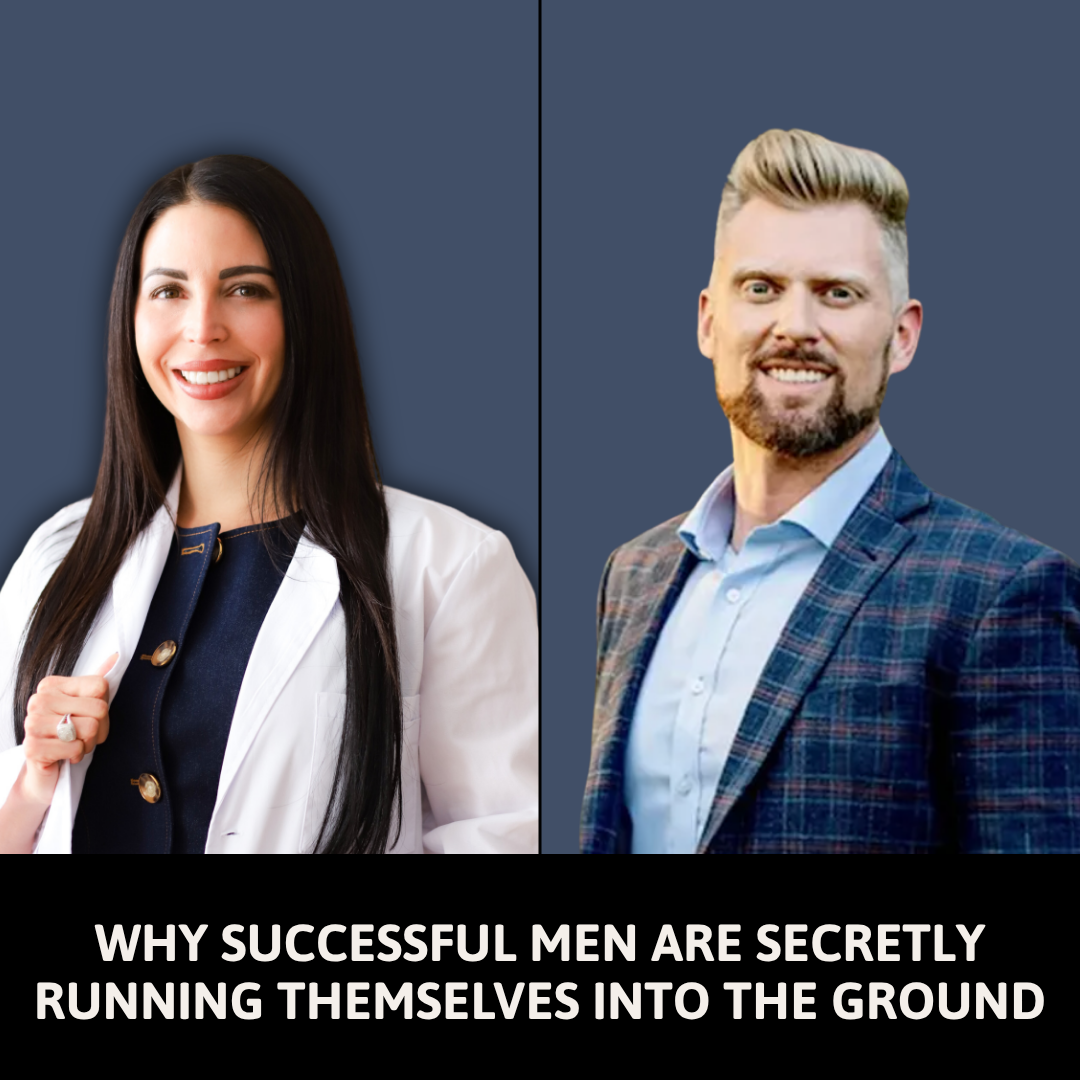
What does it really mean when a man starts feeling constantly exhausted, loses motivation, struggles with brain fog, or notices changes in his physical and sexual health?
In this episode, I sit down with Dr. Stephen Sanders, founder of Whole Men’s Health, to talk about why these symptoms deserve more attention and why men’s health is about far more than testosterone alone. We discuss the growing number of younger men experiencing hormone and metabolic challenges, how stress, sleep, nutrition, relationships, and modern lifestyles all intersect, and why so many men delay asking for help until their symptoms become impossible to ignore.
Topics We Cover in This Episode:
- Why fatigue and brain fog may signal more than simply getting older
- The symptoms many men experience long before they seek medical help
- How stress, sleep, gut health, and hormones influence one another
- Why conversations about men’s health often happen later than they should
- Practical ways couples can support each other’s long-term health
- Why tracking biomarkers matters, even when you feel “fine”
- The foundational habits that consistently outperform the latest health trends
- How to approach sensitive health conversations with empathy instead of judgment
If you’re looking for a thoughtful conversation about men’s health, relationships, and the habits that support long-term well-being, I hope you’ll join us for this episode.
Resources:
Connect with Dr. Stephen: https://www.wholemenshealth.com/
Order Dr. Cassie’s Book ‘Fix Your Gut, Fix Your Hormones’: https://guthormonefix.com/
Use code LISTEN10 for 10 % off your order on shopmodernendocrine.com
Resources:
Check out the website
Follow Cassie on Instagram
Follow Cassie on Facebook
Follow Cassie on YouTube
Follow Cassie on TikTok
Disclaimer:
The information presented including any materials discussed, referenced, or linked within this podcast are for general educational purposes only, not the practice of medicine.
No doctor-patient relationship is formed from you listening to this podcast or utilizing any of the information provided.
I am a doctor, but I am not talking to you as your doctor. The information provided is not intended to diagnose or treat health problems or take the place of the professional medical care provided by your doctor.
If you are experiencing any health problems, including problems you believe have been touched upon in any respect within this podcast, you should consult your doctor about the problems without delay. You may ask your doctor whether he or she believes the information I have provided would be helpful to you, but you should still consult your doctor immediately and follow his or her medical advice as your treating physician.
I’m just here to provide you with basic knowledge about the issues we discuss so you are more aware of them and can better discuss them with your doctor.
Join me on the next episode as we continue our journey.
Transcript
What if the symptoms. Most men brush off brain fog, bad sleep, low sex drive, weight gain, burnout, even a fading
sex life aren’t just part of getting older, but warning signs that something deeper is off. In this episode, I sat down
with Doctor Steven Sanders, founder of Whole Men’s Health, to talk about the truth. Almost nobody is saying out loud
men’s health is mental, physical and sexual, and all of it is connected. And women, please don’t just turn this off
because there is a lot of information in this that you need to help your partner transition through this part of life. We
get into why men and women often think differently about health. The hidden symptoms beyond E.D. that can point
to low hormones, gut dysfunction, and chronic stress, and how pressure, performance, and silent suffering can slowly
wreck a man from the inside out. We also talk about why these conversations need to happen at home, why opening
up to your spouse about your health can change everything, and how the basics most people ignore like sleep, light,
hydration, nutrition, and movement directly shape your hormones, your energy, your mood, your marriage, and your
future.
And we close with a message every couple needs to hear. Grow with your spouse. Embrace change. Keep loving each
other well, and push one another to become the CEO of your own health. If you’ve ever felt like you’re surviving
instead of thriving or you love someone who is, this episode is for you. Doctor Sanders, we are so excited to have you
on the podcast today. This is going to be a little different episode because typically when I’m talking to people, we’re
talking about women, but I thought this would be a really good episode to have because there’s a lot of women who
listen to this and think, wow, I wonder if my husband experiences this, or I wonder if my spouse or my partner
experiences this. And I know there are men that listen to this podcast as well. And so I think it’s something, you
know, there’s a big spotlight on women’s health right now, but I think that sometimes we forget men in their 30s, 40s
and 50s kind of ignore their health, not always on purpose. So I’m super excited to have you on the podcast.
Incredibly proud to be here.
Can you kind of tell everyone to start what you do, like how you ended up doing what you do?
Yeah, absolutely. So obviously a physician by training, trained in family medicine initially, and I spent the first ten
years in traditional medicine doing hospitalist work, wound care and addiction medicine and loved it, had a great
practice, had a great team. But what you really need to know about me is in my late 30s, I had a wall and I had a wall
big time brain fog, fatigue. It started to experience erectile dysfunction. Total changes in libido to the point I was like
almost incapacitated in the bed, and it was difficult for me to get out of the bed and physically go to work and
function. And I’ll be honest, people don’t prepare you for this. And it absolutely scared the hell out of me. And I really
began during this period to think, hey, are my best days behind me and not ahead of me? And that really, again, it
scared the hell out of me. Fast forward biking in Colorado one summer with my kids, and one of my kids takes a
photo of me and I look at that guy and I don’t recognize him. Just a lifeless face. I’m in my late 30s. I should have had
incredible vitality, but I didn’t. And so I knew at that point something had to change. That was the inflection point.
And that’s how I accidentally got into Men’s Health. I went on a journey after I saw that photo, and for the next 15
months, I dove into Men’s health longevity. I went to every conference, listened to every podcast, studied everything
I could do, read everything I could do, and I was able to fix myself from the inside out. But what I learned in the
process is, is, hey, if I’m a physician and I know the framework, I know the playbook. And I had issues how many
millions and millions of men are struggling with the same thing? And that’s how this men’s health practice was born. I
was the first patient.
Yeah. I think that a lot of us end up where we are by way of a painful story. And so you were in your mid 30s, late
30s.
Yeah, I it started sort of late 30s and it got to the crescendo point, you know, about age 39 and just totally hit a wall
and totally hit a wall in the sense that I’ve always been a high agency person. Like I could work 16 hours. I was doing
multiple things. I was trying to do everything, but it got to the point. I just couldn’t really function. And, and so initially
I went to my primary care physician and they drew labs. And like a lot of other men and women, have been told, your
labs look okay. They’re normal. Maybe you’re depressed, maybe you’re sleep deprived. Maybe it’s too much stress.
Maybe it’s, you know, is there family dynamics going on? And it was none of those. It was like my hormones had hit a
wall. My metabolic function had hit a wall, like everything was happening at once.
Yeah. And I think a lot of times providers in particular, you know, I tell people this and they kind of look at me like I’m
crazy. But when you’re in medical school, you’re not taught to be very nice to yourself. You know, I don’t think it’s
crazy that providers come out of school and they don’t know how to talk to people about sleep and rest and nutrition,
and because they don’t teach us that or exercise when you’re in school, it’s just like, go, go, go more and more and
more. I don’t know how old you are. I’m assuming you’re close to my age, but I didn’t have work hour restrictions like
they do now.
Yeah, it’s just like it was work.
As much as you could, you know?
Yeah, 36 hours all the time. I mean, that’s just what you did. And so it’s not great or conducive to your health to do
that for 3 or 4 years. And so a lot of us, I think, get out of school and our body just kind of eventually is like, yeah, no
more. And I think it’s important for, you know, people to understand that men, this can happen to you in your 30s. I
think a lot of men out there struggle with this, and they’re either embarrassed or they don’t know what’s going on, or
they don’t know who to talk to. And so they kind of keep it all bottled up. And what we know is when you do that, it’s
going to increase your cortisol, your stress, decrease your testosterone production and affect your gut even more.
And then a lot of these guys, I think, end up with like rage issues, mood issues, just like women. And so I think, you
know, it’s kind of interesting because women, we talk about it more now, it’s very out and you know, people are
talking about it, I love it. We have mood issues when we go through menopause. We have weight issues, we have
sleep issues. We talk about it. Guys just kind of like keep it all bottled up, and I don’t think they really talk about it. So
I think that this is a good you know, I kind of jokingly tell my husband sometimes I’m like, I think you’re in
andropause. And he’s like, that’s not a real thing. I’m like, oh, it’s a real thing, sweetie.
But it is. It is. Yeah. No, I think you’re spot on. Women are much more comfortable talking about this. Men are more
performance driven and they don’t want to talk about this. But it’s a growing issue, especially with the culture, with,
you know, our food supply, our inactivity, obesity levels. Now it’s a huge issue.
Yeah, for sure. And I think that it’s becoming a huge issue as men get younger too. And to your point, I don’t know if
it’s like an ego thing or what. It’s kind of interesting because 30 years ago it was very different, right? Women didn’t
talk about their health. Women didn’t talk about hormone issues. You know, doctors just told women it’s a part of
aging. And now women are very vocal about it, which is great. We’re kind of changing the trajectory of healthcare
and women and hormone replacement. But now we unfortunately have a lot of these men who are also chronically
stressed, who have bad food, who have gut dysfunction, who aren’t sleeping regularly, and they’re starting to have
androgen issues as well. And the big issue I see, I don’t know if you see this is the fertility rate in this country is
drastically declining. I wrote about it in my book because we have not only women that have hormone issues, but
men. I have a lot of men in their 30s that have low testosterone, and when you have low testosterone, you don’t want
to do the act that you need to do in order to have children. And we all know there’s multiple things that have to line
in order for you to get pregnant. And so it’s just like it’s causing an issue.
That’s spot on. And the fertility rate is alarming. I mean, I’ve even got guys coming in 18, 1920 with significantly low
testosterone below the normal range. And then a lot of times we’ll go ahead and do sperm counts and sperm analysis
and their fertility. The trajectory is awful. And these are guys that are 18, 19. 20. That should be in peak health. It’s
scary as hell.
Yeah, I see it too. In girls and in boys as well. Or young men. It is scary. And also, you know, I saw a girl today who’s
29. I’ve taken care of her since she was 24. Her husband is about the same age. I’ve taken care of him because she
actually sent him to me about three years ago, because she was like, he won’t get off the couch. He’s always tired.
And in his mid 20s, his testosterone was 300. Alarming, right? And so now they’ve decided they want to have a baby.
So I’m kind of helping them with that. And she’s 29. He’s 30. His sperm count is low. His testosterone is low. Her
hormones are a mess. And today she was like, you know, honestly, we like put it on the calendar and we have to, you
know, like do the deed a couple times a month. And it’s just so exhausting. And I’m like, you are 29. This should not
be exhausting to have sex.
That is not normal.
That’s right. That’s not.
Normal.
Like twice a month is not like, oh my gosh, but this is what I hear all the time from 20 year olds. It’s like I’m tired and I
and I’m just like, this is really sad because, you know, sex is supposed to be this intimate relationship that you have
with your partner. And it’s supposed to be a way that you grow and you, and it’s actually very important for humans.
Relationship is very important for humans.
Absolutely.
And all of that. And you have this generation of 20 and 30 year olds who are like, yeah, I’m too tired. I don’t want to
do that. And then we wonder why the divorce rate is 50%.
Yeah. Right.
I think it’s it’s all of that and the trajectory of that, and it’s got to be fixed, which is I’m proud you’re doing the work
you’re doing because it is so needed.
Yeah. It’s so tell us like so you see a lot of men. And why do you think like we talked about some of the things, but tell
me some of the things you think stress hormones, burnout, sleep. Like why are men losing their edge earlier in life?
And how like when you first started practicing, how much earlier Do you think it’s happening? Like, are you seeing
this mostly in 50 year olds or is it 40 year olds? Is it 30 year olds? Like, what are all the reasons that this is going on
and is it affecting certain people more than others?
Yeah, no, that’s a great question. I think, you know, so we in our practice, we see men 18 and up. And the scary thing
is now I’m seeing just as many 20 year olds as I am 50 year olds, because there appears to be an epidemic of low
testosterone in the 20 year old and in the 50 year old. Now the causes are different. I do think a lot of this is
multifactorial. I think it’s just sedentary lifestyle. I think the food supply is absolutely trash, and the stuff that we
consume most Americans consume is from a drive through or has a wrapper on it. The ultra processed food and the
way it’s attacking gut health is horrendous. I think a lot of it’s lifestyle to just sedentary lifestyle. I think the other
thing is the chemicals that we come in contact with. There’s just numerous endocrine disruptors now, and we know
we have data on that. So it’s really not just one thing. It’s sort of multiple things. And a lot of this is cultural and
societal impact.
Yeah. And I think stress and lack of sun is a huge issue as well. And it’s a family unit issue too. Like that’s what I tell
my patients, whether they be men or women. Like this is a family unit dynamic. Like you need to be doing this as a
family. Like after 730, there needs to be no screens. Go outside and walk with your kids, play with your kids or your
significant other. Like my husband and I walk in the morning every morning and we walk before we go to bed. So we
get the different light rays in our eyes.
And we love that.
Whatever. Sometimes we talk about work, sometimes we talk about whatever’s, you know, Megan is mad.
Sometimes we just talk about when I go on vacation, but we just try to have like a conversation for 20 minutes in the
morning and 20 minutes at night. And my husband thought it was so dumb at first, but he’s like, you know, when I do
that, I actually feel better because, you know, he’s very my husband’s very buff and like lifts weights and does the
stair climber and all the manly things you guys do. So he’s always like yoga and walking like whatever. But I actually
make him stretch sometimes. And then he started walking with me and he’s like, I do feel better and sleep better
when I go for walks and I’m not, I’m never gonna say I told you so to him, but I’m kind of.
Like I told you so, you know, I love it. It’s good for you. And there’s great.
Data.
Behind it as well. We just hold hands. Yeah.
And I make him hold my hand and he thinks that’s silly too. But I’m like, we’re releasing oxytocin and we take our dog
and we just.
Go for.
A walk. And it’s I mean.
It’s.
Good for you, you know?
Yeah.
So I think that also, you know, if you’re listening to this, whether you’re a man or a woman, I also tell my patients, like
you’re kind of the sum of the five people you’re around the most. And so it’s really important as a partner, whether
you’re a man or a woman, to do these things with your spouse. Because if your spouse doesn’t want to go for a walk
or they want to eat at the drive through, or they, you know, you’re going to end up kind of making excuses for
yourself and your health is going to slide too. So it’s something that you can do together and it’s really not that hard.
It’s just we’ve kind of changed our life to be so chaotic that people don’t do it anymore. Right. I mean, it’s not rocket
science.
Yeah.
And that’s a huge thing. I think one thing that we really see in men now that I’m increasingly concerned about as
well, is the loneliness epidemic. Now, I think there’s a loneliness epidemic in women as well. But in men, you know, if
you look at the data from the 1990s, maybe like 1% of men didn’t have one person they could call or one friend. Now
that number, depending on who you read, is anywhere between 15 and 20% of men today don’t have one friend or
one person they could call. And so we know just to what you’re speaking of, the oxytocin, just the relational piece of
that and how it impacts health is huge. And I think a lot of guys are missing out on that. And so it’s alarming that
we’re on this trajectory when we’re so connected societally. But but 15 to 20% of men don’t have one single person
they could call. That’s alarming.
Yeah. And I feel like a lot of it is stress driven, too. And I don’t know if men maybe try to like, put more stress on
themselves because they’re like responsible for the family unit, you know, whatever. I don’t know if that’s part of it. I
think that women we like nag or talk or verbalize our stress better than men. Men just kind of like, keep it all, you
know, like we are the warriors inside of them. And then they just like implode or they don’t implode. They just keep it
all inside of them. But I often wonder if that’s why a lot of guys struggle with this loneliness or erectile dysfunction or
some of these other things they have issues with, because they just have a lot of anxiety that they don’t talk about.
Or maybe they don’t realize it’s anxiety. They don’t feel anxiety the same way women do, because you guys have so
much more testosterone when it’s actually working.
Yeah.
You know, we our hormones are all over the place. So we’re just like, And we’ve been like that forever. So we’re just a
little.
More, right?
You know, I wouldn’t say difficult, but we just let our feelings out, whereas guys don’t do that.
Yeah, I agree with you. I think guys do carry a lot of stress. They’re providers. They’re protectors. There’s nothing
wrong with that. But I do think men need at least 1 or 2 people that they can communicate with, whether it’s their
partner, their spouse, whoever, somebody that they can be an open book to and take down the veil, take down the
mask occasionally.
Yeah. And I think if somebody is listening to this and they think, oh, maybe my partner struggling with this, or there’s
a man listening to this who like, what are some symptoms or signs you see in people that’s like, hey, we should really
evaluate your hormones or we should really look at your cortisol access or your gut, like from a man’s perspective,
because I can tell you very easily from a woman’s perspective, but from a man’s perspective, what are the things
that you start seeing? What are the alarming signs?
Yeah. I mean, typically guys come in and, and it’s pretty much, you know, 5 or 6 symptoms, just increasing fatigue
like, hey, I am tired all the time. Even if I’ve got a good night’s sleep, I’m still tired. Or the other thing is I’m starting to
noticeably lose muscle mass. Like I can physically see it in the way my shirts look and the way my wife tells me. My
partner tells me. The other thing is recovery. And so I can work out in the yard. I can go to the gym, and it literally
takes me a week to recover from that one event. A lot of guys report what we would call brain fog or just, you know,
the brain doesn’t fire like it used to. Like maybe you could remember telephone numbers or names or small minute
details, but now you really struggle with that. And then I would say maybe the final thing is just belly fat that
accumulates in the midsection and less testosterone is full blown and it’s incredibly low. I mean, sometimes we’ll see
a lot of libido changes from time to time and then obviously erectile dysfunction as well. But a lot of times it’s not just
one thing. It’s it’s more like a constellation of symptoms, like multiple things. And guys have to have these symptoms
pretty severe to come in. Women are our greatest referral source. I mean, they really are because they say a lot of
times it’s the spouse. It’s the partner that says, hey, you need to go get checked out. Something is off. And we love
that.
Yeah, I completely agree. So you think you see more people coming in with fatigue and they’re just like having a hard
time recovering. They’re losing their muscle mass, they’re having more belly fat and maybe some brain fog. You see
that even more than libido issues or E.D., because a lot of things that, you know, and again, this is social media, this
is. But I think a lot of guys think until I have erectile dysfunction issues, I’m fine. And that’s not true. But I think that’s
just the kind of tipping point that gets men to be like, man, maybe I should do something. You know, I joke that like,
men could be half blind in one eye and they’re fine, but as soon as they can’t get an erection, they’re like in your
office wanting to do something. And I say that with love because I took care of diabetic patients forever who I was
like, oh my gosh, you’re going to lose your feet. You’re going to lose your kidney. You’re going to. And they didn’t
care until their penis didn’t work. And then they cared. And so I’m like, come on. So it’s not always just an erectile
dysfunction issue that men should be looking for when it comes to low testosterone.
Absolutely correct. Now back to what we talked about earlier. Because guys are so performance driven, they may be
having erectile dysfunction, they may be having low libido issues. And they’re not going to say that to start with. It’s
going to be more about fatigue, belly fat, these other things. I suspect they’re having erectile dysfunction. I suspect
they’re having libido changes, but they don’t communicate that initially. And I totally get it.
Do you think that is?
I think there’s a lot of shame still around that. I mean, I can’t begin to tell you the amount of guys. And again, we see
the spectrum 18 and up that really have a lot of shame around erectile dysfunction and changes in sexual
performance. And I think that’s just because as men, we’re wired to perform and provide and protect, and it does
something to the male psyche, I think.
Yeah.
And so typically when guys come in and they’re having those other symptoms, you’re saying if somebody, if a man
comes in and they told me they’re fatigued and they’re losing muscle mass and they’re having belly fat, we should
just assume they’re probably having erectile dysfunction issues. Is there like a nice way we can approach that with
them, or is there a way of somebody listening to them, to this and they feel like maybe my partner’s having this
issue? How would you recommend bringing that up without like, because you’re a man. So this is a good question for
you without obviously feeling like we’re attacking you or we’re how as a supporting spouse, can we have that
conversation with our spouse if we feel like maybe they’re struggling and we want to help them?
Yeah. So I always start with with the basics and just asking about fatigue, irritability, moods, recovery, this sort of
standard symptoms. And then I used the tagline, hey, a lot of guys that struggle with fatigue, muscle mass changes,
recovery. They may begin to experience not always, but just sometimes some erectile dysfunction or changes in their
sexual urges or desires. Have you had any of those issues? Not. Does it happen every day, but maybe, maybe once
or twice. Have you started to note some changes? And I think that opens the doorway for the dialog to begin.
Yeah, I think that’s a good way to approach it. Yeah, I mean, I do, and I, and I think the whole shame around it, that’s
the thing that we really have to try to move past. You know what used to be shame for women about like, hey, you
don’t talk about hot flashes and you don’t talk about vaginal dryness and you don’t talk about painful intercourse.
You just go through them and pause and deal with it. Right? Like that’s kind of what women were told from the 60s,
70s, 80s until now. And so now it’s becoming more acceptable for women to talk about this, and we talk to our
friends about it. We talk to our doctors about it. And if you’re listening to this podcast and you talk to your provider
about it and you are felt, you know, if you feel shamed by your provider or they don’t want to talk to you about it, you
need to find a different provider. But I think that we just need to work on a way to make it not a stigma or not a bad
thing. When men talk about it, we need to put a positive spin on it that, hey, you know, you want to live a long,
healthy life. And so we need to figure out how to help you with this, just like we help you with diabetes and blood
pressure. And that’s what I used to tell my patients, like erectile dysfunction is kind of like a extension of blood
pressure issues because.
Blood flow.
You know, it’s all blood flow. It’s just a different blood vessel. And so I think that that is a good, a good point and a
good way that maybe we could bring that up. And I completely agree with you. We see a lot of men in my practice
too. And it’s usually the wife comes in and we’re taking care of her for six months and we get her hormones good and
she’s losing weight and she’s feeling good. And then it’s like, here, you know, here comes her husband. Because he’s
like, why don’t you do to my wife?
That’s it. Yeah.
It’s funny because I saw a lady today who I’ve been seeing for like six months and she’s like, my husband’s going to
come see you because he said that the rules in our life have reversed. And I was like, what.
Do you mean?
He goes, well, you know.
How.
When you’re 20 and your husband chases you around the house and won’t leave you alone and wants to have sex all
the time, I’m like, yeah. She’s like, well, now I do that to my husband and he’s always tired and I’m like, huh, now you
know how it was like when I was 20, you.
Know, that’s kind of I love she’s.
Like, so I’m gonna send him to you because I’m sick of the tired excuse. And I was like, got it, you know?
Yeah.
Well, I mean, I, I, we see this in our own practice and you probably do too. Sexual function and sexual performance
impacts marriages. Yeah. And so I feel like, look, if we’re going to fix a man’s hormones, we have to fix his wife at the
same time, his spouse. And so it’s vitally it’s so important that both parties are getting the care and attention they
need.
Correct. It takes two people to have sex and yes, I it should be in a marriage unit. So yes. And I honestly, you know, I
kind of joke about that, but I’m not. If you look at divorce rates in this country, it’s in excess of 50% from age 40 to
like 57 or 8. That’s like right when everyone’s hormones are just a disaster.
Right? Absolutely.
Kind of makes sense because maybe one partner is getting their hormones fixed and the other one isn’t. And, and I
sort of jokingly say this to men, but in women, but it’s not jokingly, I say, you know, I tell women like, hey, your
husband will put up with you if you’re gripey, but they won’t put up with you if you’re gripey and you don’t have sex
with them, like it’s gotta be one or the other.
No, I think that’s, that’s spot on.
I mean, and that’s just fair and, and that’s a hormonal issue, right? Like, you guys kind of gotta love us. Sometimes
we’re crazy, sometimes we’re not. But there’s got to be love involved, right? To put up with us. Right. So I.
Think no, I, I.
Think you’re spot on. And as humans, we’re designed. I mean, if you look at sex and the ability to be able to perform
over the lifetime, it’s an important thing. And that directly ties back to health outcomes. So it’s important for men and
women.
Yeah. And that’s a good segue into what I wanted to ask you about, like the longevity lie and like longevity span,
health span, sex span, like what can people do, especially men if they’re listening to this? Like, what do you do with
your patients? How do you help them have the best long term sex span with lifespan? Like what are your is it the
same thing as regular health or what do we do?
Yeah.
So I think health care has really gotten it wrong in the sense that we have just sort of thrown the foundational things
out the window. So sleep, nutrition, relationships, activity training, I think those are still the basics are the basics, and
they still win and compound 80 to 90% of the time. So I really think we have not we have put so in the longevity
community, in the wellness community, we’re always seems to be tasting the latest peptide, the latest wearable. But
the basics and the foundations are still the basics and they win every single day. So we start with that and just really
say, hey, the sleep has to be dialed in. Your nutrition has to be dialed in. Your gut health has to be dialed in, your
activity, your training, your relationships. Those are huge to winning from a long term perspective, whether it’s
healthspan lifespan or sex span. And then I think the other thing that men need to do is a lot of guys just don’t get
labs. They’re not tracking their biomarkers. They don’t even know what their testosterone is running or their TSH or
what their lipid panels are they a carrier for LPA or, you know, what’s their apob? I mean, so a lot of guys are just
really not into tracking biomarkers and labs. And that’s important from a long term perspective for Healthspan
lifespan and sex span. And those are easy to do. The biomarkers plus the foundations that’s going to get you the
most bang for your buck.
Why do you think men are not interested in tracking labs? Because women are very much like all come get my labs
every three months. Is it just like a ego thing, a timing thing? They don’t think it matters. Like because I also see in
men, they’re not very good at tracking, just like their body composition either. Like I’ll see a man and he’s like, well, I
weigh the same I did a year ago. And I’m like, actually, you gained 5 pounds. And I can tell by looking at you, you’ve
lost 10 pounds of muscle. So actually, no, you don’t. And maybe, and I don’t mean that in a bad way, but like women
are, and I think guys are too. But when you look at a person, you can kind of tell their body composition, right? And
so, I mean, why is it that men are very like, they don’t care as long as the number on the scale is, is, you know, good.
They’re not good at like, tracking those things. Why do you think that’s.
That’s a great question. I do think friction in the health care system, men hate the health care system, particularly in
the United States health care system. They just absolutely do not like to go into a doctor’s office, be told to wait,
have to do the co-pay. I mean, it’s a hassle and it’s not built for high performing men who are working, trying to
provide, protect and do what they need to do for their families. I think if we reduce friction, meaning that we make
labs more accessible, like I love some of the home lab testing now, and that seems to have improved rates for
getting labs in men. We’ve seen that in our own practice that if we send them with a home device and you do it on
your own time and send it back to us, versus having to go to a lab center or having to come into the office, that
seems to help, but I’m not sure I can pinpoint it. But you’re right. There is a marked difference in women and men
tracking labs, the body composition, things that really matter. And that’s why we want to bring awareness to men,
because women are doing a fantastic job.
And I mean this in the nicest way possible, but I have probably 85% women and 15% men, and my patients do labs
at least once a year, some of them twice a year before their visits, so that we can discuss them when they come.
99% of the time when my patients don’t do their labs prior to their visit, which just is a huge waste of time. It’s a
man. Yep.
Not a I tell you, I totally believe that. Yeah, I totally believe that. I mean, it’s like.
Dude, what are we supposed to talk about? And it’s like, oh man, I, I, I was busy. I’m sorry. Like, I’ll just do them
today and you can just send me a message. I’m like, no, that’s not how this works. We are supposed to have a
conversation about what you know, I don’t know, it’s just like they’re wired different or something.
I think it, I think it is a wiring issue. I mean, I can’t begin to tell you the amount of guys that come in, they are gung
ho about getting started on this men’s health and longevity pathway. And then we say, okay, the next step is go get
your labs drawn fast, 12 hours, get your labs drawn in the morning. Let’s see what this looks like. And it takes them
six months to get the labs. And then the momentum and the trajectory has changed drastically. Sometimes we’re our
own worst enemy. I am my own worst enemy.
Mhm. Do you think maybe it’s just because they’re busy or they, like I say this about women, but maybe they’re just
not prioritizing their own health. They’re like, hey, I have my family unit. I have my, you know, work to do. I have
whatever. I mean, I really think that’s a lot of times what it is. And the way I will get men to do labs is, again, you tie
it back to erectile dysfunction issues. Like, I won’t fill your viagra unless you get your labs there, there the next day. I
mean, it’s just very interesting. Like men are just very I don’t.
Know, they are. And I do think that’s one issue because they’re out providing and they’re doing for their families. But
that’s how guys all the time you have to be the CEO of your health. You have to take charge of this. Just like if you’re
running a business, you know what your profit loss statements look like. You know what your, you know, key
performance indexes look like you need to do that about your health. Because if you don’t take care of your health,
no one is coming to save you and you can’t take care of your family and provide if you’re not taking care of your
health.
I think that’s a great point. And I try to nicely tell my husband this too, because my husband is ten years older than I
am, and I try not to be naggy about it. And I think women, if you’re listening to this, this is a good thing you can do. I
try to just encourage my husband like, hey babe, you know, I try to tell him, you look great. I’m proud of you for
taking care of yourself. You know, I give him these little compliments because guys need compliments too. They do
like they they do like. So I try to tell them like, babe, you look great in that shirt. Hey, but I also try to make sure that
I remind him like, hey, I don’t want to be by myself in 25 years. Like, I need you here to help protect me. And, you
know, and so I try to, like, give him little reasons to do those things like, hey, I would really like for you to go do your
labs because I want you to hold my hand and walk with me when we’re 80. You know, it’s like, so I think sometimes
women, we forget that encouraging our partners like they need a little bit of that too. And if we give them a little bit
of like I noticed with my husband, if I give him that little bit of encouragement and like, hey, I’m proud of you for
doing this and I need you to do this. And he’s much more apt to do it, you know? Yeah.
So, and I love the way you frame that because to me, that’s what life is about. Like, hey, I want to be healthy so that I
can play with my grandkids. I want to be healthy so I can continue to play golf. I want to be healthy so I can continue
to ski when I’m 90. And if you frame it in the things that you want to do, I think it works.
Yeah. And just, you know, I do think that although men don’t ask for it like women do, or it’s just not like culturally
acceptable that you do that. I mean, you know, my husband’s great. Like he brings me flowers, he gives me
compliments. But my therapist kind of said to this, said me this a couple years ago, like, well, you know, you could be
nice and give compliments too. And I thought, you know what? You’re right. I don’t know, sometimes I don’t think
women think that guys need it because you’re very like, oh, but I do know that when I say things to him like that, I
can tell that he kind of like, you know, it perks him up a little bit. So I feel like if you’re listening to this and you’re a
woman and you want your husband or your significant other or your spouse, whatever to do those things, I feel like
no nagging, you cannot nag him. That doesn’t work. So please don’t nag, but just little, you know, like, hey babe, I
really want you to be around to see our kids or our grandkids. There’s this $99 heart scan that you could go do. My
doctor told me about, why don’t we do it together? Or why don’t you go get your labs done or, you know, whatever, it
just being very encouraging to your partner.
And then also the way I got him to start walking with me was I literally every night would go for a walk with my dog.
And I wasn’t mean about it, but I was like, hey, I would really like it if you would come with me so we could talk about
our day or, you know, we can spend 20 minutes together that we wouldn’t get to spend together. And I like it when
you hold my hand and walk with me, you know? And then one night, this is how I really did it, to be honest with you.
Okay, doctor Stephen, this is what I did. I was getting dark out and I was like, hey, sometimes there’s this homeless
guy that sits down there by that tree, and I’m kind of scared to walk by myself, but I really need to get these steps in.
So why don’t you come with me, you know? So he’s like, okay, I love you. I need you to protect me. So he came and I
held his hand and we walked and talked and then we were done. I was like, I really enjoyed that. Like, I got to hear
about your day. And I kind of got it into this little routine. And so now I, you know, that’s how I did it.
I love that, but to your point, I agree, men, they don’t need to be nagged. We don’t want to be nagged. But I will say
we need to be validated. Men need to be validated and they need to be validated from their spouse. Honey, you look
good in that shirt. Those pants look really good on you. I’m really proud of you for doing this. Thank you for providing
whatever that looks like. But men need validation.
I agree, just like we do. And I think you should think about that in a relationship. Like we like flowers and we like to be
told we look pretty and we. But your spouse needs the same thing. And you kind of get the energy that you put out
into the universe. I really believe that. So if you’re nagging your husband and griping at your husband and like, it’s
just it doesn’t work, I promise. I’ve been married for a while. Like nagging doesn’t work. It doesn’t go about it a
different way.
That’s right, that’s right.
Okay, so the other thing I want to ask you is like, you know, you really deal with a lot of high achieving men and just
clients. So what sort of things like if somebody is having issues with libido energy, these things that we talked about,
is it always just a testosterone thing? Could there be something else going on like besides lab work? What should
guys be thinking? Like if they hear this or their spouses hear this, what else could be going on? Like what causes
men’s health to derail, especially even if they look healthy, right? Some of these guys are going to be like, hey, I’m a
CEO and I’m in my 40s and I work out and I do all the things, but there’s still symptoms that are kind of nagging at
them. And I tell people, remember, symptoms are gifts. They’re like little text messages. You shouldn’t ignore them
and don’t feel like they’re nagging issues. But what are other things that could be going on besides low testosterone?
Yeah, I think that’s so important that we talk about this because our framework is like, look, we’re going to look at the
foundations, obviously, but then I’m going to a lot of times throughout the net and the program that we’ve done is
we’ve looked at like, hey, what are the top ten causes of death in guys? And how do we reverse engineer that? Like,
what will kill you as a man? And so a lot of times we’ve got guys coming in and we’ll get polygenic risk scores. So
we’re going to look at, hey, do you have gene mutations that put you at risk for certain types of cancers? You know
we’re looking at biomarkers like lipoprotein A and Apob. Are you at risk for advanced heart disease. Are you carriers
for certain genetic heart deficits. And so really testing I’m a pretty big fan of doing whole body MRIs, particularly for
guys who want it, who are high performers. So a lot of times we’ll go ahead and get a full MRI scan. And just to get a
baseline and just to see. But really, I have built this around, hey, what are the top ten causes of death? And how can
we mitigate that so that we’re identifying things early before they become a problem? So it really is looking at the
whole spectrum of it. But biomarkers, just the standard biomarkers, we need them. And like we like we talked about
guys just don’t even like to get labs done. So if we can get labs, that has to be the first piece mixed with the
foundations. And then we add on these other things, the polygenic risk scores, MRIs, certain other diagnostic tests.
Yeah, I love that. And you just have to remember the things that aren’t super sexy, which is you have to sleep ideally
seven hours a night, ideally between the hours of 11 p.m. and 2 a.m. like you need routine circadian sleep, you need
decent nutrition, you need to move your body. You need to see the sun, you need to drink water. You need to be in a
loving, safe, nontoxic relationship. I mean, these are just very basic things that also, I think people need to
remember. And then yes, just kind of go from there. But I do think it’s interesting here from a man’s perspective, kind
of, you know, what could be causing some of these things. And to your point, I think, you know, the best relationship
you’re ever going to have with your significant other is when you’re both in a really healthy place hormonally,
emotionally, mentally, spiritually. I mean, that’s where you’re going to be the best. And so you really, I think it’s
important to kind of hold each other accountable and help each other become the best person. Long term health
span, sex span, life span you can have.
Right? There is no.
Question. And I find that maybe you see the same thing, the toughest. It seems like decade for guys is in the 40s as
relationships are changing, as hormones are changing, as dynamics with parents and kids are changing. I think that’s
why the divorce rate is what it is in that span. So stay close to your spouse and partner.
I agree, I also think that it’s interesting because I think men and women, both when they get married in their 20s or
30s you think, oh, I fell in love with this person and this is the person I love. And then as you grow and change, a lot
of times people’s fights or arguments come from the fact that, oh, this is not the person I fell in love with. And it’s
like, correct. Because people change. And so you get to choose every day, week, month, year, whether you’re going
to adapt and fall in love with the new person this person is becoming. And ideally, you’re both pushing each other to
become better people. And so I think a lot of people get in this mindset of like, well, this is not who I married. Well, of
course it’s not. And hopefully it’s not because people are supposed to adapt and change. And I feel like we have this
society of people that are very like, don’t like change, don’t like, you know, and, and so that I think is very
interesting. I watched a documentary about relationships. And anyways, it’s very fascinating. But they had this
gentleman on there and he was like in his 90s and he was married for almost 70 years. And they said to him, what is
the key? It was like a younger guy. What is the key to being married for 70 years and being happy? And he said, well,
the key is realizing the person that I married is not the person that I’m going to be married to. Every year. She’s
going to change and adapt, and I get to fall in love with her in different ways throughout my life. And if you
understand that, you’ll be, you know, just fine. And I thought, that is it’s kind of cool for, for women and men too,
though, right?
I agree, I think that’s profound. It really is.
Because you’re yeah, I mean, I’m not the same person I was when I married my husband and he’s not the same, you
know, and hormones are changing and you have kids and you have stress. And so really, I mean, you got to go back
to like, really being each other’s best cheerleader and making sure that you guys take care of each other. Because if
not, it’s going to be hard to do the rest of the world and you need your partner, you need, you know, that person. And
so I just think that’s part of the issue, too, is people get stuck on the fact of, oh, well, this person’s changing and this
is not who I married, but as long as it’s not for a negative and they’re not physically, emotionally, you know, abusing
you, mentally abusing you, that’s not necessarily a bad thing. Right?
Yeah. No, I think you’re spot on.
Okay. So I think this has been very interesting. I love having a perspective of a man from hormones. But tell me
anything else that we missed. Like anything you think somebody should take away from this? And then I have three
questions I have to ask you.
I think it’s been a great dialog. I would just say, again, I would reiterate that the foundations, the basics win every
time. And for guys, know your numbers, know the amount of sleep you’re getting, know your nutrition numbers, know
your biomarkers. And if you can get that, you’ve won most of the battle.
And don’t be afraid to talk about the symptoms that you have. I think that’s really important to I mean, you know,
women talk about it actually, I am going to go out on a limb and say that if most men went to their significant others,
to their wives or their girlfriends or and they said, hey, you know what? I’m just not feeling well. And talk to them
about their symptoms. We might actually love that because we’d be like, oh, instead of talking to my girlfriend about
my symptoms, maybe I can talk to you about my symptoms too, you know? And you might be surprised that the
dialog that comes between a man and a woman, because we know promise like we, we deal with it every month and
have for a while. And so I would just encourage you, maybe if you’re listening to this and you’re a man, try it, you
know, like try like, hey, I’m just not feeling great because I will also tell you that sometimes my husband does this if
he’s kind of in a bad mood or whatever, and I know it’s because he’s tired or he’s stressed or, you know, he needs his
testosterone, I will personalize that. Like sometimes I’m like, well, maybe he’s mad at me. What did I do? You know?
And then I’m freaking out because I think he’s mad at me. And then when we finally talk about it, he’s like, no, I’m
just tired. Like, I don’t feel good. I need to go get my testosterone. I’m like, well, I just internalized that for 48 hours.
Right. And ruminated. Yeah, exactly.
Having the comfort. Yeah.
Because that’s how we are as women. And he was like, oh crap, it’s me. And when it’s not. So I think that having that
conversation would help a lot too.
Yeah, I love that.
Okay, so I am going to ask you three questions. First thing that comes to your mind, don’t overthink it. What is one
food that’s most beneficial and why?
So I love anything with fiber, like legumes. They’re, they’re like my number one go to. I think, you know, we overeat
protein, but fiber is so huge for gut health. So I am a huge legume fan.
Yeah. And I love that you love fiber and gut health because a lot of men that’s just not on their top priority. And I
guess we didn’t go down that rabbit hole, but I see a lot of guys with really messed up guts because they are so
stressed.
And it impacts gut health, impacts testosterone production. Shbg. There’s so many correlations to that. So yeah,
huge fiber fan, 100%.
What is one thing anyone listening to this podcast right now can do that’s 100% free? That would improve their
health.
Get 7 to 8 hours of sleep. There are so many benefits of just getting 7 to 8 hours of deep sleep. Growth hormone your
hormones are produced. It’s just sleep is so underrated. I mean people have just underrated how grossly it impacts
your health.
I agree. And what is one thing you wish you would have known about your health in your early, like, late 20s, early
30s that you would have done differently before you hit this wall?
I think I should have known that no one was coming to save me, and that I needed to be the CEO of my own health
and not be depending on my primary care doctor or my spouse or whoever that I thought was going to come in and
help me, that I needed to take the reins.
I love that, yes, you always need to be the CEO of your own health. Yes. Health is not owned. It’s rented, and the
rents do every single day. And symptoms are gifts. You shouldn’t ignore them. I think those are all very valid points
for men or women. So Doctor Stephen, tell everyone where they can find you about your practice. Whatever you
want us to know about you.
Yeah. So I hang out on Instagram at Doctor Stephen Sanders. Stephen’s with a pH. And so if you ever have questions
about men’s health, I respond to all the DMs and follow the content there.
Awesome. Well, thank you for coming on and having this conversation with me. I think it’s very enlightening for, you
know, whether you’re a woman or a man, you can listen to it and get a lot of a lot of different perspectives. I’ve
actually wanted to interview my husband on this podcast and people have asked, and he’s just been very much like.
You need to. I think it’d be fascinating.
He doesn’t want to. He’s, I don’t know, it’s an ego thing or what, but he because he had a very interesting story like
you and he will talk to people about it and tell them like, you know, he says all the time, I wish I would have started
hormones five years before I did. I wish I would have listened to Cassie, but it was I don’t know if it was an ego thing
or it was just like he didn’t believe it, that he didn’t need it. But yeah, I know I would love to talk to him, but he has
been reluctant to be my podcast guest.
You need to.
So maybe we’ll call him out right now.
No, it’s been it’s been a lot of fun. Yeah, absolutely. It’s been a lot of fun. I’ve actually learned a lot too. So it’s been
fun.
Well, maybe we’ll have to do it again.
Let’s do it. Let’s do.
It. All right. If there’s one thing we hope you take from this conversation, it’s this. Be the CEO of your own health.
Don’t ignore the signs. Don’t wait until burnout, hormone issues, gut problems, poor sleep, low energy or
disconnection. Start stealing the life you want to live. And don’t do it alone. Consider improving your health with your
spouse, because the strongest relationships are the ones that grow, adapt, and get healthier together. If you’re ready
to take that next step, consider becoming a patient with your spouse. At Modern Endocrine, we’re licensed in 46
states, and you can book a discovery call today at our website at Modern endocrine.com backslash discovery call or
click on the Become a Patient link. We do have a clinic in Oklahoma City as well, but we do telehealth in 46 states. If
this episode helped you, please share it with your spouse or significant other. Leave a review and make sure you
follow the show so you don’t miss future episodes. For a deeper dive into the connection between gut health and
hormones, check out my book Fix Your Gut Fix Your Hormones on Amazon. It can be found there, and you can also go
to Gut Hormone fix.com for additional free resources about the book. If you want extra support on your health
journey. Shop our supplements at Shop Modern endocrine.com. And if you use the code, listen ten. I will give you a
special discount as a. Thank you for listening to the show. Until next time, keep showing up for yourself, keep
showing up for each other and keep becoming the healthiest version of you.