
Cell Care Over Self-Care: A New Way to Think About Your Health
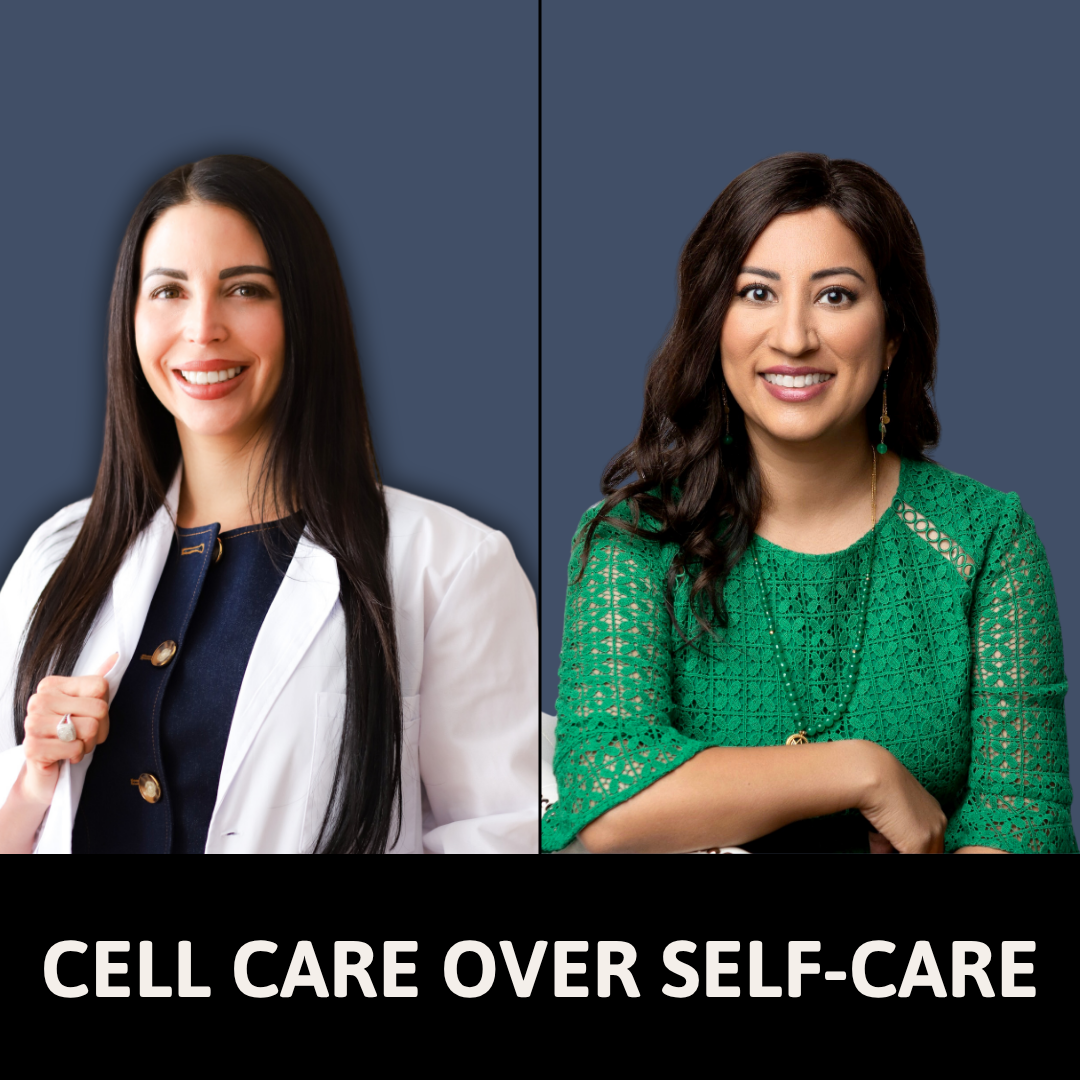
Dr. Monisha Bhanote joins me to talk about cellular health and resilience, and why fatigue, brain fog, digestive issues, and other everyday symptoms may be signals from our cells rather than things we should simply accept. We talk about her approach to cell care, cellular consciousness, and why health practices need to be personalized rather than copied from the latest trend.
We also explore why Dr. Bhanote considers travel a stress test for the body, how digestion, immunity, focus, energy, and recovery are connected, and what Ayurveda can teach us about listening to those signals. We also talk about muscle, mitochondria, and creating health rituals that work with your body instead of against it.
Topics We Cover in This Episode:
- What cellular resilience actually means
- How to recognize the signals your body is sending
- Why travel can stress multiple systems at once
- The five pathways connected to resilience
- How Ayurveda can inform personalized health choices
- Why copying someone else’s wellness routine may backfire
- How muscle supports cellular health
- A simple exercise for becoming more aware of your body
If you’ve been feeling tired, foggy, or like your body just isn’t responding the way it used to, tune in to this conversation with Dr. Monisha Bhanote.
Resources:
Connect with Dr. Monisha Bhanote: https://www.drbhanote.com/
Travella Wellness Products: https://travelawellness.com/
(Use code: DRCASSIE)
The Anatomy of Well-Being Book: https://www.drbhanote.com/the-anatomy-of-wellbeing
Order Dr. Cassie’s Book ‘Fix Your Gut, Fix Your Hormones’: https://guthormonefix.com/
Use code LISTEN10 for 10 % off your order on shopmodernendocrine.com
Additional Resources:
Check out the website
Follow Cassie on Instagram
Follow Cassie on Facebook
Follow Cassie on YouTube
Follow Cassie on TikTok
Disclaimer:
The information presented including any materials discussed, referenced, or linked within this podcast are for general educational purposes only, not the practice of medicine.
No doctor-patient relationship is formed from you listening to this podcast or utilizing any of the information provided.
I am a doctor, but I am not talking to you as your doctor. The information provided is not intended to diagnose or treat health problems or take the place of the professional medical care provided by your doctor.
If you are experiencing any health problems, including problems you believe have been touched upon in any respect within this podcast, you should consult your doctor about the problems without delay. You may ask your doctor whether he or she believes the information I have provided would be helpful to you, but you should still consult your doctor immediately and follow his or her medical advice as your treating physician.
I’m just here to provide you with basic knowledge about the issues we discuss so you are more aware of them and can better discuss them with your doctor.
Join me on the next episode as we continue our journey.
Transcript
Most of us are aging faster than we should. Not because of genetics, but because of what’s happening inside our cells every single day. And today, you’re going to meet a physician who has spent more than three decades watching disease happen at the cellular level. Almost 1 million cases diagnosed cell by cell. And it changed everything about how she practices medicine. Meet Doctor Monisha Bhanote. She is a quintuple board certified. That’s five medical board certifications and the range is unlike anything I’ve ever seen. Three of them are different areas of pathology, which is the study of cells and what happens when they go wrong. And her other two are in wellness. She has a culinary medicine and an integrative or functional medicine degree. She also incorporates either Aveda into her practice of medicine. So this is a physician who has literally looked at disease in the eye under a microscope, and then spent years learning how to prevent it from the outside in. She’s the creator of Cell Care, a framework for rebuilding health from the inside out, and the best selling author of The Anatomy of Well-Being. She’s the founder of, well, Color Institute and Travel Wellness, the world’s first physician formulated line designed to defend your body against the cellular stress of travel, the gut disruption, immune suppression, and biological dysregulation that hit every time you cross a time zone.
I know when I travel, I feel terrible, and she’s going to explain why. Her work has been featured in multiple things like CNBC, Women’s Health and Prevention. And in this conversation, we’re getting into what’s actually driving fatigue, inflammation, and burnout today and the precise cellular shifts required to rewire your cellular resilience. This isn’t wellness advice. This is biology of protecting your energy in a world that doesn’t stop moving. And she helps break this down in ways that are very fascinating, where we talk about cellular resilience and cellular consciousness, which I think is very impactful. Please welcome to the show, Doctor Monisha Bhanote. So cellular health is huge with my listeners. So I have today doctor Monisha Bhanote. She is a pathologist who is going to tell us a lot about cellular health. For those of you listening, if you don’t know what a pathologist is, it is a medical doctor, medical trained MD that looks at cells under a microscope. So she’s the person who would help people understand if you get some sort of biopsy, what we’re actually looking at. So she’s a trained medical doctor. So thank you for joining me. I’m so excited to have a conversation with you about cellular health. Absolutely.
Thank you so much for having me today. I’m excited to kind of share my perspective of my last three decades of medical expertise and training.
So will you tell everyone, kind of briefly in a few minutes what you do for a living? Like, you know, you are a medical doctor and then how you kind of got here, how you got so interested in, in cellular health and created this framework about cellular health.
Absolutely. So I am a formally trained MD, and once I finished medical school, I did what I thought I was supposed to do is go treat patients. So I actually started in internal medicine. And that very quickly became the mm. I think I’m doing everything right. I’m doing what I was taught, but I’m seeing patients in the emergency room and then in the clinic and then back on the ward. And this is back in the day when we didn’t have electronic medical records. It was literally paper charts. And, you know, every few months I’d see, oh, this was my hope or my history and physical. And I do not have doctor handwriting. I actually have very good handwriting. It’s like almost like a typewriter. And I’d be like, oh, well, now the patient hasn’t gotten better, but I gave them exactly what they needed. So looking at that and I’m like, okay, something’s wrong here. It’s not what I’m doing. It’s the system. And I’m like, this is very dissatisfying for myself and for my patients. And I’m like, what could I do that could actually help patients? And I remember back in medical school, I had very good training in anatomy and in histology and in pathology. And I’m like, oh, well, I like to understand how the human body works. And I also did a ridiculous amount of rotations in radiology because I liked looking at the inside of the body and like doing procedures. And I thought, all right, I’m either going to do pathology or I’m going to do radiology.
But I could not handle the thought of sitting in a dark room for the rest of my life doing radiology and pathology in itself is very colorful. So for people who aren’t familiar with pathology is because most people may know of it, like if they’re watching NCIS, one of my favorite shows, right? And they’re thinking, all right, this person is going and having an autopsy. And actually all the patients that I get to diagnose are all alive. So that what you see is one very, very, very small aspect of what pathology is. So I’m the only person that I know of to date that has five medical board certifications. So I’m five MDS in one, which means three of them that I’ve done are in pathology, anatomic pathology, clinical pathology, and cytopathology. And I’ll just briefly tell you what those are because it’s really important for the people who are listening. If you’ve ever gone and gotten any blood work done, which many of your listeners have, that gets validated and done through a clinical pathology lab. If you’ve had a blood transfusion, that’s clinical pathology. If there’s a transfusion reaction, If you submitted a urine sample, all of that is evaluated in a clinical pathology site. Now, if you have gone and had a colonoscopy and they took a polyp out, or you’ve gone and gotten a mammogram and you had to get a breast biopsy or say you did have to get a resection where a lumpectomy came out or a gallbladder came out or something came out of the human body.
All that comes to a pathologist who actually looks at it to diagnosis. And then I think as you’re an endocrinologist, one of the other things is something called cytopathology. So Cytopathology is literally looking at the cells under the microscope and single cells making a diagnosis. So I’ll give you an example. As a cytopathologist, I’m trained in doing fine needle aspirations. We did hundreds and thousands of these fine needle aspirations when I was at NYU. And basically we take a little needle and put it in, say, a thyroid or in a palpable lymph node or something like that, and aspirate a few cells out. So then we can go, oh, is this a benign thyroid nodule? Is this Hashimoto’s? Is this papillary thyroid cancer? So when I say that I’ve been looking at cells for decades, I’m literally the person who’s been looking at cells for decades and millions of them, all kinds of cells, every single part of the body. I know what it looks like on the inside. And, and that’s where, you know, for my career. Yeah, it’s it’s fascinating, I know it. But then I also know sitting in tumor board conferences with my colleagues, whether that’s, you know, sitting with the radiologist, the oncologist, the surgeon that I was seeing these patients that I was diagnosing these cancers in, whether it’s a, you know, invasive ductal carcinoma, poorly differentiated to a small cell lung cancer, to a gastroesophageal cancer to all these things that I’ve been doing. And for me, it was always like, okay, they’re getting their surgery, they’re getting their chemo, radiation, whatever they need to get.
Then why are their cells still not fixed? And it always came down to, all right, what is the mechanism of action? What is going on? Because these diseases don’t develop overnight. And me as a pathologist, I’ve seen the progression of these diseases. And individuals weren’t being informed that, oh, when you have the treatment, it’s your ecosystem that has been disrupted. There’s inflammation in the body, there’s all these things and they just go on living their life like, okay, now I’m fine where my integrative training. So I also trained at Andrew Weil Center for Integrative Medicine and then in culinary medicine, how to use food as medicine, making that the total of the five boards. And I’m like, I could definitely sit and just diagnose disease all day long. But I have a secret that nobody else knows of what the inside of your body looks like and how to fix that, and how to make your cells so resilient that even in this modern world, when we have all these exposures, whether they’re environmental exposures or lifestyle, all of that, how can we take these cells and really fortify them? And that’s where now my practice kind of comes in because I have this inner look. And now when I see patients, I’m really looking at, all right, why are their cells not working? What are all the things behind it? So that’s just a little gist of it.
I love that that’s so powerful. So you understand cells, which if you’re listening, think of the body. You know, your body has trillions and trillions of cells that make it up. And so the cells are like the little people in the army, right, that make things work. And so, or think of cells as like a house. Each cell is a house. And then we have, you know, cities and we have states and we have countries. Our body is is developed like that too with systems. And so from an actual cellular level, how do we start to refix our body? And I love how you said our body is an ecosystem. We talk about that a lot on this podcast. In my practice, we’re taught in medical school, unfortunately, that the body has systems in each system. You know how to diagnose and fix each system, but nobody steps back in traditional Western medicine and says, wow, all these systems are actually an ecosystem. They flow into each other and we’re a whole functional unit. And so I love that more and more people are looking at that. You brought up culinary medicine. I mean, I think food is obviously fuel. I did a podcast recently where we talked about amino acids and minerals and how that literally fuels our mitochondria in our cells. And so I think this is so important for the people that are listening, though. You mentioned cells being resilient. So if somebody is listening to this and they’ve never heard the phrase, you know, cellular resistance in a health context form, what does cellular resistance actually mean?
Well, I talk about cellular resilience and making your cells resilient. So my first book, The Anatomy of Well-Being, really goes into talking about self-care. So self-care is the first aspect of it. And self-care was kind of a riff off of everyone so focused on self-care. And I’m like, that’s great. You know, all the things you do to take care of yourself. But if you really want to be living your best life, we need to be talking about the cells and how do you care for your cells. So in my first book, I really went through all the different aspects that will influence your cells and how you can use your lifestyle, whether they’re the different practices or in my book, I talk about rituals, right? So what’s your morning ritual? What’s your evening ritual? What? Create a ritual based off of science instead of just following whatever is available on social media. Because if you understand how your body works and everybody’s body is unique, right? So that’s why one thing can work for one person and not for another person. But if you understand that on that soul level, then you can make those more informed choices. So cell resilience evolved from cell care, meaning like cell care is the practices that you do, but the resilience is how does your body adapt based off of the modern world? And how can you, even if you know, we can’t avoid all of our exposures, how can those cells be so fortified and strong that if on an emotional level, something triggers you or throws you off? Your body knows how to handle it. If on a biochemical level, something gets thrown off, your body knows how to handle it because you’ve kind of trained your body to be resilient. And I think that is the direction that we need to start looking at things, because what I see in individuals is that like, people are just falling apart these days. And I’m like, okay, let’s take a step back. It’s because we don’t have the tools to manage the complexity of the world we’re living in today.
Yeah, I completely agree. So resilience then is your body’s ability to adapt to the modern world. So I like that. So we are under bright lights now in closed buildings and homes, eating food that is mineral depleted, you know, just different than what we were thousands of years ago. And so all those things, while some people say maybe that made life better, we don’t die of, you know, cholera or the flu as much as we used to or, you know, just during childbirth. But some of the modernization of the world has made our. Our body just. Yes, we have to be more resilient because our cells are just like, oh my gosh, what is this die that you’re feeding me in food? What is this bright light? And we’re not getting fresh air because we live in contained housing units. We’re not outside seeing the sun. And so I think that’s a good way to put it for people that are listening, is how resilient are your cells? How resilient is your body so that you don’t have these symptoms, you don’t get sick, you don’t get pathological diseases like you talk about. And it’s interesting because I also feel, you know, I it’s just a buzzword that’s thrown around a lot. And you talked about your morning ritual. And to your point on social media, people talk about all sorts of stuff, like some people cold plunge, some people read light, some people fast, some people exercise. And it is frustrating because people come to me and they’re like, there are so many different things. What do I do? To your point? Everyone’s different. You kind of have to listen to your body and figure out how does your body create resilience and make you feel well. So I like that you also. So cell consciousness, how is that different from just, you know, resilience? Yeah. Yes. How how is that different?
Yeah. So, so consciousness is the framework where, okay, self-care is your actions, right? So those are your practices that you’re going to do, whereas cell resilience is the end result you want to create. But the cell consciousness is that in between, because we have to awaken our cells to actually receive the signals. So when I’m kind of talking, like I always like to use this as my cell model because people love visuals, right? So for the people listening to this, go watch the YouTube video too. But okay, here’s your human cell and we’ve got, you know, so many of these in the body and they all have different functions, whether, you know, it’s a Neuron, which is a brain cell for your brain, whether it’s a thyroid cell to make thyroid hormone, whether it’s a liver cell to help the hepatocytes, you know. So all these different cells have functions. But when your cells have been dampened by all of these exposures, they are not conscious. It’s kind of like we’re not living in a conscious world. We’re just on autopilot. So our bodies and our cells are also on autopilot because we haven’t kind of, in a way, awoken them. And the end result of that is, as I define it, in the most simplistic world, when disease is created, we literally have angry cells, okay, as opposed to happy cells. And now I have thousands of pathologic names for them depending on what the disease is. But at the end of the day, the entity is angry cells. So what I want people to do is listen to the signals their body is giving them.
And that’s kind of like creating that self-awareness and that consciousness. Because if we ignore the fact that we’re bloated, if we ignore the fact that, I mean, I can’t believe I still see patients that think like having a bowel movement every couple days is normal. If we ignore the fact that we have like headaches, this is all cellular communication. It’s
the cells are communicating, they’re sending messengers. And, you know, whether that’s through metabolites or compounds. So this kind of stuff. And we tend to dampen that and just think this is normal. This is me getting older. This is menopause. This is the aging process, all of this. And we kind of just go, all right, this is just what life is supposed to be. Instead of going, hey, what’s my body actually telling me? And I understand not everybody can go to medical school, which is why literally, like my editor told me, stop writing this book, you can write another one. And I’m like, no, but if they don’t understand how the human body works, how can I like. This is a book you read before you read the other health books, because if you understand how the human body works, you can then take that information. So I kind of like joke. I’m like, I’m kind of putting you through med school in a way that’s more relatable. So you can go and do all the things and make these more informed choices.
I love that. So self-care is the practice that you do to get the result you want. So resilience is what you want at the end. That’s why we do this. That is your end result care. That’s your end result. And so consciousness is the where you are right now, like what is going on right now. It’s trying to give you signals as to we are moving in the right direction towards resilience or we’re not, we’re tired, we’re foggy, we’re hungry, we’re cranky. And I think that is important because with everything that goes on in the world, the things from Instagram and people telling you this, like, I think we’ve kind of forgotten to just listen to ourselves. Not everyone you mentioned this, not everyone is the same. And I think that’s the nuance of medicine is we go to school and we’re taught if this, then this, you know, if this and this, then this is the diagnosis. And with this diagnosis, this is how you treat it. And the problem with that is that’s not how everyone needs to be treated. And, you know, not everyone fits into this exact box. Like not everyone that’s hypothyroid loses all their hair, loses their eyebrows or is cold. And so the nuance of medicine is you actually have to use your brain.
You have to keep learning, you have to learn the general background and, you know, the foundation. But we also have to realize that the body is a system. Not everyone fits into every single box, and not everyone’s treatment plan is going to look the same. And so I say that to say what you see on social media and what you see some influencer doing in the morning, although that may be how you want to look, realize that when you do that to your body, it might not be okay. A prime example is cold plunging. There is so much different information about coal plunging online. And I think it’s because for some people it really does help them. It makes them feel better. It makes them energized. You know, it does help them at a cellular level, but some people hate it. And if you really hate it to your core and it makes you feel worse, don’t do it. I don’t care if it helps increase brown fat production and, you know, wake you up. And like, if you hate it, don’t do it. You know, like that’s your body, like act consciously. I don’t like this. Right?
This reminds me of Ayurveda. So Ayurveda, like is something else I incorporate. And my patients might not know it, but I know when I’m like having my patient appointments with them that I know what kind of dosha they are. I know what they’re going to respond to based off of the Ayurvedic principles, which are a 5000 year old whole body system. And it’s looking at individuals on this, okay, this is the way you were born and this is how you’re going to respond to things. We do it through certain doshas. They’re called Ayurvedic doshas, whether you’re a pitta vata and kapha, which mind you can change in different stages of life. But an individual that is, say for example, a pitta individual, which is a very driven type, a person always active, always doing stuff. Their body does not respond well to spicy Mexican food. It does not respond well to the hot Thai chilies. What do they do? They put more heat on top of heat in their body, right? And that makes them not only irritable, it gives them reflux, right? So it’s these things that when we don’t pay attention and whatever system you’re going to use, it all always comes back to paying attention to the signals that your cells are giving you. Right? And so just eliminating some of these things and going, oh, well, hey, that did actually work. So why am I trying to follow a black coffee diet that somebody told me that would help speed up my metabolism, when in fact it’s actually giving me reflux.
Or prime example of that is when the warm lemon water trend came around. So warm lemon water was like, oh, now we’re hydrating in the morning and we’re getting lemons. Guess what? For some individuals that also can contribute to reflux and acidity. Right. So this is where it’s not about blindly following stuff. It’s more about understanding your body. And I love to use like so people ask me, well, how do I know if my cells are resilient? And I’m like, great, great question. The easiest and the cheapest, well, almost cheapest stress tests, instead of going to a cardiologist is using travel as a stress test, right? So if you went away for the weekend and your sleep cycle was off on Monday, how well are you bouncing back? Or say you went for a trip and you’re in a different time zone. How quickly does your body adapt, whether that’s nutritionally meaning your bowel movements? Because some people report that when they travel, their bowel movements are totally off, their sleep is totally off. So that to me is one of those like, you can actually see that stress test as opposed to going into the cardiologist and then attaching everything to you and you’re not understanding what’s actually happening. You yourself can identify whether or not your cells can support, if they can adapt, if they can respond to the life that you want to live. I love that.
So I love that you brought up either Veda. I learned about that like two years ago. I have the either Veda for dummies book from Amazon and I read it, although I can’t figure out which one I am. I go back and forth between two of them. But when I read that, and this sounds silly because I’m a very well educated, dual board certified endocrinologist, but I was like, you know, I think I’m gonna just start really listening to my body. Like, for instance, in my 30s, I got up every morning and I did hit exercise at 5 a.m. and I felt amazing. And then I turned about 37 and I was like, I feel like absolute crap when I get up and do this, you know? But I just did it because I always did it. And you need muscle, right? And, and then I started reading that book and I was like, you know, I’m gonna do some walking in the morning and some stretching and some yoga and maybe Pilates if I feel like it. I feel like a different human being, like just so much better. You know, like, and so to your point, I love that because everyone says you got to lift all this really heavy weight. And I do think you should strength train, but you can do some pretty significant strength training with Pilates and yoga. Like it’s actually really hard, but you don’t have to have that like huge cortisol, you know, spike. And so I do think it’s really important that this, I like how you say that. So cell consciousness, like we just need to pay attention to that. It’s also funny that you say that everyone in my family loves spicy food, and they give me so much crap because I cannot tolerate spicy food. It literally makes me sweat. It hurts my stomach like pitta.
Vata. If you’re wondering.
What you are. Yes, that’s what I that’s what I definitely Vata. I can’t handle it. And like, my family gets so mad and my husband will be like, I like, they want super hot stuff. I’m like, you guys, literally, it makes me ill. Like I don’t feel well. It’s not that I don’t enjoy the flavor. It’s just I don’t like it. And so it’s interesting that you say that, but I do sort of like to cold plunge, which is interesting. Like the thing I.
Do like it is because as a pitta, you already have heat inside your body. So your body likes anything that is cooling. So like, I’m sure you like cucumber water or like watermelon, like cooling things because then it brings like that. And when I say heat, like that heat can show up in so many ways, it can show up as redness in your face. It can show up as hot flashes and flushing. It can show up as reflux. Like I mentioned, it can show up as like being hungry and irritable, right? So there’s so many ways that this kind of presents itself. But the reason you, you probably like cold plunge is because it’s cooling that internal heat that you were naturally born with. So rather than fighting the forces that we have been given, like our own, like we need to understand how can we take this information that ourselves and our and is communicating with us ourselves, constantly communicating and then optimize our life, right? Because everybody’s into optimization and without understanding. I mean, I saw the funniest thing this morning where it’s like one of her colleagues without a medical degree is basically saying beans are a toxin. And I’m like, well, maybe your body doesn’t like beans because you don’t have the microbes to break them down. But we can’t say that beans are a toxin, because beans actually are one of the healthiest things for people on the planet. If their body has the ability to break them down. Right? So it’s not about like following these trends. It’s about going back to that ancient knowledge of, okay, this is how the body was designed. This is what the body is meant to do. And if I’m going against that, that’s where that friction comes in. That’s where that imbalance comes in.
Yeah, you nailed it. My husband gets so mad because I love really cold water. And if you bring me water and it’s like room temperature, and if it’s not like really cold, I’m like, and he’s like, you’re such a baby. And I’m like, I just don’t like it. I don’t like how it tastes unless it’s really cold. Like it’s just, I’m not gonna drink it. So he’s laughing at me because I keep glass bottles in our fridge full of water. And I, like, circulate them all day long. And if they’re set out for more than 15 minutes. They got to go back in the fridge. I got to get a different water and I told him, I’m like, I think it’s my either. And he’s like, whatever. I also don’t love soup. Like I don’t it’s true. I don’t like like hot stuff. I really love, I love watermelon, I love cucumber, I love I keep these eye patches in the fridge. Oh my gosh, they’re amazing. I put them on at night before I go to bed. It’s like this calming feeling. As soon as I put them on my eyes, I’m just like, oh, I can like float into bed. So that’s interesting. And I do love like people are like, how do you do that? I like when I get into cold plunge and it’s cold, like 40 degrees, I can sit there for five minutes and I just like kind of Zen out. I mean, it sort of sucks, but like, it calms me down. I don’t know how to describe it. And then my husband gets in and he’s like chattering and like, hates every minute of it, but I like it.
But keep in mind now that can change as you age, because naturally, as women become perimenopausal or menopausal, they experience more of a vata dosha. And that can be represented by, you know, dry hair, vaginal dryness, like dry crepey skin, like everything gets drier. So we have that like just from a natural stages of life. But Ayurveda has seen that as like a vata imbalance. So then maybe later in life, you aren’t going to be doing as much of that cold, dry, you know, so we also need to look at it at what stage of life we’re in. And everyone’s just kind of just literally, I feel like throw like they throw spaghetti up on the wall and be like, okay, I’m doing this today. You know, because they saw something without knowing.
Yeah, no, I think you just have to your point, you just have to be conscious of what’s going on. Like I used to be a 5 a.m. person hit the gym and now I’m like a, I kind of like to sleep till I wake up. And sometimes it’s 615 and sometimes it’s 630, and then I’m a slow kind of move around, girl, take a walk, see the sun, like just very different than the whole rest of my day and what it used to look like. But if I try to like, push through that, like this morning, I was just like, man, I wanted to lay in bed. And then I went and did a little bit of red light, got in the cold plunge, and I just didn’t feel like exercising. So I went for a walk for an hour and like, looked at the sun. If I would have tried to exercise when I didn’t want to, then I would just be in a bad headspace and like, it just ruins my day. So I just am like, I just listen, I don’t know, but also I want to go back to your travel thing. So very interesting. So you say that travel is a stress test. I’m interested in this because I hate traveling and I hate traveling because I feel like crap when I travel, because I feel like my sleep schedule gets off balance. And I do feel like I get constipated. And, you know, some people say it’s because when you travel and you’re in a plane, it does things to your stomach and compresses it. But you’re saying it’s because my cellular consciousness is is not great in my cellular resilience.
We don’t have the resilience yet. Yeah. Yeah, absolutely. Because I travel a lot. I’m like, I travel two weeks out of the month, usually international. So you would never know it. You would never know because my system is supported. And so part of that is there’s five specific pathways that I notice that happen when it comes to the travel part of it. And like I said, travel is just a stress test. These pathways are happening every single day. Okay. And the, and the pathways that I found that made the biggest impact for individuals was their digestion, their immunity, focus, energy and recovery. And I like those because it’s a little bit more systems based and they all kind of connect like instead of being siloed, like, oh, it’s just my energy levels or it’s just my focus. It’s actually as a kind of a circle path because when one gets affected, it gives a downstream downstream and it kind of keeps going around and then you feel like crap. So I like to use these five pathways as an example. And I like to start with digestion because literally your next meal can change how your body responds with different signals. I can, I can see, you know, your book there, fix your gut, right? Fix your hormones. Your gut literally is that epicenter. That’s that epicenter, whether that’s in Ayurveda, whether that’s in modern medicine, which is now slowly catching up, but it is the epicenter for where everything’s going to happen.
And so just taking a look at your gut in the sense of, are you having adequate bowel movement every day? Is your bowel movement floating or sinking? You know, we can go into the whole details of that. But looking at that, when you’re eating, are you bloated? Are you not bloated? When you eat something, do you get a rash? Do you get headaches? Like these are the small signals that I think we don’t connect often. And I know this because like even yesterday for myself, I’m like, oh, I found this new flavor of kombucha, and I took kombucha out for a really long time and I’m like, I just want to try this flavor. And what did it do? Not because my gut is not resilient, it’s because my body does not like it is. I was like, oh, I think I’m getting a little mini headache, you know, because my body does not like this. And it’s specifically because of the compounds in there, even though it’s organic or whatnot. But that’s where looking at the gut. And like you said, when we travel, if we use travel as the example, things are happening in the sense of, yes, you’re in a higher altitude.
So just like a bag of potato chips or pretzels on a plane is like puffy, that actually is what happens in our gut. Our gut expands, the gases expand in our gut. We don’t notice because we’re so used to wearing yoga pants instead of like proper button up pants. Nowadays when we travel, right? But we will feel a little puffy. In addition to that, we’re possibly. And I don’t know if your community would be doing this, but possibly because every restaurant I ever see in an airport is full. Like there’s no seats. People are sitting and eating like whatever restaurant food there is. And that’s very salty. It’s processed or they’re in the very, very long line for coffee. And coffee is dehydrating. So you have this compounded effect. It doesn’t just dehydrate your skin, it actually dehydrates your gut lining. Okay, so when your gut lining gets dehydrated, it becomes more hyperpermeable, which is, in other words, leaky gut, right? So now if our gut lining is more leaky, guess what? Now our immune system can be affected, right? Because now we’ve got this leaky gut, more environmental things are coming in. So people are like, always get sick when I travel. I’m like, no, it starts way before that, right? Like there’s a reason I don’t get sick before I travel.
I like literally have a kit of everything I need to make sure. But So now your immune system is suppressed. On top of that, you have. Some people are just not good travelers because crowds, noise, whatever it is, or they just don’t have the tools to like manage their stress, stress, cortisol levels, suppress your immune system. So now you got a double whammy of your immune system and why you might a few days later, wherever you land, be like, oh, I caught something. There was a person next to me. Not necessarily right. It’s just your immune system was not ready for that combination of that dehydration, the immunity being affected to then going into you get somewhere and you’re like, gosh, I don’t even know, like what’s going on? My brain feels a little foggy. I’m just feeling off. Right? That fullness in the brain, well, that got compounded because you’re dehydrated. And even with the people who have the bottles of water, they can still be dehydrated to the way you’re sitting when you’re traveling, whether that’s in a car, whether that’s on a plane, wherever you are, you’re actually compressing your carotids that bring blood supply to your brain. Okay? And this can happen. Even the healthiest individuals, we found that even athletes, when they travel, that the altitude affects them.
And mind you, from a vascular perspective, imagine if you’re somebody who’s not healthy as opposed to athlete who’s extremely healthy, and it’s affecting them because their percent of oxygen saturation can drop to like 90% in a healthy individual, which is really fascinating. So now we’re not getting enough blood flow. We’re not moving our body when we don’t move our body, obviously, there’s no blood flow. It’s pooling that goes down to our energy, right? So now my favorite word, I’m waiting for my t shirt to arrive that says mitochondria. But the mitochondria get impacted, right? So mitochondria, the little organelles inside each and every one of these cells that is responsible for producing energy for us, but it’s really producing energy so our cells can function, that gets impacted. And then that leads down to recovery, right? Because we never buffer in how much recovery time we need. So that’s not just sleep. So I love looking at these five pathways in a very connected way, because whether that’s a hard week at home, just working and looking at that to weather the most extreme is the travel part of it. Right? And I think there are certain things that we can use to support that. I know I certainly use a host of different things to address these pathways. And yeah.
That’s so fascinating. I love how you talk about digestion, immunity, energy focus and recovery. You know, those are kind of things that we focus on in the book as well as far as gut health. And whenever I travel, I told my husband, I think when I travel I don’t feel well because when I travel to your point, I think my cortisol is higher. It just stresses me out, stresses me out. Being in places I don’t know, around people I don’t know, you know. Now, when you travel, most of the time you’re delayed in some sort of fashion. There’s nothing you can do about it. And so I feel like my cortisol level is probably higher when I travel. When your cortisol is high, it will affect your insulin, you know, then that’s going to affect your gut. Anything that you do eat is going to be more permeable through your gut. You’re not going to absorb the nutrients. And so to your point, I mean, yes, all of these things. And you’re probably right, I am really bad about stacking things in and probably not giving myself enough recovery when I travel, but I feel like I’ve tried to do things to when I travel to make it better, like not eat and fast, make sure I hydrate really well, make sure I’m taking electrolytes. You know, I take my things for my immune system. What I probably need to do are I traveled recently and I took a nap every day and oh my gosh, when you take a nap as an adult, that can be life changing. It’s like, why have I not done this more? Like even it was, it was like an hour in the middle of the day. I’m just like, oh my gosh, this literally a couple weekends ago, my husband and I went somewhere and Saturday, Sunday and Monday during the day, I took a 90 minute nap and I was like, this is like, I don’t even know. There are no words. But besides napping, like, tell me what’s in your, you know, your.
In my regiment. Yeah.
Yeah.
So depending on where I’m going, I, I do believe like the foundations, right? So sunlight, wherever you are. So if you’re like, I travel a lot internationally, so I’m not gonna get off a plane in Europe and then go straight to my hotel room and go take a nap. I’m gonna start resetting my circadian rhythm as early as possible to get that light dark cycle going. Why? Because that also will help with resetting your microbiome circadian clock, which works independently so you can set your visual one. But the microbiome has its own clock that can get disrupted up to 3 to 5 days after you’re on the road. So that is very important. And now in some individuals, yeah, fasting can work and others no, it won’t. But I always try and eat as close to the time that is my destination time. So when they give you food on an airplane and it’s midnight in the US, guess what it’s like depending on where you’re going, we wouldn’t be eating at midnight at home, right? So, well, we shouldn’t be. But so I like to look at those things and really take a look at that. But then I’m always carrying herbs and botanicals and whatnot with me. So I know like if somebody has digestive issues and I know I do this for my patients sometimes, I always give them cumin, coriander and fennel, which is just literally culinary spices that they can put in hot water and help to relieve digestive issues when they’re on the roads.
It’s called ccft. So it’s not even tea. That’s why it doesn’t make you dehydrated, right? Because there’s no caffeine or anything in it. But it’s culinary spices that are meant to help with bloating and digestion. So ccft is something I like to do. Another thing I like to do is at one point, and I watch these videos because I’m like, wow, you guys all have way too many different supplements. But this is not about that quick fix of, okay, I only take melatonin because my sleep gets disrupted, or I only take this when I’m on the road. I always look at it from a preventative focus. So how are you going to make yourself resilient before you even take the trip so you can actually enjoy the trip, right? And from there, I developed something just specifically to make ourselves resilient. And I must tell you part of the story of why I developed this. So back in 2020, I had gone through a probably one of the hardest times in my life, which was a suffering a traumatic brain injury. And at that time, it was so bad that I couldn’t really talk, I couldn’t write, I couldn’t walk.
I mean, I had to like, retrain myself how to walk down to the mailbox to the end of the street. All this stuff. I had chronic pain from three cervical disc herniations from this injury, I couldn’t sleep. My entire sleep cycle got disrupted because the brain, believe it or not, is in charge next to the gut. The brain is next in charge, right? I developed autoimmunity because of the strong gut brain connection. The host of things vision problems to anxiety to basically, I developed everything and I became a patient right in all the senses and what was being offered to me from the best of the best doctors just was not meeting my expectations because I was basically being prescribed ADHD meds for focus. Alzheimer’s meds for my memory. Parkinson’s meds for my balance issues. Anxiety meds, depression meds, chronic pain meds, you name it, and even surgery. I mean, I was offered a lot and I was like, no, there’s got to be a better way. The human body can repair from this, right? Like my cells will know what to do if I give them what they need, right? And I really went down this rabbit hole of how do I support myself? And it did. It came down to these five pathways that were getting affected digestion, immunity, focus, energy and recovery, because I knew that, all right.
There was something that my body now because I got so blindsided and I was healthy before that no problems whatsoever. But I’m like, my body needs support and it’s not recovering as fast as I want it to. And so I went down the Ayurvedic route and really went into the botanicals that Ayurveda has to go. All right. There’s some real like solid science here. It might be small studies, but there’s no side effects with it. Right. So why not try it? And so I tried taking all these different Ayurvedic botanicals from bacopa to gotu, kola to holy basil for stress. So each of these botanicals does something different. And I’m like, okay, this is working. This is really working. Like this combination. And then, you know, of course, taking the omegas and taking the magnesium and doing all the things that of course, my neurologist was on page with some of the supplements. So I went down that route. And from that root, I’m like, okay, these are actually more powerful than I thought. But I was literally carrying around an apothecary of different herbs and all this and making teas and concoctions and like making little like date balls with the herbs and all this. And I’m like, okay, there’s got to be an easier way. And from that is what we’ve been developing for the last few years.
And actually just came out this summer, which is my first physician formulated travel wellness and longevity supplement because my goal was, all right, how am I going to protect my cells in all these different ways? If there’s something that doesn’t exist on the market? Because I had no desire to make a supplement company, I just wanted to fix my body, and I didn’t want to have to carry around 30 different pills because I wasn’t going to be able to be consistent all the time when I was on the road, when I needed to focus, when I needed my brain to be on because my brain was not working. And from that, I created travel essentials, which is what you see today that exists. And I literally took it for more than two years, even before we packaged it for everyone else. Like, even if it’s just for me, I’m gonna take it, see how it does. And now my patients are on it and they’re like, you have simplified our protocols because I not only built this through my own experience, I also built it from the fact that all the in-depth testing I have been doing on patients through functional testing and from clinical pathology testing for years, I’m like, they’re missing stuff and I can’t get this combo anywhere unless I take literally 30 bottles.
So how many of these do you have to take? Is it like a couple capsules a day?
Capsules a day. That’s it.
And it will help with our cellular resilience when we travel and resetting our.
No, not just when you travel before you travel. Right. So it’s not something you take when you travel. It’s actually to take care of yourselves. Now with our modern life demands. So it has a blend of Ayurvedic and traditional Chinese medicine herbs that have a very specific things that. I mean, I’ve had some patients reporting that their hair is getting healthier, that they’re managing their stress levels, especially some of my patients are a little bit older. So they’re dealing with their older parents and stuff and like managing their stress and their work and their responsibilities better because the way the botanicals inside here work, they work synergistically. You can’t take them in isolation and expect them to do the same thing. That’s the beauty of looking at the body in a systems based way. Then I also incorporated the longevity ingredients, which we have plenty of science around, right? So now we’ve got the Pqq, which is known to make mitochondria. I mean, it’s mitochondrial biogenesis. We have the glutathione specific glutathione that will help with as a master antioxidant for the body. We’ve got resveratrol, we’ve got CoQ10, methylated B12 and magnesium bisglycinate. So that combination of the bioactives plus the botanicals is what makes it a really unique kind of combination.
So this is something that we can stay on long term, three pills a day. And it will help with our with our cellular resilience. I love.
That. Yeah. It looks like this. So it’s trivella. That’s the aspirational part of it, right? Because we want to be able to live in the world without having to, in a way, without having to worry about how are we going to protect ourselves. There’s things that people are familiar with in there, like ginger and turmeric and elderberry and astragalus, some amazing things. But my favorite combination is really the Ayurvedic, which is the gotu kola, the bacopa, the amla, holy basil, all of that like it. I mean, they’re powerful ingredients.
Yeah. So we’ll definitely snag the link from you and put it in the show notes. Yeah. Maybe get I’m assuming you can get it on a website. You have a website.
It’s on my website, doctor.com or on Travella wellness.com. You can also get it there and see all the science behind the ingredients. I mean, for Bacopa, there were studies done comparing it to Alzheimer’s meds and how it was helping individuals with cognition. There’s also studies showing individuals who are in school and how their body was able to help make memories more. Same thing with Gotu. Kola is great for Vascularity, right? So if we’re thinking about protecting our blood vessels. Holy basil is a known adaptogen for stress. And people ask me, they’re like, well, why don’t you put ashwagandha in there? I’m like, because there’s reasons like you need, like, I have a chemistry degree. So there’s things that work together and things that don’t work together. So really taking this from a scientific perspective, and there’s so many supplements on the market and it can get very, very confusing, but many of them are not. I would say a majority of them are not actually physician formulated, like coming from this physician lens.
I would agree. Well, I love that. I think that that is, you know, something that I definitely want to try for sure because the cellular resilience is, is very important. And I love that you do either Vedic medicine with it. Besides the supplement, is there any other way, anything else that you want to tell us about? Any way that listeners can find you or support what you’re doing?
Yeah, absolutely. So very easy to find doctor.com. So DRBHANOTE, that’s my website. That’s also all my social handles, whether that’s Instagram, Facebook, Pinterest, YouTube, all the same handle. I would say start there first. You can check out my book, The Anatomy of Well-Being on Amazon, Barnes and Noble, whatever ebook retailers you can check out travel wellness. I know they will link it for you there. And I think most of all, start thinking of your body more in the cell care way and find your way through that journey. So whatever you’re going through, if you can just kind of understand instead of just following people and just doing things without knowing, is that the right thing for me? I think take a step back and become a little bit more self-aware about how are my cells responding? And if you don’t know how to even identify that, like I said, my book will help you identify like what you need to be looking for to go, all right, is this the best thing for me? Because at 6 a.m., Orangetheory class might not be the best thing for you at this time of your life because but you don’t know that yet. And you keep pushing yourself through. And I think that’s where, you know, one of the foundations of my book is going from our habits to our routines, which are routines. You know, it’s like going to the gym and we get tired of it to really becoming more intentional, more self aware, and creating rituals. So it’s not like, oh, every morning You have to go do cold plunge. It’s. You wake up in the morning like you were saying, Cassie, you wake up and you go, what does my body need today? So I’m going to do this today. And I know it’s going to help me make my best day. And that’s kind of where that reframe comes in is I want everyone to kind of start thinking in that way, because at the end of the day, what is a world if we’re not happy in living in it?
Correct, I love that. Well, Doctor Benoit, thank you. I’m going to ask you I want to wrap up. We’ll link all this in the show notes. But I wrap up with three questions really quickly. First thing that pops into your mind. Don’t ever think it people love this. What is one food that’s most beneficial and why? You mentioned beans, but if somebody’s listening, what is one food that.
One food that’s most beneficial? Okay. Food category. Dark leafy greens. Can’t live without it. Why is that? Is it good for your cellular?
Oh, it’s definitely good for your cellular health, right? So we’ve got phytonutrients in it. So anything that comes from a plant is going to give you a more cellular resilience for sure.
Perfect. Green leafies for cellular resistance y’all. What is one thing. Sorry. Resilience. I keep saying resistance. Resilience. What is one thing that is anyone listening to this podcast right now can do that’s completely free, that might help their cellular resilience?
Yeah, absolutely. So I want them after they listen to this podcast to go sit down in their favorite chair in their house and do like, put, put, like, use your phone only to put a timer on it for ten minutes and do an inventory of how your body, your mind, how you’re feeling right now. Because without identifying like what’s going on currently, you’re going to just be chasing after things that maybe aren’t the right direction for you. So go do a self-care inventory.
I like that self-care. And what is one thing you wish you would have known about your health 25 years ago that you would have done differently now?
Oh, I think what I would have known about my health 25 years ago, I think I was an athlete, like in high school, and then I kind of went down that medical school route, and I didn’t keep up with all of that. I think I would have really put on more muscle.
Back in the day.
The muscle was important. You guys, we cellular resilience.
It it is. It is. And because with more muscle you got more mitochondria more mitochondria healthier cells. So I think 25 years ago, if there was a club for like, you know, you go into college, yeah, you might be doing a little bit, but unless you’re on a sports team, you’re not doing it. Same thing in like med school. So I think that is something I personally would have kept up with.
Yeah, I deal with a lot of insulin resistant people, which is why I keep saying resistance instead of resilience. But yes, I agree more muscle you have, the more cellular resistance you have in the mess, the more cellular resilience you have and the less insulin resistant.
Yeah. We don’t want insulin resistance.
No we don’t. But I love that. I think muscle is I think that’s why I did the orange theory for so long. And I do think it works to a certain degree. But man, when your hormones start shifting, you just you gotta listen. And I do a lot of Pilates now. And, you know, even my husband was like, you actually are building some muscle doing that, that Pilates stuff that you do because my husband’s the, you know, in the gym bro guy and he’s like, oh, whatever. I don’t think that he really, but then he like saw me doing it when he’s like, that looks really hard. I’m like.
Claudia is very difficult. Oh, it’s very it is, it’s good. It’s hard. I’m gonna challenge you to add one more thing. Just because you might enjoy it is rebounding.
Yeah, I do that every morning already.
I’m obsessed with rebounding. I love it. Ten minutes of rebounding and I’m like, I can feel the difference in like, the puffiness.
Yep. I love it. Well thank you so much, Doctor Bono. I think that this will be really eye opening for people. I love the travel stuff. We’ll link everything and thank you for what you do.
Thank you so much for having me.
Doctor Bono. Thank you so much for being here. I don’t think I’ve ever heard cellular health explained with that kind of clarity. I’ve been digging a lot into cellular health recently, and the fact that our cells are talking to us all the time, and that could be causing our fatigue, our brain fog, our digestive changes. These are all signals, not random problems. I’ve been saying that for a long time, and that’s why I’ve been trying to find guests like this to explain this to you. All the five pathways she talked about digestion, immunity, energy focused recovery. That is the cell core of what we do at Modern Endocrine. We believe in a ten step care to health, and we start at the cell membrane level as well, which is why I’m bringing you these cell membrane experts on the podcast. The idea that travel isn’t the enemy, it’s just a stress test that shows us exactly where our resilience stands, was groundbreaking for me. I hope that helped you. Everything we discussed I thought was fascinating on this episode. If you thought so as well. You want to take cellular membrane health in any of this seriously, consider becoming a patient. I want to talk to you directly for just a second. If anything in this conversation sounded like you, if you’re running on fumes, if your hormones feel like they’re running your life, if your gut is telling you something is off and nobody’s listening, if you feel terrible every time you travel, we can help with that.
I’m on an endocrine. We’re licensed to practice medicine, meaning we can prescribe prescriptions in 46 states, and we help patients get real answers for their hormone thyroid, gut insulin needs. We don’t guess. Go to our website to book a discovery call. The link is in the show notes. It’s www.endocrine.com. And click on Become a Patient. It takes
two minutes to set up your call. We’ll figure out if we are the right fit for you. Please, please, please do me one favor. And if there is one person who needs to hear this episode that you know, somebody who’s tired, burnt out, convinced they’re just getting older. Send this to them. That one share could change how they think about their health. And you could change the trajectory of their life. If you’re listening on your favorite app, take 15 seconds to like, follow and subscribe to the podcast. If you love it, please leave a review. It generally makes a difference in helping more people find this conversation, so we can continue to improve the lives of hopefully millions of people.
If you want to go even deeper, grab a copy of my book, Fix Your Gut, Fix Your Hormones. It’s an Amazon best seller, and it’s now available on Audible and Spotify. Fix your. Fix your hormones. Every protocol. Every step, everything we talk about on the show, there is reference to that in the book. There’s a whole chapter about the ten step approach we take to health, and cellular health is stage one. And also, we’ve talked in the podcast about True Essentials. We talked a lot about cellular resiliency today. And if you travel as much as I do, your cells are working overtime every time you cross a time zone. That’s why I think that what she created, True essentials, would be something great to add. Make sure that if you want your cellular resilience as best as it can be, especially if you’re on the road, check it out. The information is in the show notes. Use code Doctor Cassy for a discount at checkout. Until next time, take care of yourself down to the very last cell. I’m your host, Doctor Cassy Smith, and you’ve been listening to hormones, metabolism. And you. See you guys on the next episode.