
H. pylori: The Hidden Gut Bug That Can Wreck Your Stomach (and Your Hormones)

Most people think of H. pylori as a bacterium that causes ulcers. While that’s true, it’s only part of the story. In reality, this common gut bug can quietly disrupt your digestion, trigger inflammation, and throw off your hormone balance, often without dramatic symptoms at first.
If you’ve been dealing with bloating, nausea, heartburn, or stubborn hormonal symptoms that don’t respond to treatment, H. pylori might be the missing piece of your health puzzle.
Let’s break down what H. pylori is, how it affects your gut and hormones, and how to test and treat it.
What is H. pylori?
Helicobacter pylori (H. pylori) is a spiral-shaped bacterium that lives in the stomach lining. It’s estimated that over 50% of the world’s population carries it, many without knowing.
While not everyone with H. pylori gets sick, in the wrong environment, it can:
- Damage the stomach lining
- Lower stomach acid production
- Trigger chronic inflammation
- Interfere with nutrient absorption
And since your gut is the foundation of hormone health, even low-grade H. pylori overgrowth can have a ripple effect throughout your body.
How H. pylori Wrecks Digestion
Stomach acid is your first line of defense against pathogens, and it’s essential for breaking down protein, absorbing minerals, and activating digestive enzymes. But H. pylori is sneaky. It neutralizes stomach acid to survive, which may sound helpful, but it’s not.
Low stomach acid can lead to:
- Bloating, gas, and indigestion
- Nutrient deficiencies (especially B12, iron, ferritin, zinc, and calcium)
- Increased risk of gut infections (like SIBO or Candida)
- Slower gut motility and sluggish digestion
Without strong stomach acid, your whole digestive system slows down, and that has consequences for your hormones.
The Hormone Connection: What H. pylori Disrupts
1. Thyroid Function
Your thyroid relies on proper digestion and nutrient absorption to function. H. pylori can impair your ability to absorb iodine, selenium, and iron—all critical for thyroid hormone production.
H. pylori has been associated with autoimmune thyroid disease, especially Hashimoto’s. Chronic gut inflammation may be a trigger for immune dysfunction in susceptible individuals.
2. Sex Hormones (Estrogen, Progesterone, Testosterone)
The gut plays a role in metabolizing and eliminating estrogen. When H. pylori disrupts digestion and gut balance, it can contribute to estrogen dominance, PMS, irregular cycles, and worsened perimenopause symptoms.
It can also lead to increased cortisol as your body tries to compensate for the chronic stress of infection and inflammation.
3. Adrenal Function and Cortisol
Chronic H. pylori overgrowth is a stressor on the body. Over time, it can push your adrenal glands into overdrive, raising cortisol levels and potentially leading to burnout, fatigue, and sleep disruptions.
If you’re always tired but wired, or feel like you’re living in a state of constant stress, H. pylori could be one of the physiological drivers.
Could You Have H. pylori?
Symptoms can vary, but common ones include:
- Bloating or burping, especially after meals
- Nausea or discomfort in the upper abdomen
- Bad breath or a metallic taste in the mouth
- Reflux, heartburn, or indigestion
- Low appetite or unexplained weight loss
- Fatigue or mood changes with no clear cause
H. pylori doesn’t always cause dramatic symptoms. In many patients, it’s a low-grade, chronic disruptor—flying under the radar until something else goes wrong.
Testing for H. pylori
At Modern Endocrine, we use advanced stool testing (like the GI-MAP) to detect H. pylori, including strains with virulence factors—specific genes that make it more aggressive.
We recommend stool testing because it gives a full picture of gut health, not just H. pylori, but how it’s affecting the broader ecosystem.
How We Treat It
Conventional medicine often uses triple antibiotic therapy, but it doesn’t always work long-term and can damage the microbiome.
In functional medicine, we take a more targeted and supportive approach, often including:
- Antimicrobial herbs (like mastic gum, berberine, and garlic)
- Digestive support (enzymes, ox bile, and stomach acid if needed)
- Gut lining repair (using nutrients like zinc, carnosine, and L-glutamine)
- Microbiome rebuilding (probiotics and fiber-based prebiotics)
- Stress and adrenal support
- Re-testing to confirm clearance
Our goal isn’t just to kill the bug—it’s to restore the terrain and bring your gut and hormones back into balance.
Final Thoughts
If you’ve been chasing symptoms like fatigue, bloating, hormone imbalance, or thyroid issues without answers, Helicobacter pylori could be the culprit. It’s one of the most common and most overlooked gut infections I see in practice.
The good news? With the right testing and a personalized plan, you can eliminate it and feel dramatically better.
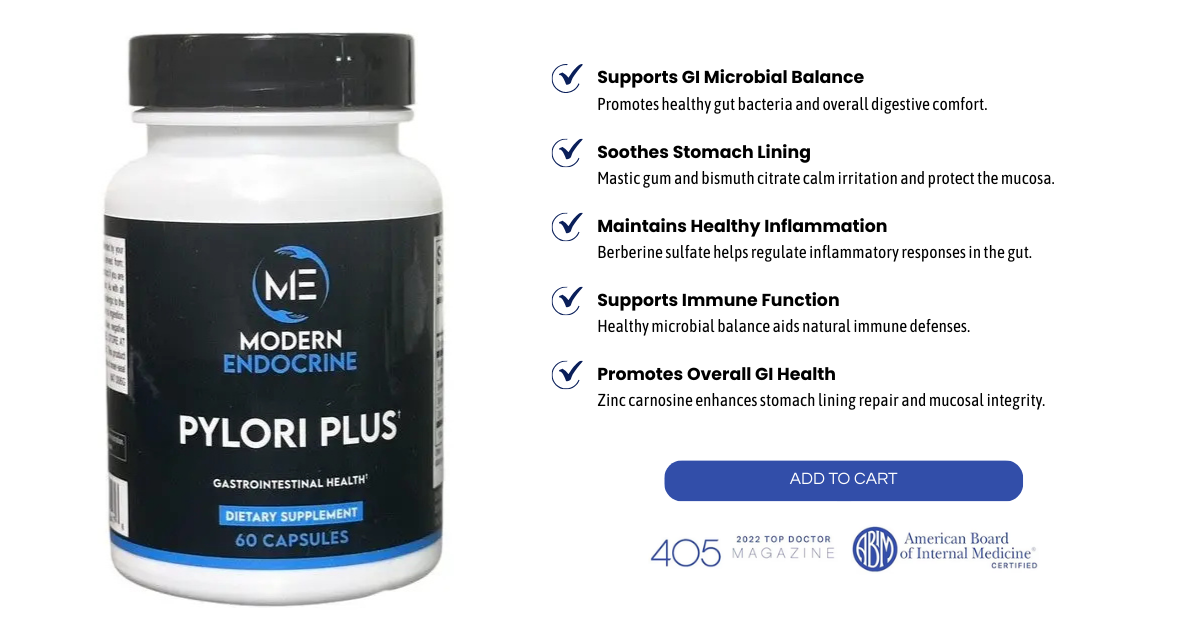
H. pylori can quietly sabotage your gut, hormones, and energy, but you can fight back. Pylori Plus supports microbial balance in the stomach, soothes GI discomfort, and promotes a healthier digestive environment from the inside out.
References
Fröhlich, E., & Wahl, R. (2019). Microbiota and thyroid interaction in health and disease. Trends in Endocrinology & Metabolism, 30(8), 479–490. https://doi.org/10.1016/j.tem.2019.05.008
Pimentel, M., Lembo, A., & Chey, W. D. (2020). Irritable bowel syndrome: An evidence-based approach to diagnosis and management. BMJ, 370, m3036. https://doi.org/10.1136/bmj.m3036
Zhang, M., Zhao, L., & Wang, J. (2019). Association between Helicobacter pylori infection and thyroid dysfunction: A meta-analysis. Clinical Endocrinology, 91(4), 486–493. https://doi.org/10.1111/cen.14084