
Peptides for Men: The Underrated Gut-Healing Hormone Hack

When most people hear the word “peptides,” they immediately think about muscle growth, fitness hacks, or anti-aging creams. But peptides are so much more than just shortcuts to muscle gains: they are powerful biological messengers that can dramatically support gut healing, hormone balance, and overall male health.
As a functional medicine endocrinologist, I’ve seen firsthand how peptides like BPC-157, TB-500, and growth hormone secretagogues transform recovery and repair in men who’ve struggled for years with gut issues and hormonal imbalances.
What Are Peptides and Why Should Men Care?
Peptides are short chains of amino acids, essentially mini-proteins, that serve as signaling molecules. They instruct cells to perform specific functions like healing damaged tissue, reducing inflammation, or stimulating hormone production.
For men, peptides are especially intriguing because they can target two critical areas simultaneously: the gut and the endocrine system.
BPC-157 (Body Protective Compound 157), known as the “gut healer,” promotes rapid repair of the intestinal lining and protects against leaky gut. TB-500 (Thymosin Beta-4) stimulates cellular regeneration, aiding the repair of connective tissue and mucosa, both essential for a healthy digestive tract.
Growth hormone secretagogues like CJC-1295 and Ipamorelin encourage the natural release of growth hormone, which not only helps with muscle growth and fat metabolism but also supports gut mucosal integrity. KPV peptide, though lesser-known, exerts powerful anti-inflammatory effects that calm systemic inflammation driven by gut dysfunction.
Why Gut Health Must Come First
While peptides are potent tools, they work best when the gut environment is optimized. Imagine trying to fix a leaky roof by patching holes without first addressing the underlying water damage; that’s what happens when peptides are prescribed without gut repair.
If a man has chronic infections, dysbiosis, or compromised gut barrier function, peptides may have limited benefit or inconsistent results. That’s why I always start with detailed GI-MAP stool testing to uncover hidden infections or imbalances. Clearing infections with targeted antimicrobials, restoring beneficial bacteria with spore-based probiotics, and supporting detoxification pathways are crucial steps.
Only after stabilizing the gut do we integrate peptides to amplify healing and tissue regeneration.
Practical Benefits Men Report
Men on peptide protocols combined with gut repair often describe:
- Faster recovery from workouts and injuries
- Reduced bloating and improved digestion
- Enhanced energy and focus
- Improved sleep quality
- More stable mood and libido
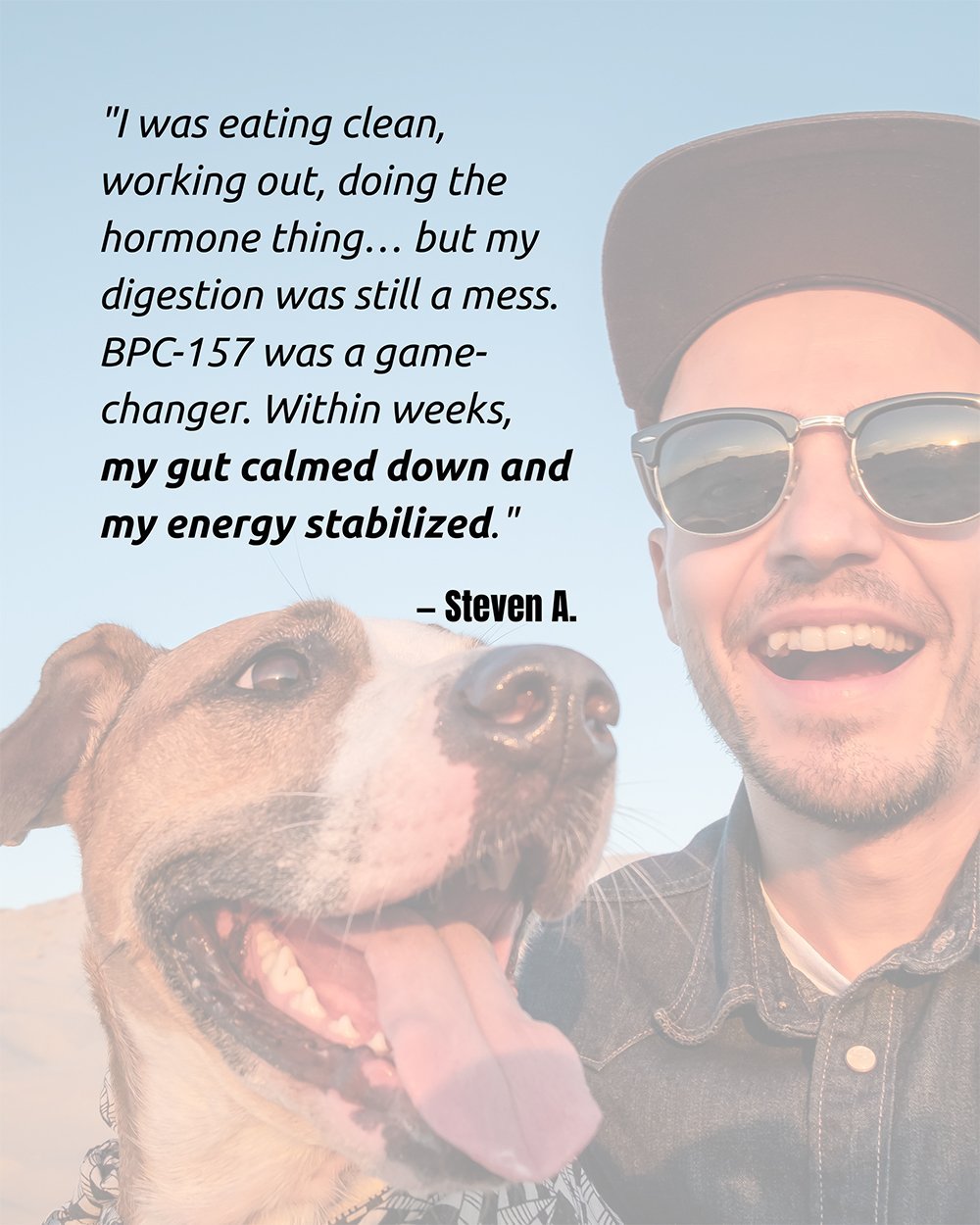
One of my patients, a 38-year-old entrepreneur, had been dealing with stubborn digestive issues and low testosterone for years, even though he was living a healthy lifestyle. He was eating clean, working out, and getting plenty of sleep, but still felt bloated, drained, and frustrated by his lack of progress.
We started a gut repair protocol and introduced BPC-157 alongside his hormone therapy. Within just a few weeks, his digestion improved noticeably with less bloating, more regularity, and his energy levels finally stabilized. He told me it was the first time in years he could get through his workday without crashing mid-afternoon.
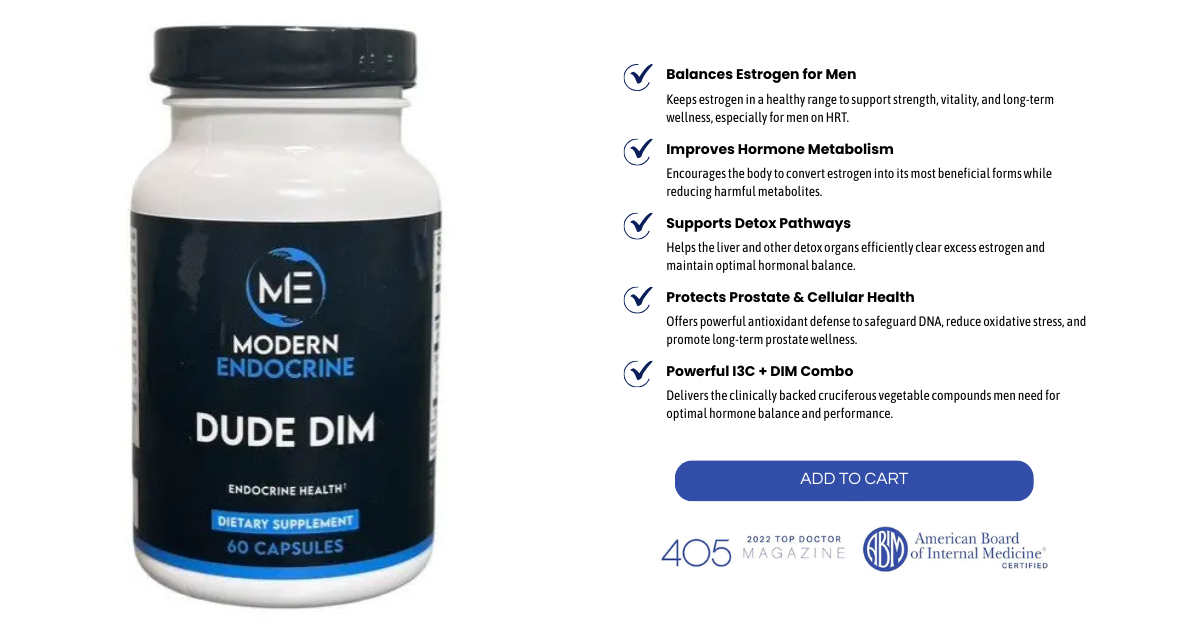
Level Up Your Hormone Balance with Dude DIM
Even with the best peptide protocol, your results will stall if estrogen isn’t in check. For men (especially those on HRT), balanced estrogen is just as critical as optimized testosterone. Dude DIM delivers a potent blend of indole-3-carbinol (I3C) and diindolylmethane (DIM), two powerful compounds from cruciferous vegetables that support healthy estrogen metabolism, protect prostate health, and aid in detoxifying excess estrogen. By keeping your estrogen pathways clear and balanced, you give your body the green light to fully benefit from peptides, hormone therapy, and your gut repair efforts.
Can Peptides Replace Hormone Therapy?
Not necessarily. Peptides complement hormone therapy and gut repair, but don’t replace the need for balancing hormones like testosterone or cortisol. Think of peptides as precision tools in a larger toolbox: they optimize cellular function and repair, allowing hormone therapies to work better and longer.
Should You Try Peptides?
Peptides are not a one-size-fits-all solution. Improper use or dosing can be ineffective or even harmful. That’s why I recommend working with a practitioner who can tailor a peptide protocol based on your unique lab results and health goals.
If you’re considering peptides as part of your wellness plan, make sure your gut is ready. Schedule a consultation, and we’ll craft a personalized peptide and gut repair strategy tailored just for you.
References
Park, S., Moon, J. Y., Kim, M. H., & Choi, Y. K. (2020). Clinical Applications of BPC-157 in Gut Healing: A Review of Mechanisms. Journal of Clinical Gastroenterology, 54(2), 95-101. https://doi.org/10.1097/MCG.0000000000001245
Sayed, R. K. A., Moustafa, M. E., & Abd-Elhakim, Y. M. (2021). The Role of Peptides in Mitochondrial Function and Their Potential in Metabolic Syndrome Therapy. Frontiers in Endocrinology, 12, 646394. https://doi.org/10.3389/fendo.2021.646394
Bulgakov, D. V., & Kalinina, T. S. (2019). Peptides as Therapeutic Agents: Current Clinical Applications and Future Perspectives. Biochemistry (Moscow), 84(8), 835-850. https://doi.org/10.1134/S0006297919080069