
Testosterone Therapy & Gut Health: What Every Man Must Know

Testosterone is often reduced to its reputation as the “male hormone” responsible for muscles, libido, and vitality. But as a functional medicine endocrinologist, I see something deeper: testosterone is a key player in metabolic resilience, brain clarity, and (perhaps surprisingly) gut health.
Many men come into my clinic frustrated. They’re tired, gaining weight, dealing with brain fog, or struggling with digestive issues like bloating and irregularity. The common narrative they’ve been told is, “It’s just aging or It’s just what you eat..” But what if I told you there’s a complex, overlooked relationship between testosterone and your gut? And that optimizing one without the other often leads to dead ends?
The Intricate Link Between Testosterone and the Gut
Low testosterone can disrupt gut motility, meaning food and waste move more slowly through your digestive tract. This can cause uncomfortable bloating and constipation, which many men chalk up to “just how I am.” But the problem runs deeper: low testosterone also shifts the balance of enzymes and immune factors in the gut lining, which can fuel inflammation.
On the flip side, a chronically inflamed or imbalanced gut directly lowers testosterone. How? Through a process called aromatization, an enzyme called aromatase converts testosterone into estrogen. When your gut is inflamed, aromatase activity increases, leading to an unhealthy hormone ratio; too much estrogen, too little testosterone. This hormonal imbalance can exacerbate symptoms like fatigue, weight gain, and mood swings.
Additionally, your gut microbiome plays a pivotal role in nutrient absorption. Essential nutrients like zinc, magnesium, and vitamin D are critical for testosterone synthesis. If your gut lining is damaged or your bacterial balance is off, you might not be absorbing these nutrients well, further sabotaging hormone production.
Why Testosterone Therapy Alone Isn’t Always Enough
I often see men start testosterone replacement therapy (TRT) expecting it to be a cure-all. While TRT can be transformative, its effects can be blunted or even cause side effects if gut health is ignored. For example, men who don’t address underlying gut inflammation often experience persistent bloating, water retention, or mood swings, even on optimized testosterone doses.
In my clinical practice, I’ve found that men who combine hormone therapy with a comprehensive gut health protocol have better, more lasting results. It’s not about quick fixes; it’s about creating a stable internal environment where testosterone can thrive.
How I Approach Testosterone Optimization and Gut Healing Together
My approach always starts with thorough testing. I recommend GI-MAP stool testing, which identifies gut infections, imbalances, and markers of leaky gut. This helps me tailor targeted antimicrobial, antifungal, or probiotic treatments.
Alongside gut repair, I incorporate mitochondrial support with nutrients like CoQ10, PQQ, and NAD+, which enhance your cells’ energy production, a critical piece since low energy is a common complaint in men with hormone and gut dysfunction.
Peptide therapies, particularly gut-healing peptides like BPC-157, can accelerate the repair of the gut lining and reduce inflammation, creating a healthier hormonal environment.
Diet also plays a huge role. We focus on anti-inflammatory, nutrient-dense foods that support both gut flora and hormone balance. Eliminating processed sugars and alcohol while emphasizing fiber-rich vegetables helps restore balance.
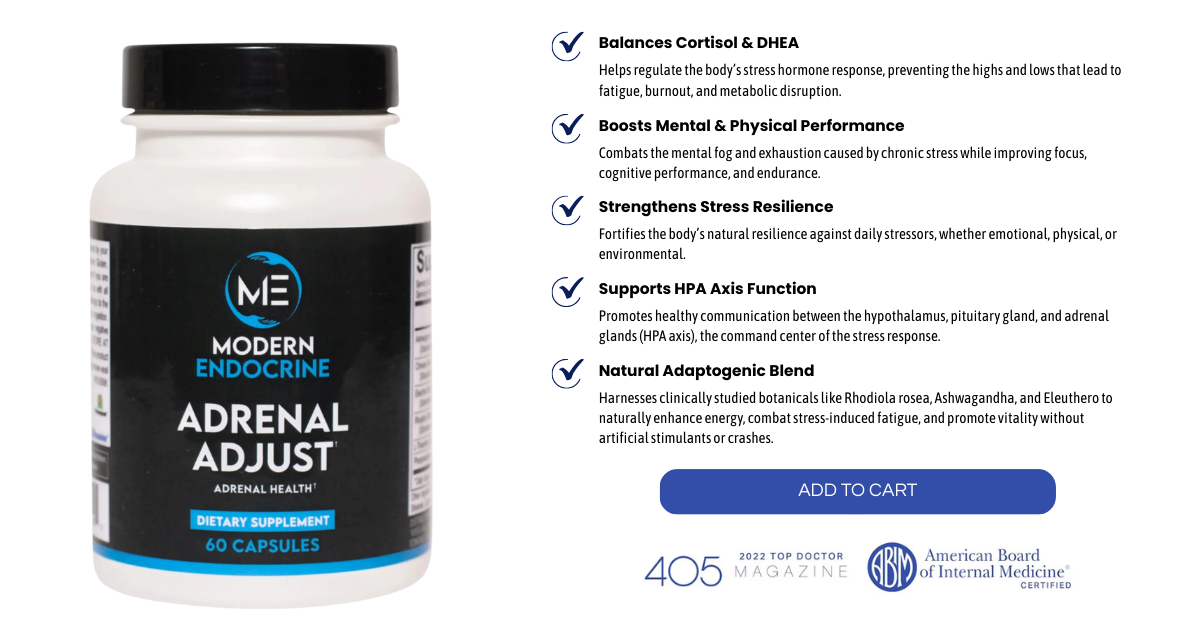
For men battling stress-related fatigue or mitochondrial issues, I often recommend Adrenal Adjust, a targeted blend of adaptogens like rhodiola and ashwagandha to stabilize cortisol, support HPA axis function, and enhance energy without stimulants. A healthy stress response is foundational to gut and testosterone optimization.
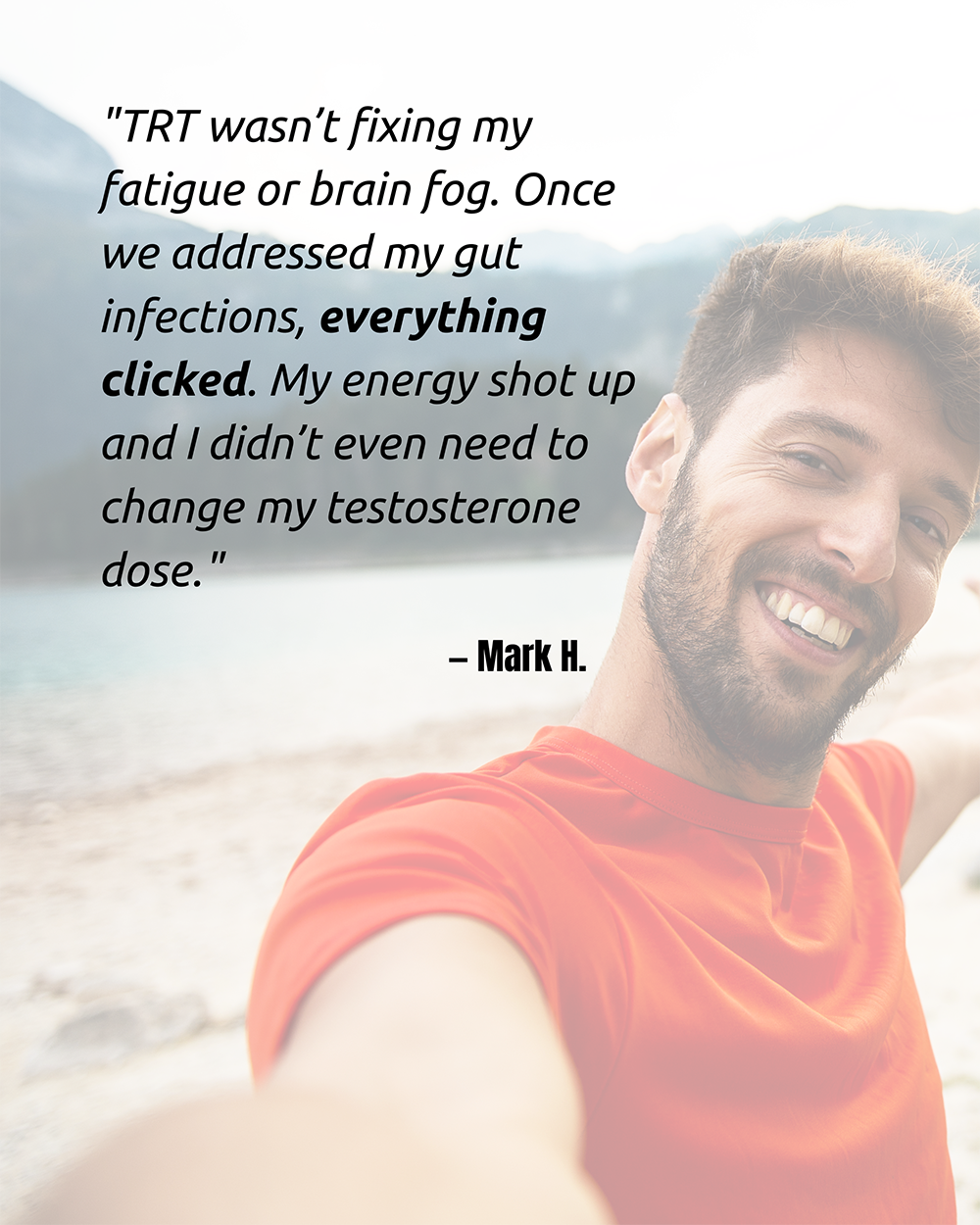
One patient, a 48-year-old man struggling with weight gain and brain fog, had been on TRT for six months with minimal improvement. After running a GI-MAP test, we discovered significant gut dysbiosis and elevated markers of intestinal permeability.
Once we treated his gut infections, added peptide therapy, and optimized his mitochondrial nutrients, his energy skyrocketed, his digestion normalized, and his testosterone levels stabilized, without increasing his TRT dose.
Is Testosterone Therapy Right for You?
If you’re a man feeling stuck in fatigue, weight gain, or brain fog, don’t assume low testosterone is the sole culprit. Nor should you dive into TRT without first addressing your gut health. A comprehensive assessment ensures your therapy will be safe, effective, and sustainable.
Ready to optimize your testosterone and gut health together? Schedule a consultation to create your personalized plan for hormone balance and digestive wellness.
References
Maggio, M., Basaria, S., Ceda, G. P., Ble, A., Lauretani, F., Bandinelli, S., … & Ferrucci, L. (2013). The relationship between testosterone and inflammation in older men. Journal of Clinical Endocrinology & Metabolism, 98(6), 2176-2183. https://doi.org/10.1210/jc.2012-3833
Kelly, G. S. (1998). Zinc: an essential micronutrient. Alternative Medicine Review, 3(2), 90-97. https://pubmed.ncbi.nlm.nih.gov/9658877/
Flores, R., Shi, J., Fuhrman, B. J., Xu, X., Veenstra, T. D., Gail, M. H., & Gajer, P. (2012). Fecal microbial determinants of fecal and systemic estrogens and estrogen metabolites: a cross-sectional study. Journal of Translational Medicine, 10(1), 253. https://doi.org/10.1186/1479-5876-10-253