
Perimenopause Is Wild: Symptoms, Support, and What Actually Helps
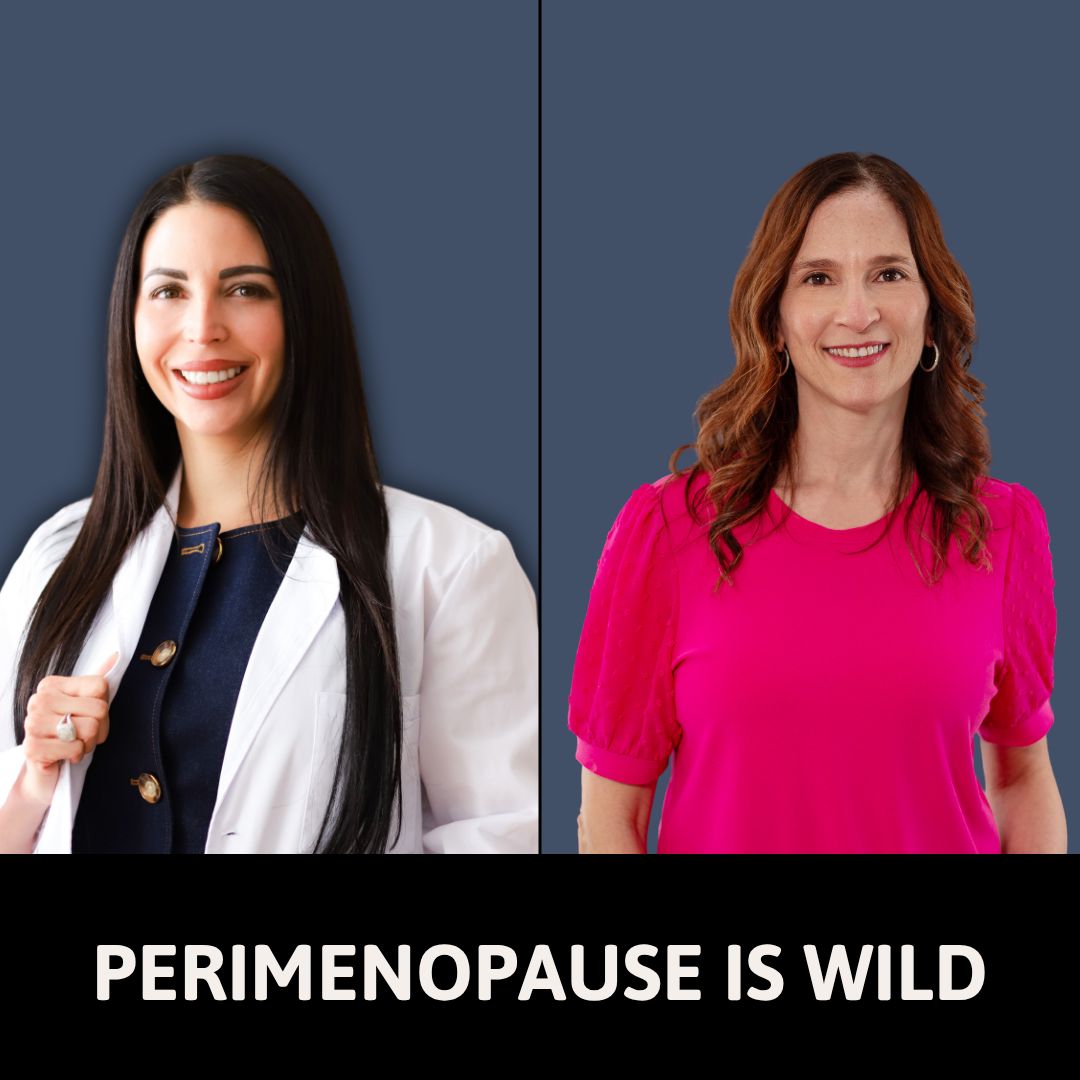
Perimenopause and menopause affect every woman, yet many are still caught off guard by the wide range of symptoms that can come with this stage of life. In this episode, I sit down with nutritionist, menopause researcher, and author Andrea Donsky to discuss what she’s learned from studying thousands of women and why so many continue to feel confused, dismissed, or unsupported when seeking answers. We explore common symptoms like fatigue, brain fog, sleep disruption, anxiety, memory issues, and weight changes, along with some of the lesser-known experiences that often go unrecognized.
Andrea also shares her personal journey through perimenopause, the inspiration behind her book Nourishing Menopause, and practical ways women can better support themselves through nutrition, lifestyle habits, mindset, and self-advocacy. This conversation offers reassurance, validation, and a reminder that while every woman’s experience is different, no one has to navigate it alone.
Topics We Cover in This Episode:
- Why perimenopause symptoms are often overlooked or misunderstood
- The most common symptoms women report experiencing
- What Andrea’s research reveals about women’s experiences with healthcare providers
- Why hot flashes aren’t always the first sign of hormonal change
- The connection between stress, sleep, hormones, and weight fluctuations
- How mindset can influence the menopause experience
- Why community and shared experiences matter during this transition
- Practical ways to better support your body through perimenopause and menopause
If you’ve been questioning changes in your mood, energy, sleep, memory, or weight, I hope this conversation helps connect some of the dots. Perimenopause and menopause can feel isolating, but understanding what’s happening is often the first step toward feeling better.
Resources:
Connect with Andrea @andreadonsky
Resources:
Check out the website
Follow Cassie on Instagram
Follow Cassie on Facebook
Follow Cassie on YouTube
Follow Cassie on TikTok
Disclaimer:
The information presented including any materials discussed, referenced, or linked within this podcast are for general educational purposes only, not the practice of medicine.
No doctor-patient relationship is formed from you listening to this podcast or utilizing any of the information provided.
I am a doctor, but I am not talking to you as your doctor. The information provided is not intended to diagnose or treat health problems or take the place of the professional medical care provided by your doctor.
If you are experiencing any health problems, including problems you believe have been touched upon in any respect within this podcast, you should consult your doctor about the problems without delay. You may ask your doctor whether he or she believes the information I have provided would be helpful to you, but you should still consult your doctor immediately and follow his or her medical advice as your treating physician.
I’m just here to provide you with basic knowledge about the issues we discuss so you are more aware of them and can better discuss them with your doctor.
Join me on the next episode as we continue our journey.
Transcript
Hi, guys. Welcome to hormones, metabolism and you. I hope that you’ve had a great day, a great week. I am excited
about our guests today. We are talking about something that everyone needs to have a real conversation about
when it comes to women’s health. And we’re going to talk about the issues related to perimenopause and
menopause. Today I’m joined by Andrea Donsky. She is a nutritionist and a seven times published menopause
researcher. She is also a best selling author, entrepreneur, speaker, media personality and the host of the podcast
Menopause Reimagined. I was on her podcast and we had so much fun. With more than 26 years of experience in
health and wellness, she’s passionate about helping women feel heard, supported, and empowered through
perimenopause and menopause. She’s also the co-founder of We Are Morpheus, a company focused on nutrition,
lifestyle and science backed supplements for women in this stage of life. In today’s conversation, we talk about why
perimenopause and menopause can be so tricky, why symptoms look so different from woman to woman, and how
too many women are dismissed or gaslit by providers who simply don’t understand what they’re experiencing. The
research shows up to 40% of us will be gaslit by providers, and it’s not necessarily that they need to. They just don’t
understand. We cover some of the most common symptoms of perimenopause, including fatigue, brain fog, sleep
issues, memory problems, anxiety and weight gain, along with lesser known symptoms like phantom smells.
So if you struggle with any of those things, know that you are not alone. She has researched and done surveys on
thousands of women, and those are the top symptoms. Andrea also shares her new book, Nourishing Menopause
Powerful Nutrition and Lifestyle Strategies to Feel Your Best. Why she wrote it. Who it’s for and what women can do
to better support themselves through this transition. If you or somebody you love has ever felt confused, dismissed,
or overwhelmed in this season of life, this episode is for you. Let’s dive in. Andrea, I’m so excited to have you on the
podcast. A lot of our listeners on this podcast are women who are struggling with perimenopause and menopause.
And I know you have this amazing new book out now that is helping millions of women over time struggle and
navigate this time in our life. That’s so difficult. So thanks for coming. Can you tell everyone briefly a little bit about
yourself? Like, what do you do every day? How did you get here? And then maybe did this book come about, this love
for menopause, maybe out of your own struggles? Or how did all this happen?
Yeah. So first of all, thank you for having me. It’s so nice to meet you. And yes, my book, Nourishing Menopause. It
really is a labor of love. So about me, I am a nutritionist. I’ve been a holistic nutritionist for 20 plus years. I’ve been in
health and wellness as a health and wellness advocate and educator for 26 years. So I’ve been around for a really
long time, and I’ve been studying menopause for about ten years. And I got into it because I, like so many of us, had
no idea about perimenopause and menopause. And even though it was my job to educate people about their health
and their body and what they’re putting in and on their body, when it came to this phase of life, I knew zilch. Like
literally nothing. And because of that, I thought, well, wait a minute, if I know nothing and it’s my job to help educate
women and people, then I’m guessing a lot of people have no idea either. So I was right. And that took me down the
rabbit hole of just really trying to understand what the symptoms were and what did we need to know, like how do
we help treat ourselves? And my lane is nutrition, lifestyle and supplements. That’s what I study. That’s what I look at
day in, day out.
And as someone who really kind of plays in the world of alternative or eastern medicine, I thought, how can I help
myself from what I actually know? And back then I got my first hot flash. I was 47 and that was 2017. And so back
then we didn’t talk about hormones the way we’re talking about it today. Now it’s accepted. You know, we looked at
the study, the WHI study and how things have come since then, how it’s progressed. You’re talking about, you know,
nine years later, I was trying to find ways of how I could help myself. And I did that through nutrition and exercise and
mindset and lifestyle strategies as well as supplements. And I thought, well, if these are what’s helping me, maybe
these will help other women as well. And that’s what kind of led me to launch my company, Morpheus. We have a line
of supplements called Morpheus themselves, and kind of led me down to relearn everything that I knew or thought I
knew about nutrition and lifestyle and exercise. Because, like so many of us, I was eating the same. I was exercising
the same, but yet nothing was working for me anymore. So I had to relearn everything that I knew, and that’s what
kind of led me to where I am today.
I love that I think that so many of us end up in the path of life because of, you know, struggles that we’ve gone
through and just wanting to help other people. And perimenopause and menopause are an animal. And to your point,
I feel so bad for the women before us who struggled and just never said anything because it was just a part of life.
Like, you know, my mom, especially my grandma, they just never talked about it. And thankfully, in the last 6 to 10
years, it’s just become more acceptable. But I will tell you, as somebody navigating perimenopause myself, and you
know, me and my friends kind of talk about it, but like, it is rough. One morning you wake up and you feel great, the
next day you feel like you got hit by a truck. The next day you want to cry, the next day you want to kill someone and
you’re just like, what is going on? And there’s really not good information out there to help people and providers just
aren’t trained to help people. And so, you know, most women end up on SSRIs because people tell them they’re
crazy. And really it’s just we need to, you know, be navigated through this part of life. And women are so different
now than they were 20 years ago. Right? Like we work more and we just have all these extra things that we do
outside the house. And so I think it’s so amazing when people like yourself write these guides like this book and are
just such advocates of, hey, let’s talk about what we’re going through. Let’s figure out how to help each other and
just make it better for everyone. Because everyone, God willing you live long enough, is going to go through this,
right?
That’s it. I would say, you know, every woman who’s blessed to live long enough is going to go through
perimenopause and menopause. And yeah, so when I decided to write Nourishing Menopause because I wanted a
book that kind of spoke to me, and I really bridged the gap between Western and eastern medicine. And I live my life
from, I believe there’s a place for both. And I believe that we could take tools from both worlds, being in health and
wellness for so long. I was really blessed to be able to learn so many different modalities and different things that
could help us. So I wrote the book that I wish I had when I was going through perimenopause. And you know what’s
so interesting, Doctor Cassie, is when I was going through it, you know, looking back when I was writing the book, I
learned so much about my journey. And I now realize I started perimenopause in my mid 30s and it was about 36 and
I was getting something called Phantom smells. So that’s when we smell things that other people don’t. And I was
smelling gasoline and things burning like cigarette smoke and burnt coffee and burnt toast. And I would ask people
around me in my office, I’m like, do you smell that? And they’d be like, no, I have no idea what you’re talking about.
And then I thought I was going crazy. I’m like, well, wait a minute, why am I smelling these things? And I went and I
had MRIs and I had all these tests done and it all came back saying, you’re fine.
We have no idea what’s wrong with you. Right. So this was so long ago. And then I thought, well, okay, I guess maybe
I am going crazy. And then years later, I realized now that they were perimenopause symptoms the anxiety, the
weight fluctuations, the weight gain, the rage. Oh my gosh. Like, can we talk about the rage? And I would wake up
happy and then like within, like, I don’t know, an hour, I would be like in a whole different person with my moods all
over the place. Right? And I now realize I was in perimenopause for a total of 14 years, 11 of which I had no idea. So
like, let’s think about that 11 years not knowing why you think you’re absolutely going crazy or your body’s not your
own anymore. You’re like, you’ve completely changed. And like you said, you wake up one day and you’re like, whoa,
wait a minute. I didn’t feel that way yesterday. So not knowing. And that’s why I am so passionate. I have three kids,
two daughters. I am so passionate about educating. Not only did I want to learn this for myself, but I wanted to learn
it for my kids and all the women who come after us so they don’t have to go through what we went through, of being
taken by surprise or not knowing what was happening to our body.
Yeah, it is a very wild ride for sure. I think a lot of women, especially like myself and maybe you, if you’re more of a
type A or you’re just used to being in control of things. For me, the hardest part is like, I’ll wake up and I’m like, am I
going to have a good day or a bad day? And then I want to know why. Okay, if I had a bad day, then why? Let’s trace
it back and try to figure it out. And sometimes you just can’t figure it out. Sometimes it’s just like, it’s very humbling
because I do this for a living, right? I help women with their hormones all day long navigate perimenopause and
menopause. I mean, I’m really good at it, if I do say so myself. I understand hormone physiology and it’s hard for me.
So I can only imagine being somebody out there just trying to go through this. And that’s what I tell my patients. It’s
like, I get it. I mean, you have good days, you have bad days. All we can really do is be nice to ourselves, try to
understand what makes it better, try to understand what helps us feel better. And you know, I joke with my patients
that, gosh, I almost just can’t wait till I get on the other side. Because sometimes I feel like menopause is easier than
perimenopause, right? Like once you get there, it’s just easier. I mean, I love that people are talking about it and that
you have references and resources to help us. And I want to ask you, so the smell thing that’s kind of interesting
because literally for three years I have weird smells and my husband’s like, what is wrong with you? Are you
pregnant? Nobody smells that. And I had no idea that was a symptom of yeah. So smells.
Right. That’s one of the most surprising things we actually have. So I am published seven times in the journal
menopause. So I have seven abstracts published. And one of the ones that I submitted this year was for Phantom
smell. So we actually have research on phantom smells. And what I realized, and because I knew so little about what
phantom smells were or that they were actually a symptom, I mean, there could be phantom smells, could be a result
of many different things. But if you go to your doctor and you get that clean bill of health and they’re like, we don’t
know what’s causing it, then I would say you can look to it being a perimenopause or menopause symptom. So I
wanted to understand, well, what is it that we’re smelling? Like, what are those smells that are very common in
perimenopause and menopause? And what we learned is, is that the number one, by far the number one smell that
women are smelling in perimenopause and menopause is something burning. So it could be cigarette smoke, cigar
smoke, coffee, burning wires from electronics. So that’s what people are reporting that they’re smelling. So by far
most women are, have are smelling something burning, but also things like bleach and cat pee and dog poop. I know
that sounds gross, but these are things, you know, spoiled food and a whole bunch of other things. And some women
who are blessed actually have sweet smelling phantom smells. I’m like, why couldn’t I smell chocolate chip cookies? I
want to smell blueberry muffins. You know, like, so some women actually have sweet phantom smells, but for the
most part, they’re not very pleasant.
That’s hilarious because I have sourdough, I make this sourdough bread every morning with einkorn flour. Anyways, I
have sourdough bread every morning. It’s like my little guilty pleasure, and I toast it in the toaster every morning.
And some mornings, I swear to you, it’s burning after like a minute and I freak out and I run over there and I open it
and it’s like, still frozen. I’m like, what? Yeah. So now I know. And my husband’s like, there’s nothing burning. And I’m
like, yes, there. Never mind. I’m not even gonna fight with you about it. But that’s great to know. So besides phantom
smells, since you have all this research published, what other symptoms? I mean, you know, everyone talks about on
TikTok and Instagram, like, you know, your mood swings and the bloating and the sleep, but like, what are other
symptoms where women will know maybe I’m going through perimenopause.
Yeah. So I talk a lot about it on my I’m very active on TikTok and on Instagram. I talk a lot about the symptoms
because that’s really where my passion lies. So let me go back for a second and then I could share it. So many years
ago, I was at a party with my husband and I ran into an old friend and we were talking about, you know, what we
were doing and catching up. And she told me that she was creating an app for menopause symptoms. And at the
time, this was before I did any of my research. I was like, an app, don’t you need to have a lot of symptoms? And she
was like, yeah, Andrea, there’s like 34 to 40 symptoms that are spoken about all the time. And the way my brain
works, I’m very data driven. So I came home and I started this whole document, and I tracked it for many years. And
what I realized is that there were way more than 34 to 40 symptoms. There were like 85 plus symptoms. And then I
thought, well, wait a minute, why don’t I go to my community? Because I have this amazing community on TikTok.
Why don’t I go to our community and through our company, Morpheus, on our newsletter and ask them what they’re
experiencing. And soon we realize. So in 2024, I had my it was our first survey that was published, which was our
Signs and Symptoms survey. At the time, it had about 2400 responses. Today it has 5300 responses. So it’s ongoing.
We collect the data all the time. We have about 15 surveys on our website.
And we’re going to be adding more this year. So what we found out was that, in fact, there are 103 plus symptoms,
so way more than the 34 to 40 if you’re actually searching it. So 103 plus. Now, why do I feel it’s important that we
look at the numbers. So it’s not the number itself that matters. What was important to me is that we have other
research that’s published on our doctor visit survey women when they’re going to their doctor, what are they
experiencing when they’re seeing a health care provider? And about 40% of women told us that they’re dismissed or
gaslit. So the reason why it’s really important that we understand what the symptoms are is because now we
empower ourselves when we do go to our doctor or to a health care provider to say, here are the symptoms. We
know this is published. It’s not just me making these up. These are published in a credible medical journal, and these
are what symptoms are. So this is what I’m feeling. And this could potentially be a perimenopause or menopause
symptom. So now women are going in, they’re empowered, they’re knowledgeable and they’re like, no, no, no, I’m
not going to be dismissed because I know it could be related to perimenopause or menopause. So to me, I’m so
proud of the research that we’re doing. And to answer your question, what are some of the symptoms? So the
number one symptom across the board from women, again, this is the most updated data that we have based on
5300 plus responses, is fatigue and exhaustion across the board through perimenopause and menopause.
So that’s over 73% of women who are exhausted. And by the way, chapter two in my book goes over all of our
research. So I talked about the research that were published in. So number one is fatigue and exhaustion. Number
two is brain fog. Number three are sleep issues. Number four is memory loss, number five is anxiety. And then you
have other ones like loss of libido, lack of focus, lack of concentration, joint pain is a big one, lack of patience. And
then what was very interesting is for the longest time, hot flashes came in at number ten. And when we think about
perimenopause and menopause symptoms, the first thing for so many of us, including myself, which is, you know, in
2017 when I got my first hot flash. My first thought was, wait a minute, am I in menopause? Is it menopause for older
women? So we associate hot flashes and night sweats with menopause. But what’s so interesting is that hot flashes
just fell off the top ten most common symptoms to number 11, and night sweats are number 12. So that’s why I
mean, you can hear it in my voice. That’s why this research, I love it so much and I’m so passionate about it because
it’s just so validating to all of us who have these symptoms and are often told, well, it’s part of life. Or maybe it’s just,
you know, it’s a normal part of aging. And for us, it’s like, well, wait a minute. It could be associated with
perimenopause and menopause. So what can we do to get treatment so that we can feel better?
I love that I think that is such good information because women. Now, to your point, number one, fatigue, exhaustion,
number two, brain fog, number three, sleep before memory and number five, anxiety. That’s like 93% of the women
that I see, the other thing they throw in there is weight issues, right? That’s very common. But I think most women
think that all of these things are just a part of life. We just get used to them. And what we don’t realize is though, our
lives are crazy when we’re in our 20s, 30s, when we have a ton of estrogen, progesterone, and testosterone, we are
much more resilient. And then as we start to lose those hormones, these things just kind of stack up. And, you know,
I was talking to my husband about it because I think, you know, he obviously knows I’m on this journey. And I was
just telling him, like yesterday, I woke up with great intentions after a good night’s sleep to go work out. And I went
and started working out in two minutes and I was like, my body hurts so bad and I want to cry because normally I
could do this exercise and this is fine, but like today it is just not working right? And so you have to kind of shift and
adapt. And I was telling my husband, it’s just like, man, it’s just not fair. Like, you guys just don’t get it.
Like you just have all these hormones and you just feel great. And we never know how we’re gonna feel. And it’s just
like the fatigue and, you know, the sleep issues and all that. You just kind of think, I think, well, oh, I own a business.
Or, you know, I see patients like this is just normal, but it’s really not. And like, it’s very validating to hear you say
that to like, and I don’t have hot flashes yet, thankfully, but all of these symptoms that a lot of women have are
perimenopausal symptoms. They’re doctors. Gaslight them and tell them, you know, this is normal. Your labs look
normal when they know, like, I know I don’t feel the same I felt three years ago. And I know there are things I can’t do
now that I could do three years ago. And so I think it’s all very validating. I also think it’s really interesting if you
throw in like looking at cortisol levels and insulin levels because people are so stressed and, and gut health, to your
point, I know you do a ton of nutrition, but our nutrition has changed, our food quality has changed, and all that
together just makes us less resilient. And to hear somebody like, hey, you know, this is all a normal part of what’s
going on. I think it’s just really validating.
Oh, thank you so much. I mean, you know, I guess because I went for so long not knowing and feeling so alone, I just
wanted to be able to support women and validate women and know that I hear them and understand them. And
that’s why I do the research that I do. I mean, we have research on libido. We know that it’s number six on the list of
top ten symptoms of perimenopause and menopause. We have surveys and research that’s published on anxiety. We
know that 66% of us are more stressed now than we were before, and we’re less able to cope with it. So for all the
reasons that you mentioned, knowing what it is that we can now say, okay, we know what could be possibly causing
how we feel, what can we do to make ourselves feel better? And like I said before, my lane is nutrition, lifestyle and
supplements and mindset. So for me, that’s my area of focus. But also we have like what you’re talking about, we
have the hormone option, menopause, hormone therapy. Like there are so many things we could do. Like when I
think back to my mother, she suffered for 20 years with hot flashes. She was miserable. I remember her complaining
about it, but you know, there wasn’t as many options that there are today. And now. We’re so blessed to be living in
this time where, you know, social media, you know, for everything that we say, like it’s overwhelming and there’s a
lot of information and some of it great, some of it not so great.
But what I feel is such a blessing from social media now is that you’re scrolling on Instagram or TikTok, and you’re
going to be shown because of the algorithm. Depending on your age, you’re going to be shown videos or something
around perimenopause or menopause, like so it’s going to come up for you. It’s going to be like, oh, wait a minute.
Could this be because of what I’m thinking? Whereas when I was going through it and a lot of us Gen Xers were like,
it wasn’t even anywhere near us. Like nobody talked about it. It wasn’t on social media. So I feel like that’s such a
positive because things are changing and now there’s a lot more awareness and discussion around it. So it’s not
taboo as like the way it used to be. My mother never spoke to me about it either, other than I knew she had a
hysterectomy and I knew she had hot flashes. My grandmother never did. My doctor never brought it up. We don’t
learn about it in school, so it’s great to see so many of us are talking about it and trying to reduce that stigma and
help women who are coming after us. And funny that you were saying before about your personality type A, I was
kind of laughing. For those of you who are watching this. Like I was like, yep, yep. So I always joke around that I talk
about this in the book that literally before perimenopause, I was a type A personality workaholic, you know, total
entrepreneur.
You can probably tell from like my personality, I just, I love learning. And when I was going through perimenopause, I
became like an F minus personality. Like I couldn’t focus, I couldn’t concentrate. Some days I couldn’t get out of bed.
And now I’m proud to say I’m back to like my A+ personality. Maybe not the triple A+, but back to type A personality.
So what you were saying before, like you can’t wait to get into menopause. For so many of us, things do get better
once our hormones are now in the menopausal ranges. Things are less erratic. I mean, perimenopause is a really
tough time. You know, estrogen, it’s like a roller coaster, right? It’s going up. It’s going down. Progesterone steadily
declining. And now you’ve got that ratio between the two. Like that’s what creates a lot of the symptoms. And for a
lot of us it does get better once we go into menopause. There are some women who still have we know according to
our research, there are symptoms that are more prevalent in menopause and perimenopause and vice versa. But
knowing what we can do to help them and seeing doctors like yourself, and I love that you’re an MD. I love that
you’re educated. I love that you want to learn and you want to help women, because that’s really another area where
my passion lies is to help educate doctors and healthcare providers about my research so that when patients come to
them, they’re like, oh yeah, we know this. We got you.
Me too. 100%. I’m working on some training courses right now for providers because I have so many people reach
out to me and they’re like, I want to know what you know. And, and I get it. And so I’m working on just some courses
to help educate people because there’s, you know, I have the highest certification in the United States for, you know,
a hormone degree. Like I’m an endocrinologist, a board certified endocrinologist, but still an endocrinology training.
They don’t teach a ton about hormones. Definitely not correctly. And then Ob-gyns don’t really get it either. So I’m
like, who’s supposed to be treating people’s hormones, you know? And so you kind of have to do it yourself. And so
my passion and goal is really to educate providers too, because it breaks my heart the number of women I see every
day who literally have been gaslit and think that they’re crazy because they see doctors and doctors just don’t know
what to tell them. And I had a conversation with somebody yesterday who had a 60 minute conversation with her,
and it she was upset and kind of crying. And I’m like, hey, every day is going to be different. And I don’t know how
long this is going to last. I think that’s the worst part is people want to know, okay, how long am I going to feel like
this? Some people feel like this for six months. Some people feel like this for six years. Some people feel like this for
ten years because to your point, your hormones are fluctuating. You know, I was telling her, we have to figure out
how to deal with it.
We have to figure out how to mitigate your symptoms the best way possible. And that’s just what we have to do. And
in this particular case, this lady is very stressed and she owns a business and she’s got kids at home, and then her
parents are sick too. So she’s like sandwiched in between that. And it’s just, it’s a lot to deal with. And so, you know, I
get it. Like I literally am in the thick of this every day myself and with patients. And so any research community
information people have, I know it makes them feel better. And funny thing is, I actually had to have a hysterectomy
earlier this year for my uterus, and I begged the surgeon to take my ovaries out. I was like, just take them out,
please. Like, I will do hormone replacement therapy. You know, I was like, I and he would not do it. He was like, I
ethically can’t do it. I’m like, that’s because you literally understand nothing about hormones. But he was a really
good surgeon and I wanted to use him, but I was just like, if you would just take my ovaries out and just let me
replace my estrogen, my life would be so much easier. You know, like I joke that I’m like, man, I wish I was a surgeon.
I would, I would help, but it’s just how it goes. And so it’s great that people are providing books like this and
everything that you do as far as the research is so helpful and so validating. So I love that.
Thank you. Actually, I have a couple of really good friends who bought several of my books and gifted it to doctors
that they work with because they’re in the nutrition space and they gifted it to their doctors or medical doctors. And I
was like, that is so awesome. So we’re all kind of doing our part to help educate. So, you know, thank you. And one of
the things you mentioned before, if it’s okay, I just want to go back there for a minute because you talked about
weight. And in chapter five of my book, I actually provide 17 different reasons that we gain weight in perimenopause
and menopause. Interestingly enough, weight gain isn’t in the top ten most common symptoms, but it is in the top 15
and it’s it’s numbers 13 to 15. So the weight fluctuations, the changes in metabolism that women feel are happening
and the changes in digestion as well. Right. So even though it’s on the top ten most common symptoms, it is number
two when it comes to quality of life, which is some other research we just submitted this year again to get published.
Hopefully, fingers crossed it gets published. And what we know is that it really it upsets a lot of us right when it
comes to quality of life. Rightfully so. I mean, I gained 20 pounds in perimenopause, so I know what it feels. And the
cortisol, the insulin, the lack of sleep, lack of movement, lack of all of it. Right. Contributes to it. So I talk about that in
the book, and I come from a very sensitive point of view because for a lot of us, especially, like if I think back to
myself and growing up with, you know, don’t eat this, don’t eat that, don’t have too much of that, you know, like eat
this, that, like, it’s like, there’s so much like anxiety and PTSD even around the food choices and what we’re eating.
So I look at it from a very sensitive point of view. And what we know is that for women in menopause, a lot more
menopausal women are saying that they’re gaining weight as opposed to perimenopausal women. Perimenopausal
women will see a lot of the fluctuations in weight and menopausal women will see that weight. Come on. But what’s
important to understand is that there is a lot we could do, and there’s new research coming out all the time in terms
of like strength training. And then what are we looking at in terms of nutrition. And that’s why to me, this book was so
important is because in chapter 11, we actually go through four chapters on nutrition in general, plus one on gut
health, which I see fix your gut, fix your hormones, your book. So your gut health expert. I love that. And as a
nutritionist, I mean, gut health is everything, right? I always look at the foundations, gut health and sleep, especially
when it comes to perimenopause and menopause. What we want to look at focusing on. So there is a lot we could do
when it does come to weight gain. So I just wanted to say that because I wanted to be encouraging to women to
know for those of you who feel like, oh, I’m trying everything, there’s nothing I could do. There is a lot we could do.
So I want you to be hopeful is what I’m trying to get at.
Yeah, I completely agree. There’s so much you can do and at least now we can talk about it. So I love all of that. And
the weight, you know, it is frustrating. I was talking I was actually talking to my friend about this yesterday. I had to
get new scrub pants for the first time in my life. So I’ve always worn, you know, I wear figs and I’ve always worn an
extra small. And my sweet new clinic manager got me a new pair last week and they came in and I put them on and
they were just so tight, like they just hurt when I sit down. And I was like, you know what? I’m just gonna get it. I’m
gonna get a small, I’m gonna get a bigger pair, right? Like, it kind of hurt my soul for a minute, but I was just like, I
don’t know, like, I need a bigger size. And I could tell she was kind of like, oh, I’m, you know, I’m sorry. I’m like, no,
it’s, I just, I need a bigger size. So it’s sort of frustrating because I’m in this space and I practice what I preach, and
I’m very good with my diet and my nutrition and my movement and my but things change. And I feel like you can
either be really mad about it and kill yourself, or you can just get a bigger pair of pants and keep doing what you’re
supposed to and move on, right? Like, I don’t know what else to tell you. Get the.
Bigger size. And also, and maybe it’s just for now, right? Like perimenopause. Still, like if I tell you, doctor Cassie,
honestly, like I remember so vividly that I would wake up day to day, like one day I’d be 8 pounds heavier. And then
like two weeks later, I’d be back down the 8 pounds. And then two weeks after that I’d be up 10 pounds. And then
like, it was so all over. And this lasted years for me because again, I didn’t know what was causing it. Right. So the
weight fluctuations in Peri are pretty kind of all over the place. And so maybe it’s just for now, but then when you get
into menopause, maybe it’ll be different.
I actually have some pictures on my phone I was going to send to my social girl because I was like, I want you to look
at the difference in what my stomach looks like literally on a weekly basis. Like I have pictures of where it looks like
I’m five months pregnant when I wake up, and then it’s like, not so bad. And then this morning I woke up and I looked
really skinny and I was like, this is great. But like, this is crazy, like completely crazy. And I think I might make a real
about it just to make people feel better. Like, yeah, no exaggeration. This is literally like one day, this is seven days
later. This is ten days later. Like, how does this happen? But I used to get really, really upset about it, and now I
almost just kind of laugh about it because it’s like, I know I’m doing what I’m supposed to do, and apparently this is
just how it goes. And I also wonder if it’s just like our society is so fixated on social media and we see all these things.
And so I almost think it just makes it worse, right? Because everyone is just so fixated on how they’re supposed to
look or how they’re supposed to dress or how they’re, I don’t know, but I’m just kind of to the point now where I’m
like, whatever it is, what it is like.
And that’s, and that’s healthy too, right? Like it is what it is and buying the bigger size and understanding. But, you
know, obviously you are doing what you can when it comes to nutrition and lifestyle and even stress management.
Like it is so tough. Like I could joke and say, okay, everyone listening, you need to like just manage your stress. And,
you know, we kind of all would laugh at that because it’s like, yeah, okay, tell me what I, you know, we all know that,
but like, hey, how are we doing it? And B, it’s not so easy all the time, right? Especially when estrogen is declining,
our hormones are going to those menopausal ranges. It makes it harder for us. And as women in general, it can be
harder for us. So I feel like that in itself. Cortisol, we know that as cortisol goes up, it can cause weight gain,
especially around our belly. And I remember when I was writing my book, it’s a great example, right? So I’m doing
this. I live my life like I do, I practice what I preach. And when I was writing the book, I was on major deadlines with
Simon and Schuster, which, you know, we wanted to get the book out for me, so I had to get it in a certain time.
And I had put on quite a bit of weight when I was writing the book because of my stress levels, even though I was
taking my walks and doing what I could. But cortisol got the best of me and I put on about 15 pounds. And then once
I hand it in the book, this was after my first or second edit. I took the weight off. Within three weeks, the weight came
off, and that just showed me how cortisol stress, what impact it has when it comes to weight gain. So it’s just doing
the best that we could do. We all do what we can do. And the other thing I feel is important to mention too is
mindset. So I wanted to make sure that I had a chapter in mindset in the book because my mother’s a therapist,
she’s a social MSW, master of social work, and she’s been a therapist for over 35 years. She’s amazing. She talks a lot
about self-care and self-love, and mindset itself plays a big role in how we’re dealing with a lot of the symptoms. And
we know that research shows that if we think we’re going to have a bad menopause or a bad experience with
menopause, is that it shows that our symptoms will be more severe.
So we have to pay attention to what we’re thinking and what our mindset is. So chapter 12 is all about mindset. And I
wanted to include it because it’s part and parcel for the tools that we can reach for now that we’re in perimenopause
and menopause. And I just don’t want all of you who are listening to forget that mindset does play a big role. So like
you’re saying with weight gain is like, okay, I’ll buy the bigger size, right? And I’ll do what I can. And this is where I’m
at right now being gentle with ourselves, I am probably the harshest person on myself that is out there. I’m very
tough on myself. I want to make sure like I’m not going to have these expectations on others. I have these
expectations on myself and what I’ve had to relearn as well. Talking about relearning things is I’ve had to relearn how
to be gentle with myself, how to treat myself. And that’s a big part of the process.
I agree. Mindset is so important, and that’s part of why I just buy the bigger pants now, because I’ve done a lot on
mindset work too. I love Joe Dispenza. I listen to Mel Robbins a lot. I have a therapist and like, I truly believe that
what you put out into the world, you receive back, what sort of energy you put out, you’re going to receive back. And
how you think about yourself is going to change a lot of things. And so that’s why, you know, I’m just in the mindset
now where it’s like, if these pants are too tight and I don’t feel like I look good in them, and I sit down and they hurt,
I’m gonna get bigger ones. And now I look better in them. And when I sit down, they don’t hurt. And you know what?
I’ll probably forget that they’re smalls anyways, you know, like it just it doesn’t even matter. And when you get rid of
that negative feedback loop in your brain, then it’s just so much easier. Interestingly, I’m reading a book right now
about how you dress affects your entire day. So I don’t know if you’ve heard about this, but there was this guest on
Mel Robbins, and now I’m gonna have to look at what the book’s called because I want to tell you it’s amazing. But
basically she talks about how all day long women are worried about different things. And it starts with when we get
dressed in the morning. And so I started reading this book and it completely changed.
It’s called the Art of Intentional Dressing by Erin Walsh, and she just talks about how the first thing that you do in the
morning is put on clothes. And if you don’t feel good about that, how it changes your entire day. And so that’s where I
was like, screw it, I’m getting a bigger pants. And I went through my closet. I threw everything away that was too
tight and made me feel bad. And like it just kind of changes how you feel because you’re right, whatever you think is
how you’re gonna feel. And then just, you know, the other thing I like to do is when I lay down at night, I like to tell
myself, you know, a lot of us lay down at night and we start going through all the things we didn’t get done. So now
what I do at night is I lay down and I remind myself of all the things I did get done. Then I put out into the world that
today was an amazing day. What am I grateful for? And then tomorrow is going to be a great day. And now it’s time
to rest, right? Because the other thing, I will tell you what I have learned about myself. It doesn’t matter what’s going
on and how stressed I am, and I’m the type of person where I can put on weight when I’m stressed. If I get a good
night’s sleep, everything in the world is so much better the next day, right? You just you have to sleep, especially
when you’re in perimenopause.
And so those are the things that I kind of focus on. I focus on sleep. I focus on gratitude. I focus on what actually went
well, screw what didn’t go well or what I didn’t get done. And then just, you know, I’m just nice to myself. Like, I’m
gonna wear something that’s flattering to me. There’s lots of different things, you know, me wearing the midriff shirts
and the skinny jeans that’s out. That was in the 20s, right? Like, we don’t need to do that anymore. We’re in our 40s.
So I think if people just do that, they would feel a lot better. I also think that you could use this. I try to look at the the
silver lining like the bright side. So I was telling my husband, my husband is very anti checking a bag. When you
travel anywhere, he’s like, you must carry on everything. My point to him recently was, you know, babe, I’m going
through perimenopause and I need different options because some days I’m bloated and some days I’m not. So I just
have to pack more things. So I feel like I need to check a bag, right? And he was like, oh my God, whatever. If I bring
up the hormone thing, he’s like, fine. But you know, I think just having options and allowing yourself a little bit of
grace goes a long way.
Yeah, 100%. I am in total agreement. And I love mantras too, by the way. So like what you’re saying, going to bed
and there’s great research around that too. Like when you get into bed, like saying out loud to yourself, tomorrow’s
going to be an amazing day. I know tomorrow is going to be an amazing day. Like we train our mind to actually then
start looking for those amazing things, right? And I’m a big believer in gratitude. I’m a big believer in journaling, so I
love that you do that. I do that myself. When I get into bed, same thing. I will say, I have certain mantras that I’ll say
that, you know, to go over my day, what I’m grateful for. And the same thing when I wake up in the morning. And
then I also love listening to like, I have this playlist that I listen to when I’m getting dressed in the morning and it’s a
playlist of positivity, positive words, abundance, all of that. So it becomes like routine when you start doing it over
and over again. And then you start noticing all of these really amazing, positive things that are coming into your life.
So I love that you do that. And that’s a whole side of me that the whole spiritual side, I just, I love it. I don’t talk about
it that much just because I’m always talking about perimenopause and menopause and symptoms, but there’s a
whole side there that I feel like, you know what, Mel Robbins and all of these incredible motivators, like even Gabby
Bernstein, I love, I, you know, follow her. So I love all of that because it does work.
Yeah. Energy is, is true. And the energy that you put out your body senses and you get back 100%. So just trying to
be positive and do the best you can and realize to like, I try to remind myself, although some days I feel like, oh my
gosh, everything is on fire. Like, think of the millions and billions of women who have gone through this, right? So it’s
like, it’s not like you’re the only person going through this. It’s just like, you just have to find the positive things and
keep going. So yeah, if you’re listening to this and you’re going through perimenopause and menopause, you’re not
alone. I guarantee if you ask your friends, they’ll be like, oh, yes. And I think that’s the other thing. A lot of women,
although we have friends, we get together and maybe we just don’t talk about this because we’re talking about our
kids and we’re talking about our husband we’re talking about. But like, I promise if you bring this up to somebody
that is in perimenopause or menopause, they would love to talk to you about this. And I think that’s what some
people are missing is just like that connection, right? I read something that if you talk to somebody face to face for
three minutes about something that you’re feeling, it releases more dopamine than an hour of scrolling on social
media. Three minutes. So like just having that personal connection, even if it’s just like I have a friend we text almost
every day and I’m like, you know, we’re texting about it because she lives in Austin and I live here. And it just makes
me feel better when she’s like, you know, yeah, I woke up really bloated too, or I haven’t pooped in three days. And,
you know, just random things that makes you feel better. Like, okay, I’m not on this island by myself, right?
Yeah. And that’s where the feeling validated and support comes in. And we know the research shows, too, that being
around and surrounded by people just makes us feel so much better and it’s so positive for us. So I like that.
So we talked about nourishing menopause as far as like, so basically, if you’re a woman, you should get this book.
But also if you’re a man, I feel like you should get this book so you understand what your wife’s going through or your
partner’s going through. But then also if you’re a provider, you should get this book. So like, is there anyone that
shouldn’t get this book?
I mean, truly, no, I think everybody should get the book, but of course I’m going to say that. But no, I mean, listen, if
you’re in, you know, you’re in your teens or early 20s. Although I will say at my book launch, I had a girl who came
who was 25, and I asked her, I’m like, how come you’re here? She’s like, I want to learn about it. I want to know what
to expect when I get into my 30s. She’s like, I’m not that far off. I’m, you know, maybe ten years out of
perimenopause. And I want to understand. So to your point, I mean, every woman over 35 absolutely should have
this book. Definitely, if you can, if you’re a provider, you’re a doctor or healthcare provider, please get this book
because it will help to educate you. And especially because I go over my research and I have that different
perspective from nutrition and lifestyle. And I have a whole chapter on sleep, a whole chapter on stress, a whole
chapter on exercise, a whole chapter on mindset, and then all the chapters on nutrition and gut health. So I cover all
the bases really, when it comes to what a woman in perimenopause or menopause might be feeling and absolutely
partners because about a year ago, I spoke in front of a thousand people live. And afterwards people were like, oh
my gosh, it’s amazing. Thank you for the education.
But what really stood out for me was one man in particular came over to me and he said to me, you know, Andrea, I
love what you’re talking about. I wish my wife would be open to the fact that maybe she’s in perimenopause. He’s
like, she’s in her 40s, but she just won’t even go there. How can I support her? So that to me, was such an eye opener
to be like, okay, so this is yes, it’s about us ladies who are in it, but also to our partners and the men who are in it. So
that actually gave me the idea to launch our Men’s Perspective of Menopause survey, which we had published in
December of 2025. So that was very exciting to me because now we also have their perspective. And for many of the
men that answered the survey, they were married ten, 20 years. And what they wanted to do was they wanted to
understand what their partner was going through and how could they support them, because a lot of the men were
feeling like they were walking on eggshells, or their wives didn’t love them anymore. So understanding how they feel
as well, it’s part of the puzzle that we’re putting together. So to answer your question, I feel like this book would
benefit anyone and everyone who wants to understand women and what they’re going through in perimenopause
and menopause.
No, I love that that survey that you have. I’m sure my husband would love to take that. It’s just I will.
Send it to you. Yes, and I have I have.
The sweetest husband, but I, I know sometimes he’s just like, what? What? I feel like, you know, he had a mom and a
sister. He was kind of he was raised by women. But sometimes I can just see it in his face. He’s just like, you know,
um, I’m gonna go play golf. Yeah. It’s just like.
Give me your space.
Yeah. He’s like, what is going on? And I’m like, I don’t know, you know, but I think that’s great. And that’s a whole
nother thing I never even thought about. But males support for husbands because, you know, I tell my husband like
you’re a saint, you put up with a lot. But yeah, it’s hard. And I think also as the woman going through it, talking to
your partner about it, to just being open about it is helpful also. You know, so that they don’t think it’s them. Because
I know sometimes I’ll like do something or act a certain way and my husband thinks I’m mad at him or something. I’m
like, no, no, it’s just I don’t feel good or, you know, it’s something else. And so I think just being open about it helps as
well. But thank God, thank God they caught up with us, right?
Yeah they do. And it’s the vocabulary, right.
Like how do we communicate again, that’s all in chapter 12. Like how do we communicate? How is it impacting our
relationships? So we covered it and I actually got some quotes from some men who are kind of really understanding
or educating themselves about perimenopause and menopause and getting their perspective. So yeah, I agree. I
think that I will definitely send you the link for your husband to fill out. And all of our surveys are ongoing. So
everyone listening, you can fill out our surveys as well, or you can pass on the men’s survey. It’s the only one that we
have for men. It’s the men’s perspective survey. The rest are for the women who are going in, who are in
perimenopause and menopause.
Yeah, we can link it in the show notes too. I think that would be I mean, I think it would be super helpful. So why did
you name the book Nourishing Menopause? Is there like a something behind that?
So it’s actually a play on nourishing because I’m a nutritionist. So the first thing we think of when we think of
nourishing, we think of nutrition and nourishing our body with food, but it’s a play on it because it’s nourishing every
aspect of our self, nourishing our mind, nourishing our cells down to the cellular level, nourishing our body, mind, our
soul, every part of us. So it’s not just nourishing ourselves with food, but nourishing ourselves with every aspect that
comes into play in perimenopause and menopause. So that’s why we pick the name. And the other reason we picked
the name too, is when we were looking at different names. I did some marketing, my own marketing research, and I
would ask women what they thought of the name and the thing that kept coming back. And I was like, oh my gosh,
it’s the best, is that they said, I love the name Andrea because I feel like you’re giving me a hug. And I was like, oh
my gosh, that’s exactly what I want you to take away from the book. So I was like, done. The nourishing menopause
because they’re like, yeah, it makes me feel like you’re hugging me. Like I’m supportive that I’m just like kind of
nestled in your arms of like, I got you. And I was like, yeah, that’s exactly the message I want it to be. So that’s why
we chose it.
Love that. A hug or a high five. We all need a hug or a high five. So and so. That’s also a reminder if you’re listening
to this and you know someone going through perimenopause or menopause to just be kind to them and tell them
you’re killing it, even though sometimes they don’t feel like they’re killing it, they’re killing it. So I love that I’m gonna
ask you three questions I ask everyone. I want you to tell me the first thing that pops in your head. And then when
we’re done with the questions, I’m going to have you tell everyone where they can find you and all about where they
can get the book. So the first question, everyone loves this. What is one food that’s most beneficial and why? From a
nutritionist’s perspective, you.
Know, it’s funny. I’ll tell you why. It’s hard for me to pick one food because as a nutritionist, we’re all so different. And
what works for me, and maybe it’s like super healthy for me may not be the same for you. So I would say whatever
that food is that has a good amount of fiber would be a good food and that it kind of sits with you and it works for
you. Then I would say that’s kind of that’s the good food.
You have a few options.
Options. So I would love, for example, I mean, vegetables, green vegetables are amazing. I love, you know, any of
the rainbow of vegetables, right? So your carrots even like your soluble fiber, like your jicama and your onions and
your garlic, your Jerusalem artichokes, asparagus, these are soluble fiber. Soluble fiber can also be a prebiotic, which
feeds the good bacteria in our gut. So you’ve got the prebiotic part of it. You’ve got the soluble fiber part of it. And it’s
really important as we go into perimenopause and menopause, that we get enough fiber. As a nutritionist, I say aim
for 25 to 30g of fiber a day. So that’s really key. And we hear a lot about protein, which we do need as well. Like in
chapter 11, we have something called the balanced blueprint, where we go through kind of all the different ways that
we can be looking at eating now. So it’s an acronym and it stands for different things. And fiber and also protein are
part of that balanced blueprint. And we hear a lot about protein out there. But also, I don’t want you to forget about
fiber because that’s really important as well.
I agree. In my book on chapter two, we talk about like, here’s what we can do to just help our gut. And the first one is
remove sugar sweetened beverages and food. And the second one is increase your fiber. And we talk about these are
all the ways you can get fiber. And I think we really miss out on that. In the US, it’s a big problem. And when you start
to actually, I mean, I’ve had patients tell me after two weeks of just adding fiber to their diet, they’re like, I feel totally
different. I’m like, no kidding. Because we’re feeding the right bacteria.
Like, and you’re going to the bathroom, right? We were like, kind of like, it’s wild, right? My little poop emoji here. But
like, we need to be doing this every day, right? Like I’m, I’m big on it. I do a lot of TV segments. So I have like a ton of
props. I have those little.
Poop emojis all over my clinic and people laugh at me. I’m like, hey, this is important, so I agree. What is one thing
that anyone listening right now can do that’s 100% free and would help them through this transition, perimenopause,
menopausal part of their life.
Go for a walk. Go for a walk. And if you can go for a walk in nature, even better, we know research shows that it helps
to lower cortisol. So and we’re getting our exercise and our movement. So just move, walk. It’s great.
A lot of people say that. And what is one thing you wish you would have done differently about your health if you
would have known better 15 years ago?
I love this question and we didn’t talk about it, but maybe we’ll talk about it on my podcast is. I have PCOS now
renamed PMOS, and I wish I knew that it was a metabolic issue many years ago when I was diagnosed at 18, it would
have completely changed the way I ate and lived my life all these years and and how I would have gone into
perimenopause and menopause. Because balancing blood sugar eating to help balance out blood sugar and get that
insulin down would have been a game changer for me. So I would say focus on eating to help balance your blood
sugar and lower your insulin. That is what I wish for everybody because it’s the be in balance blueprint.
That’s awesome. Yeah, I have a whole chapter on PCOS PMOS now, and I completely agree. I got diagnosed with
PCOS and they said nothing about the metabolic aspect of it. I mean, it really changes your life when you do, which is
why I wrote about it in the book. But it’s almost like you’re supposed to eat to live, not live to eat. And I wish that’s
what I would have done in my 20s, you know, is eat to live, not live to eat. And yeah, I just, I think life would have
been a lot different. So but we know now, right? We know when you know better, you do better.
And that’s why we do what we do. And that’s why you have your amazing book. That’s why I have my amazing book.
And that’s where helping to educate is our passion. Because when we know better, we do better. Exactly like Doctor
Maya Angelou always said. So to me, it’s about having the education and the know. And once you know, then you can
do what you want with that information.
Yes. Okay. Andrea, tell everyone where they can find you, where they can get the book. Do you have an audible
version, like all the things?
Yeah. So it’s available in three formats. Yes. An audible version is one of them. And then the best place to get it
would be on Amazon or somewhere online. Barnes and Noble Online has it. If you’re in the US, unfortunately it is not
in as many bookstores as I’d like. In the US. I went and checked out a whole bunch of stores and none of them carried
it. So you have to get it online on either on Amazon or Barnes and Noble. And then if you’re in Canada, it’s available
in all the bookstores and as well online and your independent bookstores as well. And then you can also go to our
website, which we have links to different places. You can find them at www.menopause.com. And then I’m on social
media everywhere. I’m very I’ve spent a lot of time on TikTok and Instagram at Andrea Donsky and at we are
Morphus, which is my company.
Okay. So, you know, I like books from Amazon anyway, so don’t worry about it. Order on Amazon that’s here like that.
So I’m gonna get the audible version because I like to go for walks and listen to this. So I’ve gotten my audible
version. I can’t wait to listen to it. I’m sure it’s going to be fabulous. We’ll make sure and put all the links in the show
notes. And I just want to say, Andrea, thank you for your time, for writing the book, for all your love of doing the
research and just the energy you put out into the world to help other people. Because when you meet people like
this, you just know, like, I know that you do this because you love it, because you want to, because you want to help
people. And we just need more people like that in the world. So I appreciate you.
Oh thank you. And right back at you.
Thanks so much for tuning in today. If this conversation resonated with you and you’re looking for real
comprehensive hormone care, you can become a patient at Modern Endocrine. We offer comprehensive care in 46
states via telehealth. And also we see patients in our state of the art clinic in person in Oklahoma City. Visit
www.endocrine.com to learn more about us, and book a discovery call to see if we’re the right fit for you. If you want
more support, be sure to grab my book, Fix Your Gut, Fix Your Hormones on Amazon, or head to Gut Hormone
fix.com. So guthormonefix.com. You get a ton of freebies on that site, and then you can get the book through that
site as well. But lots of awesome freebies if you want the book. If you enjoyed this episode, please follow the show,
leave a review and share it with a woman or even a man who needs to hear this message. I think education around
perimenopause and menopause is so powerful, and we need to make sure that everyone has this information. I know
you know somebody who’s going through menopause, perimenopause, or is going to or somebody who’s supporting
that person going through that process, share this with them, because it will make them feel heard, seen, and
validated. I promise as somebody going through this myself and as a special thank you for listening, check out our
supplement shop at Shop Modern endocrine.com. It’s all one word. Shopmodernendocrine.com. We’ll link all this at
the bottom, but I’m going to give you 10% off by using code listen ten. So as a thank you for listening to the podcast,
listen ten will get you 10% off on the supplement shop. Thanks again for being here. Thanks for caring about your
health, for learning and I will see you next time.