
SIBO: Why Your Bloating Isn’t Just From Food

If you constantly feel bloated—like your stomach grows three sizes after you eat—it’s easy to blame your food. But here’s the truth: your symptoms might not be about what you’re eating. They might be about what’s living in your gut.
Let’s talk about SIBO, a condition that often goes undiagnosed but can quietly sabotage your digestion, energy, hormones, and weight.
What Is SIBO?
SIBO (Small Intestinal Bacterial Overgrowth) happens when too many bacteria (even the good kind) end up in the wrong place—your small intestine. That part of your gut is supposed to be relatively low in bacteria so it can efficiently digest and absorb nutrients.
But when bacteria migrate upward from the large intestine or overgrow due to poor motility, low stomach acid, or other gut imbalances, they ferment the food you eat—especially carbs and fibers—producing gas, bloating, and inflammation.
Symptoms That Point to SIBO
- Bloating that gets worse as the day goes on
- Discomfort or distention shortly after meals
- Gas, belching, or flatulence
- Constipation, diarrhea, or both
- Brain fog, fatigue, or nutrient deficiencies
- Food intolerances that keep multiplying
SIBO is more than an annoyance—it can affect everything from your gut to your hormones to your mood. Left untreated, it can lead to chronic inflammation, poor nutrient absorption, and even worsen autoimmune conditions like Hashimoto’s.
Why It’s Not Just the Food
When people feel bloated, they’re often told to “avoid gas-producing foods” or follow a low-FODMAP diet. While this can bring temporary relief, it doesn’t address why you’re reacting to those foods in the first place.
The problem isn’t the broccoli—it’s what’s happening in your gut environment when you eat it.
Food is the fuel, but with SIBO, it becomes fermentation fuel for misplaced bacteria. That’s why you might react to healthy foods like onions, garlic, apples, or sweet potatoes. It’s not the food. It’s the overgrowth.
What Causes SIBO?
SIBO doesn’t happen randomly. It’s usually the result of an underlying dysfunction, such as:
- Low stomach acid (often from stress or long-term acid blockers)
- Poor gut motility (slow movement of food and waste through the digestive tract)
- Food poisoning or GI infections
- Ileocecal valve dysfunction (where bacteria from the colon sneak into the small intestine)
- Thyroid dysfunction or other hormone imbalances
- Chronic stress or trauma that affects the gut-brain axis
In functional medicine, we don’t just treat the overgrowth—we ask why the environment allowed it in the first place.
How Do You Know If It’s SIBO?
The gold standard for diagnosing SIBO is a lactulose or glucose breath test, which measures the levels of hydrogen and methane gases released by bacteria in the small intestine.
At Modern Endocrine, we often pair this with comprehensive stool testing and a full hormone panel to see the full picture of what’s happening in your gut-hormone-metabolism axis.
What Can You Do About It?
SIBO can be tough, but it’s not hopeless. Here’s how we approach it at Modern Endocrine:
1. Test and Identify the Overgrowth
We use functional testing to determine what type of bacteria are present (hydrogen, methane, or hydrogen sulfide producers) and how aggressive the treatment should be.
2. Target and Treat
This may include herbal antimicrobials, prescription options (like rifaximin), or elemental diets to starve the bacteria temporarily.
3. Support Digestion and Motility
Low stomach acid and sluggish motility are often the root cause. We use protocols to support digestive enzymes, HCl, and natural prokinetics.
4. Rebuild the Gut Ecosystem
Once the overgrowth is cleared, we focus on rebuilding with probiotics, prebiotics, and healing nutrients like glutamine and zinc carnosine.
5. Address the Root Cause
Whether it’s stress, thyroid dysfunction, past infections, or a gut-brain imbalance, we treat what caused the issue in the first place to help prevent recurrence.
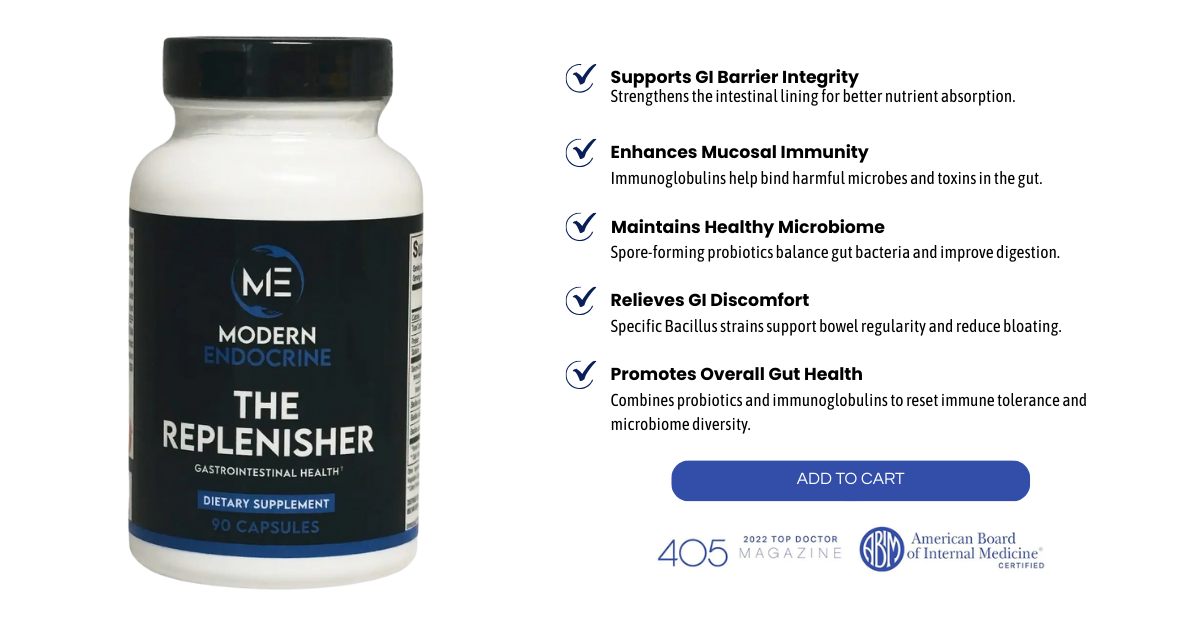
Give your gut the support it needs to thrive. The Replenisher strengthens your GI barrier, promotes healthy microbial balance, and boosts mucosal immunity so your digestion, nutrient absorption, and energy all work at their best. It’s your go-to for repairing and defending the gut from daily stressors.
Final Thoughts
If you’re constantly bloated, tired, and frustrated, you are not overreacting, and you are not alone. Your symptoms are real, and they’re trying to tell you something.
At Modern Endocrine, we specialize in getting to the root of stubborn gut and hormone symptoms. Because it’s not “just in your head”—it’s in your gut. And we can help.
Want to know if SIBO is part of your story? Let’s get the right testing, the right answers, and the right plan.
References
Pimentel, M., Lembo, A., & Chey, W. D. (2020). Irritable bowel syndrome: An evidence-based approach to diagnosis and management. BMJ, 370, m3036. https://doi.org/10.1136/bmj.m3036
Rezaie, A., Buresi, M., Lembo, A., et al. (2020). Hydrogen and methane-based breath testing in gastrointestinal disorders: The North American Consensus. The American Journal of Gastroenterology, 115(5), 682–695. https://doi.org/10.14309/ajg.0000000000000662
Ghoshal, U. C., Shukla, R., Ghoshal, U., & Gwee, K. A. (2017). Small intestinal bacterial overgrowth and irritable bowel syndrome: A bridge between functional organic dichotomy. Gut and Liver, 11(2), 196–208. https://doi.org/10.5009/gnl15444