
Why Cholesterol Isn’t the Villain and Estrogen Isn’t the Enemy with Dr. Terri DeNeui
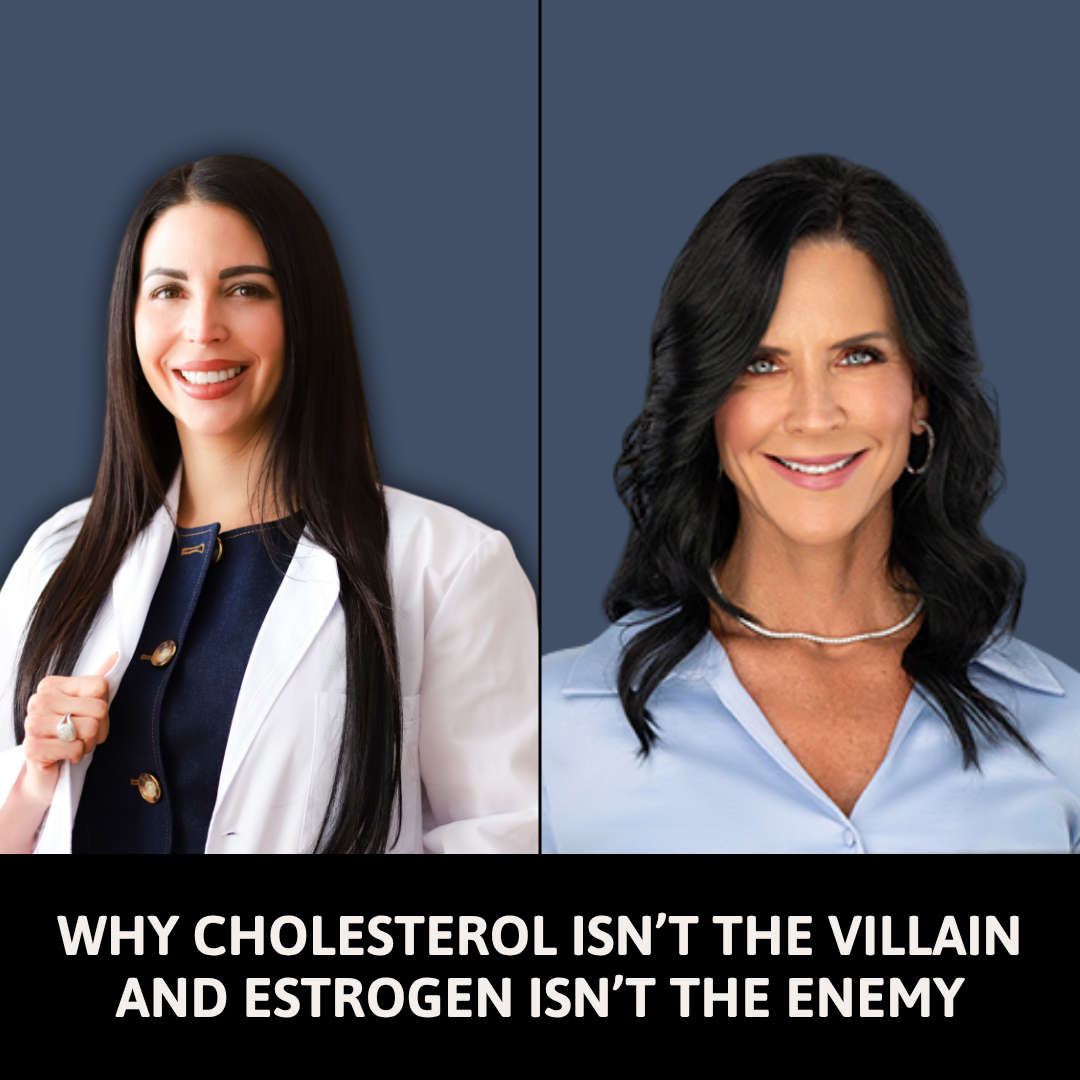
For years, cholesterol numbers have been treated as one of the primary indicators of heart health, but are we focusing on the right markers? In this episode, I sit down with Dr. Terri DeNeui to discuss the bigger picture behind cardiovascular risk. We talk through the limitations of looking at LDL cholesterol in isolation, the importance of factors like inflammation, insulin resistance, ApoB, lipoprotein(a), calcium scores, and lifestyle habits, and why a more comprehensive assessment may be necessary before deciding on treatment options. We also discuss the role statins can play, who may benefit from them, and why individualized care matters when evaluating cardiovascular health.
We also explore the connection between hormones and metabolic health. Dr. DeNeui explains how changes in estrogen, progesterone, and testosterone can influence cholesterol, blood pressure, body composition, and overall wellbeing.
Topics We Cover in This Episode:
- Why cholesterol numbers rarely tell the whole story
- The cardiovascular markers many people have never heard of
- What calcium scores can and cannot tell you
- How insulin resistance often shows up long before diabetes
- The relationship between menopause, hormones, and changing cholesterol levels
- Why gut health keeps showing up in conversations about chronic disease
- The role estrogen plays in men’s health and performance
- Questions worth asking when evaluating your long-term cardiovascular risk
Dr. Terri’s Resources:
Evexias Health Solutions: https://www.evexias.com/
Resources:
Check out the website
Follow Cassie on Instagram
Follow Cassie on Facebook
Follow Cassie on YouTube
Follow Cassie on TikTok
Disclaimer:
The information presented including any materials discussed, referenced, or linked within this podcast are for general educational purposes only, not the practice of medicine.
No doctor-patient relationship is formed from you listening to this podcast or utilizing any of the information provided.
I am a doctor, but I am not talking to you as your doctor. The information provided is not intended to diagnose or treat health problems or take the place of the professional medical care provided by your doctor.
If you are experiencing any health problems, including problems you believe have been touched upon in any respect within this podcast, you should consult your doctor about the problems without delay. You may ask your doctor whether he or she believes the information I have provided would be helpful to you, but you should still consult your doctor immediately and follow his or her medical advice as your treating physician.
I’m just here to provide you with basic knowledge about the issues we discuss so you are more aware of them and can better discuss them with your doctor.
Join me on the next episode as we continue our journey.
Transcript
Welcome back to the podcast. Today I’m joined again by somebody who’s been on several shows and always brings both clarity and courage to some of the most controversial conversations in medicine. Doctor Terry. Danai. Doctor Terry is the founder of Evexias Health, a bioidentical hormone company dedicated to changing the way hormone care is delivered for everyone. And in this episode, we are diving into two topics that challenge a lot of controversial thinking. First, we’re talking about statins and cholesterol, and why the standard approach may be missing the bigger picture, especially for women. Doctor Terry and I discuss how cholesterol ranges have shifted over the years, why LDL should not be viewed as the enemy in isolation, and why markers like LDL to HDL ratios, apoa, apob, insulin, CRP, and calcium scores may give us a much more complete view of cardiovascular risk. We also get into some of the side effects that often get overlooked, including memory issues, thyroid dysfunction, weight gain, and insulin resistance when statins are used. Then in the second half, we shift into hormone optimization, especially the conversation around estrogen in men. We talk about the overuse of aromatase inhibitors in men on testosterone therapy, and why some estrogen conversion is not only natural, but protective for the heart, brain, and metabolic health. Doctor Terry explains why suppressing estrogen too aggressively in men can backfire in major ways. This is a bold, nuanced, and incredibly important conversation. So let’s get into it.
Doctor Cassie Smith. We’re here at the Apple training. And I couldn’t not do a podcast with you since we’re together because you’re just such a wealth of information. And I wanted to talk to you about I was telling you earlier, before we started, about a month or two ago, I dropped a solo episode about the Misunderstanding of cardiovascular disease and where it really stems from in the concept of the gut and LPs and inflammation. And I started talking about statins and how they’re really not very well studied, especially in women. I don’t know if there might be some female studies, but I haven’t seen them yet. But yet we’re giving them out like candy. We’re you know, I laid the groundwork about the association between statins and dementia, and it got a lot of interesting comments, a lot of positive. A lot of people were on the feed going, this makes so much sense. I’ve noticed my memory is going since I’ve been on statins. Oh my gosh, where can I find a doctor that understands this? But then we got some negative stuff. As you know, we do when we’re talking about something as controversial as statins. So I just want to dive into that conversation and get your take as a medical doctor, as an endocrinologist, and just see if we are tracking. I love that. So if you’re.
Listening to this podcast, We need you to hear us. That statins are not your friend.
They’re not.
Typically. Especially as a woman. Right. So to your point, there’s no studies in women. They extrapolate data from men to women. And we’re not little men. Right. The other thing is cholesterol to some degree is very important for your body. Right? And so I think that people need to understand that also these lab ranges that people use, right. Your LDL should be 70, your LDL should be under 70. Your LDL should be as low as it could possibly be. Show me where that actually improves mortality. Yeah.
Not a single study. Right.
But to your point, we need LDL for our brain and for our cell membrane. So every cell in our body has membranes that actually allow hormones to flow in and out. Right. Those membranes are made of cholesterol, right? So when you lower somebody’s cholesterol to such a low degree, those membranes can’t rebuild themselves. And our body is constantly making ourselves better. Yep. And so it just doesn’t make sense.
It doesn’t make sense. And you know, I think we’ve talked about this before, how when I was a medical assistant, like 35 years ago in a clinician’s office, and I remember and I was going to nursing school and all of that, and the cholesterol ranges were very different back then. I remember that 320 was the top end, and then it went down to 300, and then 280 and then 250 and then 220, and now we’re down to like 170. And so the threshold keeps getting lower and lower. And, you know, I was having a dialog on Omaha Council just yesterday about this very thing and really delving into why. Well, follow the money, right? I mean, statins are the number one grossing medication in the history of medications globally, correct? And that’s a problem. So really just want to just educate everybody. Like why have we lowered those ranges? And why is this probably the same reason why we’ve broadened the liver function ranges because we have so much fatty liver, right? We could talk about lab reference ranges all day long, but what are your thoughts on that with regards to these reference ranges and cholesterol? And what should we be looking at? You know, should we be looking at more than just a total cholesterol with HDL and LDL?
And I think those are good points. So yes, the reference range has come down. And I think that it’s important to look at your cholesterol as a whole, just like any lab, right? So not only your total cholesterol, your LDL, your triglycerides, your HDL, the ratio of your LDL to your HDL, right? So if you have a high LDL, but you have a high HDL, we know that HDL is protective, right? And so if that ratio isn’t too high, then I don’t really care if somebody’s LDL is higher. Also,
your apoa and your lipoprotein B, like these are important because if these numbers are low and you genetically don’t have small sticky cholesterol particles, then we know that that’s not a problem. They’re not it’s not a problem. Right. And so we also know that some people just have a little bit higher ldls. And when you look metabolically, these are very healthy people, right? They have low insulin levels. They have low CRP levels. They have low inflammatory markers, and so it doesn’t make sense to take those people and push their LDL down, right? It’s there because it’s providing somewhat of a benefit. And we’re not having issues where these particles are sticking. Like I have patients who have ldls 141 50 insulin levels, less than five. They have calcium scores that show zero. They have no high CRP levels. Like there’s no indication that that LDL needs to be lowered. Right. But we do know that when we give them these medications, these statins that are, you know, very cheap and everyone’s on them, my doctor just put me on it. There’s lots of side effects of these medications. And so also, we know that throughout our life, our LDL may go up a little bit, right? We know when women go into menopause, this is how we know your blood pressure starts to go up, your LDL starts to go up, which is why hormone optimization is so important. But I do think to your point, if you follow the money, statins and levothyroxine.
Levothyroxine.
Are the most profitable medications in the world. So much to the point, doctor Terry, I bet you you get this all the time. I have patients who give me their med list, and then we’re talking about their cholesterol. And I’m like, okay, well, this level looks great. You’re not on a cholesterol medicine. Oh yeah, I am. Oh, I forgot.
To.
Write that. I forgot to write that down. I’ve been on Lipitor for 20 years and I’m like, oh yeah, you know, like it is. And they wonder why their memory is going.
It is a medication. It is important to know if you’re on it. And then it’s important to know, do you need it or do you not? Right. It’s important to know the data because primary care doctors, God love them. They just put everyone on it because they’re told to. Same thing with cardiologists. It’s like, let’s make LDL as low as possible. But when you’re like, why show me the data that this is making a woman live longer? Show me the data. You know that this woman who has a lipoprotein A that’s normal and an LDL of 150, but her ratio to HDL is low and she’s having memory issues. Why does she need a statin? Right, right, right.
Well, and you brought up so many great points that I want to just kind of break down now. First question I want to ask you before we get into the labs, because a lot several of the comments on the thread were, what labs should we be looking at? Or what should I be looking at to make sure that I really need to be on this site? So I kind of want to ask both of those questions. You know what, what patient would you say are probably the risk benefit ratio is probably better that you’re on a statin. I mean, there’s not very many, but there might be a certain population.
I think if you have had an acute coronary event, you know, you have an actual plaque build up in your heart or maybe in your brain and your LDL cholesterol is extremely high. 200. Right. You know, there is a Framingham risk score that you can, if you have extremely high cholesterol, you’ve had acute events, overweight, smoking, diabetic.
Yeah.
Yes. Then maybe a statin is appropriate. But also maybe so is lifestyle modification. Yeah. Right. So if we start to modify your life and take away the smoking and start making you not so sedentary and get rid of some of your fat cells and fix your hormones, right, then your LDL is probably going to come down a lot. You really have to balance, like when you give someone that statin, what is it going to do? It’s going to affect their thyroid. It’s going to affect their muscles. Right. It’s going to affect their glucose. And by the way, their brain. And if you’re a woman, let’s talk about the fact that we’ve shown in studies, your risk of breast cancer is astronomically higher on a statin than on not on a statin. Right. So we need to make sure that people are aware of these things. We’re not just writing a prescription, they go pick up for $4 and they think this is a benign medication.
Well, and the other thing too, and this is where we talk about training and we’re training several clinicians right now. There’s lectures going on and talking about moving out of this allopathic mindset of treating a lab or treating a symptom and getting to the root cause. And statins, just like antidepressants and sleeping pills and anxiety pills and all these medications were meant to be a temporary stopgap solution until you get to the root cause, your diet, your lifestyle, whatever that may be, and fix that and then gradually go off the statins. I mean, I think that’s a big key thing that people kind of really need to understand is these medications weren’t meant for lifelong, but we use them that way. Just like the ones that drive me crazy are the PPI, the Nexium commercials and things like that where they’re like, oh, go ahead and eat all your, you know, you’ve got the big overweight guy chomping down on a chili cheese dog and, and he’s got the stomach ache and he’s like, oh, here comes Prilosec or whatever. Yay! You can keep eating your crap food that is causing so much inflammation in your body. So this is a mindset that we have to get out of because a lot of patients are like, oh, I’m taking my statin. I can go eat whatever I want and stay sedentary and I’m going to be fine. What we have seen, what I’ve seen in the studies, and I’d love to see if this concurs with what you’ve seen is even with widespread statin use, we have not seen cardiovascular mortality decrease since they came out in the 80s. Would you agree with that? I would agree.
If anything, heart disease is getting worse, worse than women, right? Because we took all their hormones away right, in the early 2000. So no, cardiovascular disease is not getting better.
In men or women.
In men or women, people are getting sicker. And I just think it’s really to your point. It was a stop gap. And people use it as a crutch, and it gives them a reason to not actually do better and be better. The other thing I would like to point out is I think a lot of the benefit we get from statins is anti inflammatory. We know that right? Because also we know that if you take a statin daily versus if you take it twice or every other day or three times a week, a lot of times you get the same benefit. There’s a lot of anti-inflammatory benefits with statins. Well, there also are with microdose glp1, right. And fish oil and turmeric and lots of other things, right? Exercise, not eating processed foods, cleaning up your gut. So I think that you just have to really take into account what’s going on. I think that unfortunately, traditional medicine is very fast to write prescriptions for anything, which is my frustration with it. When a primary care doctor has five minutes to deal with you, right? What they’re going to do is try to listen to you write a prescription to shut you up and move on. Not that they. It’s just that that’s the tools they have.
Well, and they’ve got to see 50, 60 people a day to pay the bills because insurance reimbursements are so low. They’ve got to see a lot of people to pay all their staff and everything else.
And instead of talking to you about these are the risks, these are the benefits. This is what you can do from a lifestyle perspective. It’s easier to write a prescription. And that’s what they’re taught in school. But that doesn’t mean it’s right and it doesn’t mean it’s the best thing to do. You know, same thing with Adderall. Same thing with birth control, with sleeping medication, with, you know, it’s just all of these things that we just write a script for. And it’s like, where did we lose the whole Hippocrates mindset of like, let’s talk to patients. Let’s educate them, educate them. Right? And so it’s a huge issue. But I also think it’s important if you’re going to write somebody a drug to tell them the risk and the side effects of the drug. That’s right. Because it’s not fair to give someone a statin. And then three months later, they don’t know why their legs are aching so bad. They don’t even want to walk, and they don’t know why they can’t find words. And they’re losing memory and and they don’t know why all of a sudden now their thyroid is like trending right now. Their TSH is trending up and they may be hypothyroid and their insulin levels start to go up insulin levels and their glucose starts to go up and they have no idea to put this back to, oh, maybe it’s my statin that I wasn’t supposed to be on long term. I was supposed to start changing my life.
That’s right. Well, and you know what’s crazy about statins, too? And there’s some really good data to show this, is that the statin use is directly correlated with insulin resistance, right, in metabolic syndrome. So what’s happening here, you know, so moving into just if somebody listening really wants to understand, okay, what labs comprehensively should I get and what should I be looking at? You mentioned inflammatory markers and calcium scores and a deeper dive lipid panels. So when you have patients come in your office and they’ve clearly have metabolic disease, or maybe they’re on a statin, and you’re trying to educate them and figuring out what you can do with them. What’s your approach to these patients?
Yeah, I think that’s a good question. So not only is it a lab approach, but it’s a lifestyle approach, right? Do you sleep eight hours a night? Is it Uninterrupted. What are you eating? Like, what are you really eating? You know, and a lot of people, just so you know, for my patients listening or your patients, we know if you’re lying because if you say that you’re eating well and your triglycerides are 300, you are lying.
Yeah. Or you think you’re eating well.
And you’re so, so misinformed. I ask people like, what does your diet look like? But I already kind of know if your triglycerides are really high, that’s a problem. Now, some people have really good triglycerides, but their LDL is higher. We know it’s more of a genetic thing, but so I do like to know what is your activity level look like? What is your sleep look like? Because stress and sleep will affect your gut, will affect your hormones, will affect.
Melatonin levels, which affects cardiovascular disease, which.
We both talk about in our books. So what does that look like? Right? What is your overall stress look like? What does your gut look like? But then from a lab perspective, we look at your cholesterol, all of your levels. We look at your ApoE and your or your lipo A and your ApoE be we look at CRP levels because if your particle size, particle size. If your CRP is high, we know we have an issue. If it’s not, maybe not so much. We look at your insulin like metabolically, your liver enzymes, are they elevated? Is your insulin elevated? And then I also like to look if even if their cholesterol is high, I want to look at their thyroid. Right. Right. Do you have thyroid dysfunction? Do you not. So I think a comprehensive approach is really important. Also there are hormones right. Your sex hormones because as a woman and as a man, you know, when men lose testosterone, when women lose estrogen, our cholesterol levels go up, our blood pressure goes up, our risk factors go right because our adiposity goes up, right? And our adipose tissue is very important because it releases these nasty inflammatory molecules. So the more fat we have, the more inflammatory markers we have. And when we have more inflammation being released, all that cholesterol we do have is more likely to stick to things. Yeah. So I mean, all this is important. It’s not just like a, a one size fits all, but then it’s an approach of, okay, you know, here’s what we’re looking at. Your diet could be improved. I can tell by your triglycerides, and maybe you do have a little bit of inflammation with a high CRP. Maybe your insulin is a little elevated. If those things start to add up, then I look at calcium score because it’s easy. Not that it’s the most amazing test ever. And do I like the Everly Test and some of these other tests that are better? Sure. But a calcium score is.
Easy and it’s inexpensive.
If you are listening to this right now, you can go into Google and type in calcium score near put in your zip code. It will bring up a list of.
Where you think you need a doctor’s order.
For it. It’ll bring up a.
List.
Of where you can go get it. It’s usually 50 bucks. You walk in, it’s an X-ray, and you can get a number. And if it’s zero, you can feel a lot better. If it’s a thousand.
You might want to have that conversation.
Then we’re going to have a conversation, you know, additional testing. But even those people with a thousand. My next thought is, okay, let’s go. Have you have a stress test, right? If your stress test is normal, we’ll have another conversation about lifestyle. But I mean, these are things that are easy lab tests, calcium score, and really being honest about your lifestyle. Yeah. What are you putting in your mouth? How much are you moving? Are you sleeping well?
You know, and as you continue to look under the hood, let’s just say somebody does have a higher calcium score than zero and that, you know, okay, there’s a little bit of a risk factor. Maybe they don’t really have any family history or personal history of cardiovascular disease. Maybe their blood pressure is borderline. You know, you don’t really want to just jump right to the meds and you want to talk about lifestyle. But what are some other things you would look at in these patients? You know, we’ve talked about their CRP is high. Maybe look at a homocysteine level. And if that’s high they could have methylation issues. So how far down the path. I mean if we’re really looking for root cause and then talk about the gut and the relationship between the gut and gut dysbiosis and inflammation and cardiovascular disease.
Yeah. I mean, we, I like to go all the way down the rabbit hole, right? Like I like to look at all of it. If you have micronutrient deficiencies, let’s fix them because we know B12 is really important not only for hormone metabolism, but things neurologically. So I mean, any sort of micronutrient issue you have, let’s fix it. But if you have a lot of micronutrient issues, then we’re looking at the gut. So, I mean, I go all the way down the rabbit hole. I look at their thyroid. We optimize their thyroid if needed by looking at T3 because T3 is the important hormone.
I’m so glad you’re going to talk about thyroid in the heart.
Yeah. So I mean, if you don’t have adequate amounts of T3, then you are going to have more heart issues. That’s been shown in studies. Yeah. More likely to die of cardiovascular issues, especially when you have acute coronary syndromes. They’ve shown that if you go to the hospital and you’re having an acute coronary syndrome, you’re having a heart attack and your T3 is low and you’re given IV T3, you’re more likely to make it out of the ICU and not die. That’s right. Period. Yep. So you look at their thyroid, you make sure you real.
Quick before you move on, how many clinicians would you say ballpark look at T3? Oh.
Maybe 15%.
Yeah, it’s too low. We’re looking at the wrong labs. We’ve done other thyroid podcasts before. So go back and find those and listen to them. But it is so important to get a T3. Yeah. And then the gut.
And then, you know, also look hormones too, though, right? Yes. We’ve got to optimize your hormones as a woman. We’ve got to fix your estrogen, your progesterone, your testosterone. I was talking to a lady yesterday on the way here. Sweet lady who told me, you know, when I was in my 30s, she’s been pregnant ten times. Wow. Ten babies. Because she felt so great when she was pregnant, of course. And then as soon as she wasn’t pregnant, she felt terrible. And her doctors and she would say, I feel like I need some progesterone because I feel so well when I’m pregnant. And they would tell her and tell her and tell her, well, that’s going to cause cancer. Uh, and so now she’s 53 and she finally has found me and she has no progesterone. She has no estrogen, she has no testosterone. Her cholesterol was a little high. And we were talking and she said, my cholesterol has never been high. Like it’s never been high. Well, she’s just lost her estrogen. And we were talking about how protective estrogen and progesterone are. Well, estrogen is protective to your heart, but progesterone’s protective to your brain and to your mood and to your sleep.
And so this is really important to like fixing. I told her, we’re going to fix your estrogen. We’re going to fix your testosterone and your progesterone, and you’re going to watch because her LDL was 100 for years. And then she went through menopause recently, and her LDL is 140 and her blood pressure’s up and her insulin’s up and she’s gained 10 pounds. And I said, you’re going to see how your LDL is going to come back down. So you really have to look at somebody’s hormones too. But then ultimately going to the gut is really important because the gut is where everything starts to fall apart. Right, right. So the gut is where our hormones are metabolized, especially our estrogen. So whether we’re making estrogen or whether we’re taking estrogen, we want to make sure that it’s being detoxified and gotten rid of out of our body appropriately. If not, that’s where we get symptoms. If not, that’s where we get side effects. And so it’s not that the estrogen causes cancer. It’s how your body and environment metabolize the hormone.
And that can.
Be fixed positive or negative. Yes. So I think looking at the gut is important too, because it’s important to how do you absorb your B vitamins? How do you absorb your ferritin, which how do you absorb your vitamin D? All these are important for how our thyroid functions, right? How does our thyroid hormone that we give to somebody be converted? How does it actually go into cells? All this is dependent on how well our gut functions.
And then of course, talk a little bit about gut dysbiosis or bad bacteria overgrowth and how that can impact inflammation with lipopolysaccharides and.
Things like that. And this is huge. You know, when somebody is inflamed, finding where the inflammation is coming from is so important. Inflammation in general, right? Let’s say you have a high LDL, it’s 150, right? Let’s just pretend if you have a lot of inflammation in that blood vessel, that cholesterol is going to be more likely to stick somewhere, right? And as it sticks and we get little roadblocks, it’s harder for things to travel, right? If you don’t have a lot of inflammation, that’s just going to float right through, it’s it’s less likely to stick. So when people have inflammation from high CRP, you know, you can tell by high CRP, high insulin, insulin is very inflammatory. We need to figure out why 99% of the time it’s your gut. That’s right. Because the bacteria in your gut are balanced, there’s good bacteria that’s supposed to help extract nutrients B12, vitamin D, iron. It’s supposed to grab the food that we eat and store it where it’s supposed to go. Our skeletal muscle, our liver. So we have energy. There’s bad bacteria that when they rule the roost and are overpopulated, they’re going to release bad nasty particles and they’re going to kill that good bacteria. So when we do eat good food, we can’t absorb it. Right? And then that bad bacteria is also decreasing our ability to convert T4 to T3. It’s decreasing our ability to properly absorb and get rid of our estrogen, excrete our estrogen metabolites. Yep. And so those bad bacteria are very important. They’re also just chronically releasing these nasty signals that cause inflammation. Right. So they’re nasty bacteria. They release this little, you know, nasty signal in our bodies. Like, what is that? And so our body almost feels chronically inflamed. Like we have a low grade fever all the time from this bacteria. And so imagine if you walked around with a low grade fever for 20 years. Your body is just not working, going haywire. Yeah. And so you have to find.
That cancer and all the other diseases that follow.
To fix that. I mean, it’s just like people are freaking out about radiation, right? Oh my gosh, we get radiation from our cell phone. We get radiation from, you know, the internet, Wi-Fi routers. What’s the same thing in your gut if you have all this bad bacteria, it’s like you’re getting chronic radiation all the time. And if you don’t fix that, eventually your cells are going to start to break down. And then by the way, if you throw a statin on top of that, your cells are trying to fix that chronic, you know, inflammatory radiation. It’s like, okay, let’s get rid of this cell. Let’s make another one because this one’s got too much radiation. Oh, wait, we don’t have enough cholesterol to make this cell membrane. So we got rid of this one because it’s bad and now we can’t make a new one. So now our organs aren’t going to function as well. And now our memory starts to go. And now so it doesn’t make sense.
Yeah. And lipopolysaccharides are, you know, those nasty little signals you’re talking about that not only play a role in cardiovascular disease, but PCOS, endometriosis. So they’re just bad flavors, resistance, insulin resistance all and, you know, you talked about insulin levels and checking insulin levels. And I want you to talk a little bit about what should they be, not what are the reference ranges, but what should they be? Because this is really important. And why have the reference ranges changed?
Yeah. So fasting insulin levels should be five or less. It’s estimated that 93% of the adult population in the US have higher levels than that. So the reference range goes all the way up to 18. And in some labs 24.
That’s insane.
And that’s because if you take 100% of the population right now and you check a fasting insulin, only 7% are going to be less than five. But 30 years ago, most of the population was less than five. So now it’s like, oh, well, everyone’s high. I guess we just move the reference range. No, it’s we fix the problem at hand, right?
Yeah. Because all these reference ranges, people were thinking outside the reference range and clinicians didn’t know what to do with it. Correct. Because there weren’t diabetic, you know, because clinicians, doctors, nurse practitioners, we’re not trained on how to properly manage metabolic disease. And so when you get all these weird outside the range metabolic parameters, you know, the lab reference ranges just get broader and broader. Same thing happened with liver functions, right. And liver function tests, because we have so many people in this country with fatty liver. And so now, you know, I remember way back, you know, those lfts, the in the teens were the reference ranges. Now it goes all the way up to 40.
And let’s talk about testosterone. I saw a lady yesterday, a lady who was 49 years old. She had a testosterone of one. And they said that was normal. Yeah. Her reference range was normal with a testosterone of one. Yeah. And I’m like, that’s not normal. That’s not normal. Well, when.
0.0 is a part of the reference range, that should clue people in that zero isn’t normal. But that’s what’s expected, right? Because of our sick unhealthy population that these reference ranges, you know, are made off of. So you talked about testosterone and we’ve talked a lot about women and you just mentioned testosterone. Let’s talk about all this dialog around men because by and large, mostly it’s men that are on statins, right?
A lot of women.
A lot of women are too, but a lot of men are. And the same rules apply with men, except we’re really looking at primarily testosterone. So talk about testosterone in men. And what should those levels be to protect the heart?
Yeah. So men, it’s just as important as women, right, to make sure their testosterone levels are good. I find in men, as testosterone levels start to come down and you can kind of trend it, right. And also, let’s point out this is not like a macho thing. This is not a a lot of men are like, oh, you know, I’m 50, but I work out and I feel great.
Or I have good.
Erectile function. I have great erectile function. Even though my testosterone is 400, I don’t or.
They confuse drive, right? If they have a sex drive in a desire, then their testosterone is okay. I’ve seen this a million times. I had an 80 year old guy come in. He’s like, oh, I’m good in that department. You know, I still want to enjoy my sex life. And I’m like, okay, I don’t think guys ever lose desire.
For sex.
But that’s.
Not.
The barometer. It’s like born and die with it. It’s not going to go away. In most cases. Correct. So that’s not the right barometer. It’s a good point.
Correct. So I think it’s important for men to understand too that, you know, when you’re looking at your testosterone, if you’re a man listening to this and your testosterone is 285, I believe no matter how old you are, that’s normal. That is not normal. Yeah. Right. So 285 is is not normal. The range of normal in men is like 285 all the way to like a thousand. Yeah. That’s insane.
Even a little higher in some reference ranges.
And so what men need to understand is your testosterone needs to be in the upper quartile percentage of normal. And if it’s not what you can watch as a man, because I guarantee you it will happen. You can watch as your testosterone comes down, your blood pressure goes up, your belly fat goes up, your cholesterol goes up, your moodiness goes up. And you can figure that out by asking the people you work with and your wife, just like your your children too, that you’re going to get snappy with them? Your insulin levels are going to start to go up. You will see metabolic changes in your labs. And I have guys who I’ve seen for 5 or 6 years who will tell me, I don’t need testosterone, I don’t need testosterone. And so I will pull up a trend of their labs and I will show you, hey, look, five years ago when you started with me, your testosterone was 700 and I was already talking to you about a little bit of testosterone. Now it’s 450, but your insulin is doubled and your blood pressure’s went up by ten points and you’ve gained 12 pounds. And your wife tells me you’re a little moody and you’re telling me you can’t sleep as well, and you’re telling me you’re sore in the gym, and it’s almost like.
He wants to have sex, so he’s fine.
Yeah, yeah, but your erections are fine. Allegedly. You know, and that and that can be questioned too, because a lot of guys, God love them, are buying things on the internet, this and that because they don’t want to tell anyone, right? Because they’re embarrassed and it’s a part of aging. Yeah. But if you and I think men need to hear this too, if once you ever have an erectile dysfunction issue, know that that blood vessel in your penis is the same blood vessel in your heart and your eye and your kidney. And so if you’re having erectile dysfunction issues, it’s nothing to be embarrassed about. It’s something it’s a warning sign from your.
Body.
Like, hey, something’s going on here. Blood flow is not right. We need to look at our diet or our sleep or our cholesterol or our, you know, our insulin or our testosterone. Yes. Thyroid. Yep. Our gut. And so I think it’s just really important for men to understand when your testosterone goes down, it’s going to start to affect all these things because men’s gut changes to testosterone keeps really good balance in men’s guts, right? And so when your testosterone goes down, you need to replace it so that your gut bacteria become better and then your thyroid stays functioning well, your insulin, like all these things. It’s not, I just wish some guys it’s a very macho thing. Yeah. Right. Yeah. And even my husband will tell you, you know, my husband says to people all the time, I told him when he was 45 he needed to get on testosterone. I don’t need to get on testosterone, I look good. I mean, he’s always looked great. But finally at 48, he caved and he says all the time, I wish I would have.
Wished sooner.
I wish I would’ve, I wish I would have gotten this in my 40s. He feels better, his mood is better, his labs look better. He actually was having a lot of. And I know he won’t care that I say this, but he was actually having a lot of like just panicky anxiety type feeling.
Absolutely.
And he couldn’t figure out why he was like, well, you know, and then he started, he convinced himself he had a heart attack one night to the point where we ended up getting a cath to prove to him he didn’t. But it was all from testosterone, you know.
Because when it’s low, they begin to have anxiety. They begin. And, you know, my husband Dan describes it, and every time I use this analogy for a man, they’re like, oh, that is so accurate. When his testosterone is low because his pellets have worn off, he says, stress feels like it’s in my face, like it’s so right here and I just want to be like it. And he says, when my testosterone is good, stress is out here and I can manage it. And I’ll tell you one thing about stress, guys that are listening, it’ll kill you. It’ll kill you. In fact, something around 60% of heart attacks are not related to disease. Not no high cholesterol, no plaques. It is pure stress causing heart attacks and that is an interesting statistic. So I’d love to hear what you have to say about that. And then I also a little bit really want to talk about because there’s a lot of people listening, a lot of guys listening, a lot of guys follow this podcast that do shots, but also do estrogen blockers. So let’s talk a little bit about that.
So first of all, let’s talk about the stress stress super important. So stress when you have a large amount of stress, what I want people to understand is when you feel things or think things here in your brain, it is directly correlated to your gut instantly by something called your vagus nerve. Your vagus nerve is the Wi-Fi router of your body. It is constantly taking everything in your brain what you’re feeling, what you’re seeing, what you’re sensing, and it is telling your gut, I’m stressed. I can’t handle this. You know, I’ve got all these things going on. That constant communication when you’re stressed changes the microbiome in your gut instantly. It will kill your bad bacteria. It will make your good bacteria grow. It causes inflammation. And so when you are stressed, the reason I think people have heart attacks and have thyroid issues. It kills your gut. Yeah. And it has been shown when you are stressed, I guarantee you, if you do a GI map and you’re stressed, I can tell you, you don’t even have to tell me anything about you. I can tell you’re stressed because of the bacteria that die, the bacteria that are high and the immune system of your gut.
You said that when you looked at my GI map, you’re like, girl, you’ve been under some stress.
I was like, Doctor Terry, what’s been going on? Because you’re stressed out. I mean, stress is so important on so many levels. And not only that, when it starts messing with your bacteria and your gut, it drives your insulin up, decreases your T3 conversion, even though you’re taking, you know, a thyroid, it’s not going to work as well. The pellets you’re taking are not going to work as well. So we have to manage our stress appropriately. And we have to understand it does affect our gut. Yeah. Right. So that’s one thing. And then the guys that are on shots, let’s talk about that. When you take testosterone shots, this roller coaster of testosterone that you get is so hard on your body because your brain is like, oh, I have testosterone. Oh, I don’t, oh, I have, or I have a really big spike.
What do I do with all this testosterone?
Right. And it’s not fair. It’s almost like throwing you in a dark cave and opening the door and throwing food in there very consistently every hour, and then shutting the door and not giving you food for three days. And your body’s just like, am I getting it? Am I not getting it? What am I supposed to do? Right? In addition to that, we know that when we take shots, it increases something called thromboxane, which increases our risk of clotting. So I don’t love that in men either. Right. Pellets are just this more steady absorption of testosterone. You can keep levels higher without bad side effects.
Right?
Right. And so I do think that men need to realize that our taking shots. Is it easy or maybe is it 32.
Shots a year.
Yeah. Right. And in the muscle or. Yeah. But they they’re like, oh, it’s it is less expensive. I don’t I don’t have to come into your office. Right. Is it less expensive? Yes. But just because it’s less expensive, does that mean it’s better for you? Right. No. And I think if you you know, I tell men all the time, do a pellet once. And if you absolutely hate it, go back to shots. They usually don’t go back. Yeah, because they love that steady state. And like, to your point, like Dan says, Dan can tell when his pellet starts to come down. That’s probably his fault because he doesn’t go and he’s.
Supposed.
To. Right. Rob though, like my husband, like he knows exactly when he’s going to start feeling like that. So he will go the week before. And as long as he does that, he’s like, I feel amazing. Yeah. You know, and so when you do shots, you’re not going to get that because you’re going. Yes you are. And you know, a lot of guys say, well, I want to be able to put in what I want and take out what I want and make my levels higher. You don’t need to be playing that. Yeah. Like, you know, I mean, you you can hurt yourself, right? Two high testosterone levels are not good. And so I think a lot of guys need to realize, hey, a very steady stream of hormone instead of these peaks and valleys are your body, your adrenals, your brain. Everything feels better when it’s a steady.
And what about this? You know, I call it broscience because there’s no data to support blocking aromatase. Oh, yeah. The conversion of testosterone to estrogen. And even in a lot of studies. And I talked about it in my Estrogen lecture this morning, are showing that it’s actually the estrogen that is the primary protector to the heart and to the brain from testosterone conversion. So where did this whole thing of blocking estrogen come from and talk about why it’s bad? You know, I think it’s probably just.
These Instagram influencers that.
And even before that, I think the gym rats kind of no offense to the to the gym guys, but it kind of became this, what we call bro science, where you do your shot now in where it really stemmed from is the anabolic steroid world. And so when they would do their shots of anabolic, which aren’t aromatizable, but they also felt like blocking their estrogen was going to help with their testosterone and their, you know, muscle build. And it kind of carried over.
So let’s be very clear. We are never talking about anabolic steroids, right? But I think that’s true. Like when you are giving yourself supratherapeutic doses of testosterone in ways that they do with anavar and all these blocking your estrogen may make sense because when your estrogen is 300. Are you going to have issues? Yes. But when you give a man testosterone in appropriate doses and their estrogen is 6070, it’s not going to hurt them. Even 80.
In fact, they need it.
They need a little bit of it. Right. And that actually tells us, hey, this is a good thing. We’re converting some of our testosterone to estrogen. To your point, it protects their heart. It makes guys actually feel better. We know that when guys estrogen is really low, they get very moody and they.
Have erectile.
Function. They have erectile dysfunction issues and it’s not as beneficial to their heart. Right. So a lot of guys will look at lab reference ranges, which again are jacked up. Estrogen more than 39 is high. Well no, we need to compare their estrogen to their testosterone. If your estrogen is 39 and your testosterone is 200, yes, that’s a problem. You’re aromatizing what little testosterone you have in your fat to estrogen. And that is a huge problem because then we know your higher risk of cancer, right? But when your estrogen is 60, because your testosterone is appropriately treated at 1000 1100, then that’s a good ratio. So again, it’s all about ratios and it’s all about how hormones work together. But we do not want to suppress our estrogen to less than 30. When our testosterone is high, actually, you’re going to have a lot of muscle like muscle aches, muscle issues. It’s going to be protective of your heart. It will cause ed. And so a lot of guys need to realize, this is why it’s important to work with somebody who understands hormones as a whole. Your reference range is not the end all be all right.
So this is also, I mean, you can put whatever you want in ChatGPT, but realize that ChatGPT is going to go off of reference ranges. And when you’re seeing a provider that understands, hey, when our testosterone is higher, some of it’s going to be converted. And fat cells, whatever fat cells you have as a man to estrogen. And we do need some of this estrogen for protective brain heart benefits, right? I mean, you need some estrogen. So to your point, I hate aromatase inhibitors. I do not give them to men. A lot of them will kind of throw a fit like, oh my gosh, I’m going to get breast tenderness. I’m going to get breast. I saw a guy yesterday who does pellets. His testosterone was 1200. His free was right at 200. At four weeks out. His estrogen was 65. Perfect. He is 70 years old. He said. I’ve never felt better. I’ve never felt stronger in the gym. I work harder than all my friends. My wife can’t keep up with me, which is sort of true. She does pellets.
But.
I probably just. But I mean, he feels wonderful. No breast issues, no breast tenderness. And he’s like, my buddies at the gym told me I need to be on an aromatase inhibitor because my estrogen is too high. And I said, well, your estrogen has actually been this high for two years, and you’re telling me that you feel amazing? And he’s like, okay, yeah, you’re right.
Well, and what people don’t, and this is the thing that people need to understand a young, healthy male of 20, 30 years ago, before our food hijacked our hormones and our young men had a testosterone level of somewhere between 7800 and 1100. Well, there is a natural conversion via aromatase at about 7 to 10%. So you would actually expect a estrogen level around 70 to 80 in somebody that had a testosterone level like that. So there’s no point in blocking it. And the other thing that I see, I can tell a guy on an AI just across the gym because he’s got big, beefy muscles and he’s got a big old belly. Why? Because estradiol is a visceral fat shredder. And these guys are blocking their estrogen and they’re getting big bellies and it’s very inflammatory. Correct.
I completely agree. And this is why also, you know, I used to take care of bodybuilders. I still take care of a few of them. And I used to get into the biggest fights with them. They would come in and they would be like, you know, I’m four weeks out from a show and I’ve got to drop 12 pounds and I’m exercising so hard and I’m, you know, taking all these fat stimulators and I cannot drop weight. And I’m like, well, because you’re estrogens 30, like, get off your aromatase inhibitor. You know, one guy, I will never forget it. He fought with me and fought with me. And then he was like three weeks out from a show. He’s like, I’m not gonna be able to do my show. And I said, well, here’s the deal. Humor me. Then just get off your aromatase inhibitor and see what happens. And he texts me seven days later, he’s like, I’ve already lost 6 pounds. I’m like, because it was all right there. And then we did it. And he was like, I don’t believe you. So he did his labs. His estrogen had already come up to like 42. Yeah. And I was like.
There you go.
There you go.
Yeah. And it’s also estradiol is a peptidic to prostate cancer cells. So what we see like we used to use as you know, estradiol estrogen, synthetic estrogen. It fell out of favor because of clots orally. But that’s what was used for prostate cancer. So also men were seeing these studies come out now that over block their estrogen way down have higher risk of prostate cancer. So you got to think about it. There’s a reason God made aromatase. There’s a reason it’s in your body. It’s very protective. And I think there’s a lot of stuff we just still don’t really know about aromatase. So any last thing we didn’t talk about, we talked about the whole gamut and I love it. This was a good impromptu conversation.
Yeah, I think just, you know, what people need to take home is like, if you are on a statin and somebody rotates you very nonchalantly and said, hey, the guidelines say the lower the LDL, the better you need to take this. And there was no thought put into what is your insulin? What is your triglyceride level? What is your HDL? What are your ratios? Do you even know? Do you have a high lipid a? Do you have a high apob? What is your calcium score? You scoring. Are you metabolically like what’s going on with your with your metabolic status? Somebody just wrote you a stat and said, everyone takes it. You should. Do you really need to step back and say, okay, am I having muscle aches? Has my thyroid gotten worse? Have I gained weight physically?
How am I doing?
Yeah. Like, and then has this helped? Maybe your numbers have gotten better, but has your glucose gone up? Are you on thyroid medication now? Do you even know because the doctor checked, right? Did they check? Did they not? I mean, I think you really just need to take a conscious like look. And then I think go back to that provider and ask them questions. And if they’re not willing to entertain these questions, and all they’re willing to do is say, hey, you need to take it, then I would probably be looking for a different doctor and just know that, you know, it’s your choice in what you do. And I want you to make an educated guess. But there are a lot of studies that show that statins have a lot of issues when it comes to women. I see it all the time hypothyroidism, you know, insulin resistance, weight gain, brain issues, muscle issues. And so what you really need is a provider who will work with you and look at all these things and help optimize you instead of just writing you prescriptions.
Absolutely.
So I would agree with you. I am not on the statin train. Sorry, big Pharma. And I do think that we can fix a lot of this if we just use our brains and spend some time talking to people and teaching them about lifestyle modification.
Awesome. Well, thanks for your time. I know you’re going to be up on the stage here in a little bit talking about your favorite topic, which is the gut fix your gut, fix your hormones is Doctor Cassie’s book. You got to get it. It’s on Amazon. And someday soon, hopefully she’ll have the audiobook done. It takes a minute, but really appreciate you taking the time in the middle of our busy training day is awesome, Will.
And make sure you guys are following us because we’re going to do a podcast next about endometriosis, PCOS, and estrogen and the gut. Yep. Thanks so much for tuning in to this episode. If this conversation resonated with you and you want to go deeper, I’d love for you to check out my book on Amazon. Fix Your gut, fix Your Hormones, where I talk more about medications like statins, birth control, metformin, and PPIs, and how they can impact both gut health and hormone balance. If you enjoyed today’s episode, please take a moment to like the show, follow the podcast, and leave a review that really helps more people find this information and get these conversations into the hands of the people who need them the most. And if you know someone who would benefit from hearing this, please share it with them. You never know who may need this information right now. If you’re looking for a more personalized approach, you can consider becoming a patient. At Modern Endocrine. We’re licensed in 46 states and offer telehealth visits. If you’re not local and don’t want to come to our state of the art clinic in Oklahoma City. And finally, if you’ve been listening to the show and want to try any of our supplements on our website, we’d love to support you there too. You can use a special code. Listen ten to save as a thank you for tuning into this episode. Our supplements are found at Shop Modern endocrine.com. Thanks again for being here and I’ll see you in the next episode.