
Why Your Brain Feels Drained… and How to Reset It with Dr. Patrick Porter
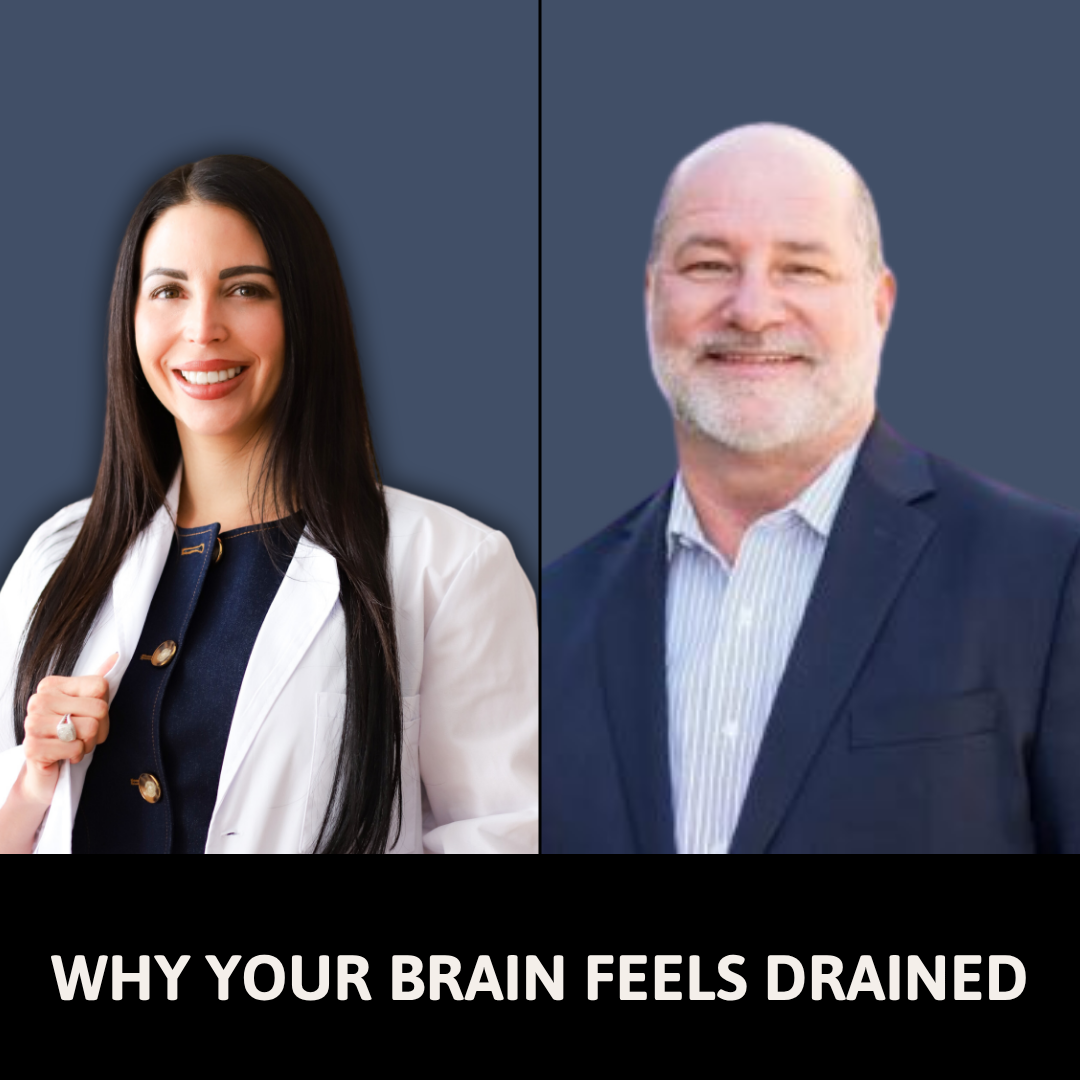
In this episode, I sit down with Dr. Patrick Porter, founder of BrainTap and a longtime researcher in brain fitness and human performance, to explore why so many people today are struggling with brain fog, poor focus, low energy, and chronic stress. We discuss the relationship between the brain, gut, and nervous system, and how modern life may be affecting the way we think, feel, and function. Dr. Porter shares his perspective on brain fitness, why recovery is just as important as stress itself, and how simple daily habits can influence cognitive performance, mood, and resilience.
We also talk about practical strategies listeners can start using right away, including breathing techniques, movement, sleep routines, and ways to support healthier energy patterns throughout the day.
Topics We Cover in This Episode:
- What “brain fitness” actually means and how it differs from brain health
- Why so many people experience brain fog, memory lapses, and afternoon fatigue
- The connection between stress, the nervous system, and metabolic health
- How sleep quality influences hormones, recovery, and cognitive function
- Why the gut may play a larger role in brain function than many people realize
- Simple breathing techniques that can help regulate the nervous system throughout the day
- The reasoning behind delaying caffeine first thing in the morning
- How recovery practices may improve focus, energy, and resilience in a high-stress world
If you’re struggling with stress, poor sleep, afternoon energy crashes, or simply want to better understand how your brain influences the rest of your health, this episode offers plenty of food for thought.
Dr. Patricks’s Resources:
Connect with Dr. Patrick Porter on Instagram
Resources:
Check out the website
Follow Cassie on Instagram
Follow Cassie on Facebook
Follow Cassie on YouTube
Follow Cassie on TikTok
Disclaimer:
The information presented including any materials discussed, referenced, or linked within this podcast are for general educational purposes only, not the practice of medicine.
No doctor-patient relationship is formed from you listening to this podcast or utilizing any of the information provided.
I am a doctor, but I am not talking to you as your doctor. The information provided is not intended to diagnose or treat health problems or take the place of the professional medical care provided by your doctor.
If you are experiencing any health problems, including problems you believe have been touched upon in any respect within this podcast, you should consult your doctor about the problems without delay. You may ask your doctor whether he or she believes the information I have provided would be helpful to you, but you should still consult your doctor immediately and follow his or her medical advice as your treating physician.
I’m just here to provide you with basic knowledge about the issues we discuss so you are more aware of them and can better discuss them with your doctor.
Join me on the next episode as we continue our journey.
Transcript
Welcome back to hormones metabolism in you. Today I’m honored to introduce Doctor Patrick K Porter. Doctor Porter is an award winning educator, author, and speaker who spent more than 35 years studying the connection between the brain wellness and human performance. He’s widely recognized as a pioneer in brain fitness and digital neuroscience, and he’s helped bring practical brain health tools to people all over the world. He’s the founder of Brain Tap, a company focused on improving mental fitness and overall well-being through innovative technology and simple daily practices. It’s an app you can get on your cell phone, and I’ve been using it for a few weeks now. Over the course of his career, Doctor Porter has written 17 books, produced more than 800 personal development audios, and created over 1000 guided imagery exercises designed to support learning focused relaxation and performance. His work has been featured by major media outlets, including The Wall Street Journal, The New York Times, CNN and Forbes, and his insights have reached audiences through appearances on PBS, GQ, and even The Joe Rogan Experience. But what makes his work especially valuable is that it takes brain science, and it makes it accessible, practical, and usable in everyday life. In today’s conversation, we’re diving into some topics that so many people struggle with but don’t always understand.
Things like brain health and brain fitness. That familiar afternoon drop in energy and the very real way stress affects the brain, the gut, and the body. We’ll also talk about simple, practical ways to reset and recharge, including how tools like brain tap app, and even intentional breathing techniques can help support focus, calm, sleep, and resilience. If you’ve ever felt mentally drained, stuck in stress mode, or like your brain just isn’t performing the way you want it to, this is going to be a really valuable conversation. So please join me in welcoming Doctor Patrick K Porter. So Doctor Patrick Porter thank you for joining me. I am so excited about our conversation. I want to start by validating all of our listeners. You’re going to teach us all why brain health is so important and why so many of us are struggling with just memory and focus and brain fog. And so you, you know, we were chatting before the podcast, you were telling me all sorts of amazing things, but can you start by telling people a little bit about yourself and what you do? And then we’re going to get into, you know, all the things you’re going to teach us about how to make our brains healthier and our memory better.
Sure. My journey actually started when I was a kid because my dad got help from alcoholism through something called the Silva Method, which was through the Catholic Church, and taught him how to meditate. And what he found out was that, hey, when he started to relax, that’s why he was drinking. So he figured a new way to relax and he never drank again. And so we got into something called the Silver Sound, which is a binaural beat. So for the listeners, your brain that you have today was not designed for the life you’re living. So we need to use technology to get our brain tuned up for the kind of life we’re living. We’re bombarded with 24 hour news cycles, stress from every angle. And so in 1986, I was with a group at a company called Light and Sound Research, and we created the very first personalized light and sound machine, which we’ll get into. And we didn’t know what it did at that time. We were trying to work with opioids. They didn’t have opioids, I should say before that we were working with biofeedback to help people de-stress. There was no neurofeedback, you know, that wasn’t even around. And so we created this process. And then over the years, I had a franchise company, I sold that. And then in 2012, nobody was doing anything with the technology. And my wife and I sat down and said, we need to upgrade the technology. There’s new science out there, what we can do. So we launched Brain Tap. So I’m the CEO and founder of Brain Tap, and we have 120,000 users out there right now in 3000 clinics using it.
We validated it first with clinics because of my franchise background. But then now you don’t have to be a clinician to use this technology. It’s one of the things that brain fitness shouldn’t be relegated to having to go into a clinic, although we do have them in clinics. But brain fitness is something you should do daily, and it’s not what you do occasionally that matters. It’s what you do daily that really needs to be upgraded, and we’ll get some tips on that and how you can improve your brain. I’m a researcher by nature, so I’m always researching. We have a 6000 square foot research lab here in New Bern, North Carolina. We have people come in all the time for something we call brain camp. We can show them how to turn their brain around in less than a week and continue to do it at home. It’s not really open to the public right now. We only do it through our clinics, and so they send us people that they feel would need it. But what we’re doing is we’re trying to find out what’s the simplest way somebody can take a brain that’s in a state of dysfunction because of stress, anxiety, the foods we consume, lack of movement, all these reasons that our brain isn’t working right. And how could we work with our their lifestyle to get them operating? Because the truth is, especially for listeners, there’s no ancient society that held the wisdom of the tribe with the youngsters.
They held the wisdom of the tribe with the elders. So that must mean we’re doing something wrong with our brain. Why are all these people getting dementia? People at 35 years old are now being diagnosed with dementia. We have a study. It’s in a book called Saving Your Brain Now. We took everybody off the dementia scale in less than six weeks. That’s in a bigger study now in Brazil and in Florida at two major universities and 56 people through the study. And everybody’s off the dementia scale in six weeks. Dementia isn’t something you’re sentenced to have Alzheimer’s and die. It’s something it’s a warning light on your car that says, hey, you need to do something here. And the checkup is pretty simple, really. You know, if we start to put together the program. But you’re going to have to change your lifestyle because your lifestyle brought you to this moment. And if you’re having difficulty right now, congratulations, you’re in the dark night of the soul. There’s never been a superhero that didn’t have to go through it. So once you get through it, you’re going to have a super power. And I can tell you right now, we’ve done studies on people at 90 years old, and we were able to improve their brain 19% in six weeks. So that means it doesn’t matter what age your brain is. Forget about what your doctor’s telling you. The reality is your brain works pretty much like your liver. And by the way, your liver controls 300 functions of the brain.
When your gut health. I actually tell people the gut is the one brain. It’s the first brain. It’s not the second brain. It’s it’s the one that controls everything that you’re not controlling. You know, 99% of who you are, the gut brain is controlling this brain between our ears, gets us in a lot of trouble. And it’s more like a Google tablet. It transmits and receives information. And there’s a third brain we’ll talk about, which is the heart brain, which they found just within 20 years that we have neutron cells, neutrino cells in our heart that are specialized cells that act like a brain. So we have these three brains that are always communicating. That’s why hrb for those that are out there that realize HIV, that’s why it’s become the gold standard, because the heart brain will tell you way in advance. If there’s something off, something wrong with your biological system. So I’ve just been a researcher, always looking for better ways to do things and make it simpler for people. Because I came from my family, my dad was, like I said, an alcoholic. He was a factory worker. He went back to school, became a PhD. So I went to school and became a PhD, not because I was going to follow my dad. I was never going to do that. But just everything lined up. And here I am. You know, I’m in midlife right now, 65 years old, so it got to be ready for the next half of my life.
I think you said a lot of things that are really fascinating that I want to unpack. One of them is you said, you know, 35 year olds are diagnosed with dementia. And I and I see that in my clinic. The other thing that I see that is astronomic and alarming is the amount of children who are diagnosed with ADHD and put on. And for those of you listening to this, I use ADHD in air quotes and they are put on all these stimulant medications, Adderall, Vyvanse, etc. because they have behavior issues and mood issues, and nobody talks to these people about their gut. You know, nobody talks to them about a lot of really important things. And I think it’s a big problem as well. And so I loved hearing you say, not only do we have the brain between our ears, but we have the brain in our gut, which is, you know what I wrote my book about? Fix your gut, fix your hormones. I tell everyone, like you can’t fix anything until you start with your gut. And so lots of really good information there. And so I’m curious to hear about this six week program, curious to hear about a lot of things. But you mentioned initially brain fitness. So what does brain fitness really mean? Because I’m sure like when I’m thinking of brain fitness, I’m like, well, am I supposed to be doing stuff that like helps my brain make muscles? Like, you know, what are you, what do you mean by brain fitness?
When you think about muscles, we have to stress those muscles to build muscles. The same thing is true with our brain, but they have different names for it. When you were born, Doctor Cassie, you were the smartest you’re ever going to be. Believe it or not, you had €100 billion bit processor. You were fully wired. You learned a language. You learned to walk. You learned an environment. You learned everything, but you didn’t come alone. You had the DNA of your parents, their parents, their parents. Mit just proved that 54 generations of our ancestors are feeding into our DNA. Which means. And it changes every 40s. So when you think about every brain, every DNA brain in your body is changing based on your environment. That’s internal environment and external environment. So this isn’t something to be taken lightly. So when we think brain fitness, think of your brain as a tuner. They’ve actually found out in research that’s proven within a shadow of a doubt in 1992 that our brain is an antenna, the one that we have in our head. It actually is a fractal antenna that picks up frequencies from the world around us, and not one frequency. It’s a multi-band frequency. Now we measure that with brain EEG technology into five different brainwaves. So to give you an example, when we think about Add or ADHD, I can show you the profile of a brain that has that, and it has nothing to do with all those other things. They can all help it.
But until you fix that and get it fit, there’s a master brain wave we should be occupying 45% better when we’re awake, 30% alpha, and then the rest really doesn’t matter at that point. We need to have gamma as the bass drum of the brain. As we get dementia, gamma frequency diminishes. That’s why MIT. I went to MIT and met with lute. Who’s the researcher there? I showed her what we were doing. They don’t understand it. They’re not even doing it right. We know how to move frequencies. Your brain is a frequency generator and it’s a receiver of those things. The problem is that most people’s mitochondria, from the gut to the heart to the brain to the body is not. I tell people there’s still a fire going under there, but it’s all covered up with a bunch of leaves, dirty leaves. So we need to detoxify everything, you know? And I always believe that every season you should do a detox of some form because the body get just everyday life metabolism. As we get older, our that’s not working. So when we think about brain fitness, it starts in the morning. So I’ll give you an example. Most people get up in the morning and have a cup of coffee. Wrong thing to do that kills the cortisol curve. It’s going to cost you energy and time later in the day. In fact, it’s going to put you behind the eight ball immediately. Your liver is going to dump 25g of sugar into your bloodstream.
Your body is going to now start to pump fat storage hormones into the bloodstream, and it’s going to start storing that sugar because there’s no place for the sugar to go. You didn’t work out. You just walked down and turned on the coffee maker, you know? So now people create insulin resistance. That’s a dysfunctional brain. They don’t fix the brain first. So the first thing to do in the morning is have mineralized salt in your water like full spectrum salt. Every cell of your body is like a battery. So if you want to keep your brain fit, just like training, you got to warm it up. You got to feed it, right? You got to get movement. So the brain, the movement it likes is lifting. So we can walk. And I think it’s a great thing to do. You should walk every day, you know, 20, 30 minutes. But we need to do resistance training. This creates something called B, D and f. And the reason we need that as we grow older is think of Bdnf brain derived neurotrophic factor as Miracle-Gro for the brain. When you exercise. We all know people that were very negative people. They started exercising, getting into shape, started eating right, and all of a sudden they become this positive, optimistic person. Well, it wasn’t an accident. Their brain got fit. Now what happens then is you can have that coffee two hours later, because the cortisol curve that starts first thing in the morning drops about two in the afternoon.
If you’re listening to me, go, I’m just so tired at 2:00. What’s wrong with me? There is nothing wrong with you. You’re dysregulated your body. When your cortisol drops. We’re we’re the only culture in in the last 200 years that works past 2:00. Could you imagine the animals in the Serengeti chasing each other around at 2:00 in the afternoon. It’s not going to happen. We shouldn’t be working after 2:00. We should be in our tribe, in our communities, talking about uploading the wisdom of the tribe, getting to know people. Then at the end of the day. But that 2:00, that’s another opportunity for brain fitness now. But we did to prove this was that Microsoft and Google, we went in right after Covid. They said, we’re getting burnout. All these programmers are burning out because they were at home in their underwear doing programing. Then they got told they got to come back into the office and they got to, you know, they got to do their thing. And they found out it was a pressure cooker. I didn’t realize this, but they only get paid when they’re making a keystroke. So they’re working like slaves really. And I said, you know what, give me 20 minutes in the afternoon. They said, oh, we can’t give you 20 minutes. That’s that’s outrageous. We’re going to lose so much. I said, just give me two weeks and I promise you, you will never stop doing it. Now you can take a four hour nap if you have the time.
But what we did with our brain tap is we create 20 minute sessions that reboot the brain. And this is an exercise just like sleeping. So it takes you through a sleep cycle, but it only takes 20 minutes. That group got 26% more work done each day that they did brain tap, which meant they got a day and a quarter more work done. So they got paid more for taking a 20 minute break than if they didn’t. Most people don’t realize in the afternoon they’re really not getting as much done as they think because they have brain fog and just natural metabolism. So what we showed their happiness score went up 54%. We didn’t even do anything about sleep. Their sleep score improved over 60%. So the whole thing is when you offload stress. Our nervous system is designed to hold. We have short term memory and long term memory. So let me make sure the audience realizes if you forget your keys, you walk from the kitchen to the dining room and you go, what am I in here for? It’s not a senior moment. It’s overload. That first memory. We call it that processing memory. It only can do five plus or minus two things. Usually some people say seven plus or minus two. But when you think social media, 24 hour news cycles, stress, job, doing all these things. You only have so much capacity there, but your other memory is pretty much infinite. You can store, categorize, and organize.
We actually do more work, more thinking, more repair when we’re sleeping than any other time of the day. They’ve proven this in neuroscience. So we help with sleep. We did a sleep study with Australian coal miners because people thought, oh, you can’t put lights in their eyes. They’re going to have that’s going to mess up their circadian rhythm. I said, no, it’s not. People that don’t do research and look at other people’s websites that are selling glasses that block blue light, that those aren’t true. It’s true. We have dirty blue light. But if you take away blue light, you now have a whole group of community that has seasonal affective disorder like they do in Michigan where I’m from. And if you live in the upper states, you know, you’re not getting as much sunlight. So your your body has this. So we need blue light. We just don’t need the dirty blue light, but we use eight LEDs and we, we work with the optic nerve. We reset the circadian rhythm. So at night they need to calm down. So we have sessions that put them to sleep. So there’s three times a day to do brain fitness. That’s real fitness. You can do this with breathing too. So I want to give them some tips so they can do it without. They don’t have to buy the brain cap to do it. You can wake up in the morning and do what they call a psychological breath, which is very easy to do.
You take a deep breath in and you go. Now I recommend you do this in your bedroom or in your bathroom, where people don’t see you doing it because they might think you’re a little crazy. But what that does is it triggers a brainwave called SM or sensorimotor rhythm when you age. Unfortunately, if you don’t keep your brain fit, that’s the brainwave that atrophies. It just happens to be the same brainwave that happens to an autistic child, an ad child. Their brain profiles are exactly the same. If I look at an ad brain, I looked at an Alzheimer brain. I looked at an autistic brain. They looked the same on an EEG scan. But the difference is what they’re doing. What’s the context of what they’re doing now? In the afternoon, we recommend doing a box breath. So that means you sit down and they can go to YouTube and get directions on how to do all these. In my book, Brain Fitness Blueprint, I have them all outlined. But you breathe into the count of four, you hold it to the count of four. You breathe out to the count of four, you hold it out to the count of four. You continue that cycle of box breathing until your nervous system regulates. Because as long as your nervous system is in high alert stress, you’re not turning on the parasympathetic system. So the whole idea with brain fitness is get you as quickly as possible out of sympathetic drive, fight or flight and get you into parasympathetic rest digest and recovery.
Now at night when you’re going to sleep. And this is the one that most people latch on to and say, wow, it’s a miracle because two thirds of the world isn’t sleeping. That means they’re not cleaning their brain. So how do you keep your brain clean? You know, I always liken it to going to New York City. One of the first times I went to New York City, this was in the 90s. I remember walking out of a restaurant and there was piles of garbage on the road, and we went into another store. We walked around, we came out, all the garbage was gone. I went, wow, that’s really efficient. I mean, like they there’s big piles of garbage, then it’s all gone, I said. And then I started learning about the lymphatic system. I said, that’s how our lymphatic system works. But nobody takes out the garbage because the lymph system doesn’t have a heart. It doesn’t circulate until you start breathing. So these breathing techniques are actually training our lymph system. And the one lymph system that never gets triggered, even when you’re doing all these different exercises is something imagine Doctor Casey, we’re in medical school together. It’s 2015. We’re learning about the lymph system. And even if you go to the web into Google right now and search lymphatic system, it stops here at the neck. Well, a doctor in Denmark during a sleep study found out that during deep sleep level four sleep, there’s a part of the body that they didn’t even know existed.
All the people, all the cadavers, they cut open, all the medical treatments, everything they’ve ever done. They didn’t know we had a lymphatic system before 2015. Imagine that. What other mechanisms do we have in our body, these wonderful machines that we have that are being bogged down because of stress, toxins and just an inactive lifestyle.
Our body is meant to evolve to get better. So when you get good sleep, that’s part of brain fitness. If you’re exercising, that’s part of brain fitness. But the number one thing is what’s your diet? Because you cannot think of bad diet. You can’t out exercise a bad diet. You can’t outthink a bad diet. If you keep putting junk into your body, then you can’t complain about having a junk brain or a junk body. You know, it starts with what are you eating? If I saw you at the grocery store and I looked at the grocery cart, am I looking at a healthy person or am I looking at somebody eats out of canned bottles, wrappers, and has ingredients we can’t read. I mean, we want to eat as close to God’s source as possible. How to come off the tree. I like those ingredients when you look at those things. So that’s kind of when you think about brain fitness. I have a 30 day plan in the book, but there’s a it’s just something you do every day that’s going to upgrade your thinking.
So what is the breathing technique that you use at night? And then how long are we doing these breathing techniques? So in the morning you did the rapid one, but.
Usually 3 to 5. 3 to 5 minutes. But at first you might only be able to do it for a minute. If you start to get lightheaded, stop. Maybe just sit in a chair and do it at first. But 3 to 5 minutes is best. Like the Navy Seals that learned the box breathing. Imagine you’re one of six people you’re going to go take on that battleship. You’re going to have some stress. So they teach them all how to do box breathing. So I teach you to all my clients to do when they’re waiting in the waiting room or their doctor’s office sitting at a stoplight. You don’t have to have your eyes closed. You can do it with your eyes open. You’re just trying to regulate the nervous system at night. The breath is a four eight breath, and there’s different variations of this, but you want to breathe into the count of four. You’re going to trigger your sympathetic system. So at first you might get a little anxiety because you triggered that system, but we have to trigger it so that we can resolve it. And then you breathe out to the count of eight. And as you’re breathing out, what I recommend you do is think of all the positive things that happened to you today. If you can’t think of anything positive, then you have bigger issues. You need a more advanced program because something positive always happens.
It’s just are you looking for the positive? Are you looking for the negative? One of the things about brain fitness too, is they’ve done studies on this. Who’s somebody who’s an optimistic thinker will outlive a negative thinker by six and a half years. Our genetics, though, are predisposed to be negative because our ancestors were paranoids. That’s why we’re still alive. They didn’t charge the tiger, you know, our lineage are the ones that made it. So we’re at the top of the food chain now. There’s not that much to fear, just what we create for ourselves. And it’s about keeping a positive attitude. And that’s why whatever’s happening to you right now, even though it might seem to be the worst thing on earth, when you really look back over the timeline of your life, like Steve Jobs says, we can’t put the dots together before us, but we can always put the dots together behind us. So you’re in training right now. You’re listening to this because you want to learn something about your hormones, metabolism and these kind of things. And here’s this brain guy talking and you’re wondering, what’s the connection? Well, let me give him a connection right now so they understand. We did a study with VO2 Max. We showed that when you use Brain Tap, you have 30% more cellular metabolism. We increase metabolism. When you increase brain function, as long as you’re in sympathetic, think of it as the brakes on your metabolism.
The more stress you have, the more cortisol you create, the more dopamine. All these things play into your body, creating its own sugar. Now, I don’t know about you, but I’ve never met anybody that had a carbohydrate deficiency. I know there is a syndrome like that, but it’s very rare. But our body makes its own sugar, so we don’t need sugar. That’s the worst neurotoxin out there. But if you’re going to have it, we want to slow it down with fiber and with some good fats and things like that. But when you deliver, like some people have breakfast and they go, I eat really well. I have a glass of orange juice, a banana and a coffee. Well, that’s a glycemic nightmare. You know, you’re so far behind the eight ball that day shot. And if you throw a donut on top of it, there’s there’s no there’s no fiber. You know, you you’re when you think about your day, are you planning to succeed? Are you planning to fail? Because if you keep doing what you’ve always been doing, you know it’s going to happen. You’re going to get those same results. So let’s look at what can you change today. So that’s why I always start with the morning. Start the morning right. And you win the day. You know that’s the whole thing about metabolism.
So I have lots of questions. We have to go back. So you said you can’t start the day with coffee because it’s a sugar rush. Now I’m going to have people that say to this, which I agree with, well, I just have black coffee. So how is that a sugar dump? Like, can you have black coffee?
Black coffee is going to trigger the it’s going to trigger a response, a stress response in the body. Your body is going to have a response. And all it knows how to do is dump those 25g of glucagon into the system. That’s a sugar. Now the insulin receptors get hit. They say, hey, there’s no place for the sugar to go. While you slept, you loaded your muscles with sugar. Now the body says, we’re going to have to save that sugar because we know there’s going to be a famine down the road. So let’s put it on the adipose tissue. And then pretty soon we get insulin resistance because we’ve done it so often, there’s never been a famine. You just keep doing it.
So then I also and I agree with you. And so I tell people, wait at least two hours if they can to have coffee. How long do you tell people they have to wait to have flowers?
Exactly the same two hours.
So I’m gonna make sure that my husband listens to this too, because he thinks his 30 minutes is sufficient. I normally wake up and have some water and exercise, and then eventually I’ll take a walk, eat breakfast, and then sometimes I’ll have coffee when I’m eating breakfast, but it’s black coffee, so two hours and it makes sense, right? So if you wake.
What you’re doing is perfect. That’s why you wrote the book. You know, we need to teach other people that. It’s that simple. You know, once you do it, it’s hard at first. Everything’s hard at first until it becomes normalized and then it becomes part of your nature.
And I think the other thing people need to realize too is, again, coffee. If you’re having coffee first thing in the morning, you’re spiking your cortisol. Then at 2:00 in the afternoon, you guys are the people who reach for Alanis and Coffee and Coke Zero because your cortisol is done. Like you dumped it all in the morning and your body’s like, eh. And the worst thing you can do is grab more caffeine with sugar. You know, these Alanis and all this crap people drink. Oh, there’s not any calories. It doesn’t matter. It’s got a bunch of artificial crap in it. And so then you’re like, your body’s stressed again. You’re trying to trigger a cortisol response when there isn’t really one. And oh, by the way, I tell people this, you know, I write about it in the book. If you’re trying to force your adrenals to make cortisol and they can’t, then also it’s affecting everything else. Our adrenals make right our testosterone as a woman. And so it is really important. So that’s one thing I know people would ask about. The second thing I was going to ask you about is you keep you keep talking about the word stress. And I think it’s important that we talk about this because some people say, well, I’m not stressed, whatever.
Like they validate stress in their head. But I want people to realize when you’re talking about stress, not only are you talking like you’re talking about that to do list that you wake up with, that you’re trying to get checked off. You’re talking about all the thoughts that go through your head of, you know, all the things that need to happen. It’s not just I mean, I think people need to understand this. Like stress is it’s the dinging on your phone that’s going off a million times, right? Because you’ve, you’ve said yes to all these apps. And so I just feel like stress is very different than it used to be. And this is why kids, this is why so many kids have behavior issues right in school, to your point, we feed them cereal and orange juice and then we send them straight to school. And then, you know, they’ve been on their phones and listening to stuff. Ding and didn’t get good sleep last night. And then we wonder why they act like little turds when they’re in school. Well, because they, I mean, they don’t feel good, right?
When my grandkids were younger, I told them, don’t even let them watch television. Television is a ten cycle programing machine, and it’s usually negative. It’s not positive. Now, if you choose in the evening to wind down and do something positive with it, then that’s fine. But like you said, the whole deal is that stress is good. If we don’t have stress, I love people and they say, Patrick, how can you get rid of my stress? I said, that only happens one time in your life. That’s your last breath when you die. So we it’s not about stress. And Tom Brady’s one of our biggest users with brain tap. And he’ll tell you it’s about recovery. For every one minute of stress, you need two minutes of recovery. So when we work with our world athletes, like we have boxers and all sorts of people using it in, you know, Olympic athletes and all that, it’s not they can stress their body all they want, but most people, short periods of stress are fine. It’s when it becomes prolonged and you never get relief from it. And it starts with your sleep. So if you didn’t sleep well last night, if you’re not measuring your sleep right now and you’re having some dysfunctions like one of the podcasts, I listened to you, they were saying, hey, if you’re been to every medical doctor and you don’t know what’s going on, you know, this is the podcast for you, right? So the reality is that your sleep is when you repair.
And if you’re not getting one hour of deep sleep now there’s a sleep lie out there. You need eight hours of sleep. That’s a lie. You don’t need eight hours of sleep. You need one hour of deep sleep, two hours of REM sleep, and you’ll beat any sleep metric out there. And you can do that in as little as six hours. Some people, the longevity studies show that 6.5 hours is optimal for humans. That means some people will need eight hours, some people will need five hours, but the average is 6.5 hours. So whatever you need, you will know. Because when you were supposed to get up, when you looked over at the clock and said, what time is it? That’s when you get up. If you go back to sleep, you start another sleep cycle. Now it’s going to take up to four hours to complete. If you wake up in the middle of that cycle, it’s like stopping your laundry in the middle of a wash cycle.
It’s a lot more work, right? So the brain has to get back the brain. Now you can train your brain to wake up like, I’ve not used an alarm since I was 12 years old because my dad taught me to wake myself up, even if I’m only going to sleep three hours, I’m on the road. I’ll wake myself up in three hours. Our brain never goes to sleep. It always knows what time it is. It’s just other people that don’t know what time it is. And they look at their watches, they read you’re they’re relying on technology to do all the work for them. When the best technology, the greatest technology in the world that we know of is us. They’ve actually done studies on this, by the way, in its empirical research that shows we have like Wi-Fi networks within us that are always communicating, always talking, and not just through our nervous system, through our fascia, through, you know, the gut makes all our neurotransmitters. So that means if our guts not right, we’re not making the dendrite connections. So our brain will function, right? You know, so all these things work together. It’s not one thing.
Yeah. I mean, I wrote a whole chapter in my book about how important sleep is. What people don’t realize is like when you get that good deep sleep, and that’s when you make IGF one, your growth hormone. And IGF one is really important for making sure that we have enough cortisol made. We have enough thyroid hormone production, we have enough estrogen, testosterone, progesterone. So I talk about a lot of this in my book. It’s when your insulin levels come down, it’s when your glymphatic system sweeps your brain. And yes, I like that the New York City when it takes out all the trash. And so it is really important. And you know, you’re right, two thirds of people struggle with sleep. I think some of the biggest people, some of the biggest complaints people say to me is I’m tired. And when they say tired, they mean I’m tired in the afternoon, like my brain’s not functioning, I’m gaining weight and I don’t know why. And it’s because they’re stressed out and their guts are a train wreck and I don’t sleep well. And the problem is all these things feed on each other, right? So when you don’t sleep well, you are going to be tired. And when you don’t sleep well, you are going to gain weight. And so it is really important for people to understand. But I thought it was very interesting.
So you’re talking about there are a couple things you said, number one, you can train yourself to know what time it is, which I think is interesting because I don’t know that I know how to do that, but I haven’t had an alarm in years either. And I do kind of like just make notes when I’m going to sleep. Like, hey, I, I need to wake up and I’ll set an alarm, but I usually wake up like 15 minutes before my alarm. I’ve also realized that like on yesterday, I got home late Monday night, and so I needed to get up to go to work on Tuesday. And I woke up at like 530. I’d probably been asleep about 6.5 hours and I was like, dang it, I was gonna sleep until 715. And I laid back down and I thought, I’m gonna try to go to sleep. And then I thought, no, if I try to go to sleep, I’m gonna feel way worse when I wake up. And I never really had put that together. Like, probably because you’re in the middle of a sleep cycle. But it’s kind of interesting because the day before that, I slept until like seven. And so it’s like my brain knew I needed to get up, I don’t know. So how do you train your brain to just wake up? Like, how do you do that?
Well, what you.
What Silverwood teaches, we call it going to level, going into alpha with brain temp. We have a technique in the app that does it, but you go to the level of alpha. That’s your intuitive mind. It’s the one that’s always going, getting your memories. That’s why when you get older, they can’t put the memories together. They’re all there. You have a perfect memory. It’s the recall network and that’s an alpha program. And so you go to Alpha and you visualize the time on the clock that you want to wake up, and you just hold that vision in your mind for. And when it fades away, you count down three, two, 321. You hold the vision in your mind again until it fades away. Three. Two. One. Pretty soon you just hold it in your mind. Like all I have to do before I go to bed is I’ll look at the clock. I’ll visualize the time I want to wake up, and I’m always waking up at that time. I don’t wear a watch, but of course our phones have it on it and things like that. So your brain is always active. That’s why a mother can be three three doors down and the child starts crying, but the father stays asleep, but the mother wakes up because they have this instinct, let’s say. But it’s really their brain is it’s like a sentinel. It’s always there. It’s always observing. It’s always doing things, you know. So what we want to do is we want to get to do the things we want it to do instead of the things it’s been trained to do by society.
Yeah. And I think all this is very interesting too, because right now I’m right in the middle of a lot of Joe Dispenza work, you know, and I’m reading one of his books and all of how he talks about your brain is very, you know, powerful and intention and intention setting. And then the comment you made about the 6.5 years, like people that are more positive live 6.5 years longer. It’s just all very it’s very interesting.
So we.
Have to bring.
Out. I’m I’m the dean of brain based medicine at Quantum University. Back when we could afford him. He’s too expensive now. But back when he was affordable, we used to bring him out to our conferences. He’s very good. I just wish he had changed his story about a book that’s different than the last book, but it’s very good. I mean, most of his stuff, I love his placebo book. I like I like his books. I wish he would come out with a new one based on all this new stuff that he’s doing. You know, that because he’s doing a lot at those seminars that are incredible. People are getting breakthrough after breakthrough.
He actually has one right now. This week I wanted to go to in Dallas, but I couldn’t get there where you go and like, yeah, you know, retrain your brain and all that. It’s very fascinating. But I want to know, tell me a little bit about and we’re going to talk about your app, but tell me a little bit about the connection between brain states, stress hormones, metabolic balance, like, because I think, you know, and I write about it in my book too, I actually have a whole chapter about the mitochondria. You would love that and how you have to start healing your mitochondria first before you even can go to your gut. And then you work on your hormones, and then you work on your nutrition. And so tell everyone, like, again, most of the people listening to this podcast are, you know, we’re, we, I, I saw one of your posts on social media where toxins are a problem to our brain, but it’s also this over stimulus, right? And so why are so many people just feeling burnt out, feeling fatigued, having this afternoon issue? How does these the things we’re talking about in like brain waves, how is that affecting our focus and our metabolism? Like put that together for people a little bit. And then, and then after you make everyone like, oh my gosh, you know, I’m never going to get better. Give us, you know, a few pointers, like, what can we do even while we’re, you know, walking or listening to a podcast? You talked about breathing. What are some things people can do that will transition us into your app of actually like fixing our chronic overload in our brain?
Sure.
The first thing to do is to start disassociating from things that are causing you harm, obviously, and we could go to your book probably goes into great detail on all those things, because the gut health usually deals with that. But what’s happening is once you stay in, we call it neurological lock. So you become so stressed that some people don’t even get out of bed till they’re stressed enough to get out of bed. They’re actually terrified. And you should wake up a little excited. Today’s a new day. It’s different than yesterday. And I always tell people, you’re part of the human race, not the human race. I’m talking about a human race. You get up and it’s like you’re at the 100 yard dash, you’re looking down the track and you’re going, I didn’t train for this. And the starter says, you’re on the starting blocks. You got to go. You know, Deepak Chopra said it best. He said 97% of what’s going to happen to you tomorrow, you know about today. So what are you pretending not to know? So awareness is number one. What are you doing that’s causing you harm? And be honest with yourself. You’re going to have to make a change because whatever you’re doing now isn’t working. But congratulations, you’re best thinking brought you here, you know. So you’ve got to acknowledge what’s working for you. So then when you think about the brain, when you start to get into those difficult situations, you start to feel stressed.
I’m just going to give them a couple techniques. One, you can say the word stop, visualize a stop sign, and you say to yourself, stop. I’m stop giving this energy. Stop giving it time. Because if it’s something you’re worried about, if you can do something about it, then just go do something about it. If you’re worrying about something you can’t do anything about, then don’t worry about it. You can’t do anything about it anyway. The biggest problem is people because of 24 hour news cycles, especially social media and all these things, they’re worrying about things that are out of their control. I mean, they have to spend a whole day getting an hour’s worth of bad news to show us on news. So don’t watch the news or get your news in another way that you get it earlier in the day. Because if you do it too close to at night, that’s going to disrupt your sleep your last two hours before you go to sleep. That’s what you’re going to dream about. Read a good book, read your book, you know, read my book, whatever. Do something without electronics. Put your. So what? I remember a day when I could leave the office, put on my answering machine. I didn’t even listen to those messages until Monday morning. Now people can call me 247 anywhere around the world, and I’m just supposed to answer because I have a phone, you know, and they’re going.
I tried to call you. Yeah, it was 3 a.m.. You know, I don’t know what you’re doing over in London at that time, but I, I don’t I’m not available, you know, but people think they have to be available. Also, there’s a technique you can do. We call it pause, break and breathe. There’s no universal law that says when somebody asks you a question, you have to respond right away. You can actually pause because we have this thing called the reactionary mind, or some people call it the default mode network. And so you already queued up all your defenses. So if you ever wonder why, when you get in an argument, you get into this defensive posture, it’s because you’ve already planned all that. You’ve done it. You’ve got through childhood, you went through school, you know, now you’re an adult now and you’re trying to justify your. It doesn’t even matter. That’s why the Buddha said, he who angers you, conquers you in medical science has proved it right. In order for when you get angry, the person you’re angry at doesn’t get the response. Your body starts to create the same neurological and chemical components of that anger, and you destroy yourself from the inside out. So negative thinking destroys you from the inside out because you have to have a corresponding chemical reaction. We are energy beings. There’s something called the electron transport chain. That’s where it all starts.
When somebody, anything, anybody talks about anything else that’s downstream, it’s all electrical system. And it starts with your mitochondria generating that energy that generates the forces that generate the fields, which NIH said in 1992. Every human being has a three foot diameter energy field called the Biofield, and all illness starts in that field. They said it. This is the NIH. And now we’ve proven that it’s not just three feet. Your magnetic field from your heart can extend out 16ft. We’re finding out that we’re electrical beings. We’re not just chemical beings, but we have to work with the chemical reactions that happen. So if you think an angry thought, a stressed out thought, a worried thought, your body and you’re going to feel it in your gut. So now your gut says, okay, I was going to digest that food, but hey, let’s take care of this thing. And then the food gets rancid even inside your body because it doesn’t have the digestive enzymes. It’s necessary. Most people need to be on digestive enzymes now because the foods are eating by the time they’re 30 years old, you know, there’s all sorts of different, I’m sure, nutritional things. You’re better at it than I am. You could probably in your book that they can do. But we are very big on nutrition because like I said, you cannot think a bad diet. So when you’re in stress, but you can’t take a pill for every skill. If you have a pill, you must have a skill.
So give you an example. We did a study down in Unisol University in Brazil, 400 9000 students. I didn’t tell you two studies we did down there. One was on opioids because opioids are only approved for four weeks of use. But I don’t know about you, but I know a lot of people on opioids that have been on them since their surgery. And it’s been a year, two years, three years later, there’s still. So what I did is I said, give us four weeks, but they have to use the brain tap at the same time that study completed, we’re following them for a year. Our group 100% that use the brain tap at the same time as taking their brains after surgery are all off opioids because we taught them the skill. Your brain has opioid receptors. We trained their brain to activate those opioid receptors. There’s no longer anything wrong. There’s no reason for the pain. The surgery is over. The healing has begun. But the others, they’re all still on the opioids because they think the pill is going to create the skill. It’s not. The pill is going to create a habit. It’s going to create a belief system that I need a pill for every ill. Now, as far as supplementation goes, I don’t believe you can live without supplementation today. So don’t get me wrong. You need we need nutrition in our body because we’re not getting it from the foods we’re consuming.
So the other study we did was we took the student population without the headset. And by the way, this is what it looks like. It’s a heads. If you’re watching the video, there’s a headset and we have lights in the visors, but we didn’t use that because there’s 490,000 students, and there’s no way we’re going to give them all headsets to do a study, so they just use the app. We raised the GPA in the whole school, and it was based on a study we did in Florida with golfers. We had the four time national champion golf team and what the university came back and said, you know what? The golf team has the highest GPA in the school because they were doing brain fitness. When you’re in school, you’re stressing out the brain, Ritalin and all these other things that they’re taking. That’s not helping the brain. It’s actually causing the brain to misfire. And people get this false idea that, hey, I’m, I’m more alert. I’m more aware. No, you’re more focused. Which means now all that signals, all that field is no longer present for you. You have this narrow band. So it’s like walking into a closet instead of turning on the overhead light and seeing everything that’s there. You have a flashlight. Oh, man, this is cool. I’m so smart. I know this one little thing, but then you ask him something.
Oh, I don’t know what that is. In this world today, we need to have really open consciousness and be able to handle multiple problems at the same time. And I think that what happens is people get fixated on the problems in the body, gets neurologically locked, meaning that the body knows how to heal. One thing that I know for sure, your body knows how to heal. Your brain knows how to heal. But if you are still assaulting it, I. The analogy I get is you can’t paint the room while it’s on fire. So we’ve got to lower the inflammation in the body so that when somebody talks about amyloid plaque in the brain, that’s a sign of inflammation and it’s there to protect you so your brain doesn’t overheat. So you can’t just take amyloid plaque out without getting them to calm down their brain and their body and get the inflammation down. It would make no sense. They would burn out, you know? So it has to work together. There’s four things that have to work together actually to make it work. So number one, if you’re eating poorly and thinking poorly and eating poorly, by the way, will make you think poorly because, and I want you to think about this, you are what you frequently see. You are frequency. So think about that. You personally are a frequency. What do you frequently see in the world? Because that’s what’s triggering back to your body.
How to respond. So if you have junk food, junk person junk thinking, bad thinking, good foods, of course, that little voice comes in and says, oh man, a candy bar would be really good right now. Or, you know, I mean, when I was younger, I loved that kind of stuff, you know? And I didn’t think there was anything wrong with it. But there was no sugar in our house. So it’s like our drug of choice because we didn’t have any sugar, white flour, no dyes. My mother took us to an allergist and she said, your kids don’t have attention deficit. What they have is a diet problem. And I learned that in the 70s. And of course, when I graduated, my school said I was going to replace Euell Gibbons in the Grape-nuts commercials because that’s who was popular. The guy with the. Because I always brought a brown bag lunch. I always made really good food. Some of it really wasn’t good, but back then we thought it was good. So that helps it. Now we’re finding out something might not be that good, but we have to fix our diet and eat less. You know, there used to be a thing, oh, you’re going to go to bed without dinner. That’s a good thing. Every once in a while, you know, go to dinner, do a 16 hour fast. Your body is always working when you’re not working. It’s always working. And think about your digestive system.
It’s really who you are. I mean, we’re walking around with this mostly digestive system. It’s metabolizing, digesting and converting energy. But our body is electrical. So if we present light energy, like go, go out in the sun would be the best thing. If you could get out first thing in the morning, reset your circadian clock. But what we do is we use light energy because every cell of your body has something called a chromophore. This is a little battery that charges with light. It also charges with sound. You’ve probably been to a party and maybe you didn’t want to be there, but they started playing all your high school hits and you started dancing. You go and they go, hey, guess I didn’t think you wanted to be here. Well, they’re playing all the songs. That’s because the cells took the vibration of that music that you liked, harmonized it, converted it into energy. Your cells started using your mitochondria, started to project it. And the cells don’t hoard energy. They do something called photobiomodulation. They’re going to share that energy with the cells around it. So you create this energy field within your body. You have just had more energy. So I think that people don’t use that enough. Think of the music that you’re listening to that can change your mood. It can change your energy state. I could listen to the Philharmonic or I could listen to a rock band, whatever I want.
You know, you can set the soundtrack to your life. You should start doing that just like a movie. You know, you should start putting that in because that’s going to raise your vibration. It’s going to raise the frequency that you see. And then as you move through your day, notice what happens when you do certain things. Does it make you angry? Does it make you upset? Negative emotions. There’s one thing that they all have in common. And then we’ll roll into whatever the next question is. Every negative emotion has this one thing in common that most people have never put together lack of breathing. And if you have children or you have grandchildren, you know, when they come up and they’re angry and you tell them, just breathe. Just breathe. They’re not going to breathe because they know intuitively, as soon as they breathe, the anger is gone. They can’t be angry anymore. So some people just want to hold on to it. And I’ve written 11 books, but the first book was called Awaken the Genius. And in there I talked about the dragons of the past. And this means that people drag them on and drag them on and drag them on. What’s your identity? What’s the first thing you tell somebody? Oh, you know what? I have gut issues. I can’t digest anything, you know? Every time I do this or I have cancer or I have what the number one psychology is.
You can’t be a behavior. You’re not these things. You’re the energy that animates these things. So your body is like your car. Most people treat their car much better than their body. They would never put the wrong gasoline in their car. You know, it gets checked up every time. Whatever service it needs. It does because they know they have to protect that car. And that’s not even 1/16 of the cost of their body. I mean, somebody said it costs $6 million to build a body or something. It’s probably a lot more now. But this body, we get one body in this lifetime. And when you get to be 60, 70 years old and you start complaining about God didn’t give you the right genes, and you look back over 50 years of abuse. It wasn’t God. It wasn’t your genes. It was your behaviors. It was your activities. But the good thing is, wherever you’re at right now, you can change. You can improve. Because your body, the one that you have I have, is no more than seven years old. It’s changing all the time. Your DNA is changing every 40s, Upregulating or downregulating depending upon. If you look at life as a threat or a challenge. 50 million cells per second are changing with that new program every second. So if you want a whole new body start today, in seven years, you’re gonna. But in two years, pretty much 97% of your body is going to change.
So I always tell people, think of a two year plan to get your body back in health. There’s no quick fix. There’s no pill that’s going to do it. You’ve got to do things consistently over time and make the journey the victory, not a victory at the end of the journey. And there’s a saying that I love Rod Hairston out of Austin, Texas. A friend of mine, he says there is no there. There’s no finish line because I’m not getting younger. I’m not like Benjamin Button. You know, someday I’m going to wake up. I’m going to be 64. Next year. I’m going to be 65. So we have to be realistic with ourselves. What can we do? And one thing we can do is the things we talked about on the show. You can take care of your gut. The gut brain is important. It’s the most important. Then we have the heart brain, which I think is the number two one. Do things that bring you joy and happiness. Find ways to bring pleasure into even the most difficult situations. Disassociate from it. Whatever you need to do in a healthy way, and then work on this brain because this one gets us in trouble. The thinking brain gets us in trouble because you can’t think your way out of the situation. You’ve got to do your way out of the situation. So it’s a little bit different than most people think.
Yeah, I think those are all really good points. And, you know, I think you brought up a good point about sleep. Like a lot of people have issues with sleep. And you said, you know, a couple hours before sleep, people really need to be focused on what they’re doing and maybe not doing things that are super overstimulating. I used to be the world’s worst at like working on my computer until 10:00 and then going downstairs, brushing my teeth, getting ready for bed 15 minutes later, laying down and then being like, why can’t I fall asleep? This is so annoying. Like, why am I not falling asleep? You know? And it’s because, you know, you can’t do that. You can’t drive your car 400 miles an hour for 16 hours, and then set it in your garage and just think, all of a sudden it’s going to cool down and it’s going to be fine. A lot of these cars now, like my car, I’ll notice when I drive it, put it in the garage, it like cools itself down and makes noise for sometimes an hour after I put it in the garage and turn it off.
Right. And it’s the same thing. And so I think a lot of people listening to this too, you know, we’re very overstimulated. We’re always on to the next thing, trying to just do more and more. And so what I’ve tried to do recently is come up with hobbies that I like, which also dissociate myself with what I do for a living, right? So I take care of people for a living. A lot of my individuality is kind of tied up into that. And so I think it’s important that you come up with a hobby or something that makes you happy. And then I have a rule where I try by like 730 at night to be done working on what I do for a living and how I contribute to the world and do what I want to do, which a lot of times is walk my dog. I like to lay in my red light bed. I’m now going to lay my red light bed and listen to your app or do the brainwave.
I love that. Do you ever, like, been here at the office too? Those are great. Yeah. Those those get every mitochondria going. Those are awesome. I have a trifecta bed.
Yeah. And I, and I try to do that. And then I try to kind of wind down towards the end of the night. So that then by the time you do your nighttime routine and lay down, I mean, you fall asleep. So I think a lot of people listening to this, you know, they say, well, I don’t have time. I don’t I mean, you do. You just have to prioritize what you do. And sometimes I don’t get everything done on my to do list. But I do think that it helps a lot. So I think that’s something people need to realize too, is if you’re up until 10 or 11:00 working on something and then smash through a nighttime routine, lay down and wonder why you can’t fall asleep. It’s because you have to keep your body a little bit of time to do that. So yeah.
I also let me just mention one thing so they understand when you go to sleep, right? When you go to sleep, there’s something called latency. You shouldn’t fall directly asleep. That’s why the breathing technique is so important. You need about 7 to 15 minutes depending upon who you are. Latency is how fast your body unwinds. The nervous system has to unwind. So if you do that breathing technique, you might find you only do 3 or 4 breaths in. You’re asleep. That’s fine, but it’s going to regulate the nervous system. Some people go to sleep really fast, but they’re still wound tight as a knot, and then they wake up at 3:00, their eyes pop open. They go, what’s? Because that fear and that anxiety is still there.
Okay, yeah. So I also want to talk to everyone about the brain Tap app. So I have the brain Tap app and you said you can use it without the headband thing you are showing us. Is that right? But if you want to get the headband that you were showing us or the earphones, like how does that work? Like explain to everyone what this app is and then how all this works.
Yeah, the app has over 3000 sessions. We have bundles, we call them. We have one for cognitive decline. Do people ask how did they get that results in the saving your brain study? So I have those in there, you know, things like that. And then we also have them for gut health in there and things like that. So the lights in the eyes, your eyes are closed, but the lights triggering what’s called the optic nerve or cranial nerve two. And it’s actually keeping the brain awake. Most people when they meditate. The problem with meditation is only 5% of people keep doing it. And I can tell you, almost 100% of people are doing it wrong. Their default mode network kicks on, their monkey mind starts. They all the mind chatter. We shut that down because we’re bringing energy into the brain. You need energy to sleep, you need energy to focus. But it’s not energy like in the form of a candy bar or something like that. It’s brain energy and that’s electrical energy like you’re getting from the light bed. So we’re bringing light into the brain. Anywhere there’s a blood vessel, you have hemoglobin. Hemoglobin is going to carry that light, that photon around the body until it finds a cell that’s about to die. And what we’re doing through the eyes, in the ears, you’ll see, if you’re watching the ears have lights in them, these lights are actually tuned to what’s called noise frequencies. There are seven frequencies of the body, so when you wear the headset, it’s not a normal headset. We’re activating the biological system, the light system of the body, the electron transport chain.
We’ve shown that like those people that have dementia. When I said you started with 18.1V, if you have seven volts or lower, I guarantee you you have symptoms of dementia. If you have four volts or lower, you have Alzheimer’s within six weeks. People in our dementia scale now, they were between 7 and 5V. We got them up to 8 to 9V. They no longer had any symptoms of dementia because the brain had the power to go out to the field and get the information they were seeking, because the information, when they say the issues in the tissues know the tissue is the transmitter and receiver, the issues are in the field. And this is science now. So I always tell people, you don’t have to believe me, save that for Sunday morning. This is science. I mean, neuroscience is sounding more and more like the betas or something like that, or some spiritual doctrine, because we are electrical beings. What we did is now in the earphones themselves, what you get, that’s the things you don’t get if you’re just using the earbuds. And we proved that you get the same results, it just takes a little longer using earbuds. So not not to worry. Out of 120,000 users, most of them are just using earbuds. I haven’t sold 120,000 headsets. We’ve sold a lot, but not that many. But when you’re listening to the earphones, we’re doing binaural beats, which is going to balance the hemispheres of the brain. One of the problems with being in a, let’s say, a sympathetic state over a parasympathetic state is and you can do the little exercise when you’re at home.
If you’re driving, don’t do this. But if you’re at home, you just stand at one foot balance on the other and write your name in the air, and then make a circle with the other foot at the same time. So you’re writing your name, doing a circle. One of them will stop. If you keep writing your name and your circle goes analog, you’re probably left brainer. If you find that you can’t remember how to write your name, but your circle is perfect, you’re probably a right brainer. When you’re under stress, half your brain shuts down. So we need to keep the brain awake without shutting down. So we’re using binaural beats to do that now, because not everybody has perfect hearing, and binaural beats aren’t a 100% solution. We also encode it with something called isochronic tones. Now what Isochronic tone is, let’s say where you’re at right now, doctor. Cassie, where are you at Oklahoma. Okay. Oh, I worked in the oil fields there during college off of Reno Road. I worked for bills, bills, machine shop. That was my job. That got me back into college. After I worked that summer job, I said, I’m going back to school, but I couldn’t believe how hot it was there. But in the in the process, let’s say that you go to the mountains when you’re in the mountains. That mountain is resonating to 7.8 Hz frequency that happens to be theta. That means that’s an isochronic tone.
Our planet is an isochronic tone. It actually has a frequency in any area of the globe. So if we go near the water, it’s ten hertz frequency. If it’s a waterfall, ten hertz frequency, if you put a waterfall in your office in the lobby, it’s ten hertz frequency. It calms people down naturally because our body is used to that and because water is so important to us. It’s right at the peak of our awareness. So we actually are like hummingbirds. We know when we’re by water. That’s why some people can dowse for water and things like that. There are electrical system is tuned to ten hertz frequency. That’s the base of the brain. That’s what we should be most of the time. But instead we’re up in this high beta reactionary mindset, you know, and just reacting to life. And when we do that, we lock ourselves out of all these other fields. Most adults are missing alpha and theta. Now, gamma is another story which you can train to. But when you think about what’s going on, we have these different algorithms and we tested them all in science with peer reviewed journal. We have six world class universities on. Speaking of AD, we just had a study with Nimhans Hospital, the world’s largest mental hospital in the world. We beat out neurofeedback, what they can do in 40 sessions, we can do in 15 without any professional help. And the reason we did it, there was they have 200 new patients every day at this hospital. They only have two neurofeedback machines and they have to have a professional running them.
I have three neurofeedback. I have more than they have at their hospital, at my office, you know. So we like to use neurofeedback just to prove to people they can change their brainwaves. But that doesn’t train their brainwaves. They need the experience. They need to do it over time. So what we show is a six week protocol. Whether you’re using the headgear or not, that algorithm will follow now. Thoughts? You know, Bruce Lipton is you probably heard of him, right? Doctor Bruce Lipton, he wrote the book Biology of Belief. That’s one of the books I had all my therapist read when they came to work at my franchise. And basically what he says and he proved it. He’s one of the first guys to ever say this. Your words, the words you choose internally and you use to speak out loud. And the communications you get change up to 3200 gene expressions. So we have over 2500 sessions that have words in them like guided imagery, positive psychology, neurolinguistic programing, those kind of processes in it. And there’s 67 different voices. So it’s not just me. I’ve done 2000 of them, but there’s there’s other people that have done it. And then we also have just music only we have so low frequencies and light frequencies. So there’s six technologies in this headset when you use it that all have been validated in science. So what we did is we created an algorithm using all six of them to harmonize and balance the brain and really give you brain fitness.
And you can do all that on your app as well. So you don’t have to have the actual headset. Okay, so in the app, they can get in the app store. And so we will link all of that in the podcast as well. But if somebody were to give.
You a try.
If you link, try brain tap.com, it’s a link right to the app only. So then they can, they don’t have to go through the whole website and try to find out how to do it. It just shows you how to do it.
Perfect. And if you were going to get that and do it, do you recommend somebody do it 20 minutes a day? Do you recommend they do it 20 minutes, three times a day? How do you recommend somebody does it?
I recommend there’s one called Quick Start, and I picked out the first 21 days for you. If you have time to do it in the morning, it’s ten minutes. If you have time to do it in the afternoon, there’s 20 minutes. If you have time to do it in the evening. It could be up to 30 minutes. The nice thing is, if you’re still using an alarm, okay, just set it ten minutes earlier. You can do the ten minute one. You’ll wake up on an upswing because we’re going to rebalance the brain and get it ready to go. So it doesn’t take any time. And then in the afternoon, when you have that neurological dump of cortisol, you basically most people run out of it about 2:00 and that’s why they feel low. Then if you don’t have time to take a nap, you do the 20 minute session. Boom. That’s the only time you have to have time for it. At night, you just put it on and go to sleep.
Can you do it while you’re walking? Like if you walk?
Yeah. We actually have some sessions that were designed for that. I would listen to Alpha Sessions while you’re walking, you know. Have you ever heard of Cathy Smith? She’s an exercise physiologist. She used to be with Guthy renker, like Tony Robbins kind of people. And she’s one of our exercise physiologists that we use now. But she’s 73 years old. You wouldn’t know it. She looks like she’s 45. Maybe, but she did a walking series that’s an hour long that has positive affirmations, but you. I have people listen to it all the time when they’re biking or riding. I wouldn’t want you to to listen to anything but alpha while you’re doing something where you might have to be aware of what’s going on around.
Oh, I think all this was very amazing information. I can’t wait to start using mine. I think I’m going to use it at night when I’m in my red light bed, but I want to transition to three questions I ask everyone at the end of every podcast. And this is just one word answers first thing that comes to your mind. Don’t ever think it. What is one food that’s most beneficial and why?
Olive oil. Because most people don’t get enough essential fats, and it actually has been proven to reduce your dementia risk by 40%. Just one tablespoon a day.
I love it. I eat olive oil every morning. What is one thing that anyone that’s listening to this podcast right now can do that’s 100% free? That would change the brain health.
Get up in the morning and have that glass of water with mineralized salts. And you can buy Celtic Celtic salts right in the grocery store, so there’s no excuse you’re going to get it for the table anyway. You want to get rid of the table salt and get get yourself some full spectrum salt because we need to energize the cells. Most of the cells are not charged enough. So think of a Tesla. If you don’t charge those batteries, they’re not going to do any good. So every cell is like a Tesla battery. And we need to get cell salts in there. And the best way to get it for free or as close to free as possible is that. And then of course, the breathing exercises we talked about.
Okay. And what is one thing you wish you would have known about your health when you were 20 years old, that you would have done differently? Knowing what you know now.
I would have probably.
Started doing cold plunging earlier. I loved that, and of course, I’ve always been doing brain taps since way beyond time. But I had a cold plunge here at the lab and I, I very rarely ever used it, but when I started researching how it regulates the body’s immune system and gets your gut back to being healthy just by jumping into cold water because you’re shocking the system. You’re getting it out of that sympathetic drive and you’re triggering it. You’re really stressing out the system. But when you’re done, you jump into the hot sauna and there’s just magic that happens. And I’ve seen it happen not only for myself, but for other people.
So you would cold plunge for a minute or two and then get in a sauna?
Yeah, I do five minutes and then I get into the sauna till I warm up. Then I get back in. I do it three times, but I’m an overachiever. So the, you know, I’m like I said, I’m in midlife. I’m only 65, so I gotta keep my body going. So, you know, I want to do what I can to. And then in between those times after you do cold Plunge, if you’re listening, that’s the time you do your exercise. Like I’ll do planking. Like I, I can beat my grandkid, I can do five minutes of plank. You do some kind of I’ll do squats. I’ll do my physical workout in between. When I first get out of the cold plunge. You can boost testosterone like crazy when you do that. Now, women might not be able to get into it. So a lot of women, you can just put your hands in it and maybe put your face in ice water and that’ll do the same thing. And maybe put your feet in a bucket of cold water. You don’t have to submerge yourself to get the same kind of results.
Really? Okay, well, we have a cold plunge in our office too, so I don’t use it as much as I used to because it’s hard, but I’ll start doing it again.
One of my books I’m writing that my wife doesn’t like the title is Getting Old Isn’t for sissies. That’s what I say, you know? So because I, I talk about all the. When you think about keeping your health optimized, everybody wants an easy way. But I don’t know any professional athletes I ever worked with. But, said Patrick, can you give me an easy
workout? What can I do more of what. What’s going to move the needle? How am I. You know, the achievers are always looking. They’re not looking for the easy way. They’re looking for the way that’s going to get them the biggest return on their time. And that’s what’s important. So so 11 minutes a week is optimal for cold plunging. So if you do. Yeah. So if you do two minutes a day or three minutes a day every once in a while, that’s okay.
I can do that. 11 I could probably do three minutes. Man, how cold does it have to be?
I think anything under 50 degrees works. I use 39 degrees because that’s as cold as mine goes. So, you know. Mine will go to 33. It will get cold. It hurts.
Do you have a porch? Do you have a, uh.
I have a, I don’t know, it’s a big one. It’s like a $35,000 one echo something, I don’t know.
Oh, yeah. There’s a good book out there called Uncommon Cold. And he’s a university professor out of Arizona State University. We became friends when I found out that I had a high PSA and he said, just start jumping in the cold plunge. And I brought it down from the seven to a three and six months.
Holy cow. That’s crazy. Okay, well, I think I can do that. If I put my mind to it, I can, I can do 11 minutes, I think.
Just jump in that sauna. You jump in the sauna before to warm up and then get in. Well, yeah, I usually do Wim Hof breathing while I’m doing that. You know, the the breathing technique.
Yeah, that would be easy. Okay. Well, thank you so much for coming on. I know my listeners are going to get a ton out of this. I know I learned a ton about it as well. So thanks for sharing with us.
You’re welcome. It’s great to be on the show. Thanks for having me.
As we wrap up today’s episode, I hope this conversation gave you a deeper understanding of just how connected your gut hormones and overall health really are. So many people are struggling with symptoms like fatigue, bloating, weight changes, mood issues, brain fog, and hormone imbalances without realizing that the root cause may be starting in the gut and could have a huge impact on your brain. If today’s episode resonated with you and you’re ready to take the next step, I’d love to invite you to become a patient. You can learn more about working with us by visiting www.endocrine.com. If you’re looking for more personalized root cause approach to your health, that’s the best place to start. And if you want to keep learning, be sure to join our next Gut Health Live webinar, where we go even deeper into how gut dysfunction impacts hormones, metabolism, inflammation, skin, and overall well-being. It’s a great opportunity to learn practical strategies and get more insights into what might be going on in your body. If you enjoyed this episode, please take a moment to follow the podcast so you never miss an upcoming conversation. If this show has been helpful to you, I’d be grateful if you would leave me a review that really helps us reach more people who are looking for real answers and better solutions for their health. If you’re ready to take a step by step guide on your own, be sure to grab my book, Fix Your Gut, Fix Your Hormones now available on Amazon. In the book, I walk you through exactly how to support and repair your gut and then address each hormone system chapter by chapter. I also explain how our microbiome and our gut health became so disrupted in the first place. So you can better understand not just what to do, but why it actually matters. Thank you so much for tuning in today. I’m so glad you’re here, and I look forward to continuing this journey with you. Until next time, take care of your gut, take care of your brain, take care of your hormones, and take care of yourself.