
Cortisol, Stress & The Leaky Gut Syndrome in Men: Breaking the Cycle

When I sit down with male patients in my clinic, I often hear a similar story: “I’m exhausted, I can’t focus, my gut is a mess, and nothing I’ve tried seems to work.”
They’ve taken probiotics, testosterone boosters, and every supplement they could find online, but still, they’re bloated, moody, and drained. What they’re rarely told is that the real driver might be stress—and more specifically, cortisol’s destructive effect on the gut.
Stress isn’t just “in your head.” It’s physiological. And for men, chronic stress often shows up in the form of digestive dysfunction, low testosterone, loss of muscle mass or the inability to build muscle, mood swings, and fatigue that no amount of caffeine can fix. At the center of this storm is cortisol, the body’s primary stress hormone.
How Cortisol Breaks Down the Gut
Cortisol is designed to keep us alive in emergencies. Short-term spikes sharpen focus, mobilize energy, and suppress pain. But when cortisol stays elevated for weeks, months, or even years—because of work demands, poor sleep, unresolved illness, or emotional strain—it begins to eat away at your gut lining (Hanieh et al., 2013).
This breakdown creates what we call intestinal hyperpermeability, or “leaky gut.” The normally tight junctions of the intestinal wall loosen, allowing toxins, food proteins, and bacteria to escape into the bloodstream. Your immune system sees these invaders and launches an inflammatory response.
The result? Widespread inflammation that disrupts nutrient absorption, destabilizes hormones, and makes you feel like your body is constantly working against you.
The Vicious Cycle: Stress → Cortisol → Gut Dysfunction → Hormone Imbalance
Here’s how the cycle plays out in real life:
- Stress elevates cortisol.
- High cortisol damages the gut barrier.
- Leaky gut drives inflammation.
- Inflammation disrupts hormone signaling, lowering testosterone and thyroid output. It also increases insulin.
- Low hormones and high insulin worsen energy, mood, and gut resilience. They also lead to weight gain.
- The cycle starts all over again.
I see men in this cycle every week. They describe:
- Persistent bloating and abdominal discomfort, especially after stressful days.
- Sudden energy crashes in the afternoon.
- Difficulty building or maintaining muscle mass despite training.
- Mood swings, irritability, and reduced libido.
This isn’t laziness or aging—it’s physiology gone rogue.
Why Addressing Cortisol is the Missing Piece
One of the most common mistakes I see is men chasing symptoms instead of the root cause. They’re prescribed testosterone or gut-healing powders, but no one ever asks: What’s happening with your cortisol?
If cortisol imbalance isn’t addressed, nothing sticks. You can pour in supplements and hormones, but the body can’t heal on an inflamed, leaky foundation (Poesen et al., 2018).
That’s why in my clinic, we start with a root-cause strategy:
- Repair the Gut Barrier with Remodeler or nutrients like L-glutamine, zinc carnosine, and collagen peptides reinforce the gut lining. These aren’t “quick fixes”—they literally rebuild the barrier that keeps toxins out.
- Use Advanced Therapies. Peptides such as KPV and BPC-157 are game-changers. They calm gut inflammation, accelerate tissue repair, and help reset immune responses that drive chronic symptoms.
- Rebalance Hormones. Once the gut begins to heal and cortisol regulation improves, we optimize testosterone, DHEA, and thyroid function. This creates sustainable energy, sharper cognition, and improved body composition.
- Regulate the Stress Response with Adrenal Adjust or adaptogenic herbs like ashwagandha and rhodiola, paired with evidence-based lifestyle changes—sleep hygiene, targeted exercise, breathwork—restore cortisol rhythm and resiliency (Chen & Vitetta, 2018).
A Real-World Example
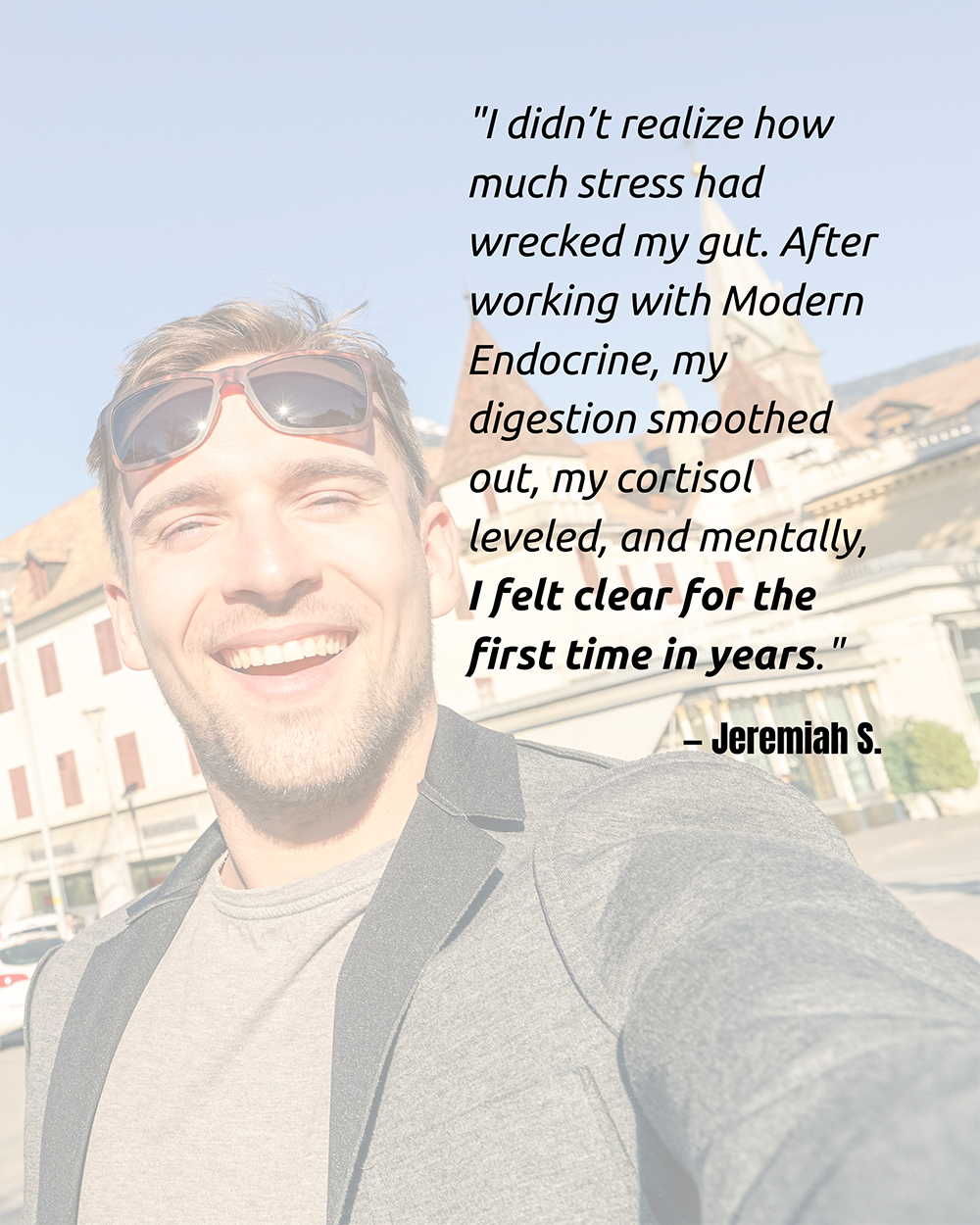
A 42-year-old software developer came to me exhausted and bloated after years of grinding through stressful workdays. He described himself as “wired but tired”—unable to wind down at night, waking unrefreshed, and relying on caffeine to survive his afternoons.
His labs told the story: elevated cortisol levels, disrupted circadian rhythm, and clear evidence of intestinal permeability. We built him a program that started with gut-healing nutrients, regulated his cortisol rhythm with targeted supplements, and, only later, hormone optimization.
Within months, his bloating eased, energy stabilized, and mental clarity returned. The best part? His testosterone improved naturally once inflammation and gut dysfunction were addressed.
Taking Control of Stress for Gut and Hormone Health
If you’re a man caught in the stress-gut-hormone loop, here’s the truth: you can’t out-supplement chronic stress. You have to break the cycle at the root. When you repair your gut, regulate cortisol, and rebalance hormones, the transformation is powerful—better digestion, stronger energy, sharper focus, and a renewed sense of vitality.
This isn’t about “managing” stress. It’s about addressing the physiological wreckage it leaves behind.
If this cycle sounds familiar, don’t wait. Book a consultation with me at Modern Endocrine, and let’s create a personalized plan to heal your gut, regulate cortisol, and restore your hormonal edge.
References
Chen, J., & Vitetta, L. (2018). Modulation of gut microbiota for the prevention and treatment of mood disorders: Focus on probiotics and prebiotics. Current Pharmaceutical Design, 24(3), 254–258. https://doi.org/10.2174/1381612823666171214163312
Hanieh, H., Greaves, R. F., & Gamble, G. D. (2013). Stress-induced gut dysfunction and the benefits of adaptogens. Journal of Herbal Medicine, 3(3), 83–89. https://doi.org/10.1016/j.hermed.2013.04.002
Poesen, R., Evenepoel, P., de Loor, H., Bammens, B., Claes, K., Sprangers, B., Kuypers, D., Augustijns, P., Meijers, B., & Verbeke, K. (2018). Gut microbial dysbiosis in patients with adrenal insufficiency and its role in metabolic regulation. Journal of Clinical Endocrinology & Metabolism, 103(5), 1634–1645. https://doi.org/10.1210/jc.2017-02506