
Why We Left Conventional Medicine – The Untold Truth About Healing Hormones & Gut Health
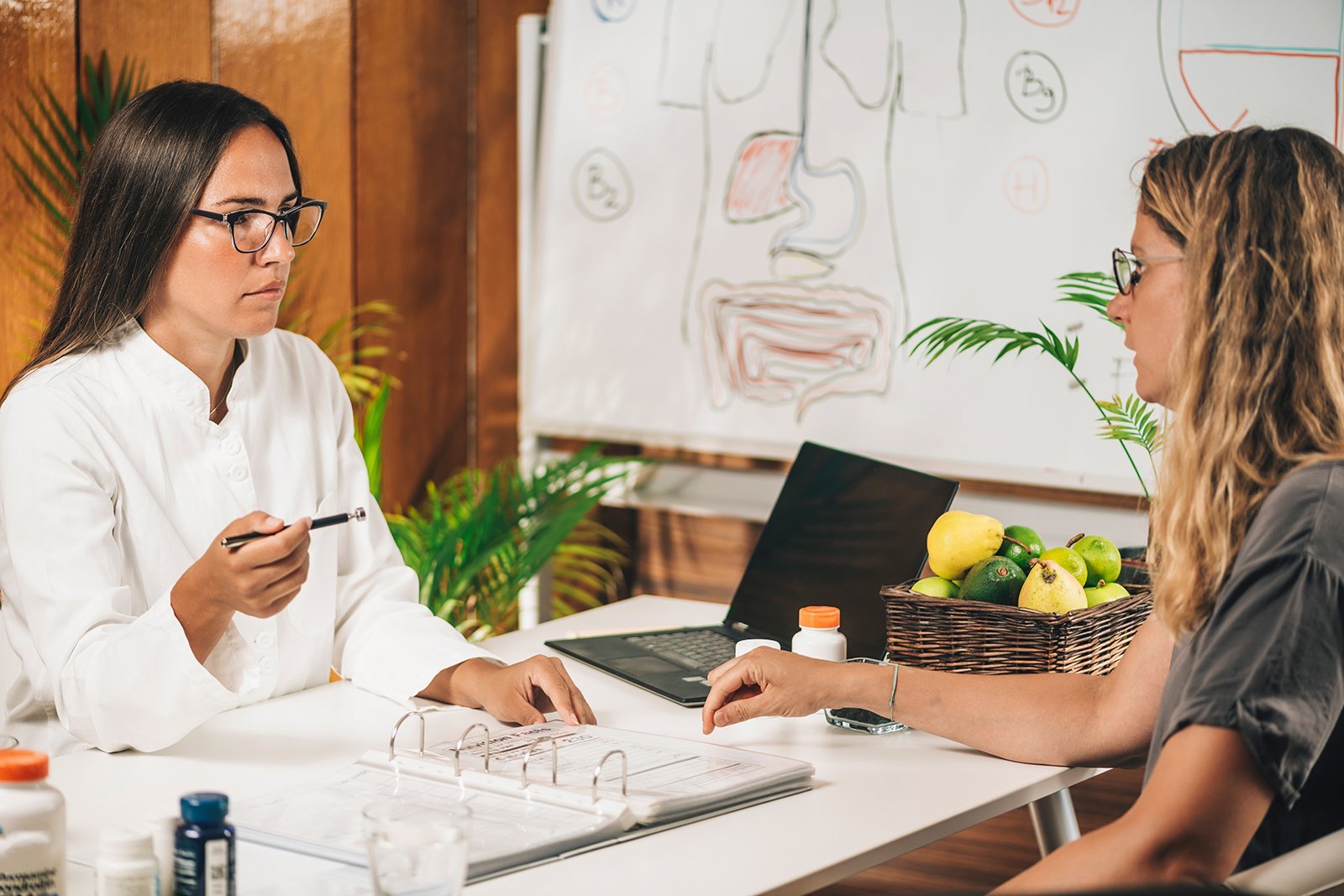
In this episode of Hormones, Metabolism, and You, Dr. Cassie Smith welcomes two new Modern Endocrine providers, Dustin Pollard and Lacy Long, for a heartwarming and insightful conversation about their journey into functional medicine.
Dustin and Lacy open up about their diverse medical backgrounds—from pediatric and cardiovascular intensive care to women’s health and community nursing—and how their desire for deeper patient relationships led them to the root-cause approach practiced at Modern Endocrine. You’ll hear about their personal health philosophies, how they balance busy family lives with clinical work, and what excites them most about personalized hormone and gut health care.
Whether you’re curious about how functional medicine providers think or simply want to get to know the people behind your care team, this episode offers an authentic, behind-the-scenes look at the compassionate, collaborative spirit of Modern Endocrine.
Cassie info and links:
Check out the website
Follow Cassie on Instagram
Follow Cassie on Facebook
Follow Cassie on YouTube
Follow Cassie on TikTok
Guest info and links:
Dustin Pollard, APRN, FNP-C
Dustin is an Advanced Practice Registered Nurse with board certification as a Family Nurse Practitioner. His clinical journey began in a Cardiovascular Surgical ICU, followed by several years in general pediatrics. Today, he’s passionate about helping people move beyond symptom-based treatment toward whole-body healing. Dustin takes a personalized and thoughtful approach to care, integrating lifestyle factors and root-cause analysis into every treatment plan.
When he’s not working, Dustin enjoys reading, staying active, chasing his two boys, and cheering for the OSU Cowboys and OKC Thunder.
Lacy Long, DNP, APRN, FNP-C
Lacy is a functional medicine nurse practitioner, mom of three, and a champion of holistic family health. With a background in women’s health and community-based care, she brings a warm, relatable energy to every patient interaction. Lacy’s superpower is breaking down complex health issues—like hormone balance and gut health—into practical steps that families can actually follow.
Outside the clinic, you’ll find her lifting weights, exploring the outdoors, or creating helpful, real-life wellness content for social media.
Blog/Transcription:
0:00 [Music] It’s time for another episode of
0:06 Hormones, Metabolism, and You. Thank you so much for joining me this week. I’m your host, Dr. Cassie Smith. I am a dual
0:13 board-certified endocrinologist and internal medicine doctor who is now practicing functional medicine out of
0:18 Oklahoma City, although we do have licenses in over 42 states. So, we can see you virtually from almost any state
0:25 in the United States. Today, I’m super excited to introduce you guys to Dustin Pard and Lacy Long. They are my newest
0:32 nurse practitioners. Both of them kind of came to me in very interesting ways, but Summer and I were needing some help,
0:38 and I found two amazing people. I think it’s very important for you to know the people who are taking care of you. I
0:44 want you to know their story. I want you to know their why, and I want you to know what they like about their job and and how they got to Modern. So, I just
0:52 asked them some very basic questions about what they do and how they got here and what they like to do, what sort of
0:57 patients they like to see, funny and interesting things about them. And we even do some fun stuff at the end, just
1:03 like rapid fire questions. I also tell you towards the end of the interviews with each of them what I appreciate
1:09 about them and the compliments I get about them from patients. So again, I just like people to really feel
1:15 comfortable at Modern Endocrine and know the people who are helping take care of you because we really appreciate you
1:20 letting Today I am interviewing one of Modern Endocrine’s newest members of our
1:26 cult team. This is Lacy Long. So she is a nurse practitioner and she joined us
1:33 about a month ago. She just finished school. I’m going to let her kind of tell you a little bit about her
1:39 backstory, but I wanted you guys to be able to get to know her and get to know Summer and Dustin, one of our our newest
1:46 member after Lacy. And so, we’re going to talk about lots of things today. Just what is it like to work at Modern
1:52 Endocrine? What have you learned? What are things that Lacy’s excited about? What is she going to focus on? And just
1:57 let you guys kind of learn a little bit about her. So, thanks for joining me, Lacy.
2:02 Yeah, happy to be here. Okay. So, I think let’s start with just like tell people what do you do at Modern
2:10 Endocrine or how did you get here? Let’s talk about like why how did you become a nurse practitioner? So, obviously with
2:17 nurse practitioners you start as a nurse for people listening who don’t understand. You start as a nurse when
2:23 you’re a nurse practitioner and so what kind of got you into medicine and then what led you into becoming a nurse and
2:29 nurse practitioner? Kind of tell everyone your story. My nursing career started in women’s health. Uh so I
2:35 started as a labor nurse um and doing that for a few years until I got offered
2:40 a position as a school nurse in a small town and so I did that. I have I had
2:47 young kids at the time so it made a lot of sense with our schedules and things like that and I did it for that reason.
2:53 But that kind of turned into like a love for community health and being in the community and helping people outside of
3:00 like the hospital setting. Um, and I just saw so many issues like I
3:05 had I talked to so many families and so many kids and all these kinds of things and you just see like this huge gap in
3:11 healthcare. And so that kind of led me into going back to school which is something I told myself I would never do
3:16 but I did and I’m glad I did. Um, but through that process, kind of seeing the
3:21 conventional medicine layout, I guess, it made me realize that I really didn’t want to do that. I didn’t want to be in
3:27 a typical like primary care office and things like that, which kind of led me into the functional medicine pathway.
3:33 So, now here we are. So, you started out as a nurse, then you were a school nurse,
3:40 and then your desire to help other people led you here. And so you were doing your rotations, the end of your
3:47 rotations earlier this year and you came to our clinic and then we sort of kind
3:53 of derailed your plans of maybe working in primary care. Sorry, not sorry, but
3:59 now you’re with us. Yeah. Okay.
4:04 So, love that story. Love that you were a school nurse. That’s hard. Where do you
4:11 want to tell people like where did you grow up? I think that’s interesting too. Did you grow up in Oklahoma? Did you
4:16 grow up in New York City? Where did you grow up? I grew up in a small town in Oklahoma. It’s called Straoud. Most people don’t
4:23 know where that’s at. There’s like maybe 2,000 people there. And we still live close to there. We live in a town a
4:28 little bit bigger than that, but we still live close by. So, we’re small small town people.
4:34 Stradout, Oklahoma is where the chicken place is, right? Did I make that up? No, that’s Okchi. Yeah, that’s Okchi. Okay, never mind.
4:40 Ignore me. Similar. I just know our patients talk about the chicken place, but I thought it was
4:46 Stout, but it’s not. Okay. So, you grew up in a small town and you’ve you’ve
4:52 been working at Modern Endocrine for about a month now. Yeah, it’s been about a month. So, how would you describe
4:58 Modern Endocrine to somebody you just met? Like if somebody said, “What do you do?” What would you say?
5:03 That’s a complicated question because it’s endocrinology. It is, but
5:08 endocrinology is kind of intertwined with everything. And so I whenever
5:14 people come here, they’re not just getting just like one aspect of their health dealt with. They kind of get
5:19 everything at one time. So it’s I feel like when people ask what we do here, it kind of leads into like a long
5:25 conversation because you can’t really say it quickly because everything from like inflammation to hormones to I mean
5:31 even like heart health and things like that are all things that we address. So I mean everything kind of plays in
5:36 together. So, it’s more holistic. I guess it’s more of a holistic practice. Yeah, I like that. I think that modern
5:42 endocrine is like a good place where you come and just get all your health care needs met wherever you are at that
5:47 point. Like if you’re healthy and you want to focus on longevity, we do that. If you’re not healthy and we need to
5:53 focus on some things to get you healthy, we do that. And if you feel like, you know, you’ve seen 20 doctors and you’re
6:00 a complete mess and you don’t even know where to begin, we specialize in that, right? Yeah, absolutely.
6:06 I feel like we do a good job at kind of like talking to the patients, seeing what their goals are like because
6:12 everyone kind of has different, you know, expectations and things that they want to accomplish and what they expect
6:17 to be good in life. And so it’s it’s nice like here it’s like you just talk to the patient, see what they’re wanting
6:22 to accomplish, and then seeing what you can do to help them get there. So that’s kind of nice. Yes. And the nice thing is we don’t have
6:29 these constraints with like insurance companies and things like that dictating how we care for patients and how long we
6:34 spend with patients, which is what I love. That’s the best part, right? And the second thing that I love is that
6:40 people actually get better, which is nice, too, right? Yes. Outcomes are great.
6:45 Yeah. So, what Yeah. So, you’ve been here for a month. So, have you seen that? I guess that’s my question is like, do you feel like it’s different
6:52 than the other rotations you did? Do you feel like people actually get better, get the care that they need? Like what
6:58 have you observed with that? Yeah, so let’s see. My rotations here started in April, I think, and now it’s
7:04 what it’s the end of June. And so now, like we’ve seen like some of the newer patients that were back in April, like
7:10 we’ve seen the follow-ups now of those patients, and yeah, they’re completely
7:15 different. like they came in like emotional and upset and didn’t know
7:20 where to turn to and now they come back and there’s like life in their face and
7:26 they’re happy and smiling and feeling a lot better and yeah, you see a huge difference. So
7:31 yeah, I think you told me I think it was last week we saw somebody who we’ we’d seen in April, right? And although we
7:37 came out of the room and you’re like she still has a lot going on, she’s a lot better, right? Like you even said she’s
7:43 totally different than she was in April. And so I think that’s really powerful and fun to to see and for you to see in
7:50 in a short amount of time. And so I’m lucky enough to see that all the time, which is why we do what we do. And
7:55 although sometimes, you know, it can feel overwhelming, like I tell people this all the time, the the word I think
8:00 I hear from patients the most and you could you could, you know, let me know what you think is a lot of people come
8:06 to us and they are just very overwhelmed. Like if I have to pick one word, it’s overwhelmed that you hear like over and over and over. Like
8:12 overwhelmed with how sick they are or how much they’ve done or where to start or how to get better. And so they just
8:19 don’t do anything, right? Because it’s human nature when you’re overwhelmed and everything’s hard to just not do
8:25 anything. And so we hear that a lot with patients. But then a lot of times, like when I was talking to you about starting
8:31 and I was talking to Summer, cuz Summer’s been with us for a year. summer’s like, you know, sometimes as a
8:36 provider it’s overwhelming, too, because it’s like you’re you’re you’re drinking from a fire hose. And so, I think that’s
8:43 important, you know, to know as well. Like although patients feel overwhelmed, I think we have a really good
8:49 environment you can come to and we try to make you feel very welcome because we all know what that feels like. I know
8:54 what it felt like whenever I got out of school and tried to learn all this. And I think you used that word a couple
9:00 weeks ago after you went to hormone training, right? where it’s like, “Oh, I feel like it’s I’m drinking from a fire
9:05 hose.” But it’s a good thing, right? Like you’re just learning all these different ways to help people. I would agree with all of that.
9:10 So, we understand what overwhelm feels like from a different perspective. But the cool thing is like, you know, you I
9:16 tell patients this all the time. We kind of specialize in that, right? Like even though people feel like when we do lab
9:22 reviews, they get 10 or 12 diagnosis and they’re like, “Oh my gosh, am I the worst person you’ve ever seen?” The answer is always no. And it’s like I’ve
9:28 seen five of you today actually. So don’t feel bad, right? Yeah.
9:34 So what do you think? Like what have you learned so far by working at Modern Endocrine? Like what are some things
9:40 that stick out? I think just mainly the difference between just treating illness and then just getting people to like an optimal
9:46 level of health. That’s probably the biggest difference that I’ve seen. Like it’s not just like we’re going to give you some medication and we’re going to
9:53 try to push you into like this normal range of your labs and tell you you’re fine and move on. Um, it’s like talking
9:58 to people about how they feel and like optimizing not just like medications,
10:03 but maybe their supplements or maybe their lifestyle, maybe their diet, maybe whatever it is. Just like talking to
10:08 them and seeing what may be off and helping them get their life to like an optimal level to where they’re actually,
10:14 you know, enjoying life and living life the way they should and being, I don’t know, living their life at a higher
10:19 level. I think that’s might be the better way of putting it. Yeah. And I think that makes me very happy to hear you say that because I
10:26 think I don’t know that I emphasized this to you very much when you started, but I do to the staff and I try to like
10:31 how people feel really matters and that’s something they don’t teach you in school. And in actually in school, what they teach you is what how people feel
10:38 doesn’t matter. They teach you like you put them in the box, you give them their prescription, and you kick them out the door. Especially in medicine, that’s
10:44 what they teach you. And especially in the hospital, right? It’s like, oh, okay, you fit in a box, everything looks
10:50 fine. Goodbye. And I think how people feel is very important and very validating and you have to use that in
10:55 addition to all the information you have from labs in order to make someone, you know, healthy and and feel the best. And
11:01 so that’s why every single patient we see at Modern Endocrine, our staff know
11:07 the first thing you ask them is how are you feeling? And so in all of our notes when we go into rooms, it says patient
11:12 is feeling tired, great, wonderful, sad, angry, anxious. Like we want to know how
11:19 you feel because that helps us figure out how to make you feel better. Right. Right. Yep. So yeah, like we’re taught
11:25 how to kind of put everyone into a guideline and functional medicine can be difficult sometimes because there’s not
11:30 guidelines. There’s not very many guidelines to go off of for functional medicine specifically. But that’s kind of nice sometimes too because you can
11:36 adjust things as you need to and try different things. Yeah. And that brings up a good point. So my friend Nicole just texted me
11:42 yesterday. she’s kind of finishing up her book about thyroid health and she said, you know, Cassie, will you tell me
11:48 what you learned in med school and in fellowship about thyroid because she’s a
11:54 PA and she’s like, I learned nothing. You know, I learned everything that’s actually not correct. And I think that’s
11:59 a very valid point is like, you know, what did you learn in school as a nurse practitioner just recently? What did you
12:05 learn about thyroid hormone? What did you learn about what did you learn about thyroid? What did you learn about hormones? What did you learn about gut
12:11 health and nutrition and just functional medicine in general? Did you learn anything? Very, very little. Like when it comes to
12:18 thyroid specifically, it was very much just like checking TSH, maybe T4. And
12:23 that was I mean they went over it and it may have been like maybe a very quick lecture and that was about it. Um, and
12:29 then like when you’re studying for boards and things like that, it’s very simple. Like I didn’t know all of even like the medication options that we even
12:35 had for thyroid until I came here and like because they don’t they don’t teach all the specifics when it comes to
12:42 thyroid specifically. When it comes to nutrition, there wasn’t much. We’ll say that we didn’t have like a nutrition
12:48 class or anything like that. We may have had a
12:54 lecture [Laughter] or something. No nutrition in med school too, y’all.
12:59 So, so like there’s very it was very minimal in functional medicine. No,
13:06 it was all it was all conventional. Really sad because I’ve been out of school for about 10 years now, right?
13:12 and I did a fellowship, but like we just we haven’t changed and we’re not getting any better. And like we know gut health
13:18 is so important to your overall health and we’re not teaching anyone providers,
13:24 nurse practitioners, PAs, doctors, anyone how to actually fix people and
13:30 talk to them about nutrition. So there’s they’re big on um like patient centered care, which is interesting because
13:35 they’re like always it’s always a shared decision making. you know, always listen to the patient, see what they’re wanting, all this kind of stuff, but
13:43 like and that’s great, but it doesn’t line up with like then what, you know, like you talk to the patient, you get
13:49 all these all this information, but then it doesn’t fit into the guidelines that we’re given. And so, it’s just
13:55 interesting, interesting, sad, and hopefully going to be fixed. But what are you So, here’s my
14:02 next question. What are you most excited about learning at Modern Endocrine? And where do you think you’re going to end
14:07 up like really wanting to learn and and focus on from a patient perspective? Like not saying that these are the only
14:13 type of patients you’re going to see, but what really like interests you that we’ve done so far and makes you think like, whoa, I want to learn a ton more
14:19 about that because that really helps people. Um, I think the gut health stuff, I think there’s a lot um of interesting
14:26 like developments and stuff happening there. Um, I can’t even remember the statistic now, but it was like I heard
14:32 something like how many like just specifically gut health studies that are being produced like every month right
14:38 now is like outrageous. And so they’re like learning all this new information about it. And we do gut mapping at the
14:44 clinic and it’s very interesting to see how people improve and all that kind of stuff after they go through the whole protocol. And so I do like that quite a
14:52 bit. And I like I have a passion for kids just because like that’s that’s what I know. I know a lot of stuff with
14:57 kids, but I also like through school nursing like it’s not really like so
15:02 much as treating the kids as it is treating the parents and educating the adults that are have the kids at home.
15:09 And so just like really focusing in on like education for like nutrition and exercise and using peptides or whatever
15:16 it is to optimize like the parents so they can bring that into their house for their whole family. I really like that.
15:21 Yeah, I think that’s so powerful. I think family units are becoming like a dying thing in our culture, especially
15:27 like extended family units. And I think what people forget is your kids see
15:33 everything that you do and they hear everything that you do. And so if you as a parent are healthy and you’re making
15:39 good choices and you’re walking and you’re sleeping, you’re kids are going to see that. And I think that’s really
15:45 really important for where we’re going in the trajectory of health care. And to your point, really helping just helping
15:51 patient helping parents figure out what they can do to make their kids healthier
15:56 because unfortunately our country, our food industry, our like social media,
16:02 the TV ads are destroying children. Like they are targeting kids at younger and younger ages. They’re putting all these
16:09 terrible dyes and fillers in their foods which change their, you know, their mood
16:14 and their ability to have attention in school. We have all these kids with ADHD
16:20 and autism and it’s just insane. And I think a lot of parents feel overwhelmed and they have no idea what to do, right?
16:26 And so all these kids get put on medications that they shouldn’t be on. And really, you just need to go back to
16:32 educating parents about sleep and nutrition and not being on screens all the time and and things like that. So, I
16:39 think that that is really powerful and I’m excited that you want to learn about that sort of thing. We’re gonna I told
16:45 you this before we started, but we’re about to take a big master class on gut health in kids and adolescence and also
16:52 ADHD and behavior issues in kids and how you fix that holistically. So, I’m excited for us to go on that journey
16:59 together. And I think it all kind of ties together too, right? Like you said, your gut health is so important for the
17:04 rest of you. Like hormones and thyroid and everything that we do, weight loss, it all ties back to your gut. So, if you
17:11 don’t have a good gut, it won’t work. If you have mold, if you I don’t care what problem you have. If your gut doesn’t
17:17 work and you can’t detox and you don’t poop every day and your liver isn’t able to clear out toxins, you will not get
17:23 better and you will not be able to use the hormones your doctor is giving you. So, if you have a chronic issue and you
17:28 haven’t gotten better and nobody’s talked to you about your gut, nobody knows anything about your gut, you need a different doctor. And I’m hoping in
17:35 five years people will realize that, right? It’ll be totally different. Hopefully. Yeah. Maybe in one year it will be totally
17:42 different. Okay. So, what is one interesting thing
17:49 about you? Interesting. Besides the fact that you grew up in Straoud and you were a school nurse because that’s kind of cool.
17:56 That’s a little interesting. Like, do you do all the crazy things your husband does? Like all those crazy like triathlon things or whatever he
18:03 does. No, I might be crazy for supporting him and everything he does.
18:09 Well, I think it’s a little interesting slashc crazy that you have two children
18:14 that are 11 and nine. Yeah. And now you’re pregnant again, so you decided to start over. I think that’s a
18:20 little interesting. What brought that on? Like that was just like a let’s go
18:25 for it one more time or what what was um again I think it was one of my husband’s
18:31 crazy ideas. Oh, okay. We’re gonna blame Tanner. Yeah, we’ll just blame him. Um, but he
18:38 wants a big family, which I do too. Like like he started thinking about like later in life, you know, like who’s
18:44 going to take care of us. Like who like he wants to be surrounded by family and stuff, which is great. And he’s like, I
18:50 don’t know that we’re going to get that done with two kids. And it’s like I don’t know either. And so, but I think
18:57 we’re good after this one. So that that’s how that happened. What’s a fun fact about you then?
19:04 Let’s see. I used to dance. I was on the dance team at UCO a long time ago.
19:10 That is a fun fact. You were on the dance team at UCO. Okay. A long time ago.
19:15 How did you meet I think this is a fun fact. Did you Did you tell me you met your husband like in school? How did you
19:21 meet your husband? Yeah. So, yeah, that’s an interesting story. I guess we were both working at
19:26 Walgreens. We did not go to the same college in the same town, two colleges in the same town, but he was going to
19:32 pharmacy school at the time. I was working in the pharmacy and then I was just like floor girl out front and he I
19:39 met him because he went out to help stock stock shelves and he was stocking tampons of all things. Don’t know.
19:46 That’s amazing. So you met your husband while he was stocking tampons at Walgreens. I think that’s an interesting
19:51 fact. So that’s kind of weird. Tanner Felden mentioned that to me when I met him.
19:57 Yeah, I think that’s a fun that’s a fun and interesting fact. If here’s I have a
20:02 question for you. If you weren’t in medicine, what’s your dream job? I like numbers. Maybe something with
20:08 numbers or maybe just I don’t know, something that keeps you active all day, you know, like
20:14 personal trainer. Yeah, like something that that would be kind of fun. I agree.
20:19 Definitely have to be around people though. I can’t just not be around people. You don’t want to be at home with your
20:25 three children all day? No.
20:30 Okay. What is your go-to healthy meal? Okay.
20:36 Let’s see. Go to healthy meal. That’s hard because, you know, I don’t cook very often.
20:42 Well, let’s say somebody else would cook for you. What’s your go-to one healthy meal? I would say like a really good
20:50 steak and like a big old salad and like
20:56 eating outside like just like a like a good healthy
21:02 meal. Maybe a sweet potato. I love a steak and sweet potato. Sweet potato, right? Yes.
21:07 Rice. Okay. What is one word that describes you best if you had to pick
21:12 one word? Have you ever done that? No. Yeah. One word that describes you
21:18 best. Trying to find something more positive than busy because I can I can make myself real busy all the time.
21:24 Yeah, I would say positive. You’re definitely very positive, which I like. So, that’s a good word. You’re very positive. If there’s one Do you ever Do
21:31 you play any instruments? No, I’m not musically inclined at all. I’m not either, but if you could if you
21:39 could play any instrument, what would you play? I’ve always wanted to play the fiddle.
21:46 Okay. I love it. The fiddle, you know, like Devil went down to Georgia, you know?
21:52 Uhhuh. I always thought that was cool. Okay. So, she would play the fiddle. What about if you could if you could
21:58 talk to anyone dead or alive and ask them whatever you wanted, who would you talk to?
22:03 Goodness. Like someone like I knew or someone Well, it doesn’t matter. Anyone. If you
22:08 had if you could pick anyone dead or alive and pick their brain, who would you talk to? You don’t have like somebody you looked up to that you’re
22:14 like, “Man, I would love to ask them questions.” Most of the people I look up to are still alive. So,
22:20 who would you talk to? I said dead or alive. Oh, you did? Yes. Okay. Okay. Dead or alive? Let’s see. I
22:27 know you already got to meet Mark Kyman, but I would love to meet Mark Hyman. I would probably fan girl out if I got to
22:34 meet him. Fan girl out. RFK would be so fun to talk to, too. RFK
22:40 Junior. Yeah. Okay. We’ll see if we can make that happen. Dr. Hyman or RFK.
22:47 Okay, pick one. Salty or sweet? Sweet. It depends. Okay. Early bird or night
22:53 owl? Definitely early bird. Summer or winter? Usually summer, but right now it’s winter because you’re
23:00 pregnant in the middle of summer. You guys, Lacy tried to take a walk the
23:06 other day. We try to walk at clinic at lunch and she’s like what seven months pregnant right now, eight months
23:12 pregnant and it’s June 26, so it’s like a million degrees in Oklahoma. And so we
23:17 tried to take this little half mile walk at lunch like Summer and I and everyone at work. And she she went outside to
23:23 start walking. Did you even make it or did you come back? But she comes back in. Did you she comes back in and she looked
23:30 like she was gonna pass out. A little confused, kind of white. And I was like, “What’s wrong with you?” and she’s like, “I just got so hot. I I need to I don’t
23:37 know. I might need to lay down.” I’m like, “Well, maybe we shouldn’t be walking, but it’s 112 outside and we’re
23:44 super pregnant.” It was cute. But so maybe she doesn’t love summer right now was the point to that, but typically she
23:49 is. Rain or shine? Uh, shine. Walk or run when you’re not pregnant.
23:56 Walk. My husband. Ocean or mountain? Uh, what’ you say?
24:02 Ocean or mountains? Ocean. Ocean. Yeah, I like all those things. Okay.
24:08 I used to think I wanted to live in the mountains until I went to the mountains and now I think I’ll just stick to the
24:14 sandy beaches. It’s hard to breathe up there for sure. Hard to breathe. And I don’t like to be
24:19 cold. So, I’m not a skier and I like I just know too many people that have broken things. So, I’m just very like
24:24 anti skiing. I’ll hike with the best of them, but like I don’t know. If I’m going to be in a mountain, I just
24:30 want to Yeah. If I’m going to be in a mountain, I just want to sit in a hot tub and like look at things. I don’t really want to
24:36 do a whole lot. Yeah. Okay. Did we miss anything? Anything you
24:44 can think of? No. I just wish I had something interesting about myself and I just don’t know what that is.
24:50 I mean, I’ll learn something interesting about you. I’m trying to think. You don’t speak another language. You don’t
24:55 play an instrument. I mean, you were a school nurse. That’s pretty interesting.
25:00 You live in a small town. You choose to live in a small town. That’s also interesting.
25:09 I have choose to be there. Halfway choose. It’s because your mom lives there, right?
25:14 Yeah. Because I can’t bring my mom with me. Um Well, you can. She just doesn’t want to
25:20 come. Yeah. Right. She can’t. Yes. Okay. Bless her. Well, I want to end by telling you the
25:28 most common compliment I hear about you from patients so far. So, you haven’t necessarily been seeing patients a ton
25:34 on your own, but the compliment I’ve heard the most about you is, “She is so
25:40 cute. She is so cute while she’s pregnant.” Like people, everyone like when you leave the room is like, “She is
25:45 so cute pregnant.” And I know you don’t feel cute pregnant, but you are so cute pregnant. So, that’s a compliment
25:51 currently. But I’m sure after you start seeing patients, it will be different. And then the some the I want to tell you
25:56 the one thing I appreciate the most about you. The thing I appreciate the most about you is since you started, you’ve just had a wonderful attitude and
26:03 you are just willing to like learn and help any way possible, which I think is a wonderful asset to have. And I think
26:09 that we’re very lucky to have you at Modern Endocrine. I know patients are going to love you. And so I’m just super
26:15 happy that we have you and that you’ve been here helping us and learning. I’m happy to be here. It’s been really
26:21 exciting. We’re going to miss you when you’re gone for a month or so, but when you get back, it’ll be wonderful. And we’re
26:27 excited to see little Teddy. So, for everyone that’s listening, Lacy’s having a little girl. She has a boy and a girl,
26:34 right? Yep. She has a boy. Your girl’s 11 and your son’s nine. No, opposite.
26:39 Opposite. Her son’s 11 and her girl is nine. And she’s going to have a little girl, Teddy, in like two months. So,
26:46 she’s going to be gone for a month or so and then she’s going to come back. We’re gonna have to get little Teddy a little
26:51 like modern indocrine cult shirt or something so that we can Oh my gosh. Yeah. Put it on her.
26:58 Maybe we can get her a little shirt that says like making the perfect microbiome or something like that. Yeah.
27:03 We could start her microbiome, you know, right when she’s born. But so I appreciate you coming on and chatting
27:09 with me. I just wanted everyone to kind of be able to get to know you. So, I’m going to chat with you and Summer and Dustin and just more people in the
27:15 office so patients start to learn the people that are in our office besides myself because it takes lots of people
27:21 like you to keep the clinic going. So, I appreciate you. Yay. Well, we appreciate you, too.
27:28 All right. Well, thank you. So, this is Dustin. Dustin is one of the nurse
27:33 practitioners that joined Modern Endocrine about two months ago now. And so I wanted you guys to get to know
27:40 Dustin as well, a little bit about him, his backstory. So tell everyone Dustin,
27:46 I guess. Well, what is your name and what do you do at Modern Endocrine? Yeah, so uh my name is Dustin Pard and I
27:53 work as a nurse practitioner at Modern Endocrine. So where did you come from? How did you end up in Modern Endocrine?
27:58 Yeah, so let’s see. I started uh my nurse practitioner career in, you know,
28:04 2021. So just right kind of after the cusp of COVID I worked primarily in
28:10 pediatrics. So I did a lot of pediatric primary care and urgent care. I was there for about four years before I
28:16 joined uh modern endocrine as a nurse. I worked primarily in the cardiothoracic
28:22 intensive care unit recovering open heart surgeries you know all of that stuff. I did that for about 5 years. So
28:29 what led me to join modern endocrine is you know I was actually a patient first started seeing you for a lot of gut
28:36 related things. I had, you know, some horrible acid reflux doing the full nine yards, taking the PPIs, the Pepsi, all
28:43 of that stuff, right? I had previously seen a gastronenterologist in Oklahoma City. I did a scope and they were like,
28:50 “Yeah, you have an inflamed esophagus.” And I was like, “Thank you. I I know that.”
28:57 And at the time, you know, they did a biopsy and they were like, “No, you don’t have H. pylori or anything crazy
29:02 in there. Just take Omerazol 20 milligrams. you can go to 40 milligrams just like you know for the rest of your
29:09 life basically. Um, and then yeah, I came to see you and
29:15 you were like, “Okay, we need to do a GI map.” And I was like, “Yeah, of course.” Right. I did the GI map. I did in fact
29:20 have H. pylori. You know, pretty significant bacterial overgrowth, right? I had leaky gut, all of that stuff, too.
29:28 You know, I was treated with the protocol that you recommended, right? So, I followed that pretty good and led
29:33 to symptom resolution. You know, in between, you know, I had follow-ups with you and we would just chat about work,
29:40 right? I mean, I was a nurse practitioner in pediatrics at the time and we would kind of express our frustrations with, you know, traditional
29:46 medicine and how things were going, right? I was telling you about, you know, some kids that I’ve seen with
29:51 crazy high insulins and it’s just insane the amount of chronic conditions that
29:57 kids have now, like food allergies, eczema, all of the things, right? And so
30:03 I just voiced, you know, frustrations along those lines. And then a few weeks after, you know, one of our
30:09 appointments, you called me up on the phone and was like, hey, how would you feel about joining my team and I was
30:14 like, I’m all for it. Sign me up. Yeah. And so that’s kind of my story and how I got started here. So,
30:20 so three points. Number one, he, if you’re listening to this, was a
30:26 practicing nurse practitioner and went through our gut protocol. And like he said, he did it correctly. So I have a
30:32 lot of people are like, “How can anyone do a gut protocol?” me. You can. I’ve done it. He’s done it. Like, you just
30:39 have to put your mind to it and do it. Like, it’s not fun. It’s like a sprint for 90 days, but you can do it. So,
30:44 that’s my first point. My second point is we have to give a little bit of props to your mom because your mom has been my
30:50 patient for a really long time. And a thousand% all the props. You probably is the one who convinced
30:55 you to come see me and then was like, you need to do this, right? Yes. You got to give props to your mom, Lori.
31:01 So, she’s like the sweetest person in the world. And that’s why I knew you would be a great fit for Modern Endocrine because if you’re a product of
31:07 your mother and your father, you can’t be a bad person. So, um, that’s another point. And then thirdly, yeah, it’s kind
31:15 of funny. Summer and I were talking about this, like we were like, well, we need another nurse practitioner, but we can’t have one that sucks and we need
31:21 one that like definitely understands functional medicine or wants to understand functional medicine, but then also you have to be able to get along
31:27 with us. And we’re easy to get along with. We’re just kind of like funny and quirky and we’re not like you know how some people are
31:33 very like in a box. We’re not like that. And so also we wanted somebody who wasn’t like gonna
31:39 make us feel weird. Like we had to walk on eggshells. So we were like And then Summer actually went to school with you
31:44 and she’s like oh I remember she was like Cassie Dustin’s like super smart. Like he’s like weird smart. Like really
31:49 really smart. So then I was like dang is he gonna be weird? And you’re like yes he is weird.
31:55 No he’s not weird. At first I was like, is he going to be as fun as Summer and I? But then after
32:00 like four weeks, you finally opened up and really me a little bit. Yeah, you’re if any if any of you have the
32:07 privilege of seeing Dustin as a patient, he’s actually hilarious. He’s actually really funny and he’ll just like throw
32:15 something at you, keep a completely straight face, and keep walking. And you’re like, “Wait a minute. That was
32:20 actually got to keep everyone on their toes, right? It’s it’s too easy if not right.
32:26 Yes. So, so we’ve loved having him at Modern Crane. He’s only been with us for two months now, but he’s caught on very
32:32 quickly. Summer’s right. He’s extremely smart and he has this background of
32:38 peds. So, we are thinking about incorporating some older children into
32:44 our practice with gut health issues, things like that, because that’s kind of his love. So, he kind of ended up with
32:50 us just in a weird about way, but we’re happy that he’s with us. So, that tell
32:56 me. Okay. So, how would you describe Modern Endocrine to someone you just met? If somebody’s like, “Hey, where in
33:02 New York? What is that?” What would you say? Yeah, I actually love this question because I like I find myself saying this
33:08 a lot when I tell people where I work. I’m like think of like endocrinology but like with a twist of like you know like
33:15 to dig like you know to dig deeper to find you know I say like I like to ask why like that’s our whole thing like we
33:22 want to know why you’re feeling this way and why your like symptoms are this way why your labs look like that right and
33:28 so yeah that’s kind of how I describe it I mean it truly is like a functional endocrinology practice and you don’t
33:34 hear like any of that anywhere else honestly yeah you really maybe no you And maybe I should use that
33:40 for my commercial we’re going to film. It’s endocrinology with a twist. With a twist.
33:48 We’ll work out the semantics. But I like it. With a twist. Maybe that can be our next
33:54 t-shirt design. Um, yeah. I mean, that would be good. I like endocrinology with a twist. Okay.
34:01 So, that’s good. I would agree with that. It’s like we want to know why. And I don’t I don’t know that the gut per se
34:08 is like this endocrinology study. Like obviously there are GI doctors, but I feel like everything that nobody
34:14 understands in medicine gets thrown into the endocrinology bucket. So I guess why not the gut too, right? Because nobody
34:21 really understands that. But it’s coming. People, if you’re listening to this podcast, you mark my word. It’s 2025. In 2030, if your doctor doesn’t
34:28 talk to you about your gut, everyone’s going to be like, they’re an idiot and you’re going to go somewhere else. because by 2030 there’s a few of us that
34:35 are on a mission to make sure everyone understands how your gut is related to your health and you will want to know
34:40 this stuff. So it’s pretty it’s pretty cool. Okay. What do you love most about
34:46 your job? I like digging deep. I like looking at all the details of everyone’s labs. If
34:52 there’s something that I’ve noticed from what I’ve just heard just from the patients that I’ve already seen, you
34:57 know, everyone expresses the same frustration of, you know, well, I went so and so and everything was normal, but
35:04 I don’t feel normal, right? And I’m like, well, when I look at your labs, like our approach to labs is a little
35:10 bit different than say a traditional, you know, provider, right? I explain it like you have your normal lab ranges,
35:16 right? So, you have like low range, high range, right? if your low range was a D+
35:21 and your high range was a A+, right? You wouldn’t want your kid to like make a D+ and be like, “Okay, yeah.” So, there’s a
35:28 lot more. So, that’s my favorite part is just like digging deep, understanding why, and really trying to optimize
35:33 people’s health and like have them feel the best that they can. I love that. Yeah, I do that a lot of
35:39 that, too. I’m like, “Yeah, your thyroid’s working at like a C minus, D plus, right?” Which isn’t going to cut it for
35:45 a majority of people. I mean, yeah, I guess it’s working. You’re not dead, but you feel like
35:51 you’re dead. You want your doctor to get through med school with a D plus C minus? Because I
35:57 don’t, right? Yeah, I like that. Okay. What have you learned by working at Modern Endocrine?
36:03 I bet a lot so far, but what are some things that stick besides the fact that little baby
36:10 Jesus’s make everything better? I mean, yeah. Yeah. You know, sometimes works a little bit better than others,
36:16 right? But no, what I’ve learned most, I mean, I feel like I was telling this to my wife the other day. I was like, I
36:21 feel like I’m in like this hormone boot camp, right? And so doing all of this stuff, going to all the trainings,
36:26 learning about pellets and optimizing hormones and everything, too. And now we’re kind of shifting to like more gut
36:32 health kind of stuff now that I have like a good grasp on hormones, right? And so I love that aspect because it we
36:38 really like treat everyone as a whole body system as opposed to an organ system, right? And so, and that’s what’s
36:44 lacking like in just traditional medicine. Everything is put into a box. And I know you preach on this a lot,
36:50 right? But we’re not just a big box with a bunch of little boxes. Like, it’s we’re one big box that we need to be
36:56 treated as such, right? So, everything truly does work together. Um, and that’s what’s been the most rewarding to me,
37:02 but also the most interesting is to kind of learn about that and how everything interacts. Um, because yeah, we do kind
37:09 of interact that way. So, that’s true. Well, good. I’m glad I’m glad that you like that and that you’re
37:16 learning and that’s kind of how we do it. You know, I told you when you started, you’re going to learn a lot. It’s going to feel like you’re drinking
37:22 from a fire hose for about six months and then you’re really not going to be super comfortable for about a year, but
37:29 you learn like we teach you all these things and it’s amazing and you have learned really quickly and you just see
37:34 though how it’s so important to learn hormones and gut and thyroid like you
37:39 have to learn it all, right? So, it’s very powerful and lifestyle. And I think it’s really cool that you were a
37:44 patient, too. That’s what I was telling Sarah, our health coach, like you kind of already did it. So, I like the fact
37:50 that like if you all see Dustin and you try to give him some excuses about your gut health issues, you’re probably not
37:55 going to fly very far, he’s going to be a good accountability partner because he did it. And he didn’t love it the whole
38:02 time either. He can tell you he did, but he didn’t. I remember. But he did it and
38:07 it got better. So, you know, he would be a good accountability partner. Okay. What is
38:14 one interesting thing about yourself? [Music]
38:20 So, other than like the normal boring stuff like I have a wife and two kids,
38:25 right? So, I feel like that’s just like, yeah, whatever. What you might not know is that in seventh grade, I spent a
38:32 majority of the year in a wheelchair. Oh, I didn’t know that. Your mom was telling me this. Yeah. So, I had a
38:39 pretty good knee injury. I ended up having to have a procedure. I think it was called like a mosaic plasty where
38:45 they took some bone from my femur and like reconstructed some like bone that was just degrading from like blown out
38:52 cartilage essentially. Um, and it happened because I grew too fast and so just playing basketball, all of that
38:58 stuff. And I remember, you know, the surgeon, he was like, “Yeah, I’ve done this about maybe like five times.” I was
39:05 like a 12-year-old. You’re like, “What?” But yeah, so that’s kind of something I guess interesting, I guess, that not a
39:11 lot of people know unless you went to middle school with me. But how tall are you? I’m 6’4 and 6’5 on a good day is what I
39:19 say. He’s pretty tall, you guys. I did notice that. He kind of like Yeah, he’s very tall. Okay. Well, that’s interesting. I
39:24 didn’t know that. Your mom never mentioned that to me either, so if you were working at Modern Endocrine
39:32 or in the field of medicine, what would your dream job be? This question is hard because I feel
39:38 like it changes like every couple months, right? You’re like, I think that would be pretty cool to do lately. Like
39:43 meteorology I think would be cool. We live in Oklahoma. That’s a terrible
39:48 You’re you’re going to be Well, that’s why I think it would be cool because like our weather sucks all the time, right?
39:54 We have like all this severe weather. But no. Yeah, I would say that. I think that that’s that’s super interesting.
39:59 What was it three months ago? Jeez, I don’t know. I really don’t know.
40:05 Yeah. Okay. We’ll ask you again next year. Yeah. I don’t know. I feel like I get in these moods and I’m like, “Yeah, I could
40:11 do that. That would be cool.” Right. And then you’re just It’s like a fleeting thought and then you’re just like,
40:16 “No, that’s a bad idea. I think you should stick to medicine.” Okay. I think
40:22 one fun fact about you that people might find surprising other than you’re 6’4 and you’re really funny. What else? It’s
40:30 funny. Um, other fun facts. I don’t think I know anything. I can’t
40:36 think of anything. I went to Africa and nursing school to work with kids. Yeah. In the jungle. So,
40:42 that was cool. That’s cool. Fun fact. Yeah. I did a lot.
40:48 What is one word that describes yourself if you had to pick one word?
40:54 One word. One descriptive word. Driven. I think is a good one.
40:59 We’ll also accept Goofy. Second place. Funny, driven, goofy. I like it. Okay.
41:06 All great. All great attributes. Yeah. What is your go-to healthy meal?
41:11 Okay. So, lately it’s been like just ground beef, sweet potatoes, some black
41:17 beans, and avocado. Chef’s Yes, I can relate. Like he eats that for
41:22 lunch. It looks so good. So, ground beef, sweet potatoes, black beans, and
41:28 avocado. Yes, it does look really good, too. Like some days I’m like, maybe I should steal that
41:34 before you come. And it’s easy to meal prep, too. So, no excuses. And you get fiber. Sarah would be so
41:41 proud of you, our health coach. You’re getting your fats, you’re getting your fiber, you’re getting your protein. She would be
41:46 You got to get all the good macros and the fiber. Is there anything else you can think of that you would like to share with
41:52 people? like what are you looking forward to seeing or like who are you looking forward to helping at Modern Endocrine? Is there like something in
41:58 particular you really like doing? Honestly, since I started I have loved every aspect of it. So, it’s hard for me
42:04 to pick one thing that I’m like I’m super like into, right? Because I want
42:09 to learn it all. Like I want to be like a jack of all trades in this space, right? I will say I’m very excited to
42:14 start seeing like some adolescence. I think like I’m very excited to see what their guts look like specifically,
42:20 right? because I’m like are all of these kids do we need all these stimulants? Like do we I think that’s the most
42:27 overprescribed medication ever, especially with kids. And I’m like, do we need that? Like I
42:33 want to dig deeper. Like is something going on right that like So I’m just I’m super curious. And again, there’s not
42:41 like one aspect that I’m just like gung-ho on because I want to like learn it all if that makes sense.
42:47 Yep. I completely agree. And even with adults, there’s a lot of adults out there on stimulants. And it’s like I
42:53 look at those people and I’m just like, this is really sad. Your body is so confused. Like you’re tired, you don’t
42:59 have the nutrients you need, your guts out of whack, and you’re just like hitting the gas
43:04 and there’s no gas and there’s no oil and there’s nothing in your car. We need to hit the brake and figure out what the
43:11 hell is going on under the hood. Right. Yes. I completely agree.
43:17 Yeah. Okay. Well, let’s do some rapid fire questions. How about that? Because that’s
43:22 Okay. All right. Yeah. One. Salty or sweet? Salty.
43:28 Early bird or night owl? Early bird but brunch.
43:38 Summer or winter? Winter. Really?
43:44 Rain or shine? Shine. Walk or run?
43:50 Walk. Walk or bike? Bike.
43:56 Okay. Ocean or mountains?
44:02 Mountains with a caveat being close to the ocean.
44:07 I know. I know. That’s a copout. I know that’s a copout.
44:13 Oh my god. Okay. Well, actually I have one other question I want to ask you too though in all serious. One is can you
44:19 think of some tips that you would give someone who was going through our gut health program? Like was there something
44:25 in particular you found that helped you more doing the gut health stuff or just any advice you would give
44:31 someone? Yeah, for sure. One thing that I think that helped the most with me, there’s a
44:37 couple things actually. One thing would be ozone therapy. I think that that was like a complete game changer. Like I had
44:43 so many overgrowths. I like and I was just so gung-ho. I was just like, I want to do all of the things and I want to do
44:49 it all right now. Right. Ozone therapy was a game changer, right? I really think that that like helped with a lot
44:55 of the die off symptoms, right? But to be honest with you, because I was do I did six weeks of ozone, so like one low
45:01 dose and then five high dose treatments. I honestly didn’t feel like I had a whole lot of die- off symptoms. And I
45:07 think it was mostly due to the ozone. I really do. other tidbits in regards to
45:14 like food intake, fiber. I mean, that was that well that that was a big thing for me, too. And just like just knowing
45:20 that there’s like a light at the end of the tunnel, right? And it’s it truly is like a marathon, not a sprint. Like this
45:27 isn’t something that you’re going to do that’s like a quick fix, right? Because nothing that we do here is like a quick
45:32 fix, right? Because we have to fix everything, right? And so just taking
45:38 some time and just realizing, hey, this is a process. It’ll get better. You’re going to have
45:44 slip ups during the program because we all do. Like I don’t know how many times I forgot to take a digestive enzyme, you
45:49 know, before a meal, but like that’s the easiest thing to forget, right? So it’s going to happen, but just get back on
45:54 the horse, right? And so but yeah, and then I was pleasantly surprised with my retest when all of my overgrowths were
46:00 gone, my h pylori was gone, my leaky gut was better, you know, all the things. So, just trust the process would be my
46:06 biggest advice. And maybe do some ozone. I would completely agree. That’s why I brought ozone on because I 100% know it
46:13 helps mitigate all the bad side effects and gets people through their gut protocol and then allows them us to
46:19 actually heal their gut. In addition to that, you get some additional energy. And yeah, then it gets people like you,
46:26 the type A’s who need their scorecard to be perfect, happy at the end because all their It’s kind of funny because
46:32 whenever I do gut health programs with people, I can be like like Sarah and I will message each other. I’m like, “This one’s going to have to have a A+ on
46:38 their GI map or they’re going to be really mad, you know, like they’re just certain people and it doesn’t matter.” Like I saw a lady yesterday and she
46:45 feels amazing, but she still has a couple overgrowths and she was like almost in tears because she just had a couple stupid things on a piece of
46:51 paper, but she’s like, “I feel totally different.” And I’m like, okay, well, like that that is the win. Like we can
46:57 continue working looking on those things, but the win is like your symptoms, you know? Right. And I mean, is there a such thing
47:02 as like a perfect GI map? Like, no. I have not seen one. Like, no. So, I mean, you’re gonna have
47:08 some of those overgrowth kind of stuff, too. But like, yeah, that’s just But if we ever see one, I mean, I guess
47:14 we could give a prize for that. If we ever see a perfect GI, the biggest gold star,
47:19 we will let you know. But yeah, maybe we should have a like a maybe we should have a next year we should have like a
47:28 Yumi summer lace. You should all see whose guts can be the best and like have a competition.
47:33 Yeah. Yeah. I think we’re on to something. Yeah. Yeah. Well, I’ll be in the red light bed
47:38 every day and I’ll be in the ocean every week. Unfair advantage.
47:45 I’m older than all you guys. Okay. This is not fair either. Let me tell y’all. I love all my people. I’m older than them
47:51 though. I’m like, get back to me in five years. So, I want to end by doing I want
47:56 to end by sharing two things with you. So, I want to tell you the most common compliment I hear about you from
48:02 patients and something I personally appreciate about you. So, the most common compliment I’ve heard about you
48:08 from patients is that you are very like empathetic, kind, listen, they just feel
48:14 like you are paying attention and actually want to help them. So, that’s a good compliment, right? like, oh, he
48:20 seemed very engaged in my care and he actually wants to help find an answer like you. So, I appreciate that. Also,
48:26 you, you know, just seemed very engaged. So, those are the things that patients have told me about you. And so, that’s,
48:34 you know, obviously if you want an engaged, caring provider, that’s important. And so, Dustin is I think
48:40 that something I personally appreciate about you the most, it’s hard because there’s a couple things. I do love that
48:46 you’re funny because I like to laugh and it and I love that you just randomly throw things in there too. Like today
48:51 when you came out and threw that baby Jesus down, I was like um I like that it’s like randomly funny.
48:59 But I think that I appreciate even more so than that is just like I do see in
49:04 the fact I do see in in you that you’re very driven and empathetic and like you want to help people and so you take it
49:10 upon yourself to like learn. I don’t necessarily have to hold your hand for everything. you take it upon yourself to
49:15 go figure stuff out, but ask me when you need to. And I think that’s just really important in life with like learning, especially in medicine, right? Like if
49:21 you have the drive or desire to do something and help someone, then you just go do it and you don’t need me to necessarily point you in every single
49:29 step of the way. So, I think that I appreciate that about you the most.
49:34 Well, thank you. Yeah, those are really kind words. Thank you. I appreciate it. And I’m happy to to be here and to see
49:40 patients because I really do care and I want everyone to feel better. So, I know you do, which is amazing.
49:45 Yeah. So, all right. Well, thank you for answering these questions and letting people get to know.
49:51 Yeah. Thanks for having me. We’ll have you back again. I hope you guys enjoyed these two
49:57 interviews. I’m going to try to do some stuff like this and not have as many guest interviewees just so you know what
50:03 it’s like to really be a part of modern and kind of part of our team and and why we do what we do. So, if you enjoyed
50:10 this, I would like to know so I can do more stuff like this. Let me know by leaving a review wherever you get your
50:16 podcast. You can let me know on social media as well. Make sure you’re following us. I give out so much good
50:21 advice and just education and information on social media at modernindocrine_.
50:27 Also, our gut health live webinar is going monthly and is doing phenomenal.
50:33 So, if you want to learn more about your gut, make sure you get on our weight list and sign up to hear one of those.
50:39 Our licenses are now available in 42 states. So, if you want to become a patient, we would be more than happy to
50:45 see you. And finally, please, please, please leave us a review and share this because this is how we get the word out
50:51 there. Have a wonderful week. I’ll see you next week. The information presented, including any
50:58 materials discussed, referenced or linked within this podcast, are for general educational purposes only. Not
51:05 the practice of medicine. No doctor patient relationship is formed from you listening to this podcast or utilizing
51:11 any of the information provided. I am a doctor, but I am not talking to you as your doctor. The information provided is
51:19 not intended to diagnose or treat health problems or take the place of the professional medical care provided by
51:26 your doctor. If you are experiencing any health problems, including problems you believe have been touched upon in any
51:32 respect within this podcast, you should consult your doctor about the problems without delay. You may ask your doctor
51:39 whether he or she believes the information I have provided would be helpful to you, but you should still
51:44 consult your doctor immediately and follow his or her medical advice as your treating physician. I’m just here to
51:51 provide you basic knowledge about the issues we discuss so you are more aware of them and can better discuss them with
51:57 your doctor. That’s why we call it back to the basics. Join me on the next episode as we continue our journey.
52:05 [Music]
Disclaimer:
The information presented including any materials discussed, referenced, or linked within this podcast are for general educational purposes only, not the practice of medicine.
No doctor-patient relationship is formed from you listening to this podcast or utilizing any of the information provided.
I am a doctor, but I am not talking to you as your doctor. The information provided is not intended to diagnose or treat health problems or take the place of the professional medical care provided by your doctor.
If you are experiencing any health problems, including problems you believe have been touched upon in any respect within this podcast, you should consult your doctor about the problems without delay. You may ask your doctor whether he or she believes the information I have provided would be helpful to you, but you should still consult your doctor immediately and follow his or her medical advice as your treating physician.
I’m just here to provide you with basic knowledge about the issues we discuss so you are more aware of them and can better discuss them with your doctor.
That’s why we call it Back to the Basics. Join me on the next episode as we continue our journey.