
Women, Weightlifting & Longevity: How to Build Muscle, Protect Hormones, and Age Well
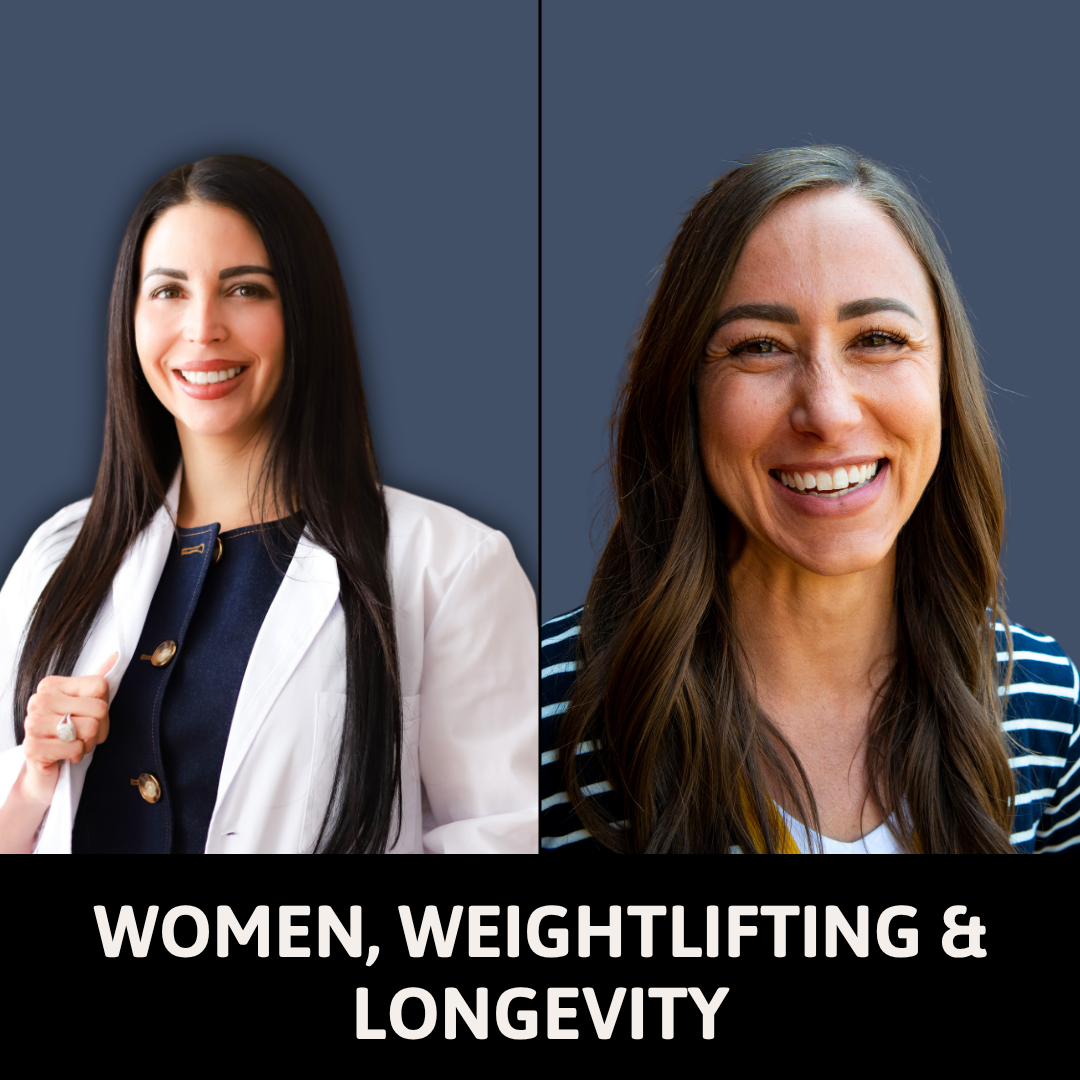
If you still think weightlifting is just about aesthetics, this conversation will completely change the way you see your body and your future. In this episode, I sit down with a highly experienced physician assistant and longtime strength training expert to unpack what women have been getting wrong about fitness for decades, especially in perimenopause and beyond. We dive into the real role of muscle when it comes to metabolism, hormones, and longevity, and tackle the questions so many women are quietly asking. Is cardio enough? Will lifting weights make me bulky? Is it too late to start? We break through the noise and get honest about what actually matters if you want to feel strong, energized, and in control of your health as you age.
We also get incredibly practical, walking through what effective weight training actually looks like for real women with busy lives. From how often you really need to lift, to why more workouts are not always better, to the growing concerns around GLP-1 medications and muscle loss, this episode connects the dots between modern trends and long-term consequences. If you have ever felt overwhelmed, confused, or stuck in an endless cycle of doing more but seeing less progress, this conversation will give you clarity, direction, and a whole new perspective on what your body truly needs.
Topics We Cover in This Episode:
- Why muscle might be the missing piece in your long-term health plan
- The surprising truth about cardio and why it may be holding you back
- What most women misunderstand about “toning” and body composition
- How little you actually need to do to start seeing real results
- The hidden risks behind popular weight loss medications
- What your future mobility, independence, and strength really depend on
- The mindset shift that changes everything when it comes to consistency
- Why doing more workouts could actually be working against you
If this episode got you thinking differently about your health and your future, share it with a friend, subscribe so you never miss an episode, and take the next step toward building a stronger, more resilient body. Your future self will thank you.
Transcript
Welcome back to hormones, metabolism and you. Today’s episode is one that I think every woman in perimenopause and menopause needs to hear, because we’re talking about a topic that’s often misunderstood, oversimplified, or ignored completely. And that’s weight training. If you’ve ever wondered whether lifting weights is really necessary in midlife, if cardio is enough, if weight training will make you look bulky, or if it’s too late to start, this conversation is for you. Today, I’m joined by Danielle Quebec’s PCA. Danielle is a licensed physician assistant with a truly unique background in women’s health. She’s passionate about helping women in midlife optimize their hormones, energy, metabolism, and overall health through an individualized, evidence based approach. Her training spans medical care, physiology, lifestyle hormone optimization, counseling, psychology, functional diagnostic nutrition, fertility education, and even years of experience as a certified personal trainer, which makes her the perfect person to have this conversation with. In this episode, Danielle and I dive into why weight training matters so much for perimenopausal and menopausal women, not just for appearance, but for things that actually determine quality of life and long term health, mobility, longevity, insulin sensitivity, mood, sleep, strength, resilience, and metabolic health. We talk about the myths women have been told about resistance training, what actually works, and how often you really need to train to see meaningful results.
We also get practical and specific about the kinds of weight training routines women should be doing. Why? Muscle is one of the most important predictors of healthy aging, and why being strong and muscular is often far more productive in the long run than simply being thin. And yes, we also touch briefly on GLP one medications. The growing issue of women becoming what many call skinny fat, and why preserving muscle has to be part of the conversation. If we actually care about long term health outcomes. This is a powerful discussion that cuts through the noise and gives women real, useful information they can apply right now. So if you want to understand how to train smarter, support your hormones, protect your metabolism, and feel stronger in your body as you age, stay with us. Here’s my conversation with Danielle. So Danielle kept because you are my new found friend from Utah because you’re doing HRT correctly in Utah. And so we have so much to talk about today. And we’re going to circle back to HRT. But first of all, before we start, tell everyone a little bit about you, how you ended up here in this space. Like, why should people listen to you believe you? Are you just like making stuff up on Instagram? You know, tell me all the things.
Yeah, yeah. Hi. Thanks for having me. I love when the internet world does actual social things and connects me with cool people. It’s one of my favorite things. So yeah, I. My name is Danielle. I am a licensed physician assistant. I’ve been a licensed PA for about the past 12 years. Before that I was a mental health therapist. So I hold a master’s in counseling psychology. And before that I was a certified ISA personal trainer. I also hold certifications in nutrition coaching, FNP and fertility education. So I have a pretty wide breadth of knowledge. I’m definitely not a grifter, although people have been like sliding into my DMs, accusing me of that. And I’m like, listen, you can call me a lot of things, but uneducated is not one of them. So I have worked across multiple different areas of health, and I kind of take all of that. I like to say for my millennials and elder millennials out there, I’m a little bit of everything all rolled into one when you work with me. So that’s what I bring to the table and a little bit about my background. I left conventional medicine a couple of years ago. I think you were a little bit ahead of me with that. And just, you know, I saw that medicine wasn’t serving women the way that I felt that they deserved to be served. And so I went and did things on my own terms. And here we are today.
Yes. And I love that here we are today. So I want to start because I kind of follow you on social now. So I know you have some pet peeves, as do I, but I want to start with like we were kind of talking about. So you have a lot of knowledge around weightlifting, which is very important because women weightlift different than men. Shocking. I know we’re not little men, but I want to talk a little bit about like weight lifting in women. Is it good? Is it bad? Is muscle maintenance and health good or bad in women? Do we have a problem now that everyone’s taking Ozempic and GLP one? In general, do we foresee that being a problem in the future as far as muscle health? We can just talk about health span, different things, and then we can maybe talk about how some people are misusing or abusing these medications too.
Yeah. So I love talking about weightlifting. So I’ve been what I would call a gym rat since the age of 12. So I just turned 42. So I’ve been lifting weights for 30 years of my life. I have a lot of experience in that realm, and I truly believe that weightlifting is one of the top 3 or 5 things that women and really all people need to be doing for their health and longevity. I know longevity has become like this buzzword and health span. Like it’s really become buzzy recently, but there really is quite a difference between healthspan and lifespan, right? Like how well are we living versus how long are we living and how long can we live while actually also living well, right? With like good health and not just like burdened to like pills and walkers and assistive devices and all of these things. So I really do feel like it is the pillar of health. I’m seeing. One of the other things that you, that you put in there was just about GLP one. And I do think that we’re going to see a crisis of sarcopenia and osteoporosis in the next 5 to 10 years in the women of our generation who aren’t being prescribed these medications correctly, right? And one of the things that I get criticized for a lot is I hold the prescribers feet to the fire a lot with this because of press ganey scores. And people don’t want to have conflict prescribers like, I get it.
There’s a whole we could we could go into the press ganey scores and patient satisfaction scores and like the nuance of that. Right. And but you know, they’re just saying yes, yes, yes. Like I have a girlfriend who works in a more affluent area. She works for concierge medical service. She’s also a PA, and her doctor is literally actively writing a script for a woman who’s 90 pounds. And so it’s just, you know, what are we doing here? And there’s no conversation being held around how women need to be eating and weight lifting and muscle protection, right? Like anytime we lose weight, we’re going to lose muscle. Like that’s really inevitable. However, we can do things to preserve the amount of muscle that we lose in those conversations are not happening. So the way that I put it is these medications are really being overprescribed and under-supported. People are not seeing dietitians. There’s no conversation about the trauma and why people are landing overweight. There’s no boundaries for practitioners, right? These medications are being written for women with the BMI has its own problems, but BMI is under 25 at just for, you know, pure, pure vanity purposes. There’s no health considerations. So yeah, I mean, whatever direction that you want to take that if you want to hear more about muscle, if you want to hear more about my GLP take, I’m here for whatever.
So yeah, and I think if you’re seeing a provider that is talking to you about protein and talking to you about ways to maintain muscle, and you have a lot of inflammatory disorders, right? Like I use GLP one sometimes in people that don’t have a BMI, you know, might have a BMI of like 22. 23, whatever. But we’re doing it for other reasons. It’s very low dose. That’s a different conversation because we also talk about protein. They also do in bodies. We talk about weightlifting. But to your point, like if your BMI is 17 or 15 and you weigh 90 pounds. I mean, there needs to be a conversation about like, what are we using this for? I agree with that. And so the other thing that really bothers me is like, I have patients now who tell me, well, I’m just buying my peptides online and I’m just mixing them myself and injecting them because ChatGPT told me that I can take this amount. And I’m like so many issues here. Like not saying that ChatGPT is not intelligent, but ChatGPT cannot take your entire medical history along with your labs and really make an educated, clinical guess. You can upload whatever you want into ChatGPT. It is still going to hallucinate. It’s still not perfect. You know, if it was great also like, where are these peptides coming from? You know, some of the prices people say they pay for them. It’s coming direct from the manufacturer in China. It doesn’t make me feel any better for you. Like things in China are not regulated how they’re regulated in the United States. There’s just a lot of issues, right? But I think I don’t know that I want to beat the glp1 to death right now.
I think what I want to ask you about, since you have all this certification in weightlifting, is because I have this conversation with women a lot. You know, we’re of the age because we’re very similar age that, you know, in the 80s and 90s, it was like, everyone needs to be stick thin, right? Like we’re not eating any fat and all women are stick thin. And then, you know, as time has progressed, we know that being stick thin is maybe it is not the best thing, right? We end up with osteoporosis. We end up with metabolic issues. Actually, this whole thing. And so I think what’s really hard for women to change their mind around is stick thin is out. And I think in like 2010 to 2020, it was kind of becoming better where curves were better. And but now that we have this big run on GLP one, we have all these superstars that are tiny again. And so it’s like, almost like we’re reverting back to when we were kids. But why should women care about muscle? So like, let’s talk about in general health span, like if you’re a 30, 40 34 year old listening to this. Why do we care about muscle when we get to be 50, 60, 70? What is he going to do for us? And like you said, exercise is one of the best things to preserve muscle or to what do we do as a woman in our 40s? Perimenopause, menopause to maintain and build muscle and like, what is that going to do for our longevity since you know a lot about exercise? Let’s talk about that.
Yeah, I love this question. So why should women care about muscle? There’s a couple of different directions we can take this. First, the health route. Health route. Right. So muscle is really going to protect our metabolic health for a number of different reasons. We know that having visceral adiposity is not good for us from a vanity standpoint. It’s going to give you probably the look that you want, right? Like a lot of women are like, oh, this long, you know, I had this guy come up to me at the gym and he was like, my daughter figured out how to build long, lean muscle versus
bulky muscle. And like, with all due respect, no, she didn’t. She has no idea what she’s talking about. And he was just looked at me like I was crazy. And I was like, yeah, I said what? I said my dude. So it’s going to it’s going to regulate your blood sugar, right? Like this is a huge one. Our blood sugar is absorbed in two main places in our body, our liver and our muscle. The more muscle that you have, the more sponge that you have to take up that water, aka glucose, right? And then it’s not floating around in your bloodstream causing this major roller coaster. Blood sugar. I think, I think you mentioned this when we talked like insulin is one of our, what we would call a tier one hormone. If your blood sugar is dysregulated or messed up or whatever term you want to use, you’re going to wreak havoc with your sex hormones.
Your cortisol is going to be all all over the place, your thyroid, like it’s going to impact your entire system. So the more muscle you have, the better regulated your blood sugar is, and the more kind of protection that you have, like blood sugar can become really dysregulated because of stress too. And I think that that’s something a lot of women don’t realize they’re out there. Dtm, what I call doing too much, and they’re eating clean, which I don’t love that term. And they’re like borderline orthorexic and they’re working out all the time and they’re like, why is my A one, C 5.8 or 6.0 and they’re not sleeping and they’re raising three kids and they have this corporate job and that will make you diabetic or pre-diabetic really fast. But what muscle does is it makes your body just more resilient to all of the stress and all of the metabolic mayhem that can happen throughout our body. Right? And then like I mentioned, also from a vanity standpoint, it’s really going to give you the look that you want the muscle, unless you have some freak genetics, which is like less than 1% of the female population, or you’re doing a round of anavar, like you are not going to look like a beast. You are just not going to look like a man. I’m sorry. Listen, I’ve been lifting weights for 30 years. I’ve been through bulk cycles and I mean, I’ve been in bulk cycles where I’ve been eating 3600 to 4000 calories.
And it is so hard if you are eating mostly whole natural foods to put that weight on and to put that muscle on, it is hard freaking work, right? So the other thing that you asked was, what do women in their 40s need to do to maintain and build muscle and what to do for longevity? Right? So this is really going to depend on where you are in your health and fitness journey. Like if you’ve never picked up a weight before ever, or you’re like couch to like, you know, couch to five K or couch to the gym, however you want to call it. I mean, it’s going to look the same, but your journey is going to be different. The things that I’m going to ask you or guide you to do are going to be different, right? Like the person who’s never picked up a weight, I’m not going to be like, you need to go do all the compound lifts. Like that’s great. If you want to hire a trainer and go do all the compound lifts, that’s great. But I’m going to probably veer you more towards like, let’s get some dumbbells, let’s do some body weight movements. Let’s get used to like those planes of movement, right? Like even just lighter weight. And I, I’m not a fan of like using light weights, but when someone’s first starting out, like we need to get proper mechanics and proper lifting form. Because what happens is when you’re off like three degrees with how you’re doing a back squat with 20 pounds or just just the far right, 45 pounds even as opposed to when you’re loading 200 pounds when you’ve gotten stronger, like three degrees difference of misalignment is can really hurt you when you’re lifting in those heavier weights, right? So by and large, two full body days a week of lifting for 30 to 45 minutes.
Whether you’re a newbie, as a newbie, you’re going to see a lot of gains, right? Like you hear that term, like newbie gains with weight lifting. And really those first, I would say like three years, I’m so envious of people who are like still in that newbie phase and they’re slapping on all the weights and I’ve got like my half pound weights and my one and a quarter weights trying to like PR and slowing down my tempo instead of trying to lift more weights and things like that. Right. So that’s going to look very different for three years, as opposed to someone like me who I’ve been lifting for 30 years. And, you know, my programs change to make sure I follow. I’ve I think you also follow at least their page mind pump. I follow a lot of their programs. I love those guys. They’re really, really fantastic. I have no affiliation financially with them, but really, really love their programs. And so I switched those up. And most of the time I’m doing a three day full body split. And I think the research is showing that if you are doing two full body day lifts, so like you’re hitting all your body parts two days a week in a structured program, you will get 80% of the benefits from weightlifting, meaning the look, the blood sugar control, the sleep benefits, right? Like all of these different things that we get.
And so it just doesn’t take a lot. And I think one of the most common pitfalls that women in their 40s, they just think that they need to be doing more. And I’m like, no, you need to be doing less. Most of the women, at least that come to me, I see very high functioning type A women ages 30 to 50 for the most part, and they’re trying to run marathons and train for Ironman. And I’m like, listen, like, yeah, you’re burning, you’re sweating a lot. And you’re quote unquote burning a lot of calories while you’re doing cardio. However, when we put muscle on our body, we increase our basal metabolic rate. And while you’re sitting around doing Netflix and chill, you’re burning calories and your calorie. Your cardio workout isn’t doing anything for you. And I’m not like saying like, don’t do any cardio, don’t do this. But what I see is women who just like, they’re not getting the look they want from all the cardio that they’re doing because they need to be weightlifting, truly. And so they just keep adding more cardio and more cardio, and then their stress bucket is overflowing. So then they’re not sleeping, right? They’re not recovering. They don’t feel good. They’re not getting as much meat in through the day.
I mean, I could take this down like six different rabbit holes, but like women, regardless, if you’ve never picked up a weight or if you’re ten, 15, 20 years in, like you need to continue to weightlift and you need to do it heavy, right? Like haven’t been having this conversation a lot recently with people where they’re like, but I’m not losing weight and my body’s not changing. And I’m like, okay, how hard are you lifting? Like, if you’re not making funny faces, your last two reps or you’re not grunting or making noise, you’re not going hard enough to see body composition changes. So like, I think that that is also a huge common misconception that women need to lift light weights to get that. It’s just so not true. And I mean, you can elicit that stimulus at any weight. But, you know, there was a study recently that came out of people who did 28 reps for a back squat and people who did six reps. And they gained like the I think it was the same amount of muscle. Sure, we can do that. But when you ask when you actually go to apply 28 reps of a back squat, that person’s going to burn out cardio wise. I don’t care who you are before they can get those in or before you can actually put their muscles to the stimulus that they need most of the time in application. So long and short, you need to be switching it up. Yeah.
And so I have two thoughts. When you were talking about that, number one is I agree, like I go to the gym sometimes and I see these women who come to the gym and I’m like, I’m not sure why you’re here. You have on like a full set of makeup. You look like you’re going to a dinner party. You know what I mean? I’m like, I’m not sure that you’re doing a whole lot right. Like, I mean, it shouldn’t be super pretty when you’re going to the gym, right? Like it should be, It should be ugly or like God ugly. You know, it’s just it’s not a beautiful thing. But that’s different for everyone to. Right. And to your point, like some days I just am like, man, I don’t want to lift something super heavy. So I lift something medium heavy, but I do a different tempo, right? Like you said, really slow down, really slow up. And so like you can do different things because some days I’m just not in the mood to lift stuff really, really heavy. But I can still like on Saturday last week I didn’t want to lift really heavy, but I did a lot of like medium weight, very slow tempo, eight counts with like my legs and I could barely walk on Sunday, you know? So I was like, this obviously still working. So I think that’s one thing is to your point, like switch it up. But my other question to you is, what about the women who say, because I have a lot of 40 year old women who say they do that 1233 thing where it’s like 12% incline, 30 minutes, three miles an hour, because then they’re like a lot of influencers say if you walk on a treadmill at 12% incline, you’re actually building muscle but also burning fat. I mean, I sort of understand that, right? Because if you’re not holding on and you’re walking, you are going to probably build some muscle. But what is, you know? So I have women who are like, well, I do that for weightlifting. I’m like, well, so what is your thought about that?
Yeah. So walking on an incline is great for you. Here’s the thing, because people will use Pilates to like, well, Pilates can build muscle. Great. Yeah, but strength training is king. Nothing is ever going to build muscle as well as good strength training with good programing and progressive overload. And someone who’s following that program well and consistently and increasing their weights. Right. So I don’t think that that’s an awful what did you say, 12% incline 30 minutes for three, three.
3.3 point zero miles per hour. Yeah.
Yeah. I mean, that’s great. Like, I’m all for getting your steps in and getting movement. But it’s the same thing with these weighted vests, right? Like you see all of these women. I am not a huge fan of this. It’s just it’s putting pressure on our cervical spine. It’s Its changing our gait. And my biggest beef with it is that women are confusing that with strength training. It’s not strength training. If you want to walk with a weighted vest every once in a while, fine. But you can also just go for a walk. You’re not making it that much more difficult. And it is, I mean, because it’s putting pressure on your cervical spine, it will change the way that you walk and can potentially make you more prone to injuries down your kinetic chain, right? Because what affects our spine affects our hips, affects our knees and our ankles and the way that we move and things like that. So to directly answer your question, I don’t think that’s an awful workout. I think that’s great. If someone wants to, you know, after they lift weights, go do that for 20 minutes to get their heart rate up and get their steps in and get some additional movement. I think that’s great, but we know that it’s not going to do what strength training is doing. So that’s great that you’re doing that, but also go pick up some weights.
And do you think people should do that before or after they lift weights? Because some people say, oh, you should do your cardio before. And some people say after.
This is a really interesting point.
So there are studies now that are showing that the best results that you can get if you’re doing both cardio and weightlifting, a week of weightlifting, a week of cardio, a week of weightlifting, a week of cardio if you want to. Max. Yes, there are studies showing that it’s it’s super interesting concept, I think, for the women who are asking that question are probably already doing all of the things, and they’re probably splitting hairs. Like the best program is the one that you’re going to follow and the one that you’re going to do consistently, right? So if you are at the gym and you love getting on the treadmill first and you like, I hate being cold when I work out, I go there with like six layers and I will strip, strip, strip. And then like, once I finally feel warm, like I just feel so good when my muscles are warm working out, like I don’t even want to be in the air conditioning. Put me in the 90 degree heat like Saint George heat outside, right? Only when I’m working out otherwise like please don’t. So if that’s what they like and they like being on that treadmill first, and then they like weightlifting, great. If they like switching, doing alternate days, great. If there’s somebody who’s like really just a super nerd and they don’t have a problem with consistency. There’s someone like me who they’re gonna go do it no matter what, and they want to try the every other week thing. Great. I think, though, that for most people, doing it all in one session and whatever feels better to them, whatever they like is the best way to do that.
Yeah, I agree, the workout that works the best is the one that you’re going to do consistently 100%. So yeah, I mean, it’s very true. Let’s talk about the whole you were talking about mine pump and the whole I love their mats that I tell people all the time, like, if you need to start somewhere, do the maps. 15 it’s like two extra sizes a day. And it seems like so mundane, but actually I had surgery in January. I couldn’t work out for like six weeks. When I started working
out again, I used that program because I was like, okay, it was great to like get me back into it, but it’s harder than you think because they’re very like compound movements, but there’s only two of them. So I agree. I mean, I like their stuff. You said something about if you’re working out two days a week and it’s full body workout. What does that mean? Does that mean we’re just hitting every muscle group one time? And are we just doing our max for 6 to 8 reps? Are we hitting every muscle group two times? Like, what does that look like? Because there’s a lot of people that put stuff on social media that I follow. Like, you know, there’s a guy in particular and there’s a girl too who like show their shredded bodies, whatever. This is the only exercise I do bullshit. And it’s like 1 or 2 days a week, right? I’m like, you’re lying. So what does that look like? If you want to work your whole body out two days a week, is it literally like every single muscle? How many times like, what does that look like?
Yeah. So like any good clinician, I’m going to say it depends because you can do this a lot of different ways. So it depends on how much volume you want to do. But an example of this would be like a bench press a bent over row bicep curls, tricep pushdowns. I mean, I’m just like throwing stuff out there and a shoulder press, right? Like I’m hitting back Bi’s chest, tri shoulders in that boom. Done. Right. And that like might not be listen that you can and you can manipulate the order of that based on like what muscles you. There’s so much art and science to this. So to your point, when you were talking about ChatGPT, I had a client who was like, yeah, I know you recommended the mind pump programs. I swear to God, I have no affiliation. I just there’s such good dudes and I really love them and their, and their stuff. And they were like, I just asked ChatGPT to write me a program. And I was like, hmm, okay. Like that’s that’s fine. Don’t come crying to me when your body isn’t changing. I feel really strongly about that. Right? So now if we wanted to do a heavier volume program, we could do something like dumbbell bench, dumbbell incline bent over rows with dumbbells, followed by pull ups, followed by hammer curls with preacher curls, tricep push down and overhead tricep extension, and a shoulder press and rear flys. Right. So same thing back Bi’s chest tries shoulders but two exercises per body group. Right. And as far as the rep range like this is something that should be always be changing. If you live like we all have rep ranges that we love to live in, right? Like I love that 5 to 8 rep range. Like I just eat it up, like make me go hard, but don’t make me do it for too long, right? I mean, I can go super heavy, but like, just, it doesn’t feel great for my CNS to stay in that 1 to 3 rep range.
I do it from time to time because it’s good to switch that up, right? But I really like that 5 to 8 rep range. But I recently did a program where it was like a 20 rep range in the first four weeks, right? So it’s like the other thing is people tend to, they get a.d.d, they get impatient. They’re like, well, I did that for a week. I’m going to go do something else. And it’s like, we’re not getting the neuromuscular adaptation. We need to stay in that for 4 to 6 weeks, and then we need to move on to another phase, right? So rep ranges should always be changing. Your phases should be changing. And the exercises that you’re doing are going to depend on how much volume. But those are some examples of like really good full body workouts. If you wanted to take what I said and do that for the next four weeks and stay in the five rep range, and then the next four weeks, you wanted to do ten reps and then the next four weeks you wanted to do 15 reps. You could do that, and it would be a good program. And maybe you want to change up the tempo. There’s so many different ways to do it right. But those are an example of like what I would call a full body day. I didn’t hit legs, I guess. So you would have to put lower body in there too. So like a back squat and deadlift done at a back squat and deadlift.
Yeah. And so would you be doing these like one set two sets. How many sets are you doing?
It depends on most of the time you’re doing like three to 3 to 5 sets. Like the program I’m doing right now has a failure week. So I’m doing one set for 10 to 12 reps. And the volume week, I’m doing three sets of 6 to 8 reps. So I’m alternating, right. So it depends on how fancy you want to get. And the reps should change. So it could be three reps. It could be six reps. It could be nine reps. It could be I mean, I don’t know anybody that does nine reps. That would be like a really weird rep scheme. I’ve never seen that written. Actually.
You could do 15 or.
20, right? So it just depends. And you can start wherever you want, but stay in that rep range for four weeks, and then you need to be kind of changing that up.
Yeah. And I think that’s important too. I used to get kind of hung up on that. Like, especially if you’re listening to this and you’re busy, you know, I used to like make myself wake up at five in the morning and do all this crazy morning routine and stuff. And now I kind of just like sleep till I wake up. And sometimes that’s 530, sometimes 545, sometimes it’s six. But like, then I’ll be like, okay, it’s 6:00. I need to be somewhere at eight. I’ve got a solid 45 minutes. What can I do? Right? And so like, I also think that, you know, but if I wake up like this morning, I just was wide awake at 5:00. I went to bed early. And so I was like, cool. I have like an hour and a half if I want. So like, I can list, you know, longer. So then this morning, what I did was I did like three sets of things, like eight reps. But yesterday I woke up kind of late. So I was like, you know what? I’m just gonna, like you said, I’m just gonna like blast out six reps as hard as I can of whatever I’m doing so that it just doesn’t take as long. And I think whatever you’re going to do consistently is good. I think that tracking it and knowing what you’re doing is good. But I mean, there are days that I literally do ten exercises. I hit every muscle, like you said, five.
Most of the five core uppers. And then I’ll do like five lower because I like to do my glutes and, you know, do a little bit of core. But like you can do a full body workout, do 6 to 8 reps, really heavy on each muscle. You can do that in 20 minutes. Like you really can if you just do each muscle once. And it’s not like you have to wait a ton of time to recover because you’re only doing each muscle group once. And so people like the people that are like, I just don’t have time. I, I don’t have a lot of sympathy for you because you have to respectfully disagree. Yeah, I disrespectfully disagree because you have 20 minutes, I promise. And everyone does. If you really want to get crazy because I’ve done this before too, you can do an upper and a body at the same time, right? You can do a squat to shoulder press. I mean, really, if you have to, you can do a full body workout in 15 minutes and you can do a good one. You just have to, your point, you have to figure out what weight works for you. And to be honest with you, it kind of sucks. Like this morning, I was like, I don’t really want to work out because I worked out really hard yesterday and I was sore. So it’s like, then you have to really like, okay, I, you know, I need to do then you have to start talking about why do I need to do this, which is what we’re going to transition into, right? Like, oh, I love, I need to, I need to do this, you know? So this is the conversation I have with myself this morning.
I was like, I have all this time, but I don’t really want to do anything because I’m sore from yesterday. So then I was like, okay, well, I need to do this because when I’m 80, I want to put my suitcase in the overhead bin and I need to do this because I don’t want to be insulin resistant. And I need to do this because if I want to have a cookie at some point, I can have a cookie. And to your point, it won’t make my blood sugar high. And I want to sleep well. And, you know, so you think you have to kind of start sometimes. At least I do. Maybe I’m different, but sometimes I have to give myself a little pep talk as to why I’m going to do it, because it’s not always fun. And yes, it does hurt. And I feel like if you work out, if you’re listening to this and you work out every day and you’re like, oh, I go to Orangetheory, I do whatever every single day and you’re never saw, you are wasting your time, in my opinion.
Soreness doesn’t really correlate to a good workout. Okay. I think there’s some misconception about like how people should feel during their workout and after. So like, you should feel good during your workout and you should feel better than you did at when you walk out, you should not feel like defeated and crushed and, you know, crashing an hour later. And I don’t think that that’s what you meant. But I think people have that misconception of if I’m not demoralized and dripping sweat and it was worthless kind of thing, because sometimes weightlifting, you’re not. And I think that’s why people, women especially gravitate towards the group classes, the hot yoga, the Orangetheory F 45 type thing, because they sweat and they feel like they got a good workout type thing. So I think there’s some misconception around that.
Yeah. So what I mean is like if you go work out and you’re never tired while you’re working out and you’re like, I could do this forever. This is not tiring. I could do this for hours and hours. Yeah, then. Then that’s how I got it. I have people who tell me that like, oh, I go to F 45 or I go to Orangetheory, and I could do that for hours. Like it’s not really that hard. I’m like, well, then maybe we need to reevaluate what you’re doing there because I feel like it should be like you should do it. It should be hard. And then you stop. Right. Or you should stop saying that you feel like you’re dying, but it should at least be difficult.
Difficult. Yeah. No, I understand what you’re saying now. And I also would say that those people who are attracted to that, they are probably living in fight or flight and their brain is not recognizing that like, oh my God, this is too much. And so, for lack of better terms, addicted to that stress, that cortisol pump, right? And so they’re just like, I could go forever. I could go forever. And I would be willing to bet that those people are crashing afterwards because they need that. I bet you they feel worse on their if you’re someone who’s listening to this, whose f 45 Orangetheory. And just like Cassie was saying, like, oh, I never feel tired. That kind of thing. I bet you you feel like crap on your rest days because when you wake up in the morning and you don’t go to Orangetheory, you don’t have that cortisol pump to get you going for the day. So I would bet that you feel worse on your rest days. And if that’s you, you need more rest days than your than you’re taking and you need to switch your workout up.
Yeah. And maybe you need to do, like you said, like two days a week of a full body. And then maybe we do need to do one day of yoga or one day of just stretching or one day of just walking and like really working on, you know, on some of those things, which I think is hard for people, especially people who are type A’s, right? Like the first time I did yoga, I was like, this is the most miserable experience I’ve. Why did I do this? Because it was just hard for me to like, stop my mind, stop my body. And if you’re not flexible, yoga is hard and it hurts.
Yeah. Yeah.
It sucks.
Like it’s not fun. So like, I try to make myself do yoga once a week. I try to make myself do Pilates once a week. It’s really hard. I actually did Pilates a couple weeks ago, like, and it was a very my back had been hurting. So I went to this Pilates class that was all about like lengthening your spine and like helping it hurt so bad. I was like, almost in tears in the class just because I was like, working on stretching. Not that I was doing anything that hurt. But then the next day I felt so much better and I was like, oh, I’m so glad I did that. You know.
I feel like those workouts are so insulting. I’m like, really? This made me this didn’t.
I know.
Totally.
My husband, my husband was making fun of me because he was kind of watching it from the gym. And he was like, were you doing anything besides just laying there and flailing your legs around? And I was like, actually, I was, I was working on putting my head up higher and stretching my neck. He’s like, uh, huh? And then the next day I was like, oh, my back. Like it is. It’s very good. It’s good for your humility, right? Like your ego. It’s okay. I need to do that. So I agree with all of that. So tell people to you sort of touched on it, but like, if you’re listening to this and you’re like in your 30s, in your 40s and you’re like, okay, you know, I hate working out. This sucks, but I’m gonna start. What are some of the things like, why should women be working out besides the fact that, hey, we get muscle, right? And when we get muscle, then that helps our blood sugar. But you know what else from a muscle standpoint, like, you know, energy, mood, sleep, like what else is it benefiting?
Yeah. So sleep and this is a drum that I really like to beat personally, because I feel as though if you are not sleeping well, everything else is kind of going to go down the shitter, so to speak. We’re not going to want to move. We’re going to make worse choices. Our blood sugar is going to be more unstable, which prones to, you know, just cravings and things like that. And sleep is also tied to our sex hormones. Like we produce a lot of our growth hormone and other hormones between like, I think midnight and 3 a.m.. And so if we’re not getting good sleep through those hours, which is really, I call it the perimenopause witching hour, you’re adding fuel to the fire, you’re adding chaos to chaos if you’re not getting sleep. Right. And so I like to say, when we expend energy, we need to make more energy. And I know that it’s not this simple equation. However, I believe who’s the guy? Matthew Walker, who wrote Why We Sleep? He called, I think it’s called drive for sleep, right? So like, if we’re not exerting energy. We don’t feel tired. Right? So it’s definitely super, super important for sleep. It’s important for our hormone profile, as we talked about before, and why women should be working out in their 30s and 40s. Mood is another big one, right? Like I hear, you know, that rage in perimenopause and it just, you know, we have studies that are showing and I’m not telling anyone to not stop therapy or get off their SSRI with this. But we do have studies showing that exercise is like 150% more effective for depression than SSRIs and therapy.
And again, I don’t think that like going to the gym is therapy. Those are very different things. If you have trauma and other things like that. And I just think that that clarification is important, but it’s going to help with mood regulation. It’s going to help, you know, if you’re exercising with other people and getting that community. If you’re doing outside and you’re getting that vitamin D right, there are ways that we can like kill two birds with one stone, so to speak. It will stabilize your energy also. Like how I talked about, we should be leaving our workouts more energized than when we were not necessarily wired. Like, oh my God, but you should feel clear and alert and like ready to go through your day, right? And if you’re feeling crappy after your workouts, there’s something off about what you’re doing. The intensity is either too high, the frequency is too much. Maybe it’s not enough, I don’t know. Like everyone is a little bit different, right? So energy, mood, sleep, body composition, blood sugar control, sex hormones, just longevity, just talking about like, you know, I travel a lot and I see a lot of little ladies who can’t lift their luggage and the, what do they call them? I want to say, stewardess, the fact that, yes, thank you. Perimenopause. It’s like Where’s Waldo for words, right? And so the flight attendants are not legally allowed to help them. So if you don’t have someone who offers to help you, best of luck to you, you know, and just even this simple motion of reaching overhead, this is one of the first things to go.
And it’s like you need to be able to reach into your cabinets or put something on top of your car or whatever it is just for independent functioning, right? I mean, I joke, and I say that I want to be able to wipe my own ass until the day that I die. But like, seriously, like, if you don’t have that mobility and flexibility to do things, like you are going to need someone else to care for you. And you know, you see people go get on these like assistive devices and get the handicapped stickers really early. I know I took like a took this really far, but the sooner people, if, you know, maybe people in their 70s and 80s aren’t listening to this, but people are listening who have parents or loved ones in their 70s and 80s. Do not let them get a walker. Do not let them get an assistive device. Make them go to physical, not make them. You know, you can’t make anybody do anything but encourage them to go to physical therapy and strengthen themselves, because the rate of decline, once we start to use an assistive device, you fall off a cliff. The more that you can support the body with muscle, the better off you are. And then my favorite statistic and most important statistic to tell people, I will never forget the day that I sat in PA school and I heard that if you suffer a hip fracture after the age of 65, you have a 25% risk of death. Death and dying people like in.
The next year.
Do not. Do not pass. Go. Do not return. Do not collect $200. It is unbelievable. And the thing that protects against hip fractures is guess what. Bone density. And you don’t build bone density. Maybe you do somewhere walking on a treadmill and whatever. But strength training is the way to do that. And muscle is protective. And so if you didn’t care about anything else that you heard, but maybe you like to travel, or maybe you don’t want to die from a complication of a hip fracture after the age of 65, and you want to see your grandkids like that is why you should be lifting weights.
I agree with that. It goes away. Like even me sometimes. I’m like, man, I’m not as flexible as I was, but I agree. Like I tell my husband all the time, I gotta lift weights because whenever you die, I’m traveling without you. I joke with him because he’s older than me, but I’m like, I gotta be the lady putting my suitcase in the overhead bin because like, I don’t check bags like that drives me crazy. Airlines lose them all. So no matter where I go, I just. And it’s true every time I travel. I’m not kidding you. Every single time I travel, there’s some old lady or man that’s like trying to get their suitcase up there, you know? And my husband’s like, so sweet. He always gets it for them, or I do, but I’m like, I tell him, I’m like, see, that’s, that’s the person I don’t want to be. I want to be the little 80 year old that jumps on the plane, just tosses my stuff up there and everyone’s like, who is that? You know? And I do want to wipe my own. Yeah, I do want to wipe my own, but like, I don’t want anybody wiping my butt and. Right. Yeah. I mean, to your point, like, it’s so good for your gut too, because when you exercise, it helps keep your microbiome, you know, healthy because your insulin is good. And so it’s so important. So I do not saying that I like, I do like to exercise, but I have my days just like everyone else.
And so when I do and I’m laying there in bed like, uh, then that’s just what I remind myself like, hey, I’m gonna go do this because I don’t want to. Somebody’s wiping my butt. I want to put my suitcase in the overhead bin. When I’m older, I, you know, if I want to eat a cookie, I want to eat a cookie. And so just like you just kind of I mean, it’s just life. That’s what you do. And so then, and to your point, like you can change your exercises. So if you’re not, some days I’m just like, hey, I don’t want to lift super, super heavy like you’re talking about. I’m like, okay, let’s do medium or let’s even do lighter. So I do think it’s just really important for people to understand, you know, muscle is important for your brain. It’s important for mobility, mobility, it’s important for your glucose. So yes, if you have a hip fracture after the age of 65, your risk of dying from a complication the next year is 25%. The other thing that helps out besides muscle is hormones. We I mean, period estrogen and testosterone, very important for your muscle mass and your bone health. So as is vitamin D and weight bearing exercise, that’s all you can do. So I mean, it’s very important. And so I think people just need to realize that. And you know, when I see all these very, very thin people, I just I feel bad for them because I’m like, man, you’re destroying your bones.
It’s gonna. And the older you get, the harder it is to build muscle. And like, if you’re destroying yourself in your 20s and 30s. And with all due respect, when you’re this big, when you’re like, as big as my pinky, you might be kind of cute in your 20s and 30s. I don’t even think that’s cute anymore. I’m like, where’s your muscle? Because guess what? You can buy skinny. You can go get liposuction. You cannot buy muscle people. That is the one thing in this world you cannot buy. You cannot buy muscle. You get it from hard work. Period. Right. And so like, I just feel kind of sorry for those people too, because I’m like, in your 50s, you’re gonna look terrible and you’re 60s, you’re gonna look worse by the time you’re 70, you’re gonna look 100 if you’re even alive. And like, then you’re not building muscle because you’ve destroyed your metabolism, your hormones are erect, like, so it’s just kind of sad. And I think that we’re going to have millions of people like that in their. Well, I say millions, I don’t know, we have an obesity problem too, but maybe we have, you know, skinny fat people too, but just a lot of people are gonna end up in really bad metabolic and just, we’re gonna feel.
Like we’re super overweight and obese. And then the people who are, you know, what we call skinny fat, like they’re both metabolic dumpster fires, believe it or not. Yeah.
So, and I mean, I don’t think anything is more attractive than like a 40, 50, 60 year old woman that’s like muscular, you know, you’re like, dang, those are the people I’d pick out. I’m like, dang, I want to look like her. Like, look at her back muscles, look at her leg muscles. You know, I’m like, I’m thinking in general, men can say what they want, but
my husband’s the same way. He’s like, he’ll literally look at somebody and be like, that’s disgusting. They’re too skinny. And I’m like, yes, good. Okay, great. You know, it doesn’t matter how skinny they are. And the fact that they have giant fake boobs, you know, when they’re tiny, like it’s just it doesn’t, I don’t know, it just doesn’t.
Look, that’s an epidemic in Utah. I don’t know if you know this. This is like a little quick fact that Utah has the highest rate per capita of plastic surgery. So I am surrounded by fake eyelashes, hair extensions, fake boobs like everywhere I walk.
Really?
Oh yeah. Like I’ve been to South Beach. I’ve been to Beverly Hills. I’ve been to all the places. Miami Beach I have never in my life experienced. Like when I went to San Jose, California recently, I was like, women look like not plastic here. This is weird. Like, and I noticed that it I noticed the difference, you know, and that’s an affluent area, you know, so it was really something.
Wow.
Yeah. It’s really something here. So when I go to the gym, it’s like.
Yeah, even if you I mean, again, even if you are, I, I think as a woman, if you find yourself looking at those people that are tiny like that and feeling like, man, I need to be small and tiny like that, then you probably have some personal work that you need to do. Yes.
There’s some body dysmorphia going on.
Yeah. I mean, there’s some work like, why do you feel like you need to be smaller? Like, what is the problem? Because you want to have muscle. You want to look strong in my opinion, you know, and I’m sure we might get some hate about this. There might be men that are like, that’s disgusting. But in general, you know, muscle is very pretty. It gives you the look that you want to have. And not only that, when you’re 80, you’ll still be pretty because you’ll still have that muscle. You won’t have skin falling off of you, you won’t have a broken hip and you’ll be able to wipe your own butt. So anyways, progress. So I want to ask you three questions. I ask all of my guests, and then I want you when we’re done. So don’t overthink them. First thing that pops into your head. And then when we’re done, I want you to tell everyone about your clinic because I know you’re opening this HRT clinic in Utah and where people can find you and all the things. But the first question is, what is one food that is most beneficial and why?
That’s a hard one for me. I mean, like, the first thing that came to mind for me was like the food you love the most because it brings you joy. Like that’s such a generic answer, But I’m gonna say steak, man. Yeah.
Because it has a lot of protein.
Oh, protein. Micronutrients. Yeah. All the things. Okay.
Some people like, download my podcast episodes. Fast forward just to the end to get these answers and then go back and listen to them. And then they’ll be like, hey, I ate this because so and so said it had antioxidants or whatever. I’ve had a couple people say steak. So steak, egg, blueberries, avocados. I get a lot of that. What is one thing that anyone’s listening to this podcast right now can do that will improve their health, let’s say improve their muscle. What is one thing that anyone listening to this podcast can do that will improve their muscle? That’s 100% free.
Sleep more.
Yep. Get your phone out.
Of your room. And the second step to that is get your phone out of your room and get eight hours of sleep a night. Eight hours is so. Yeah, it’s.
And if you are, if you’ve never had a sleep test, go have a sleep test. 100% sleep apnea is an epidemic in fit women. And it also becomes more prominent through perimenopause. Lots of things change in our oral health and hygiene in our 40s, and things become more lax and not as tight because of the estrogen declining. So if you’ve never had a sleep test, I really, really, really encourage people to go have a sleep test.
Mm. Okay.
And then what is one thing that you wish you would have known about your health 20 years ago that you would have done differently?
I’m gonna say alcohol. Like I don’t really I don’t drink alcohol like at all. And like, that was not the case in college. And I don’t drink really now. And it’s not because I’ve, you know, religious reasons or anything else. It’s just I hate how it makes me feel. I hate what it does to my body. It’s a class one carcinogen and I don’t want any parts of it. So I’m not saying that everyone else needs to follow that, but I think if I could go back and do it all over again, I would probably not have drank in college the way that I did. See.
When we’re in our 20s, we can get away with a lot. I think about the drinking, the late night, Taco Bell, the. Oh God girl.
You know.
My stomach is turning just yet. You’re still, like, regenerating overnight. And I just think, man, the difference is that, I mean, I’m very healthy now and I have no problems. I the only medications I take are hormones and I feel great, but I just yeah, I, if I could do. I don’t have regrets, but if I could, I would.
I agree. Yeah. So tell everyone Danielle about your clinic, what you’re doing, where we can find you all the things.
Yeah. So if you are a woman in the state of Utah and you are curious about hormone replacement therapy, or if it’s time for you, I can help you. And I’m super, super excited about it. Empowered medicine.co is the website. I am on Instagram at Danielle. I do a hormone strategy session with everyone to find out if you are appropriate, because I’m also not about giving the 34 year old or 30 year old hormones because they’re under eating and not having a period and they think they’re in early menopause. So we really do a very robust screening for safety and appropriateness of hormones because that is very, very important to me. And then we go from there with lab work and personalized intake and everything to see if you are a candidate for hormones. And if you do want to move forward with hormone replacement therapy. I saw a huge gap when I started looking for myself, and most of the things I were finding were med spas and just people kind of peddling things that they weren’t actually experts in hormones. They were just like, oh, I’ll do this on the side to kind of make money. So I decided that I was going to start offering this because I have the ability to do so in the state of Utah. So if you’re a Utah lady and you’re looking for HRT and your ob gyn hasn’t read any articles since the WHI in 2002 and still thinks that estrogen causes breast cancer. Hit your girl up.
Yeah. Or if you just, you know, have a lot of questions about the text size or because you have a lot of not only hormone, but you have a lot. I mean, you have a lot of great knowledge about, you know, how I should exercise, am I exercising too much? And we didn’t talk a lot about that. But I do think there’s a lot of women out there who are overdoing a lot of things, like overstimulating their body in multiple ways. You’re taking too many supplements, you have too much of a morning routine, you’re exercising too much. You’re saying yes too much. Your to do list is too long. Like you’re the yes ma’am people. You are gonna be sick until you stop being a yes ma’am person, because you have way too many stimulus going in and your body doesn’t know what’s normal and what’s crap, and so it just has no energy to even help you get better because it’s like you’re inputting a thousand things in your body. It’s like, okay, I can actually do 50. So I’m going to spend all the energy I could doing 50 things just sorting through to try.
To figure out what the heck this is. Right? So I think, you know, a lot of times just I’ve started doing this with some of my PCP patients. It’s like, hey, what is everything you do in a day that’s like not negotiable. I want to know. And some people will give me a list of like 50 things. I’m like, Jesus Christ. Like, how do you even get anything done? This is why you feel the way that you do. And I will say, like with every person that I work with, the number one thing I say is we need to be doing less. And I would, I would also say like to, if you see me for a hormone strategy session, like I give you a breakdown of like everything like nutrition, exercise, lifestyle, stress, sleep, sleep, your oral health. I’m, I know you probably don’t know this about me. I’m very, very, very big on oral health and the sleep study. Most people are not being screened for that appropriately. I can give you people to talk to who are actual experts in that if you’re interested in chatting with them. But I will say I’ve probably sent, I don’t know, 8 to 10 people in the past year for palate expansion as adults because their issues were not getting resolved from anything. And that was the issue. But yeah, like I give you breakdowns for everything. So you get Even if you don’t decide to move forward with hormone replacement therapy, if it’s not for you, like we can still do things to help your hormones that even if you’re not interested in HRT, you know, I know that not everybody wants to do it and I’m never gonna, I would never, ever pressure somebody to do something with their body that they didn’t want to do. But we can work with what? With what you have. If you want to do natural things or supplements or just general lifestyle things like you will get a full breakdown of everything.
So yeah, lifestyle and coaching I think is, is great too. And it’s not sexy. Like a lot of people, you know, people on Instagram don’t have millions of followers talking about lifestyle coaching because it’s not sexy. And it’s like the easy things that we know, but sometimes we need somebody to hold us accountable and really give us a game plan, because we’re also watching social media where everyone tells us that we should have a 17 step morning routine, and then that’s even before we take a shower and wash our face. And then there’s the ten step skincare routine. And then there’s, you know, the 40 things you’re supposed to take before you eat breakfast, and then there’s breakfast. And then it’s like, you know, your body’s just like, I’m done. And it’s 730 in the morning. So I think that sometimes just getting somebody to come in from the outside and help you figure out what is actually important is really good too. Right. Cut through the noise. Yeah. And I think that you definitely would be somebody that could help somebody with that. You have good training, you have a good understanding of hormones, and you’re not just like slinging random stuff on social media trying to make a buck. All right. Well, thank you so much for coming on. We’ll put all your stuff in the show notes, and then hopefully we’ll see each other in person sometime soon.
Someday. Yeah, I would love that.
All right. Thanks.
Thanks so much.
Thanks so much for listening to today’s episode. I hope this conversation gave you a new perspective on why weight training is not just about esthetics. It’s about protecting your muscle, your metabolism, your bones, your brain, your sleep, your mood, your insulin sensitivity, and ultimately your long term health. If you enjoyed this episode, please take a second to follow the podcast. Download this episode and leave a review. That really does help more women find the show and get access to evidence based conversations like this one. And if you’re looking for support in your own hormone, metabolic, or midlife health journey, I’d love for you to consider working with modern endocrine. We’re licensed in 47 states now, and we offer both telehealth and in-person visits in Oklahoma City. Also, be sure to check out my new book, Fix Your Gut Fix Your Hormones, available now on Amazon. In the book, I walk you through how your gut affects every hormone in your body, including insulin, cortisol, testosterone, progesterone, estradiol, thyroid hormone, and growth hormone, and how that ultimately impacts sleep, mood, weight, and so many of the symptoms women experience during perimenopause and menopause. Thanks again for being here, and I’ll see you on the next episode.
Danielle’s Resources:
📲 Connect with Danielle on Socials
@danielle.kepics
@unconventional.collaborative
Resources:
Check out the website
Follow Cassie on Instagram
Follow Cassie on Facebook
Follow Cassie on YouTube
Follow Cassie on TikTok
Disclaimer:
The information presented including any materials discussed, referenced, or linked within this podcast are for general educational purposes only, not the practice of medicine.
No doctor-patient relationship is formed from you listening to this podcast or utilizing any of the information provided.
I am a doctor, but I am not talking to you as your doctor. The information provided is not intended to diagnose or treat health problems or take the place of the professional medical care provided by your doctor.
If you are experiencing any health problems, including problems you believe have been touched upon in any respect within this podcast, you should consult your doctor about the problems without delay. You may ask your doctor whether he or she believes the information I have provided would be helpful to you, but you should still consult your doctor immediately and follow his or her medical advice as your treating physician.
I’m just here to provide you with basic knowledge about the issues we discuss so you are more aware of them and can better discuss them with your doctor.
Join me on the next episode as we continue our journey.